
Reviewed · SHARM EL SHEIKH TOURS
3-Day Expedition in the Sinai Desert Climb Seek and Find
The best part of this Sinai trip is that rock climbing is only half the story. You spend three days among volcanic mountains and desert cliffs, learning to trust your feet, your equipment, and yourself. Belal and Abanoub are known for calm instruction and steady encouragement, which matters when your first climb feels higher than expected.
I like the small group of no more than eight and the fact that the $361 price includes climbing gear, guides, water, food, and two nights of camping. I also like the clear progression from beginner routes to a more advanced final site. The main consideration is stamina: this is three full days of outdoor climbing, not a gentle sightseeing trip, and you should have a moderate level of fitness.
In This Review
- Key points to know before you book
- Why three days in the Sinai feels different
- Day one: learning the basics at Wadi Gnai
- Day two: new routes and new movement
- Day three: putting your new skills to work
- Camping under the stars, with simple food and water included
- Safety, equipment, and the guide team
- What the $361 price really buys you
- Who will enjoy this Sinai climbing trip most
- Booking, timing, and cancellation details
- Should you book the three-day Sinai expedition?
- FAQ
- Where does the experience start?
- Where does the activity finish?
- How many people can join the group?
- Are food, water, climbing gear, and camping included?
- Do I need previous rock-climbing experience?
- What happens if bad weather cancels the trip?
Key points to know before you book
- Three climbing areas: You climb at three locations, with two days spent in different parts of Wadi Gnai.
- A real beginner pathway: The first day covers climbing basics before the routes become more demanding.
- Two nights under the Sinai sky: Camping gives the trip a simple, quiet rhythm far from modern distractions.
- Everything practical is included: Food, drinking water, climbing equipment, guiding, and camping are part of the package.
- Personal attention: A maximum of eight people leaves room for direct coaching and support.
- A physical and mental challenge: The trip asks you to work on balance, courage, patience, and endurance.
Why three days in the Sinai feels different
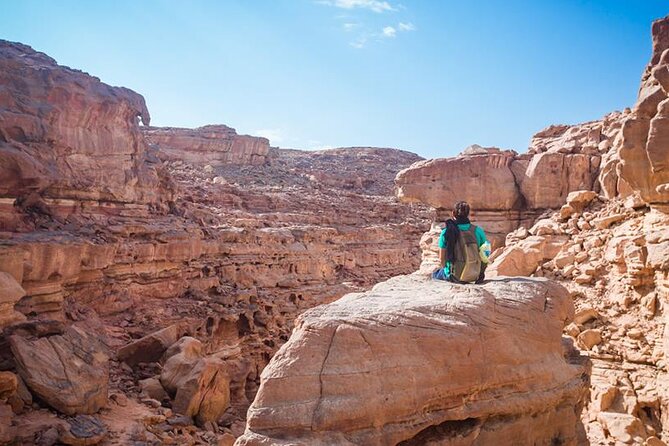
Dahab is known for water, wind, and easygoing beach life. This trip takes you away from that familiar setting and into the dry mountains outside town. The change is quick and striking. Bare rock, narrow valleys, and volcanic peaks replace cafés and the coast.
You are not simply driven out for a single climb, then returned to Dahab before lunch. The three-day format gives the activity room to develop. You learn on the first day, apply those skills on the second, and face harder routes on the third.
That gradual pace is important. Rock climbing can look simple from the ground, but it asks for more than arm strength. You need to read the rock, place your feet carefully, manage fear, and keep going when the next handhold is not obvious. A longer trip lets you make mistakes without feeling that the day is already over.
The setting also changes the mood. With no modern distractions around camp, the focus turns to the rock, the people beside you, the food, and the night sky. I would choose this trip for anyone who wants a demanding outdoor activity with time for quiet reflection.
More Sharm el Sheikh trips worth a second look
- From Aswan: 3-Day Cruise to Luxor with Hot Air Balloon
★ 4.3 · 598 reviews - Siwa Oasis All inclusive 3 days Tour from Cairo or Giza
★ 5.0 · 310 reviews - Siwa Oasis Tour All inclusive 3 Days Experience from Cairo&Giza
★ 5.0 · 227 reviews
Day one: learning the basics at Wadi Gnai
The meeting point is on Blue Beach Road in Dahab, with an 8:00 am start. From there, the group heads to Wadi Gnai, one of the main climbing areas used during the trip.
The first day begins with a briefing on how the team approaches climbing and the basic skills you need. This is especially useful if you have never climbed outdoors. Indoor climbing walls can make the sport feel neat and controlled, while desert rock brings uneven surfaces, open views, and a different sense of exposure.
You should expect the guides to explain the fundamentals before asking you to take on routes. The instruction is not only about reaching the top. It also covers how to move, how to deal with difficulty, and how to stay safe while using the equipment.
Several people who climbed with the team for the first time praised the patient teaching. That fits the design of the day. You are not thrown straight onto the hardest rock. The early routes give you a chance to understand your body and the stone beneath your hands.
The first location is also a good place to judge your own pace. Some people will feel eager to climb again and again. Others may need longer breaks or more encouragement. The group size helps here. With only eight people, the guides can offer more direct help than they could on a large outing.
The drawback is that a beginner day may feel slow if you already climb at a high level. Still, the outdoor setting and the coaching can make the first day worthwhile even for experienced climbers. The team’s approach places attention on technique and personal limits, not only on the height of the route.
Day two: new routes and new movement
The second day returns to Wadi Gnai but uses a different climbing location. That change matters because the rock itself teaches you new lessons. A route that felt natural on day one may not prepare you for every movement on another section of mountain.
The itinerary describes this day as an introduction to different routes and techniques. You may need to adjust your balance, find a new way to use your feet, or think harder about the next step. The point is not simply to repeat yesterday’s climb with more confidence. It is to broaden your understanding of how outdoor climbing works.
This is where the small-group format becomes especially valuable. A guide can watch how you move and suggest a practical correction. You may hear advice to slow down, shift your weight, or stop pulling so hard with your arms. Those small changes can make a difficult section feel possible.
The team’s coaching style is one of the strongest reasons to consider this trip. Belal is often singled out for his supportive and thoughtful way of teaching, while Abanoub is praised for clear instruction and friendly help. The available information does not set out a fixed guide roster for every departure, so you should confirm who will lead your dates when booking.
Day two may be the point at which the physical work becomes more noticeable. Your forearms and legs could feel tired, and you will need to pace yourself. Healthy Bedouin food and plenty of water are included, which removes two common worries on a remote outing. Even so, you should arrive ready for repeated activity rather than treating the trip as a once-a-day climb.
Day three: putting your new skills to work
The final day takes you to the most advanced climbing location of the trip. The idea is simple: use the technique and confidence you developed during the first two days.
That does not mean the final climbs will feel easy. A more advanced site can test your patience and concentration. You may reach a point where strength alone stops helping. Good foot placement, calm breathing, and careful route reading become more useful than rushing upward.
The last day is also where the trip’s personal side becomes clearest. The guides do not appear to treat the climb as a race. Their method focuses on facing difficulty and finding out what you can do. You might finish a route you did not expect to complete, or you might learn that stopping and trying again is a sensible choice.
This is a good fit for people who want a challenge but do not need a competitive atmosphere. The guides encourage you, but the climb remains your own. You decide how much to attempt within the limits of the team’s safety instructions and your ability.
For a strong climber, the final location may still feel modest compared with specialist climbing destinations. The supplied details do not give route grades, heights, or technical ratings, so you should not book this trip expecting a precise progression in a formal climbing sense. What you can expect is a three-day increase in difficulty and an outdoor setting that makes the activity feel far removed from a climbing gym.
A different kind of day out, same part of Egypt:
- Sharm El-Sheikh: Ultimate ATV Quad, Stargazing & BBQ Dinner
★ 4.7 · 4,084 reviews - Sharm El-Sheikh: Jeep Adventure to Blue Hole, Canyon & Dahab
★ 4.7 · 3,759 reviews - From Sharm: White Island and Ras Mohamed Snorkeling Trip
★ 4.7 · 3,194 reviews - Sharm El Sheikh: White Island and Ras Mohamed Cruise Adventure
★ 4.5 · 1,824 reviews
Camping under the stars, with simple food and water included
Two nights of camping are part of the package. The camping element changes the trip from a series of climbing sessions into a desert expedition. You do not spend each evening returning to the comfort of Dahab. Instead, you stay close to the mountains and keep the days connected.
The setup is described in simple terms: camp, healthy Bedouin food, and all the water you need. No luxury camp or hotel-style comforts are promised, so pack with a basic outdoor stay in mind. This is a place to value quiet, open skies, and shared meals rather than private facilities.
I like that food and water are included because remote activities become harder when you must arrange supplies on your own. You can focus on climbing instead of guessing how much drinking water to carry or where the next meal will come from.
The desert nights may be one of the most memorable parts for you. After a day of physical effort, a simple camp meal and a sky without city noise can feel like a real reset. The word detox in the tour description is promotional, but the idea has some truth: three days with fewer screens, fewer errands, and no urban routine can help you pay attention to where you are.
At the same time, camping is a real consideration. If you need hotel comfort, private bathrooms, or a soft landing after climbing, this is not the right format. The information provided does not specify tent style, toilet arrangements, sleeping equipment, or shower access. Ask the provider what to bring before departure.
Safety, equipment, and the guide team
The package includes climbing gear and helmets. Equipment is described as being in very good condition, and helmets are available for everyone. That is an important detail for a first outdoor climbing trip. You should still listen closely during the briefing and check that your gear fits before leaving the ground.
A guide’s attitude matters as much as equipment. The team is repeatedly described as warm, patient, professional, and careful about making beginners feel safe. That is useful if you are nervous about heights or unsure how your first climb will go.
The coaching also appears to work for mixed ability levels. Beginners receive step-by-step help, while experienced climbers can climb more independently when they do not need constant attention. If you already have outdoor climbing experience, tell the team early so they can understand your level.
The tour requires moderate physical fitness. You do not need to be a specialist climber based on the supplied information, but you should be comfortable with sustained activity over three days. The work may include walking around the climbing areas, repeated attempts, and time spent on uneven desert ground.
Bring practical clothing, sturdy footwear, sun protection, and personal items for camping. The exact packing list is not provided, so confirm details about sleeping gear and personal equipment with Insights Seekers before setting out.
What the $361 price really buys you
At $361, this is not a cheap half-day activity. It is also not a simple climbing lesson. The price covers three days, two nights of camping, food, water, guiding, and climbing equipment. That makes the value much stronger than the headline price first suggests.
You are paying for time in a remote setting and for a small group, not just access to a rock face. A group of eight or fewer can mean more useful instruction and less waiting for your turn. It also creates a quieter outing, which suits the reflective side of the trip.
The value depends on how much of the three-day format you will use. If you want one quick introduction to climbing, a shorter activity may suit you better. If you want to learn, practice, and then test yourself on harder routes, the longer schedule gives you a more complete progression.
I would also consider the cost of arranging the same elements separately. You would need transport to the climbing areas, qualified guides, technical gear, helmets, food, drinking water, and a place to camp. Since those are bundled here, the package is practical for visitors who do not already have local contacts or climbing equipment.
The price does not appear to include every possible travel cost, and the supplied details do not specify transport arrangements beyond the departure from Blue Beach Road. Ask what is covered from the meeting point onward.
Who will enjoy this Sinai climbing trip most
This outing suits you if you want active travel and are open to learning outdoors. It is a particularly good choice for:
- First-time climbers who want careful instruction
- People with indoor climbing experience who want a more natural setting
- Friends or couples looking for a shared physical challenge
- Solo visitors who prefer a small, social group
- Anyone drawn to quiet desert nights and simple camp life
- Strong walkers who can handle three days of moderate activity
You may want another trip if you dislike camping, have limited mobility, or want a relaxed sightseeing schedule. The activity ends back at the meeting point, but the details do not promise hotel pickup or a flexible daily timetable.
This is also not the best choice if you need exact route grades before booking. The itinerary gives a clear pattern of increasing difficulty, but no technical ratings are supplied.
Booking, timing, and cancellation details
The activity starts at 8:00 am from Blue Beach Road, Blue Beach Rd, Dahab, South Sinai Governorate. It ends back at the same meeting point, and the location is near public transportation.
Confirmation is provided when you book, and the group maximum is eight people. The experience needs suitable weather and a minimum number of participants. If poor weather or low numbers force a cancellation, you can choose another date or experience, or receive a full refund.
You can cancel for a full refund up to 24 hours before the local start time. Cancellations or changes made within 24 hours are not refunded or accepted. That rule makes it wise to keep your plans firm before booking, while the weather provision offers some protection for a desert activity that depends on safe conditions.
Should you book the three-day Sinai expedition?
I would book this if you want more than a single climb and like the idea of learning through steady practice. The strongest points are the small group, thoughtful coaching, included equipment and supplies, and the shift from beginner routes to a harder final site.
You should skip it if your ideal Dahab day means a beach chair, an easy schedule, or a hotel bed every night. But if you are ready for heat, rock, physical effort, and basic camping, $361 is a fair price for three active days in one of Egypt’s most striking desert settings.
The best reason to choose it is not simply reaching the top. It is the chance to see how you respond when the next move feels uncertain, with a guide nearby and the Sinai mountains all around you.
FAQ
Where does the experience start?
It starts at 8:00 am on Blue Beach Road, Blue Beach Rd, in Dahab, South Sinai Governorate, Egypt.
Where does the activity finish?
The activity ends back at the same meeting point.
How many people can join the group?
The group has a maximum of eight participants.
Are food, water, climbing gear, and camping included?
Yes. The package includes food, water, guiding, climbing equipment, and two nights of camping.
Do I need previous rock-climbing experience?
Previous experience is not stated as a requirement. The first day includes an introduction to rock-climbing basics, and the activity requires a moderate level of physical fitness.
What happens if bad weather cancels the trip?
If poor weather causes cancellation, you will be offered a different date or a full refund. You can also cancel for a full refund up to 24 hours before the start time.
Recently reviewed around Sharm el Sheikh
- St Catherine Monastery and Mt Sinai Sunrise Tour from Dahab★ 4.5 · 23 reviews
- Full-Day Hike Tour at St. Catherine’s Monastery★ 5.0 · 23 reviews
- Mount Sinai Sunrise and St. Catherine’s Monastery Trip from Dahab★ 4.0 · 26 reviews
- 1-Day Jeep Excursion from Dahab to Small Colored Canyon★ 4.5 · 19 reviews
- Tiran Island: Full-day Snorkeling, Diving Boat Trip★ 3.5 · 15 reviews
- Sharm El Sheikh: Trip to Luxor & Tutankhamun Tomb by Plane★ 4.4 · 151 reviews
- Sharm: Introductory Dive from the Shore & PADI Courses★ 4.4 · 19 reviews
- Sharm el-Sheikh: Ras Mohammed Elite VIP Cruise and BBQ Lunch★ 4.4 · 96 reviews
Sharm el Sheikh Tours, compared.

White Island and Ras Mohamed Cruise Adventure
Read our review →

Sharm ElSheikh: ATV Quad & Buggy Adventure Sunrise or Sunset
Read our review →
Browse the lists this tour appears in