
Reviewed · EGYPT
3 Days Cairo Tour Package exploring Cairo Top attractions and best things to do
The Giza Pyramids and Sphinx are only the opening act here. In three busy days, you move from the monuments of the Old Kingdom to Islamic Cairo, Coptic Cairo, the Egyptian Museum, and the lanes of Khan El Khalili. It is a lot of Cairo, but the plan gives first-time visitors a useful sweep of the city.
I like the hotel pickup and private vehicle, which spare you the work of arranging transport across a sprawling city. I also like the historical range: you see Khufu’s pyramid, the Step Pyramid at Saqqara, King Tut’s treasures, medieval mosques, Christian churches, and a Jewish synagogue. The drawback is pace. The first two days are long, and pyramid entry tickets, personal expenses, and tips cost extra.
In This Review
- Key Points to Know Before Booking
- Why This Three-Day Plan Works
- Day One: Giza, Khufu, Saqqara, and Memphis
- The Great Sphinx and Giza Plateau
- Going Inside Khufu’s Great Pyramid
- Saqqara and the Step Pyramid
- Memphis, the Old Capital
- Day Two: King Tut, Saladin’s Citadel, and Khan El Khalili
- The Egyptian Museum’s Ancient Collection
- Cairo Citadel and the City View
- Khan El Khalili Bazaar
- Day Three: Coptic and Islamic Cairo
- Coptic Cairo and the Holy Family Tradition
- Amr Ibn Al-As Mosque
- Sultan Hassan Mosque and Madrasa
- Al-Rifa’i Mosque
- What the $170 Price Really Covers
- Practical Advice for a Smoother Visit
- Who Should Book This Cairo Tour
- Should You Book It?
- FAQ
- How long is the Cairo tour?
- Is hotel pickup and drop-off included?
- Is this a private tour?
- Is entry inside the Great Pyramid included?
- Are meals included?
- Can I cancel for a full refund?
Key Points to Know Before Booking
- Khufu’s Great Pyramid requires an extra ticket: You can buy the entry ticket on the spot if you want to go inside.
- Saqqara adds an important second pyramid site: The Step Pyramid of Djoser gives you a look at the early development of monumental stone building.
- The private format keeps the group to your party: You are not touring with a large mixed group.
- Three days cover several eras of Egypt: Ancient, Islamic, Christian, and Jewish Cairo all appear in the plan.
- Guiding is a major part of the experience: Esam, Hossam, and Eman have been praised for clear explanations, patience, and friendly service.
- The price is $170 per person: Hotel transfers, an air-conditioned vehicle, a guide, bottled water, two lunches, and two breakfasts are included, while optional visits and tips are not.
Why This Three-Day Plan Works
Cairo can feel confusing at first. Its sights are spread across Giza, southern Cairo, central Cairo, and the older quarters around the Citadel. This package solves the main practical problem by giving you a vehicle, hotel pickup and drop-off, and a guide who can connect the sites.
The tour is private, so only your group participates. That matters when you want to linger at a pyramid, ask several questions about pharaohs, or keep moving when the heat begins to wear you down. The schedule is still fairly fixed, but it should feel less rigid than a large coach outing.
The guides are central to the experience. Esam is praised for making Egyptian history clear and fun. Hossam is described as thoughtful and able to tailor the days, while Eman is noted for being kind and accommodating. Those qualities matter in Cairo, where a good guide can turn a pile of ancient stones into a story with names, dates, and purpose.
At $170 per person, the value is strong if you want a full sightseeing program without arranging each transfer yourself. You receive transport, guiding, bottled water, two lunches, and two breakfasts. Check the details of your booking carefully, since admission tickets for optional visits, personal purchases, and tips are not included.
More Egypt trips worth a second look
- From Aswan: 3-Day Cruise to Luxor with Hot Air Balloon
★ 4.3 · 598 reviews - Siwa Oasis All inclusive 3 days Tour from Cairo or Giza
★ 5.0 · 310 reviews - Siwa Oasis Tour All inclusive 3 Days Experience from Cairo&Giza
★ 5.0 · 227 reviews
Day One: Giza, Khufu, Saqqara, and Memphis
The first day focuses on ancient Egypt, beginning at the Giza Plateau. Hotel pickup makes an early start easier, though the exact pickup time is not given. Expect a full day with several major stops, so wear practical shoes and bring water even though bottled water is provided.
The Great Sphinx and Giza Plateau
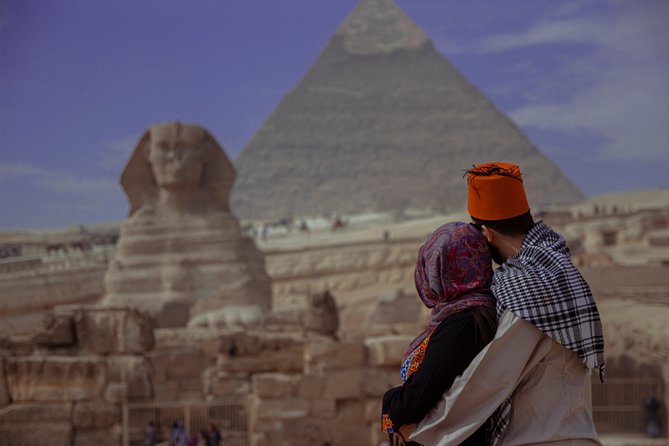
The Great Sphinx sits on the east side of the Giza complex, near the pyramids and their associated temples. Its human head is generally identified as Khafre, the pharaoh linked to the second-largest pyramid at Giza.
You have about 30 minutes at the Sphinx. That is enough to take in its scale, hear the basic explanation, and see how it relates to the rest of the complex. It is not a long independent exploration, so ask your guide questions while you are there.
The Giza visit lasts about three hours and includes the Great Pyramid of Khufu, the Pyramid of Khafre, and the Pyramid of Menkaure. The area also contains smaller queens’ pyramids, causeways, valley structures, cemeteries, and the remains of a workers’ village.
I like this portion because you are not seeing only one famous monument. The three main pyramids belong to Egypt’s Fourth Dynasty, and their different sizes and settings help you understand that Giza was a planned burial complex, not simply a row of isolated pyramids.
The site lies about 9 kilometers west of the Nile and roughly 13 kilometers southwest of central Cairo. That distance explains why a private vehicle is useful. You can look around without spending much of your day figuring out how to cross the city.
Going Inside Khufu’s Great Pyramid
The Great Pyramid is the oldest and largest of the three Giza pyramids. It is also the only surviving monument of the Seven Wonders of the Ancient World that remains largely intact.
The schedule gives you about 30 minutes specifically for Khufu’s pyramid. Entry inside is possible, but the ticket is extra and can be bought on the spot. Decide with your guide whether you want that option, since seeing the exterior and entering the interior are different experiences.
Inside, you should expect a physical visit rather than a decorated tomb filled with objects. The main appeal is the chance to pass through the structure itself and think about the engineering required to build it. If you prefer open views and photographs, the exterior may be enough.
A different kind of day out, same part of Egypt:
- Hurghada: Luxor Valley of the Kings & Tutankhamun Tomb Trip
★ 4.7 · 13,208 reviews - Cairo: Pyramids & Great Sphinx Private Tour with Camel Ride
★ 4.9 · 6,335 reviews - Tour to Giza Pyramids and The Egyptian Museum
★ 5.0 · 6,016 reviews - From Hurghada: Cairo and Giza Highlights Full-Day Tour
★ 4.5 · 6,014 reviews
Saqqara and the Step Pyramid
After Giza, the tour moves south to Saqqara, the ancient necropolis of Memphis. The site stretches across a large area and contains pyramids, mastabas, and other burial monuments.
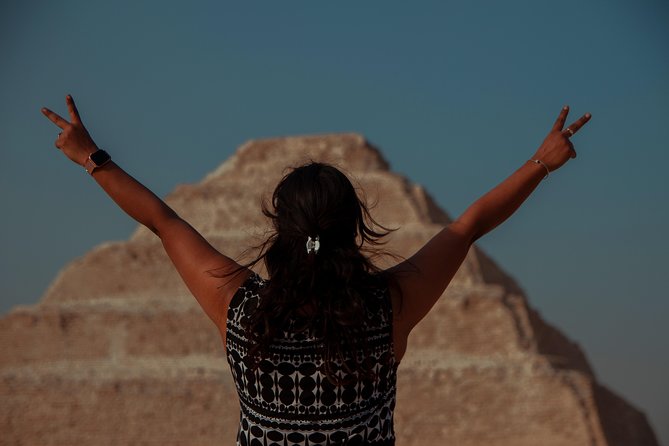
The main prize is the Step Pyramid of Djoser, built during the Third Dynasty. It is often described as the oldest complete stone building complex known in history. Its stacked design looks different from the smooth-sided pyramids at Giza, making Saqqara a useful lesson in how pyramid construction developed.
You have about two hours here. That gives the guide time to explain more than one monument, although the exact route can vary. Saqqara is less tightly associated with the standard Cairo postcard than Giza, and that is part of its value. You see a broader picture of royal burial practices and ancient building methods.
The site is about 30 kilometers south of modern Cairo. Since the day already includes Giza, Saqqara, and Memphis, expect a substantial amount of time in the vehicle. The payoff is that you visit three major ancient sites without having to organize separate taxis or tours.
Memphis, the Old Capital
The final ancient site is Memphis, located near Mit Rahina, about 20 kilometers south of Giza. Memphis served as the capital during the Old Kingdom and remained important for much of ancient Egyptian history.
The visit is scheduled for about one hour. Your guide can place the pyramids in a wider setting by explaining Memphis as a center of government, religion, trade, workshops, storage, and river transport.
Memphis is not as visually overwhelming as Giza, but it fills in an important gap. Pyramids were built for royal burial, while Memphis was a living city where people worked, worshipped, governed, and moved goods. That contrast makes the first day more than a sequence of monuments.
Day Two: King Tut, Saladin’s Citadel, and Khan El Khalili
Day two changes the subject from pharaohs to Cairo’s later rulers, religious buildings, and commercial streets. The plan gives three hours to the Egyptian Museum, followed by the Citadel and the bazaar.
The Egyptian Museum’s Ancient Collection
The Museum of Egyptian Antiquities houses about 120,000 ancient Egyptian objects, with some on display and others kept in storage. The building dates from 1901 and was designed by French architect Marcel Dourgnon.
Three hours is a sensible amount of time for a first visit. You cannot take in everything, so your guide’s priorities are useful. The King Tut exhibit is a central attraction, and the collection provides context for the people, beliefs, and objects connected with the sites you saw on day one.
I recommend asking your guide to help you choose a manageable path through the museum rather than trying to see every room. Ancient collections can become tiring when each display demands attention. A clear explanation of a few major pieces is often more useful than a hurried look at dozens.
Cairo Citadel and the City View
The Citadel of Saladin occupies a high point in the Mokattam hills near central Cairo. Saladin began the medieval fortification, and later rulers expanded it. For nearly 700 years, it served as a seat of government and a residence for Egypt’s rulers.
The visit lasts about an hour. You will see a preserved historic site that includes mosques and museums, while the elevated position gives you a broad view across Cairo.
The Citadel works well after the museum because it shifts your attention from objects to the city itself. You can picture how rulers used this strong position to watch over Cairo and control the center of government. The site also helps explain why several important mosques and historic quarters cluster nearby.
Khan El Khalili Bazaar
Khan El Khalili is Cairo’s famous bazaar and souq in the historic center. Its lanes contain shops, traditional crafts, souvenirs, and workshops producing Egyptian goods.
You have about an hour here. That is enough for a first look and some shopping, but it is not a long market wandering session. Keep your purchases and personal items in mind, since personal expenses are not included.
The bazaar is best approached with curiosity and patience. Your guide can help you understand the area and point out the kinds of products available. You should also expect the atmosphere of a working market rather than a quiet museum. If you dislike shopping stops, this part may feel less important than the museum or Citadel.
Day Three: Coptic and Islamic Cairo
The third day begins at 8:00 a.m. and concentrates on places of worship. It is the most religiously varied day, moving through Coptic churches, the Ben Ezra Synagogue, and major Islamic monuments.
Coptic Cairo and the Holy Family Tradition
Coptic Cairo is linked with the Christian history of Egypt and with traditions about the Holy Family’s journey. The tour includes the Church of Abu Serga, St. Barbara’s Church, and the Hanging Church.
You have about two hours in the area. These visits offer a different experience from the open pyramid sites. Instead of monumental scale, you are looking at surviving religious spaces, long traditions, and the layered history of Old Cairo.
The tour also includes Ben Ezra Synagogue, often identified as the old Jewish synagogue in this part of the city. It is scheduled separately for about 30 minutes, although it fits naturally with the Coptic Cairo visit.
This section is especially worthwhile if you want to understand Cairo as more than an ancient Egyptian capital. The city’s identity was shaped by several faiths and ruling periods, and the day gives you a direct look at that mixture.
Amr Ibn Al-As Mosque
The route then moves to Islamic Cairo and the Mosque of Amr Ibn Al-As in the El Fustat area. The mosque was built in 642 AD by Amr Ibn Al-As, the Muslim leader associated with the founding of Islamic Cairo.
The stop lasts about 30 minutes. That is enough for an introduction and a visit inside, but not a long architectural study. Ask your guide about the mosque’s place in the early history of Cairo, since the site connects the city’s Islamic identity with its earliest Muslim period.
Sultan Hassan Mosque and Madrasa
The Mosque-Madrasa of Sultan Hassan is a massive Mamluk-era complex near the Citadel. Sultan Hassan founded it in 1356, and it served both religious and educational purposes.
You have about 30 minutes here. The short stop means you should focus on the building’s scale, layout, and role as a madrasa rather than trying to inspect every detail.
The complex makes a strong contrast with the earlier mosque of Amr Ibn Al-As. One represents Cairo’s early Islamic period, while Sultan Hassan reflects the power and architectural ambition of the later Mamluk rulers.
Al-Rifa’i Mosque
Across from Sultan Hassan is Al-Rifa’i Mosque. The building dates from the modern period but was designed as an architectural companion to the older Sultan Hassan complex.
The visit also lasts about 30 minutes. Seeing the two buildings opposite each other helps you compare their forms and understand how later Cairo placed new monuments beside older ones.
Since this is a religious site, follow your guide’s instructions on clothing and conduct. The supplied information does not specify a dress code, but respectful clothing is a sensible choice for mosque and church visits.
What the $170 Price Really Covers
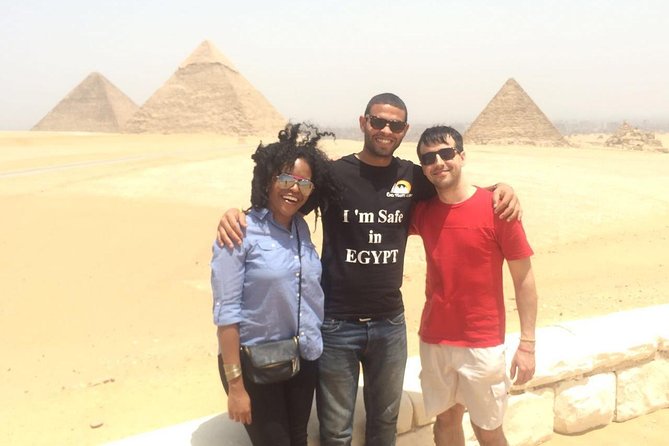
At $170 per person, this is not simply a three-day sightseeing ticket. The value comes from combining a private guide, air-conditioned transport, hotel pickup and drop-off, bottled water, two lunches, and two breakfasts.
The private setup is important. With only your group participating, the guide can explain the pyramids at your pace and help you make choices, such as deciding if entry into Khufu’s pyramid is worth the extra ticket.
Still, budget for extras. Personal items, tips, and optional tours are excluded. Admission is shown as free for the listed stops, but the entry inside the Great Pyramid specifically requires an additional ticket. Ask what other optional visits might involve before you commit to them.
The package is a good fit if you have only three days in Cairo and want the main sights organized for you. It is less suitable if you prefer spending an entire day at one museum, lingering at one pyramid, or setting your own route with no fixed schedule.
Practical Advice for a Smoother Visit
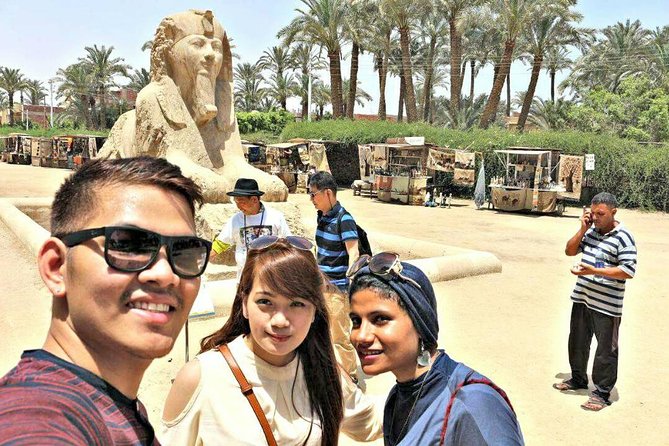
The first day is the most demanding because it combines Giza, Khufu’s pyramid, Saqqara, and Memphis. Start with comfortable shoes, protect yourself from the sun, and keep some energy for the later sites.
Use the guide actively. Ask for the story behind the workers’ village at Giza, the changes represented by the Step Pyramid, and the role of Memphis as a working capital. The guides praised for this experience, including Esam, Hossam, and Eman, are noted for making history clear and adjusting their help to the group.
Plan your spending before entering Khan El Khalili. The bazaar offers traditional crafts and souvenirs, but purchases are personal expenses. You may also want to keep room in your budget for the optional Khufu entry and tips.
Cancellation is free if you cancel at least 24 hours before the start time. Changes or cancellations made within 24 hours are not accepted for a refund. Confirmation is provided when you book, and the tour is described as suitable for most participants.
Who Should Book This Cairo Tour
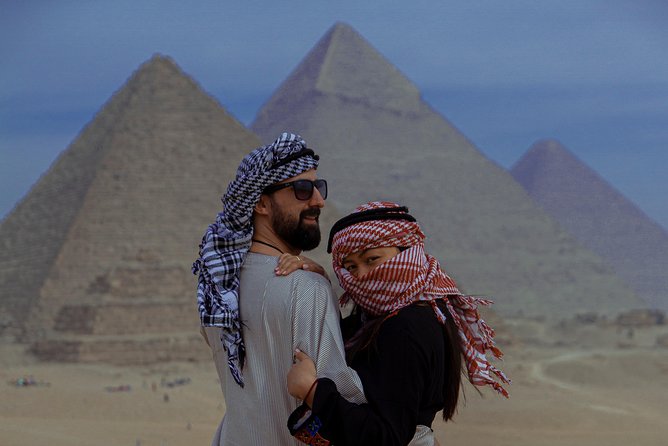
I would choose this tour for a first visit to Cairo, especially if I wanted the city’s major ancient and religious sites without arranging transport every day. Families may also appreciate the private format and the ability to ask the guide for help when children lose interest.
It suits history-minded visitors who want more than the Giza pyramids. The combination of Saqqara, Memphis, the Egyptian Museum, Coptic Cairo, Islamic Cairo, and Khan El Khalili gives you a useful three-day introduction.
I would think twice if your priority is slow travel. The schedule covers a great deal, and some stops last only 30 minutes. You can ask your guide to tailor the day, but the tour remains designed for broad coverage rather than long, quiet visits.
Should You Book It?
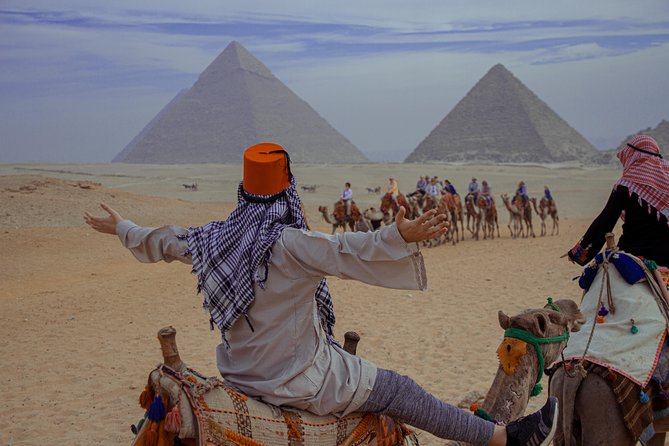
Book this tour if you value coverage, private transport, and a human guide more than a relaxed pace. For $170 per person, the combination of Cairo’s main sights, hotel transfers, meals, and guiding offers solid value, especially for a short stay.
Before booking, confirm the pickup details, what your two breakfasts and two lunches cover, and which admissions count as optional. If you are comfortable with long sightseeing days and extra tickets for selected experiences, this is a practical way to get your bearings across Cairo’s ancient, Christian, Jewish, and Islamic quarters.
FAQ
How long is the Cairo tour?
The experience lasts approximately three days.
Is hotel pickup and drop-off included?
Yes. Hotel pickup and hotel drop-off are included.
Is this a private tour?
Yes. Only your group participates in the private tour or activity.
Is entry inside the Great Pyramid included?
No. Entry inside Khufu’s Great Pyramid requires an additional ticket, which can be bought on the spot.
Are meals included?
Yes. The package includes bottled water, two lunches, and two breakfasts.
Can I cancel for a full refund?
Yes, if you cancel at least 24 hours before the experience start time. Cancellations or changes made less than 24 hours before the start time are not accepted for a refund.
Recently reviewed around Egypt
- 2 Hours Catamaran and Semi Submarine with Snorkeling in Hurghada★ 5.0 · 39 reviews
- Hurghada Private Guided City Tour with Shopping★ 4.5 · 64 reviews
- From Hurghada: 5 Days 4 Nights Nile Cruise Luxor-Aswan With Tours★ 5.0 · 30 reviews
- Cleopatra Massage Sauna, Jacuzzi, Steam bath w/transfer-Hurghada★ 4.0 · 16 reviews
- Cairo pyramids tour from Hurghada and Nile boat without Stopping★ 4.5 · 42 reviews
- Full-Day Pyramids of Giza Tour from Hurghada★ 4.0 · 16 reviews
- Cleopatra’s Royal Spa Retreat – VIP Massage, Sauna & Jacuzzi Exp★ 5.0 · 18 reviews
- Private Giza Pyramids & Sphinx Day Tour with Lunch from hurghada★ 4.5 · 28 reviews