
Reviewed · GIZA TOURS
9 Days Private Tour in Egypt with Transportation
The most unusual part of this nine-day Egypt tour is its reach. You see the famous pyramids, but you also get to Dendera and Abydos, two major temple sites often left off shorter Egypt trips. One honors Hathor, linked with music and marriage, while the other is tied to Osiris and ancient beliefs about death and rebirth.
I like the private transportation, which keeps the pace in your hands, and I like the mix of air travel, road transfers, and a Nile cruise. Spanish-speaking guides such as Mohamed Samora, also called Mohammed in the tour details, are a strong fit if you want detailed explanations in Spanish. The drawback is the schedule: several days run seven to ten hours, with an Abu Simbel departure at dawn and multiple flights.
In This Review
- Key points to know before booking
- What $1,980 buys you in nine days
- Cairo begins with pyramids and a packed first full day
- Aswan pairs granite, Isis, and a felucca ride
- Abu Simbel is the early morning trade-off
- Edfu, Karnak, and Luxor Temple fill the cruise route
- Dendera and Abydos are the tour’s special pair
- Luxor’s royal tombs require a steady morning
- Cairo’s second look focuses on the Egyptian Museum and Coptic quarter
- Why the private guide matters here
- Transport is efficient, but the pace is not gentle
- What is included, and what you still pay
- Should you book this Egypt tour?
- FAQ
- How long is the tour?
- Is airport pickup included?
- Is this a private tour?
- Is transportation included?
- Are entrance fees included?
- Is a Nile cruise part of the tour?
- Which languages do the guides speak?
- Is the Egyptian visa included?
- Which meals are included?
- Can you cancel for a full refund?
Key points to know before booking
- Dendera and Abydos in one long day: This is the tour’s most distinctive outing, linking Hathor worship with the cult of Osiris.
- Private, air-conditioned vehicles: Your group travels on its own rather than joining a large shared coach.
- A full Nile cruise from Aswan to Luxor: The route includes Philae, Kom Ombo, Edfu, Karnak, and Luxor Temple.
- Abu Simbel requires an early start: Set aside almost eight hours for the excursion from Aswan.
- Spanish support is a major strength: Mohamed Samora is praised for fluent Spanish, clear explanations, patience, and careful attention.
- The price covers major trip costs: At $1,980 per person, the package includes domestic flights, entries, transfers, meals listed in the plan, and guides, but not international airfare, the $25 visa, drinks, or tips.
What $1,980 buys you in nine days
At $1,980 per person, this is not a shoestring Egypt trip. But it bundles several expenses that can quickly become costly and confusing if arranged separately: airport transfers, domestic flights, private vehicles, admission fees, guided touring, hotels, cruise accommodation, and meals.
The value is strongest for you if you want one organized route through Egypt without managing every connection yourself. Cairo, Aswan, the Nile Valley, Luxor, and the remote temples south of Luxor all fit into one plan. You also avoid the compromises of a large group, since the vehicle and activity are private for your party.
The package includes eight breakfasts, three lunches, and three dinners. Those meals match the cruise and selected touring days, but the information does not specify hotel names, cruise-ship standards, cabin categories, or every meal location. I would ask for those details before paying, especially if your comfort level depends on a particular hotel grade.
Tips, drinks, laundry, calls, international flights, and the Egyptian entry visa are extra. The visa is listed at $25 per passport. Build those costs into your budget rather than treating the advertised price as the final total.
More Giza trips worth a second look
- Private guided tour to Giza Pyramids, and Great Sphinx
★ 5.0 · 1,755 reviews - Giza Pyramids and Sphinx: Half-Day Private or Group Tour
★ 4.4 · 1,424 reviews - Egyptian Museum in Cairo: Private Guided Tour
★ 5.0 · 316 reviews
Cairo begins with pyramids and a packed first full day
Your first day is simple: airport pickup, visa procedures, a transfer to the hotel, and overnight accommodation. That is useful after an international flight, since you do not have to find your own taxi or work out the first hotel transfer.
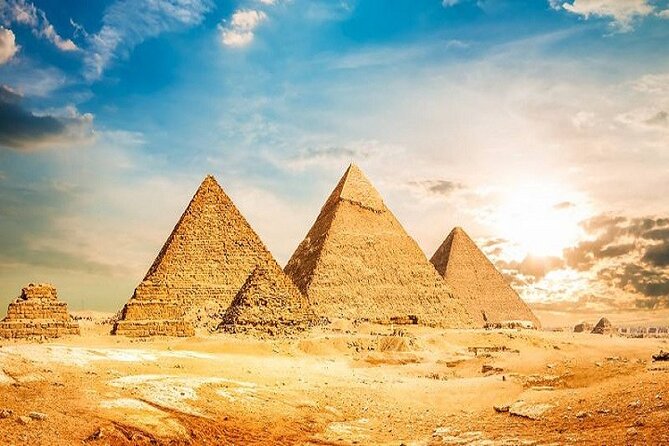
Day two brings together Saqqara and Giza before an evening flight to Aswan. At Saqqara, you see the Step Pyramid of Djoser, built under the direction of Imhotep. It is presented as Egypt’s first stone pyramid, so this stop gives you an earlier stage of pyramid building before the enormous monuments at Giza.
The Giza visit includes the three main pyramids and the Great Sphinx. Plan on two to three hours at both Saqqara and Giza according to the schedule, though the day is longer once road transfers and the airport are added. You will want comfortable shoes, water, and a little patience with the heat and repeated boarding times.
The wording places the Museum of Egyptian Antiquities in the Day Two heading, but the day’s description focuses on Saqqara and Giza. The Egyptian Museum is clearly scheduled for Day Eight, so confirm the exact Day Two plan with the operator.
That evening, you fly from Cairo to Aswan, then transfer to the hotel. This is efficient, but it is also a demanding start. If you prefer slow mornings and long pauses at monuments, this pace may feel tight.
Aswan pairs granite, Isis, and a felucca ride
Day three opens with the old granite quarry and the Unfinished Obelisk. The huge stone gives you a clear sense of how Egyptian builders shaped monumental blocks, and its unfinished state lets you see a project stopped before completion.
Next comes Philae Temple, reached as part of a visit lasting almost four hours. The temple was sacred to Isis, associated here with love, peace, and magical powers. The site offers a different mood from the pyramids, with a temple complex focused on worship rather than royal burial.
You then check into the Nile cruise. A felucca ride adds a short, quieter period on the river, lasting about 45 minutes. From the boat, you can see Elephantine Island, connected with the worship of Satet and Khnum near the Nile’s first cataract.
Breakfast, lunch, and dinner are included on this day. The combination of a private guided visit and a short boat outing gives you variety, though the day still includes about five hours of planned touring. The exact timing can depend on cruise check-in and local operating schedules.
Abu Simbel is the early morning trade-off
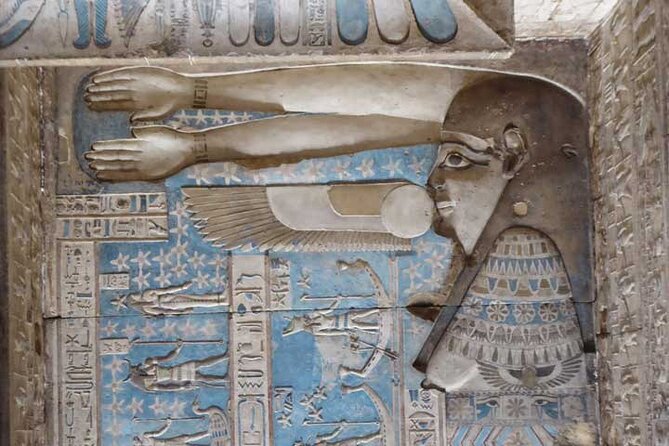
The Abu Simbel excursion on Day Four is the trip’s biggest time commitment. It usually leaves at dawn and takes almost eight hours, but the reward is one of the most dramatic monuments in Egypt: the rock-cut temple of Ramesses II.
You should think of this as a full excursion, not a quick stop. The early departure can be tiring, especially after the Cairo to Aswan flight and the previous day’s sightseeing. Still, for many people, Abu Simbel is worth protecting in the schedule because it is far from the main Nile cruise route and difficult to add casually.
In the afternoon, the program continues to Kom Ombo for about an hour and a half. This temple is unusual because two gods were worshiped there, Sobek and Haroeris, identified in the tour details with the crocodile god and Horus the Elder. The cruise remains your base that night.
Breakfast, lunch, and dinner are included. I would keep this day focused and avoid adding optional activities. Abu Simbel plus Kom Ombo is already a full plate.
A different kind of day out, same part of Egypt:
- From Cairo: Half-Day Tour to Pyramids of Giza and the Sphinx
★ 4.6 · 2,891 reviews - Pyramids of Giza: 1-Hour Quad Bike Desert Safari
★ 4.5 · 930 reviews - VIP Giza Pyramids,Sphinx,ATV bike,CamelRide,Shopping&DinnerCruise
★ 5.0 · 704 reviews - From Hurghada: Pyramids and Egyptian Museum Tour & Boat Ride
★ 4.4 · 381 reviews
Edfu, Karnak, and Luxor Temple fill the cruise route
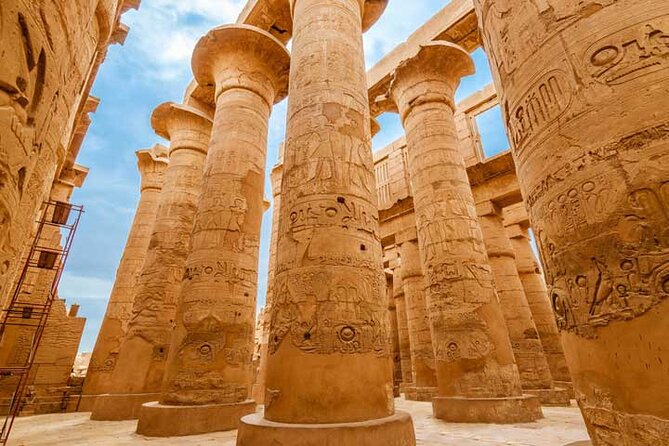
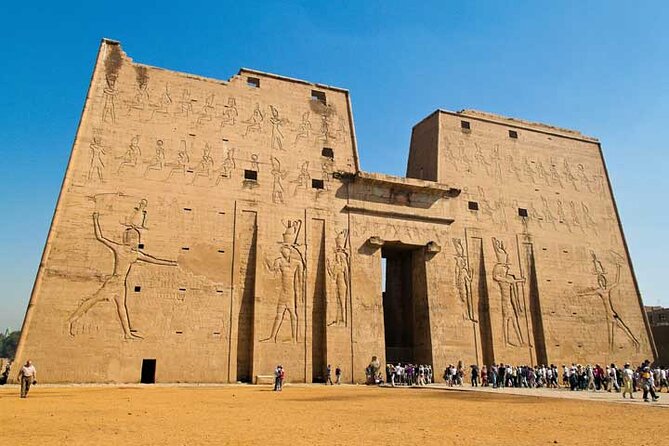
Day Five includes Edfu Temple, Karnak Temple, and Luxor Temple. Edfu is dedicated to Horus, the falcon god, and is described as the best-preserved temple architecturally. The planned visit lasts about two hours, giving you time to look closely at the carved walls and layout.
Karnak is the largest temple complex on the route and was dedicated to Amun and his divine family. Its construction continued over more than two thousand years, which helps explain why the complex feels like many periods joined together. You will need your guide here to sort out the long sequence of rulers, gods, and additions.
Luxor Temple follows, with links to Amenhotep III and Ramesses II. Its entrance includes a 25-meter obelisk, while its matching partner is in France. The tour allows about four hours for the Karnak and Luxor Temple visits together, then returns you to the cruise for the night.
This is a powerful temple day, but it can blur together if you are tired. Take short pauses, drink water, and ask your guide to focus on the details that interest you most instead of trying to memorize every pharaoh.
Dendera and Abydos are the tour’s special pair
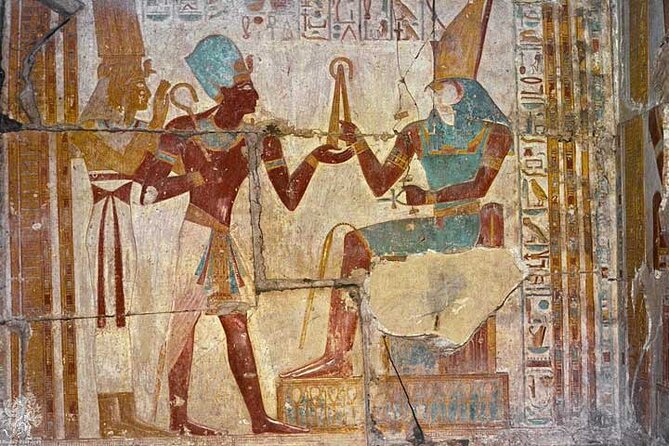
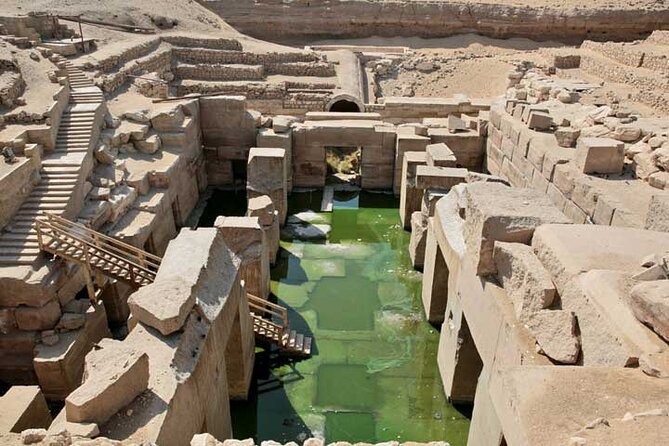
After checking out of the cruise on Day Six, you travel to Dendera and Abydos. The excursion lasts almost nine hours, followed by hotel check-in in Luxor, so this is another long day with substantial road time.
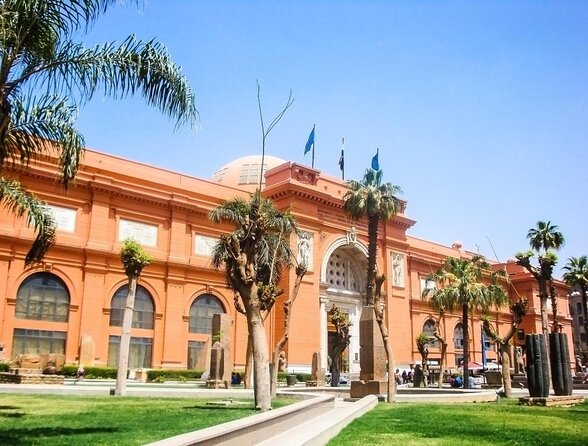
Dendera is dedicated to Hathor, an old Egyptian goddess associated with marriage and music. The temple also reflects the Greco-Roman period, giving you a later chapter of Egyptian sacred architecture than the Old Kingdom pyramids.
Abydos is tied to Osiris and ancient ideas of resurrection. It is also described as Egypt’s oldest cemetery, with early monarchs from the first two pharaonic dynasties buried in the area. That makes the stop important even if you have never heard of it before: it connects temple ritual with the earliest royal burials.
I like this pairing because it gives the trip a clear theme. Dendera shows the continuing life of Egyptian religious traditions, while Abydos turns your attention to burial, death, and renewal. You are not simply collecting famous buildings; you are seeing how different gods shaped different places.
The main caution is fatigue. Nine hours on the road after a cruise can test your patience, particularly if you want long, unhurried time inside each temple. Ask how much time is allocated at each site and how much is spent in transit.
Luxor’s royal tombs require a steady morning
Day Seven is devoted to the west bank of Luxor. You visit the Valley of the Kings, where rulers of the New Kingdom were buried, then the Valley of the Queens, where queens and children who died young were placed.
The tour also includes the Temple of Queen Hatshepsut. Its terraces give it a different shape from the broad, column-filled temple complexes along the Nile. Your guide can help explain why Hatshepsut’s temple matters and how its design differs from the nearby royal burial areas.
The two Colossi of Memnon complete the visit. They are described as the largest statues in Luxor and the remaining pieces of Amenhotep III’s old funerary temple. The full outing lasts about seven hours before an airport transfer and a flight back to Cairo.
You should expect heat, walking, and uneven surfaces at some ancient sites, although the provided information does not give detailed accessibility guidance. The private setup helps here because you can ask your guide to adjust the pace within the fixed day, but the number of sites still makes this a busy schedule.
Cairo’s second look focuses on the Egyptian Museum and Coptic quarter
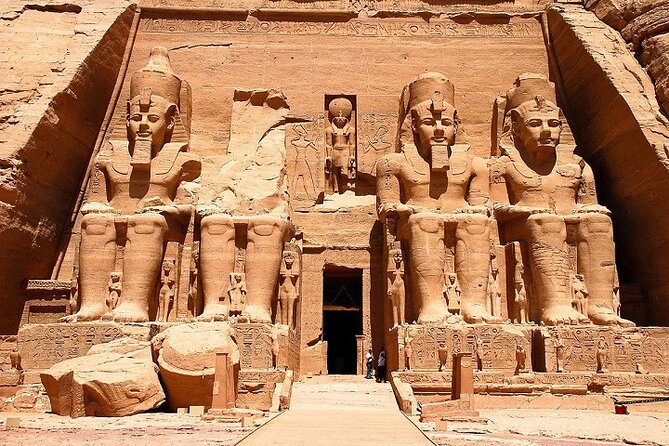
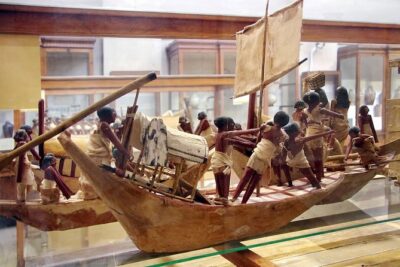
Day Eight returns to Cairo and gives you time at the Egyptian Museum. This is where the tour places the major collection of pharaonic treasures and objects from Egypt’s ancient civilization. The visit lasts almost seven hours when combined with the Coptic neighborhood.
In the Coptic quarter, you see the Church of Saint Sergius, the Hanging Church, and the Ben Ezra Synagogue. The plan connects Saint Sergius with the Holy Family’s journey in Egypt. Together, these sites show that Cairo’s religious story extends far beyond the pharaohs.
The day is listed as about six hours of touring, while the individual description says nearly seven hours. That small difference is worth clarifying if you have an evening flight or another fixed plan. The tour includes breakfast and hotel accommodation, then your final airport transfer comes on Day Nine.
Why the private guide matters here
Egypt is a place where a guide can change the experience. Names such as Mohamed Samora and Mohammed appear in the tour details, and the strongest praise centers on fluent Spanish, detailed explanations, patience, punctuality, and help with practical needs.
The language coverage is not limited to Spanish. The guide is also described as speaking strong English and Portuguese. If your group uses one of those languages, confirm which guide will be assigned and whether that language is guaranteed for every day.
A private guide also lets you ask for context instead of receiving a fixed speech. At Karnak, you might want the political story. At Abydos, you may care more about Osiris and burial beliefs. At Giza, you may simply need help understanding how the pyramids fit into the larger royal system.
The personal attention praised in the supplied comments includes safety awareness, flexibility, and help with requests. Those qualities matter on a nine-day trip with flights, hotel changes, cruise boarding, and early departures. Still, guide assignment can change, so ask for the confirmed name before booking if that is important to you.
Transport is efficient, but the pace is not gentle
The tour uses private, air-conditioned vehicles for transfers and sightseeing. That is a major comfort advantage in Egypt, especially on the long Dendera and Abydos day and during the drive connected with Abu Simbel.
The route also includes domestic flights between Cairo, Aswan, and Luxor. Flights save considerable road time, but they add airport procedures and fixed departure times. Keep your day bag organized and avoid assuming every transfer will feel quick.
The Nile cruise links the central sightseeing days. You board in Aswan, spend nights on board, and leave the cruise in Luxor. The plan includes breakfast, lunch, and dinner on the cruise days, though it does not name the ship or describe its cabin facilities.
The schedule is best for you if you want to see a lot in one visit. It is less suited to someone who wants free afternoons, repeated visits to favorite sites, or time to wander without a guide.
What is included, and what you still pay
Included services are:
- Airport to hotel and hotel to airport transfers
- Private air-conditioned vehicle transfers
- Spanish-speaking guided tours
- Domestic flights
- Entrance fees to the listed places
- Taxes
- Eight breakfasts
- Three lunches
- Three dinners
You pay separately for international flights, the $25 Egyptian visa, tips, drinks, calls, laundry, and other personal costs. The phrase all places mentioned is useful, but you should still ask if any optional tombs, special photography permits, or cruise extras are excluded.
Free cancellation is available up to 24 hours before the experience start time for a full refund. Changes or cancellations inside that window are not accepted for a refund. The operator may also reschedule or refund if poor weather affects the experience or if a minimum number is not met.
The tour is listed as suitable for most people and available only to your own group. It is near public transportation, though the private transfers mean you are not expected to rely on it.
Should you book this Egypt tour?
Book it if you want a tightly organized first visit that covers the major Cairo sights, the Nile cruise route, Abu Simbel, Luxor’s tombs, and the less commonly included temples at Dendera and Abydos. The private vehicle and language support make the $1,980 price easier to justify, especially for a small group that values direct help.
Think twice if you dislike early starts, long touring days, or frequent changes of base. The route is ambitious, and you will spend several days on the move. Before booking, confirm the hotel and cruise standards, exact flight times, guide language, Day Two museum details, and what the listed admission fees cover.
For a history-focused group, Spanish-speaking travelers, or families wanting one point of contact throughout Egypt, this is a strong choice. For a slower trip, you would be better served by cutting sites and adding rest days.
FAQ
How long is the tour?
The tour lasts approximately nine days, from arrival at Cairo airport on Day One to the final airport transfer on Day Nine.
Is airport pickup included?
Yes. Airport-to-hotel and hotel-to-airport transfers are included.
Is this a private tour?
Yes. Only your group participates in the private tour or activity.
Is transportation included?
Yes. The tour includes transfers in private, air-conditioned vehicles, along with domestic flights.
Are entrance fees included?
Yes. Entrance fees to all the places mentioned in the tour plan are included.
Is a Nile cruise part of the tour?
Yes. You check into a cruise in Aswan, spend nights on board, and check out in Luxor.
Which languages do the guides speak?
The tour includes local Spanish-speaking guides. Mohamed Samora is also described as speaking English and Portuguese. Confirm the assigned guide and language before booking.
Is the Egyptian visa included?
No. The entry visa is not included and is listed at $25 per passport.
Which meals are included?
The package includes eight breakfasts, three lunches, and three dinners. Drinks are not included.
Can you cancel for a full refund?
Yes, if you cancel at least 24 hours before the experience start time. Cancellations or changes made less than 24 hours in advance are not accepted for a refund.
Recently reviewed around Giza
- Full Day Trip from Cairo to Luxor★ 5.0 · 16 reviews
- Private half Day Tour to the Great 3 Pyramids of Egypt★ 5.0 · 15 reviews
- Private guide’s trip to Giza pyramids, Great sphinx valley temple★ 5.0 · 37 reviews
- VIP Tour inside Giza Pyramids★ 4.5 · 103 reviews
- Unique Tour to The Grand Egyptian Museum and 12 main galleries★ 4.0 · 38 reviews
- Full-Day Private Tour to Giza Pyramids, Sphinx, Memphis & Saqqara★ 5.0 · 106 reviews
- Elite Boats Tour in Cairo & Giza with Drinks Included★ 4.5 · 15 reviews
- Sakkara, Memphis & Dahshur Tour★ 5.0 · 26 reviews
Giza Tours, compared.
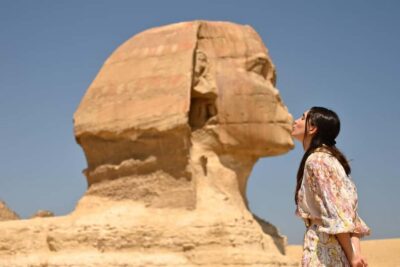
Half-Day Tour to Pyramids of Giza and the Sphinx
Read our review →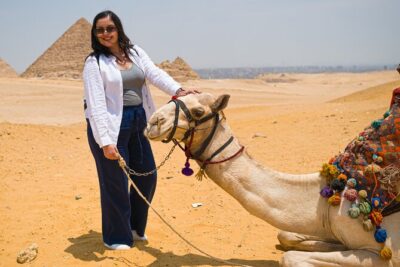
Private guided tour to Giza Pyramids, and Great Sphinx
Read our review →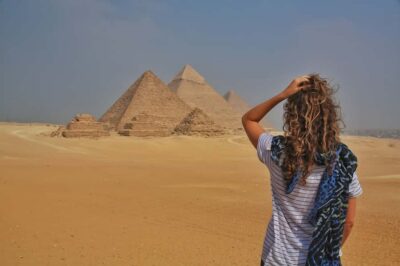
Giza Pyramids and Sphinx: Half-Day Private or Group Tour
Read our review →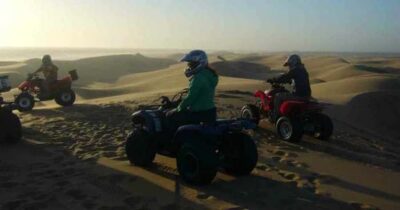
Pyramids of Giza: 1-Hour Quad Bike Desert Safari
Read our review →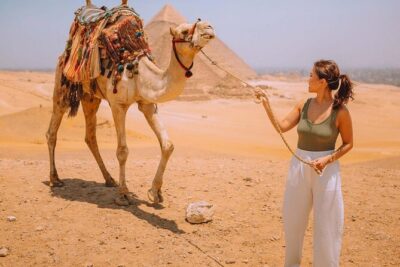
VIP Giza Pyramids,Sphinx,ATV bike,CamelRide,Shopping&DinnerCruise
Read our review →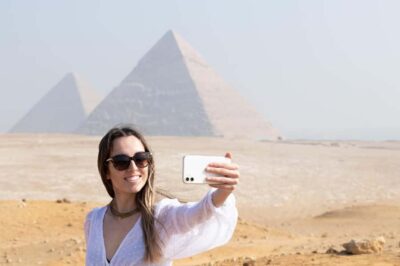
Browse the lists this tour appears in