
Reviewed · MEMPHIS & SAQQARA TOURS
All Saqqara treasures (Pyramids and Tombs) and the underground Serapeum
The most striking part of this Saqqara tour is not simply seeing another pyramid. It is going inside the monuments. You may enter decorated tombs, the Pyramid of Unas, and the underground Serapeum, where huge stone sarcophagi were placed in long subterranean passages.
I like two things right away: the private format gives you room to ask questions, and the Egyptologist guide can connect the bare stone, painted walls, and hieroglyphs to ancient Egyptian beliefs. Guides named Deen, Sam, and Osama Othman have received especially warm praise for clear explanations, good humor, and careful pacing.
The main consideration is the pace. The tour is advertised at roughly two to four hours, yet Saqqara contains a great deal to see. If you want every tomb and monument explained at length, you may need more time than a short morning visit allows. Lunch is also not included.
In This Review
- Key points at a glance
- Why Saqqara feels different from Giza
- The morning pickup from Cairo or Giza
- The Step Pyramid of Djoser and its temple
- Decorated tombs and the details most people miss
- Entering the Pyramid of Unas
- The underground Serapeum and its huge sarcophagi
- How much can you see in two to four hours?
- Is $140 per person a fair price?
- Who should book this Saqqara tour?
- Booking, cancellation, and practical details
- My booking verdict
- FAQ
- Where does the tour start?
- How long does the tour last?
- Is the tour private?
- Is transportation included?
- Is an Egyptologist guide included?
- Does the tour include entrance fees and taxes?
- Is lunch included?
- Can I cancel for a full refund?
Key points at a glance
- Enter ancient burial spaces: The tour includes access to tombs, the Pyramid of Unas, and the underground Serapeum.
- See Egypt’s first pyramid: Saqqara’s Step Pyramid of Djoser is the oldest pyramid in Egypt.
- Travel privately from Cairo or Giza: Pickup and private transportation make this easier than arranging local transport yourself.
- Get more than a photo stop: The guide explains hieroglyphs, tomb decoration, royal burial customs, and the purpose of the monuments.
- Expect a moderate physical outing: Walking through a large archaeological site and underground passages calls for a reasonable level of fitness.
- Pay one listed price: The $140 per-person cost includes transportation, bottled water, admission fees, and taxes, but not lunch.
Why Saqqara feels different from Giza
Giza gives you Egypt’s most famous pyramids. Saqqara gives you a broader look at how Egyptian burial practices developed over thousands of years. This plateau served as one of the main cemeteries for Memphis, the ancient capital, and it gathered royal and high-status burials across many periods.
That range matters. At Saqqara, you are not just looking at one enormous stone monument from a distance. You are moving between pyramids, decorated private tombs, temple remains, and underground chambers. The site helps you see how a royal cemetery worked as a whole.
I especially like Saqqara for visitors who have already seen the main Giza viewpoint and want something more focused. It is still an important archaeological center, but the experience is less about one famous skyline and more about individual places, details, and stories.
The private guide makes a real difference here. A guide such as Deen or Sam can explain what you are looking at before you enter a tomb, then give you time to examine the decoration. Several descriptions of the tour praise guides for knowing when to talk and when to let you quietly look. That is a useful skill in a place where the details can be easy to miss.
Other Giza days travellers weigh against this one:
- From Cairo: Half-Day Tour to Pyramids of Giza and the Sphinx
★ 4.6 · 2,891 reviews - Private guided tour to Giza Pyramids, and Great Sphinx
★ 5.0 · 1,755 reviews - Giza Pyramids and Sphinx: Half-Day Private or Group Tour
★ 4.4 · 1,424 reviews
The morning pickup from Cairo or Giza
The day begins at about 8:30 a.m. with pickup from your Cairo or Giza hotel. You travel in a private, air-conditioned car or van with a driver and your Egyptologist guide.
This arrangement is one of the tour’s strongest practical features. Saqqara is outside the main hotel districts, and organizing a car, entrance tickets, and a guide separately can take time. Here, the transportation is private, so your group does not have to follow the schedule of strangers or wait for several hotel stops.
The air conditioning is not a minor comfort in Egypt. After time in the open desert, returning to a cool vehicle gives you a useful break. Bottled water is included as well.
The tour is private, meaning only your own group participates. That suits families, couples, solo visitors, and small groups with different interests. A solo visitor can ask detailed questions without competing for the guide’s attention. A family can move at a pace that works for children. The private format also gives you a better chance to pause for photographs or request extra explanation.
The timing is worth considering. An early start gives you a practical way to make the most of the cooler part of the day, although the precise amount of time at each site may vary. The stated duration is approximately two to four hours, so ask yourself how much depth you want before booking.
The Step Pyramid of Djoser and its temple
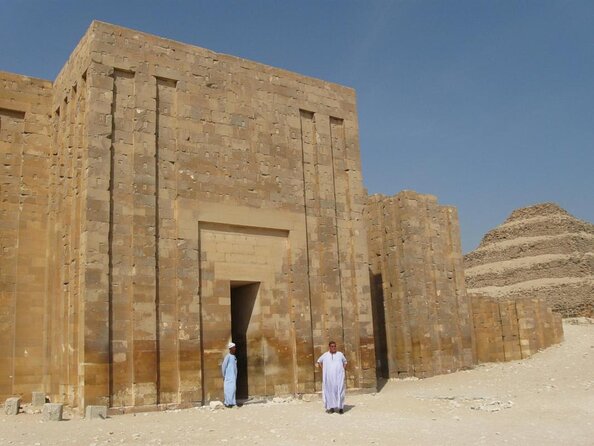
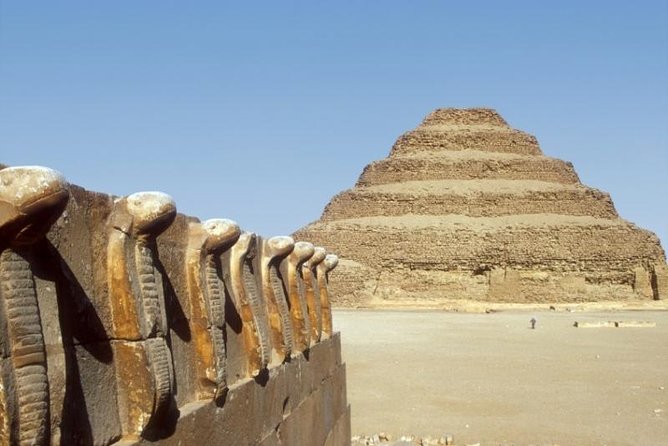
Your main introduction to Saqqara is likely to be the Step Pyramid of King Djoser. It is identified as the oldest pyramid in Egypt, and its unusual shape makes it instantly different from the smooth-sided pyramids at Giza.
Instead of one clean triangular surface, the monument rises in a series of stone levels. The form gives you a useful visual lesson in pyramid development. It shows an early stage in the move from earlier tomb designs toward the classic pyramid shape most people picture when they think of ancient Egypt.
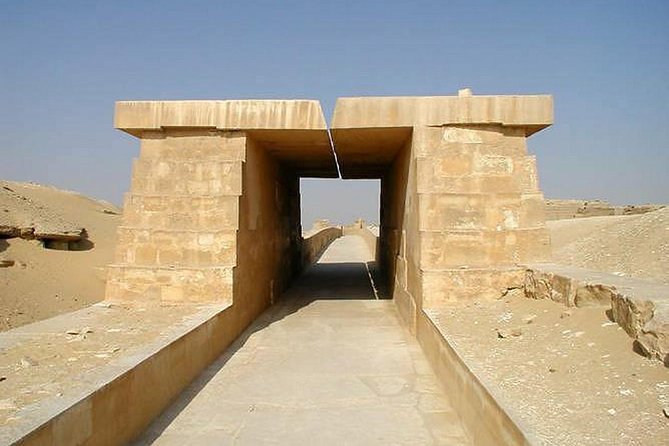
The pyramid is part of a larger complex, including its temple. This is important because the Step Pyramid was not an isolated tomb in the desert. Egyptian royal burial grounds included ceremonial spaces, courtyards, entrances, and temples connected with the king’s afterlife.
Your guide can help turn the site from a collection of weathered stone into a place with a purpose. Look closely at the layout, not only at the pyramid’s height. Ask about how the temple and surrounding areas related to the burial ceremonies and the king’s eternal existence.
You will have open areas to walk through, so comfortable shoes are sensible. The tour requires a moderate level of physical fitness, and the ground can be uneven. The experience is not a demanding hike, but it is not a quick step from a coach to a viewing platform either.
Decorated tombs and the details most people miss
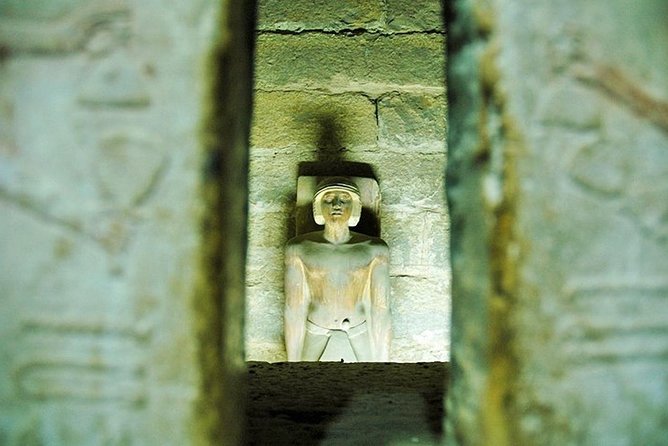
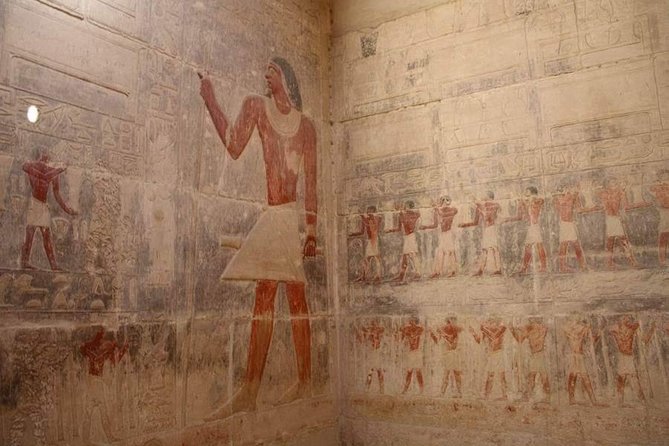
The private tombs are among the best reasons to choose this experience instead of a quick Saqqara stop. Their scale is smaller than the great pyramids, but their walls can offer more detail. Painted scenes and hieroglyphs show the people, work, food, animals, rituals, and offerings connected with life and death in ancient Egypt.
This is where a strong guide earns the fee. Sam, also identified as Osama, is praised for explaining the meaning of hieroglyphs and for bringing the site to life with historical context. Deen is also praised for fluent English, humor, and a calm approach that leaves space for silent looking.
I would ask your guide to point out details before you walk through the tomb. In low or changing light, it is easy to see color without understanding what the scenes mean. A short explanation can help you notice how the images were arranged and why offerings mattered.
These tombs also give you a more personal view of ancient Egypt. A pyramid represents a king and a national project. A decorated tomb can show the concerns and status of an individual official or family. The combination helps you understand the society behind the monuments.
Do not expect every chamber to feel spacious. Some passages and rooms may require bending, careful footing, or a steady pace. The experience is best for people who are comfortable walking and entering enclosed archaeological spaces.
A different kind of day out, same part of Egypt:
- Pyramids of Giza: 1-Hour Quad Bike Desert Safari
★ 4.5 · 930 reviews - VIP Giza Pyramids,Sphinx,ATV bike,CamelRide,Shopping&DinnerCruise
★ 5.0 · 704 reviews - From Hurghada: Pyramids and Egyptian Museum Tour & Boat Ride
★ 4.4 · 381 reviews - Egyptian Museum in Cairo: Private Guided Tour
★ 5.0 · 316 reviews
Entering the Pyramid of Unas
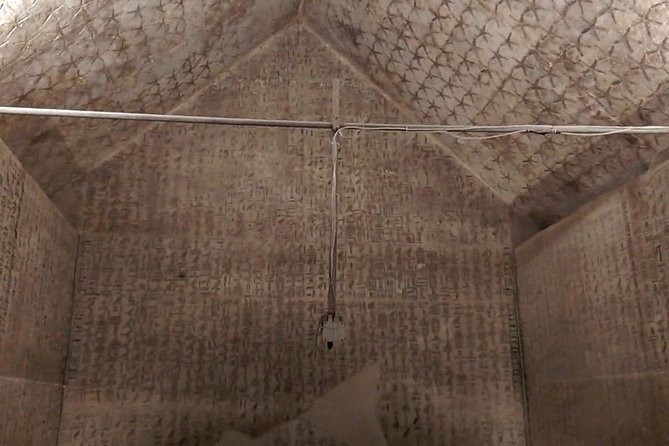
The Pyramid of Unas adds another important layer to the visit. Unas was an Old Kingdom king, and the pyramid is particularly associated with its internal inscriptions, known as the Pyramid Texts.
The tour specifically includes entry into the Pyramid of Unas. That changes the experience from viewing an exterior monument to moving through an ancient burial structure. Inside, the focus is on the route, the chambers, and the inscriptions rather than on a grand open room.
Your guide can explain why the texts were placed inside royal pyramids and how they relate to the king’s journey after death. This is a good moment to slow down. Read the marks as part of a religious program, not simply as decoration.
You should also be ready for a more confined setting. A pyramid interior is not suited to everyone, especially anyone uncomfortable in narrow underground areas. The moderate fitness requirement applies here as well. Still, for many people, stepping into the pyramid is one of the tour’s most memorable moments because you are close to the original burial architecture rather than viewing it from outside.
The underground Serapeum and its huge sarcophagi
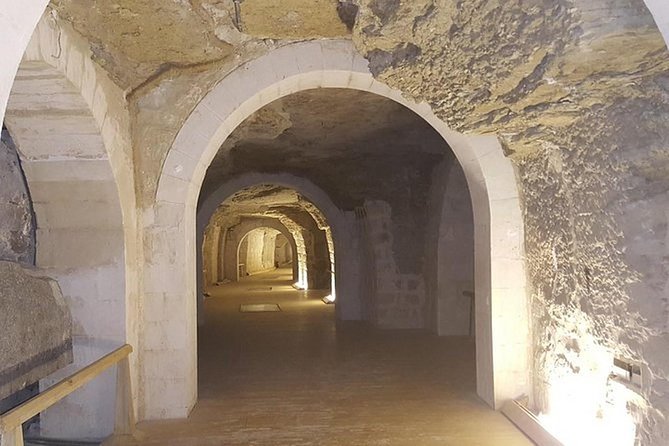
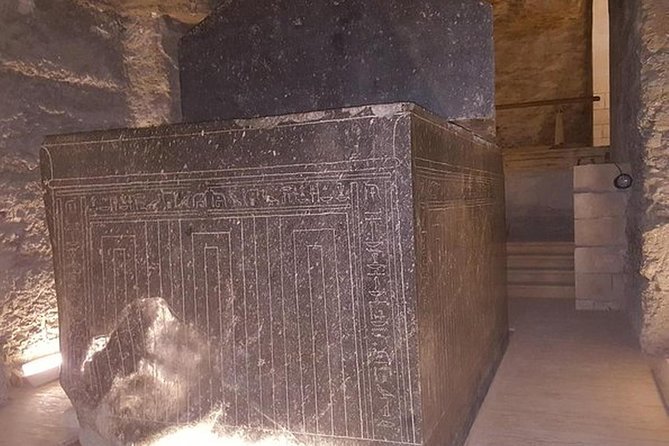
The Serapeum is the tour’s most unusual stop. It is an underground complex with tunnels and burial chambers associated with sacred bulls. The site is known for its large stone sarcophagi, and entering the passages gives the visit a different mood from the open pyramid grounds.
You move from sunlit desert to a darker enclosed world of corridors and chambers. The contrast is part of the appeal. The Serapeum is not just another pyramid interior. Its underground design, heavy stone containers, and long passageways create a strong sense of scale and mystery without needing theatrical presentation.
The underground sarcophagi are repeatedly singled out as a highlight of the experience. They help show the resources and effort devoted to religious burial practices. Your guide can explain what the Serapeum was used for and how it fits into Saqqara’s long history as a cemetery.
The practical warning is simple: watch your footing and take the underground sections at a comfortable pace. If you prefer wide open spaces, this may be the least comfortable part of the visit. If you enjoy unusual archaeological sites, it may be the most rewarding.
How much can you see in two to four hours?
The title promises all Saqqara treasures, and the itinerary covers a large number of major features. In practice, a two to four-hour visit is best understood as a concentrated introduction rather than an exhaustive study of every corner of the plateau.
You can expect the Step Pyramid, its temple, decorated tombs, the Pyramid of Unas, and the Serapeum to form the core of the experience. The actual order and time at each place may depend on opening conditions, walking speed, and the interests of your group.
I recommend deciding in advance what matters most to you. If your priority is entering tombs and underground chambers, tell the guide early. If you care most about Djoser’s architecture, ask for extra time at the Step Pyramid complex. A private tour gives you some flexibility, but the total visit still has limits.
Some guides may offer additional stops at a jewelry or papyrus shop. One visitor accepted these and added a couple of hours to the half-day outing. These stops are not part of the core archaeological experience, so treat them as optional. If you would rather spend every available minute among the monuments, say so clearly.
Is $140 per person a fair price?
At $140 per person, this is not the cheapest way to see Saqqara. The value depends on how much you want to handle yourself and how important private guiding is to you.
The price includes private transportation, an air-conditioned vehicle, bottled water, all fees, and taxes. You do not have to arrange a separate driver, negotiate local transport, or calculate extra admission charges during the visit. Those conveniences matter in Cairo, where a smooth transfer can save both time and energy.
You are also paying for an Egyptologist guide rather than simply being dropped at the entrance. The strongest part of the experience is the interpretation of tomb scenes, hieroglyphs, pyramids, and the Serapeum. If you are curious about what you are seeing, that context gives the visit much more value.
The calculation changes for a larger group. Because the tour is private, group discounts may be available, and the cost can make more sense when shared among several people. A family with children may also value the private vehicle and the ability to adjust the pace.
Lunch is not included, so plan for that separately. The information provided does not specify a meal stop, and the tour’s stated duration suggests that food is outside the main program.
Who should book this Saqqara tour?
I would choose this tour if you want Saqqara to be more than a quick photograph from a distance. It suits anyone interested in tomb decoration, royal burial practices, inscriptions, and the engineering behind early pyramids.
It is also a strong choice for a first visit to Egypt if you want a guide to explain the basics without joining a large group. Families can benefit from the private setup, and the positive comments about Sam and Deen suggest that both clear teaching and a relaxed manner are available when those guides are assigned.
Solo visitors may appreciate the balance of attention and personal space. One account specifically praised Deen for recognizing when a solo visitor wanted to look quietly rather than listen continuously. That kind of pacing can make a long archaeological visit feel less tiring.
I would be more cautious if you want a slow, specialist-level examination of every monument. The duration is limited, and Saqqara is large. You may need to arrange a longer visit or accept that this tour gives you a strong selection rather than every possible site.
Booking, cancellation, and practical details
Confirmation is sent within 48 hours of booking, subject to availability. The tour is often reserved well in advance, with an average booking lead time of about 60 days, so leaving this until the last minute may not be wise.
Free cancellation is available if you cancel at least 24 hours before the 8:30 a.m. start time. Cancellations or changes made less than 24 hours before the start are not accepted for a refund. The cut-off follows local time.
Wear shoes suitable for walking and be ready for both exposed outdoor areas and enclosed underground sections. Since the tour calls for moderate fitness, it is sensible to tell the operator about any mobility concerns before confirming.
My booking verdict
I would book this tour for a first or second Cairo visit when I wanted the most meaningful half-day look at Saqqara, especially the tombs, Unas Pyramid, and Serapeum. The private car, included fees, and Egyptologist guide remove several common hassles.
The strongest reason to choose it is the access and explanation. You are not limited to seeing the Step Pyramid from outside, and guides such as Deen, Sam, and Osama Othman have shown the warmth, language skills, and subject knowledge needed for this kind of site.
I would skip it only if you want a very slow full-day archaeological study, or if you dislike narrow underground spaces. For everyone else, the combination of major monuments, decorated tombs, and the Serapeum gives Saqqara real depth at a fair price for a private experience.
FAQ
Where does the tour start?
Pickup is offered from hotels in Cairo and Giza. The stated start time is 8:30 a.m.
How long does the tour last?
The estimated duration is approximately two to four hours.
Is the tour private?
Yes. Only your own group participates in the activity.
Is transportation included?
Yes. The tour includes private transportation in an air-conditioned car or van.
Is an Egyptologist guide included?
Yes. The tour is led by a private Egyptologist guide. Guides named in the available information include Deen, Sam, and Osama Othman.
Does the tour include entrance fees and taxes?
Yes. All fees and taxes are included in the listed price.
Is lunch included?
No. Lunch is not included.
Can I cancel for a full refund?
Yes, if you cancel at least 24 hours before the experience start time. Cancellations or changes made less than 24 hours in advance are not accepted for a refund.
Recently reviewed around Giza
- Full Day Trip from Cairo to Luxor★ 5.0 · 16 reviews
- Private half Day Tour to the Great 3 Pyramids of Egypt★ 5.0 · 15 reviews
- Private guide’s trip to Giza pyramids, Great sphinx valley temple★ 5.0 · 37 reviews
- VIP Tour inside Giza Pyramids★ 4.5 · 103 reviews
- Unique Tour to The Grand Egyptian Museum and 12 main galleries★ 4.0 · 38 reviews
- Full-Day Private Tour to Giza Pyramids, Sphinx, Memphis & Saqqara★ 5.0 · 106 reviews
- Elite Boats Tour in Cairo & Giza with Drinks Included★ 4.5 · 15 reviews
- Sakkara, Memphis & Dahshur Tour★ 5.0 · 26 reviews
Memphis & Saqqara Tours, compared.
VIP All inclusive Best of the best Giza Pyramids,Sakkara,Memphis
Read our review →
Pyramids of Giza, Sphinx, Saqqara & Memphis Tour
Read our review →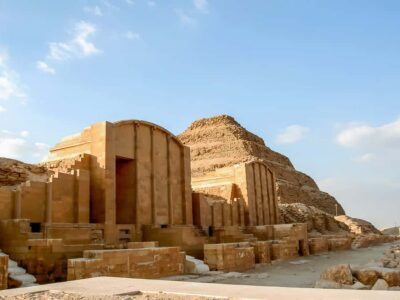
Private Day Tour Giza Pyramids, Sphinx, Memphis, and Saqqara
Read our review →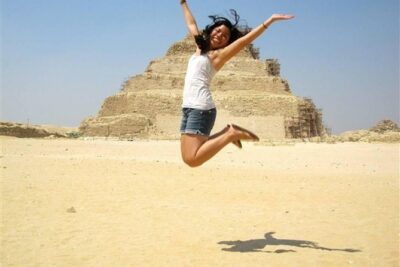
Private tour: GIza Pyramids, Memphis City & Sakkara Pyramid
Read our review →
Sakkara, Memphis & Dahshur (Pyramid & Felucca Options)
Read our review →
Private Full-Day Tour to Giza Pyramids,Sphinx,Memphis, and Saqqara
Read our review →
All-inclusive Private Trip Giza Pyramids Sphinx Saqqara, Dahshur
Read our review →Browse the lists this tour appears in