Reviewed · HURGHADA TOURS
From Hurghada: Abydos, Osireion, and Dendera Day Tour
Abydos and Dendera give you two very different views of ancient Egypt. Abydos centers on Osiris, death, and the afterlife, while Dendera feels brighter and more complete, with Hathor, music, joy, astronomy, and Roman-era decoration filling its well-preserved rooms. The contrast is the main reason to make this long trip.
I like the access to places many visitors based in Hurghada never reach, especially Seti I’s finely carved temple and Dendera’s famous ceiling. I also like the private format, which lets your guide adjust the pace and explain details instead of rushing you through with a large group. Guides including Omran, Aziz, and Walid have been praised for clear explanations and personal care.
The drawback is hard to avoid: this is a punishing day of driving, with the advertised road time reaching four to five hours each way. The Osireion is also not entered on this tour, according to the practical details provided, so you view it from above rather than walking through its famous underground structure.
In This Review
- Key points at a glance
- Why this Hurghada day trip is worth the road
- The road from Hurghada to Upper Egypt
- Abydos and the cult of Osiris
- Seeing the Osireion from the upper level
- Dendera Temple and the world of Hathor
- The famous Dendera ceiling
- Guides, vehicles, and the private format
- Who should book this tour?
- Is Abydos, Osireion, and Dendera worth $199?
- Should you book it?
- FAQ
- How much does the Abydos, Osireion, and Dendera tour cost?
- How long is the tour?
- Is hotel pickup included?
- Which archaeological sites are visited?
- Can you enter the Osireion?
- Is lunch included?
- Which languages are available?
- What should you bring?
- Is the tour suitable for wheelchair users?
- Can you cancel for a refund?
Key points at a glance
- Seti I’s temple at Abydos: See some of the finest relief work from Egypt’s New Kingdom.
- The Osireion from above: Learn about the watery monument dedicated to Osiris, but do not expect an interior visit.
- Dendera’s Hathor temple: Explore one of Egypt’s best-preserved temples, built and decorated in the Greco-Roman period.
- A striking ceiling: Look up at Dendera’s decorated roof, one of the visit’s clear highlights.
- Private guiding: Guides such as Omran, Aziz, and Walid provide the historical context that makes the carvings easier to understand.
- A long but inclusive day: Hotel transport, entry tickets, lunch, bottled water, and an Egyptologist guide are included for $199 per person.
Why this Hurghada day trip is worth the road
From Hurghada, the usual ancient-Egypt choices are closer coastal excursions or the long run to Luxor. Abydos and Dendera offer something different. They take you away from the best-known tourist circuit and into temples tied to religious ideas that shaped Egyptian life for thousands of years.
You are not just looking at columns and worn stone. At Abydos, your guide can explain why the site was linked with Osiris, the god of the dead and ruler of the underworld. At Dendera, the focus shifts to Hathor, a goddess connected with love, happiness, music, and joy. Those themes give the two sites a useful balance.
The $199 price includes the major costs that can quickly add up on a private Egyptian day trip: hotel pickup and return, admission to all listed sites, lunch, bottled water, guide services, and taxes. It is not a cheap outing, but the distance is substantial and the private vehicle and guide make the price easier to justify if these temples are high on your list.
I would not choose this trip simply to collect two more names on a sightseeing list. Choose it because you want the temples themselves, especially Dendera, and because you accept that much of the day will pass through a vehicle.
Other Hurghada days travellers weigh against this one:
- From Hurghada: Cairo and Giza Highlights Full-Day Tour
★ 4.5 · 6,014 reviews - Hurghada: Luxury Cruise Trip to Orange Bay with Lunch
★ 4.9 · 5,451 reviews - Hurghada: Orange Bay Island Boat Trip w/ Breakfast and Lunch
★ 4.9 · 5,345 reviews
The road from Hurghada to Upper Egypt
The day begins with an early hotel pickup in Hurghada. The drive is long, and the stated estimate is about four to five hours each way. That can mean an overall day of roughly 12 to 16 hours, depending on the route, stops, road conditions, and time spent at the temples.
One useful practical detail comes from the transport experience: the vehicle has been described as comfortable and air-conditioned, and one outing took about 12 hours rather than the full 16 hours suggested by the program. You should still plan for the longer version. It is better to return earlier than expected than to build your day around a short schedule and find yourself exhausted.
The road itself adds a side benefit. You pass through towns and inland parts of Egypt that feel very different from the Red Sea resort area. Do not expect a scenic sightseeing drive with planned photo stops. The value is simply seeing more of the country between the coast and the temples.
Bring water, sunglasses, and comfortable clothing. Bottled water is supplied, but you will still want practical clothes for a hot day, uneven ground, and repeated movement between open courtyards and enclosed temple rooms. Large bags and luggage are not allowed, so pack lightly.
Your passport or valid ID is important. It may be checked at police or military checkpoints, even though you are taking a day tour within Egypt.
Abydos and the cult of Osiris
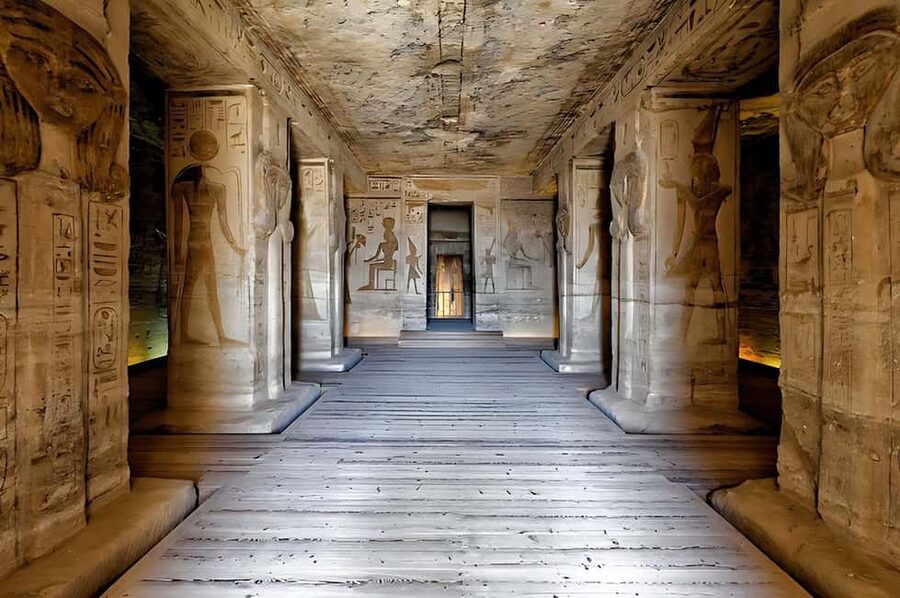
Abydos was one of ancient Egypt’s most sacred religious centers. The site is strongly tied to Osiris, the god associated with death, resurrection, and the underworld. That connection gives the visit a darker, more ritual feel than the joyful imagery at Dendera.
The main stop is the Temple of Seti I. Its reliefs are a major reason to come. Fine carving survives across the walls, with royal figures, gods, and religious scenes cut into the stone with remarkable care. Your guide’s explanation matters here because the temple can otherwise become a blur of similar-looking figures.
Seti I was a powerful New Kingdom ruler, and his temple presents kingship as part of a sacred order. You will hear about the rulers linked to the site, along with pharaohs whose reputations did not survive as well. That mix of famous and forgotten names is useful. Egyptian history was not created only by the rulers who appear in modern guidebooks.
Look closely at the reliefs rather than trying to rush through every chamber. The value is in the quality of the carving and in understanding how the temple connected the king, the gods, and the afterlife. The guide can point out details that are easy to miss when you are taking in the size of the building.
Abydos may not impress you in the same instant way as Dendera. One visitor found the road challenging and considered Dendera the stronger temple. That is fair. Abydos is more dependent on interpretation, and the long drive can make it feel like a demanding stop. If you care about Egyptian religion and fine New Kingdom art, it earns its place. If you want the most photogenic and complete temple, Dendera will probably be your favorite.
Seeing the Osireion from the upper level
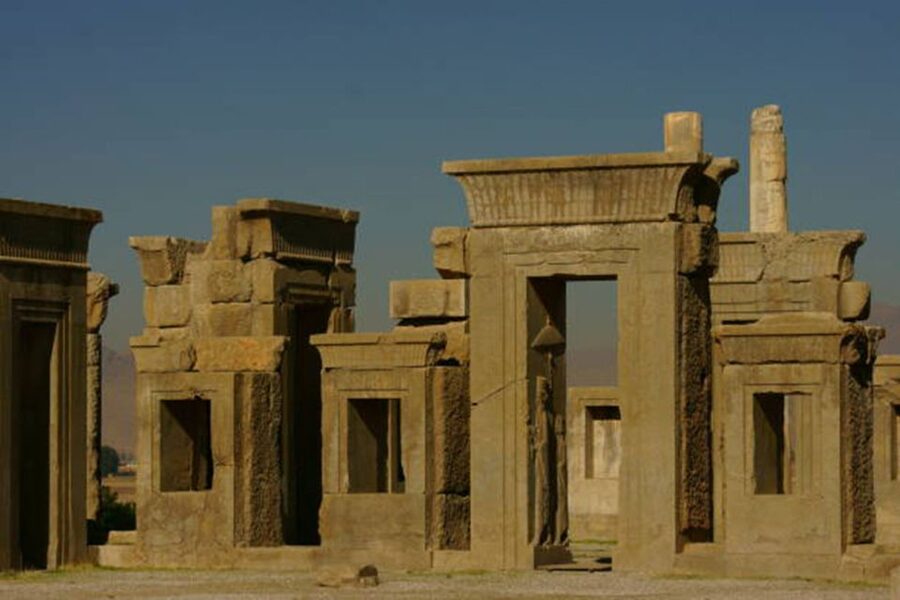
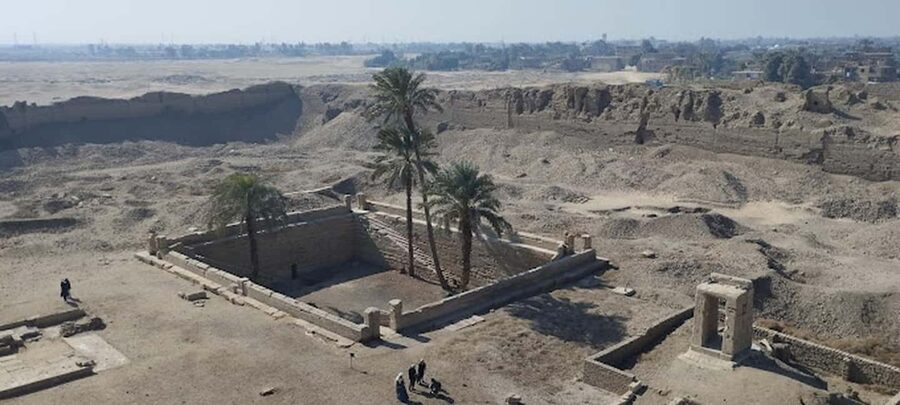
Behind the Temple of Seti I is the Osireion, a structure built in honor of Osiris. It sits at a lower level, around 18 meters down, and is associated with ancient underground water springs. That watery setting is part of what makes the monument unusual.
The design and location have encouraged much discussion about its purpose and age. Your guide will connect it to the Osiris cult and the idea of the underworld. For a visitor, the key point is that this was not simply another decorated temple room. Water, depth, darkness, and the god of the dead all support a different kind of religious setting.
Set your expectations correctly. The tour does not include entry into the Osireion. You see it from above. That is still worthwhile, especially with an explanation of the structure and its place behind Seti I’s temple, but it is not an underground exploration.
This is one reason to ask your guide to spend a few minutes explaining what you can see from the viewing area. The monument may look less dramatic from above than it does in photographs or archaeological drawings. Its importance comes from the setting and the religious idea behind it, not only from a quick visual impression.
A different kind of day out, same part of Egypt:
- Hurghada: Royal Seascope Submarine Cruise with Snorkel Stop
★ 4.4 · 4,637 reviews - Hurghada: 3 Islands, Dolphins & Snorkel Yacht Trip w/ Lunch
★ 4.7 · 4,609 reviews - Hurghada or Makadi: Discover the Magic of Dolphin House
★ 4.8 · 4,198 reviews - Sindbad Submarines – Hurghada (Egypt) – 2 Hours
★ 5.0 · 3,985 reviews
Dendera Temple and the world of Hathor
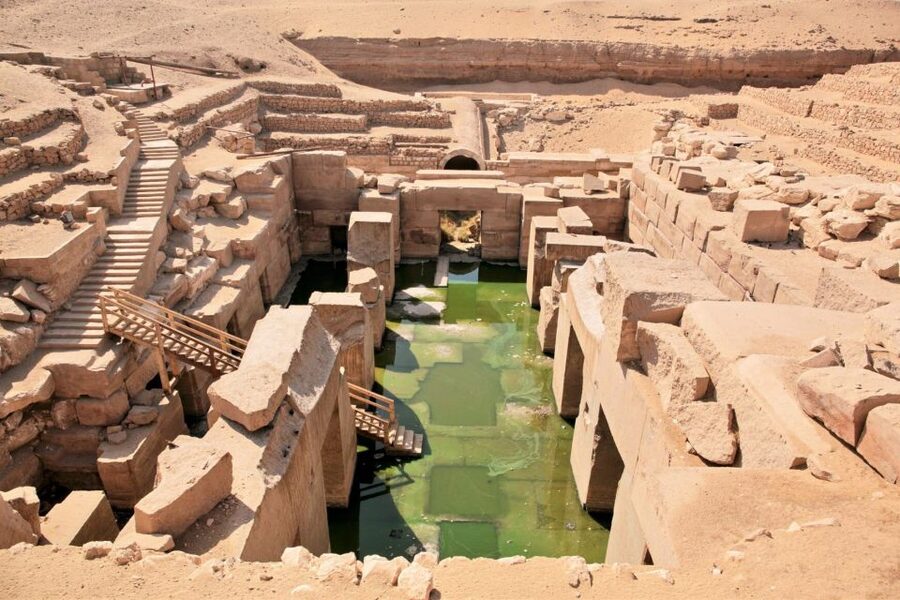
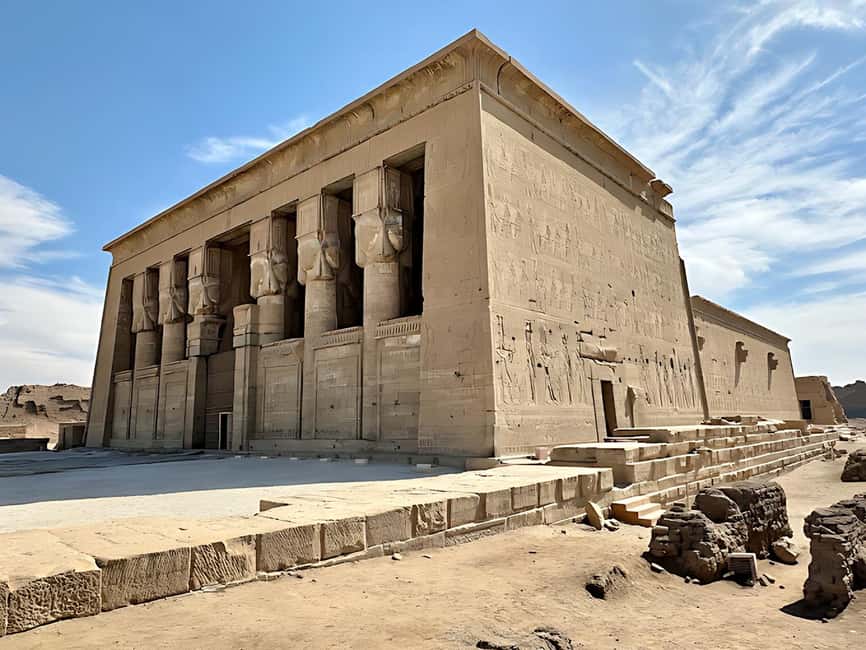
Dendera is the emotional high point of the day for many people. It is one of Egypt’s best-preserved temple complexes, and its condition helps you read the walls, columns, and reliefs without having to reconstruct everything in your imagination.
The temple is dedicated to Hathor, a goddess linked with love, joy, happiness, and music. That subject gives Dendera a warmer tone than Abydos. The decoration includes Egyptian gods alongside Roman rulers, reflecting the temple’s long life and its final major building phase in the Greco-Roman period.
Dendera is often described as the last temple built in ancient Egypt. More precisely, much of the surviving complex belongs to the later Greco-Roman era, when Egyptian religious traditions continued under foreign rulers. That blend is visible in the artwork. Egyptian gods appear beside rulers from a very different political world.
This is where an Egyptologist guide earns the fee. A good guide can explain why Roman emperors appear in Egyptian poses, how Hathor’s symbols recur across the temple, and what the scenes mean rather than leaving you with a collection of attractive photographs.
The temple’s preservation also rewards slow looking. Notice the repeated faces, headdresses, musical references, and formal scenes of offering. You do not need specialist training to enjoy it, but you will get more from the visit if you give yourself time to compare one wall with another.
The famous Dendera ceiling
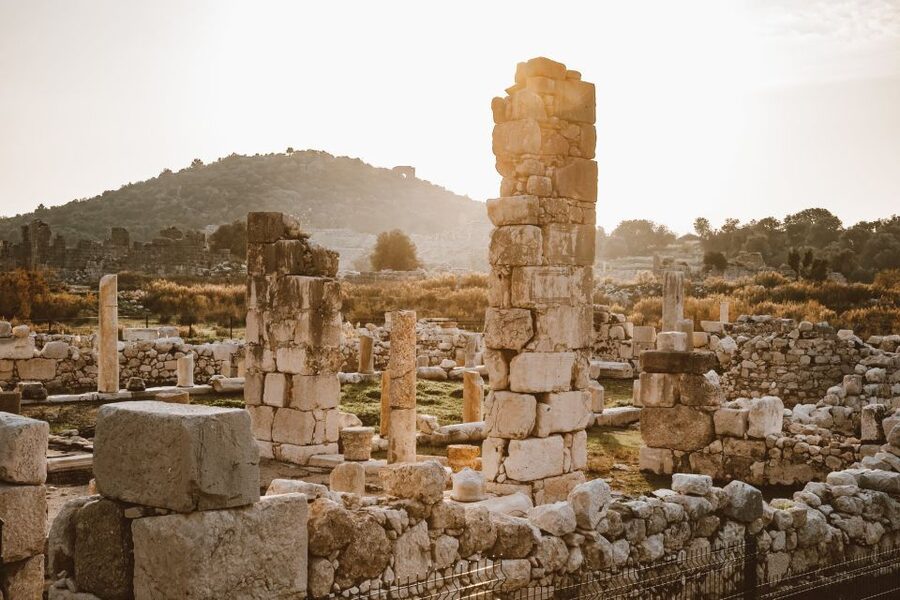
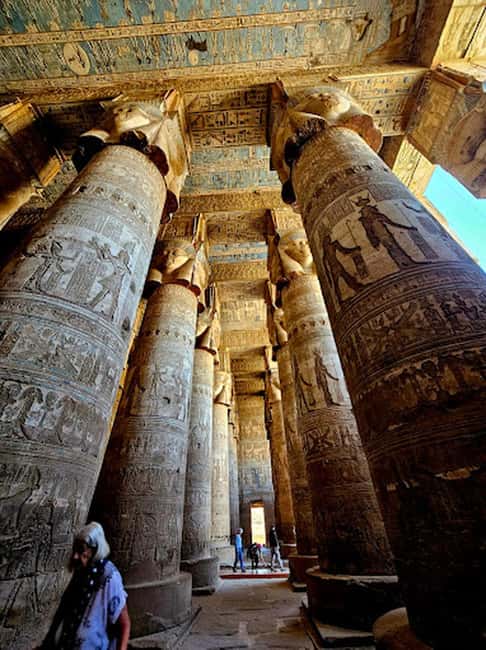
The ceiling is one of the tour’s strongest reasons to make the journey. Look up, and you will find an intricate display that brings together religious figures and astronomical ideas. It is easy to focus on the walls and miss it, so make a point of asking when and where to look.
The ceiling is also a reminder that Egyptian temples were not plain stone halls. Color and design once covered much more of these buildings than survives today. At Dendera, the remaining decoration gives you a better sense of how carefully every surface was planned.
The temple includes imagery linked with the sky, gods, and the order of the universe. Your guide can help you read the ceiling as more than a beautiful pattern. This is one of those moments when a short explanation turns a photograph into a meaningful part of the visit.
You may also see the sculpture of Cleopatra VII. Her presence adds a memorable historical link between the old pharaonic tradition and the late period of Egyptian rule. Cleopatra is not simply presented as the modern political figure familiar from films. Here, she appears within the visual language of an Egyptian temple.
Guides, vehicles, and the private format
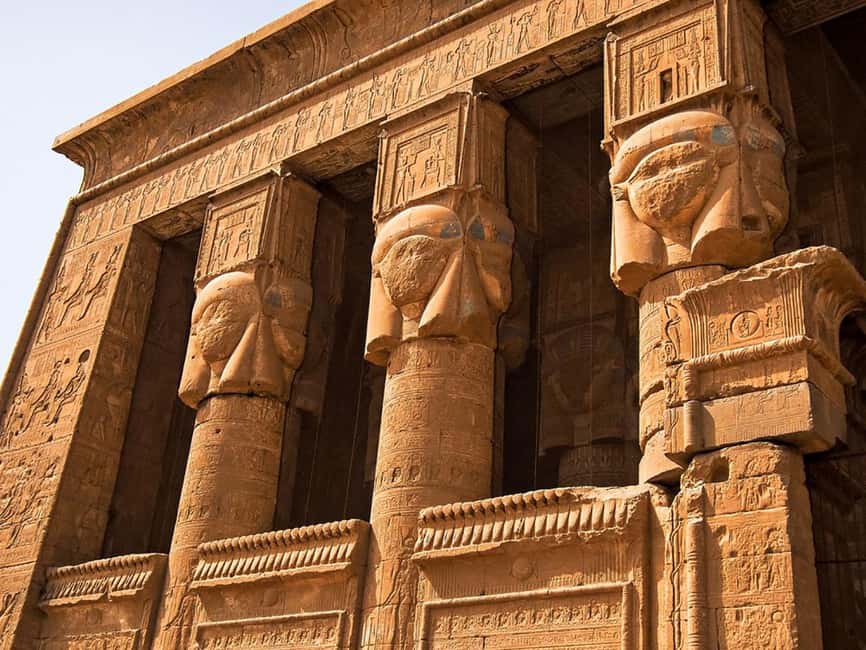
The guide can make or break a temple day, particularly when the sites are far apart and the schedule is tight. Omran has been praised for his command of the subject, his passion, and his attention to comfort. Aziz is also singled out for bringing the history to life, while Walid is described as friendly and generous with information.
Those names may not be the people assigned to your departure, since guide availability can change. The important point is to expect a local Egyptologist guide who accompanies you at Abydos, the Osireion, and Dendera. Languages offered include English, German, French, Italian, Spanish, and Arabic.
The private arrangement is especially useful for solo visitors and couples. You can ask for clarification, pause at a carving, or move on when you have had enough. A solo woman has also found the combination of guide and driver reassuring throughout the day, which is worth considering if you are cautious about taking a remote, lengthy road trip alone.
Transport is air-conditioned, and the driver is responsible for a lot of road time. Lunch at a local restaurant is included and is described as typical Egyptian food. Bottled water is also included during transfers and sightseeing.
Pickup and return apply within Hurghada city limits. Hotels in Makadi Bay, Sahl Hasheesh, El Gouna, Safaga, and Soma Bay require an additional charge of 10 euros per person. Check this before booking so the final cost is clear.
Who should book this tour?
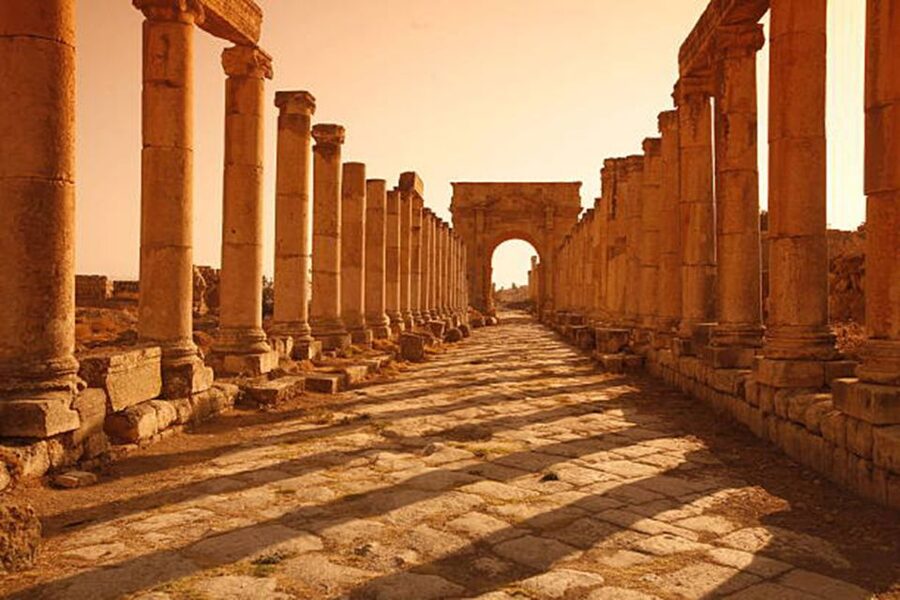
I would recommend it to you if you have already seen some of Egypt’s major sites and want a less usual temple day. It is also a strong choice if Dendera is a personal priority and you are staying in Hurghada rather than Luxor.
You should be comfortable with a very early start, long sitting periods, heat, and walking over archaeological ground. The experience is not suitable for pregnant women, young children, wheelchair users, people with mobility impairments, or those with serious heart or other health conditions.
The physical challenge is not just the walking. The repeated hours in a vehicle can be tiring, and the road may be rough in places. Bring only a small day bag, wear sensible shoes, and keep your expectations realistic.
The tour can require a minimum number of participants. If it is canceled for that reason, you are offered another date or a full refund. You can also cancel up to 24 hours before departure for a full refund, and the reserve-now, pay-later option helps keep plans flexible.
Is Abydos, Osireion, and Dendera worth $199?
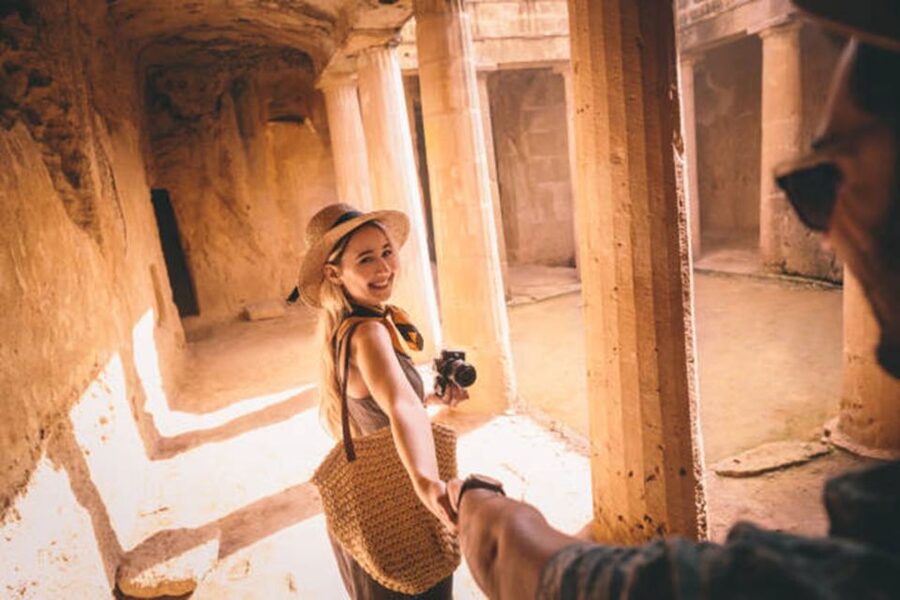
For $199 per person, the value depends on what you would otherwise spend to reach these sites. The fee covers private hotel transport from Hurghada, all listed entry tickets, lunch, water, guide services, and taxes. Since the temples are several hours from the coast, arranging the same day independently would still involve transport, admissions, food, and the challenge of finding a guide.
The price is easier to defend for a solo visitor or a small private party because you are not paying only for a ticket. You are paying to make a difficult route practical and to have someone explain what you are seeing.
The value is weaker if you dislike long road days or if you mainly want a relaxed holiday from the beach. In that case, the time in the vehicle may outweigh the temples. Dendera is the safer reason to book, while Abydos adds the religious depth and the best New Kingdom reliefs.
Should you book it?
Book this day trip if you want serious temple sightseeing, appreciate expert explanation, and are willing to trade a long day on the road for access to Abydos and Dendera. The best moments are likely to be Seti I’s detailed reliefs, the unusual Osireion setting, Dendera’s Hathor decoration, and the ceiling overhead.
Skip it if you need a gentle schedule, have mobility or health concerns, are traveling with very young children, or already know that four to five hours each way will make the day miserable. If you do book, confirm your pickup area, bring ID, pack light, and ask your guide to explain the ceiling and Osireion carefully. Those are the parts easiest to miss without help.
FAQ
How much does the Abydos, Osireion, and Dendera tour cost?
The price is $199 per person. Hotel transport within Hurghada, entrance fees, lunch, bottled water, an Egyptologist guide, service charges, and taxes are included.
How long is the tour?
It is a very long day trip. The stated driving time is approximately four to five hours each way, and the overall day may last about 12 to 16 hours depending on the schedule and road conditions.
Is hotel pickup included?
Pickup and drop-off are included for hotels within Hurghada city limits. Hotels in Makadi Bay, Sahl Hasheesh, El Gouna, Safaga, and Soma Bay require an extra charge of 10 euros per person.
Which archaeological sites are visited?
The tour visits the Temple of Seti I at Abydos, the Osireion, and the Dendera Temple Complex.
Can you enter the Osireion?
The practical tour information states that the Osireion is viewed from above rather than entered. Your guide explains its connection with Osiris and its underground water setting.
Is lunch included?
Yes. Lunch at a local restaurant is included, and it is typically Egyptian food. Bottled water is also supplied during the tour and transfers.
Which languages are available?
Guiding is available in English, German, French, Italian, Spanish, and Arabic.
What should you bring?
Bring your passport or valid ID, sunglasses, comfortable clothes, and cash. Large bags and luggage are not allowed.
Is the tour suitable for wheelchair users?
No. It is not suitable for wheelchair users or people with mobility impairments. It is also not suitable for pregnant women, people with heart problems, or those with serious health conditions.
Can you cancel for a refund?
You can cancel up to 24 hours in advance for a full refund. If the tour is canceled because too few participants book, you are offered another date or a full refund.
Recently reviewed around Hurghada
- 2 Hours Catamaran and Semi Submarine with Snorkeling in Hurghada★ 5.0 · 39 reviews
- Hurghada Private Guided City Tour with Shopping★ 4.5 · 64 reviews
- From Hurghada: 5 Days 4 Nights Nile Cruise Luxor-Aswan With Tours★ 5.0 · 30 reviews
- Cleopatra Massage Sauna, Jacuzzi, Steam bath w/transfer-Hurghada★ 4.0 · 16 reviews
- Cairo pyramids tour from Hurghada and Nile boat without Stopping★ 4.5 · 42 reviews
- Full-Day Pyramids of Giza Tour from Hurghada★ 4.0 · 16 reviews
- Cleopatra’s Royal Spa Retreat – VIP Massage, Sauna & Jacuzzi Exp★ 5.0 · 18 reviews
- Private Giza Pyramids & Sphinx Day Tour with Lunch from hurghada★ 4.5 · 28 reviews
Hurghada Tours, compared.

Orange Bay Island Boat Trip w/ Breakfast and Lunch
Read our review →
Royal Seascope Submarine Cruise with Snorkel Stop
Read our review →
3 Islands, Dolphins & Snorkel Yacht Trip w/ Lunch
Read our review →
Sindbad Submarines – Hurghada (Egypt) – 2 Hours
Read our review →