
Reviewed · GIZA PYRAMIDS & SPHINX TOURS
Giza Pyramids with (GEM) Grand Egyptian Museum
The Great Pyramid is the star here, and rightly so. You will stand before the only surviving wonder of the ancient world, then see the full Giza group from a broad panorama point before riding a camel or horse near the pyramids. It is a quick, powerful introduction to ancient Egypt.
I like the private car and guide, which keep the day personal and make it easier to pause for photos or ask questions. I also like the pairing of outdoor monuments with the Grand Egyptian Museum, so you see both the huge stone buildings and the small objects, jewelry, furniture, and royal statues made for the people who built them.
The main thing to consider is time. Four to six hours is enough for a strong overview, but not a slow, detailed visit to every corner. Entrance tickets cost extra, and about an hour is set aside for shopping, so confirm the schedule if you have a tight airport connection or a long list of museum rooms to see.
In This Review
- Key points to know before booking
- A strong Cairo introduction in half a day
- Meeting the Great Pyramid at Giza
- The panorama, camel ride, and photo stops
- Walking through the Valley Temple
- Seeing the Sphinx up close
- From monumental stone to museum treasures
- Ramses II, Hatshepsut, and Tutankhamun
- Lunch, transport, and the private format
- The shopping stop and how to handle it
- Who will get the most from this tour
- Is the $80 price fair?
- Should you book it?
- FAQ
- How long does the tour last?
- Is hotel pickup included?
- Is this a private tour?
- Are the pyramid and museum tickets included?
- Is a camel ride included?
- Is lunch included?
- Can I cancel for a full refund?
Key points to know before booking
- The Great Pyramid leads the day: You see the most famous monument first, along with the other pyramids at Giza.
- A camel or horse ride is included: This adds a short, classic Cairo photo opportunity around the plateau.
- Your group has a private guide and car: Only your party takes part, with hotel or other pickup offered.
- The Grand Egyptian Museum adds royal treasures: Expect statues, ancient objects, Tutankhamun material, and explanations about daily life and technology.
- Lunch and water are included: A local meal is part of the package, reducing the need to arrange food during a short visit.
- Budget for entrance fees and shopping time: Pyramid tickets and museum tickets are separate, and the day includes roughly one hour for Egyptian products and souvenirs.
A strong Cairo introduction in half a day
This experience tries to answer the big Cairo question in one outing: what did ancient Egypt build, and what did ancient Egyptians make and use? The Giza portion gives you scale and spectacle. The Grand Egyptian Museum gives you objects and detail.
That combination works well if you have one free day in Cairo, a short stop between flights, or limited energy for a longer archaeological program. You will not cover every major sight in the city, but you will see two of its most important attractions in one private outing.
The stated price is $80 per person. That includes private transportation, a private guide, lunch, bottled water, and the camel or horse ride. It does not include entrance tickets, which are listed as 700 Egyptian pounds for the pyramids and 1,270 Egyptian pounds for the Grand Egyptian Museum. Add those costs before deciding how good the deal is for your group.
For a solo visitor or couple, the price may be higher than joining a large bus tour. In return, you get a car for your own party and a guide who can adjust the pace. For a family or small group, the value improves, especially if group discounts are available.
More Museum Tours in Cairo
- Tour to Giza Pyramids and The Egyptian Museum
★ 5.0 · 6,016 reviews - Cairo 8 Hour Private Tour of Pyramids, Egyptian Museum and Bazaar
★ 5.0 · 2,931 reviews - Cairo: Grand Egyptian Museum, Pyramids, Sphinx Tour & Lunch
★ 4.7 · 2,282 reviews
Meeting the Great Pyramid at Giza
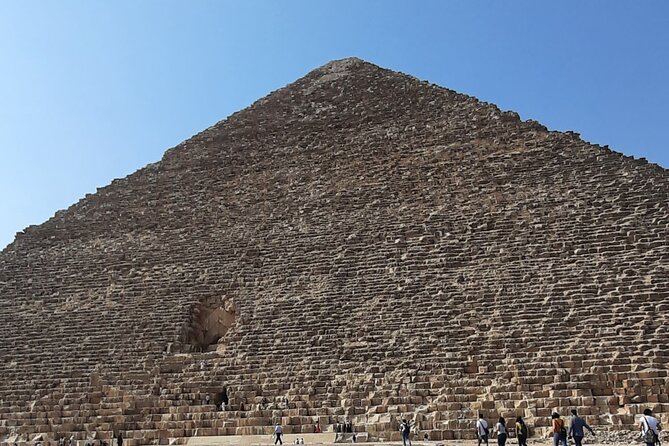
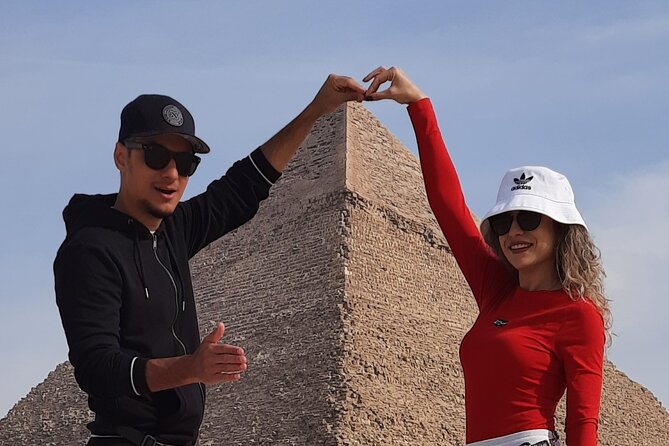
The first stop puts you in front of the Great Pyramid, the last surviving wonder of the ancient world. Photographs do not quite prepare you for its size. From ground level, the blocks, steep sides, and sheer mass make the monument feel less like a picture and more like a piece of built geology.
Your guide can give the Great Pyramid a useful frame: it was built during Egypt’s Fourth Dynasty and made for the pharaoh Khufu. The important point is not just that it is old. It shows the organization, labor, engineering, and belief system that allowed ancient Egypt to create a monument on this scale.
The scheduled pyramid portion lasts about two hours, including the panorama, ride, Valley Temple, and Sphinx. That means you should expect an overview rather than a long archaeological study. The entrance ticket is not included, and the listed pyramid admission price is 700 LE, so keep Egyptian pounds or confirm current payment arrangements before the day begins.
There is no promise here of entering the Great Pyramid itself. The experience focuses on seeing the monuments from outside, walking through the Valley Temple, and viewing the Sphinx. If going inside a pyramid is your top goal, ask about that specific ticket before booking.
The panorama, camel ride, and photo stops
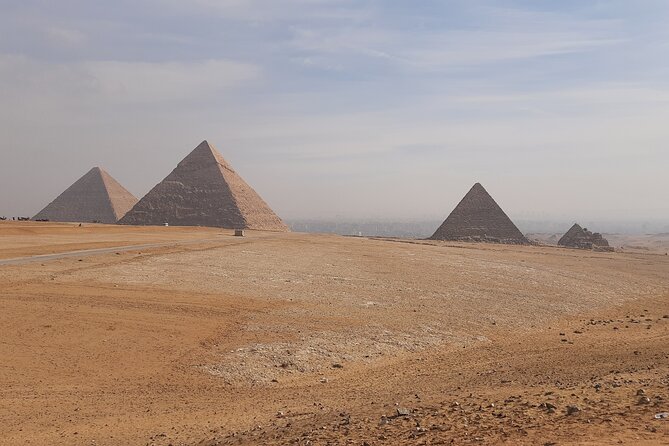
The panorama stop is useful because the pyramids are hard to understand when you are standing right beside one. From the higher viewpoint, you can see the three principal pyramids together, with the wider Giza plateau opening around them. The supplied description also refers to a view of nine pyramids, giving you a broader sense of the site than the usual close-up photograph.
The included camel or horse ride is a short experience around the pyramids, not a full desert expedition. That distinction matters. You are paying for a memorable way to view the monuments and take photographs, not for hours in the saddle.
I would wear trousers or other comfortable clothing and shoes that can handle uneven ground. The experience specifically promises photo opportunities, and the guides connected with this tour are praised for finding less crowded angles, even during busy periods. Mido, also written as Midoo or Midu in the guide references, is especially noted for helping with unusual pyramid photographs and taking pictures for the group.
You can ask your operator if Mido is available, but do not assume a named guide is guaranteed unless it is confirmed. The useful promise is the private format: your guide can respond to your preferred mix of history, photos, walking, and riding instead of following a fixed bus schedule.
Walking through the Valley Temple
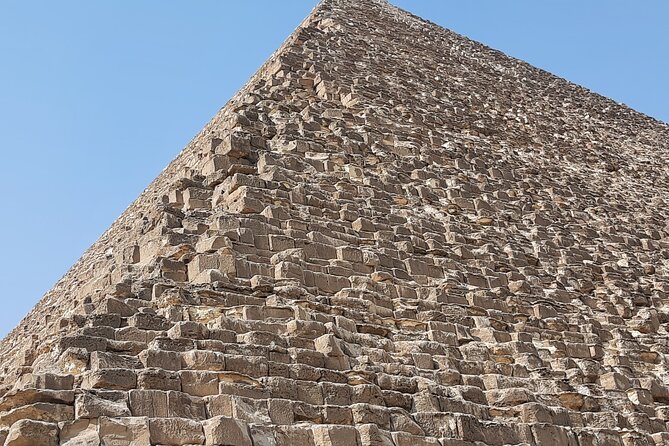
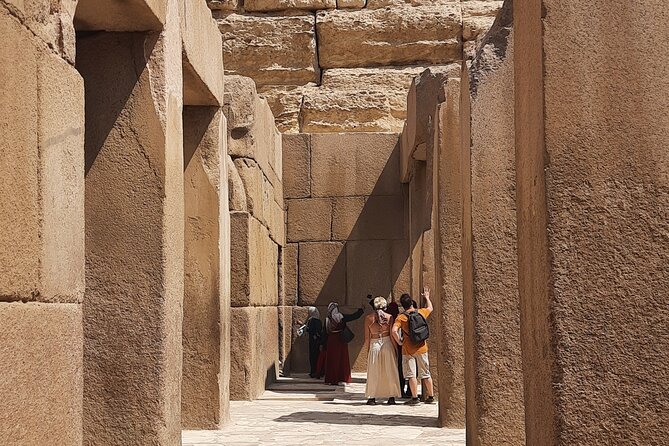
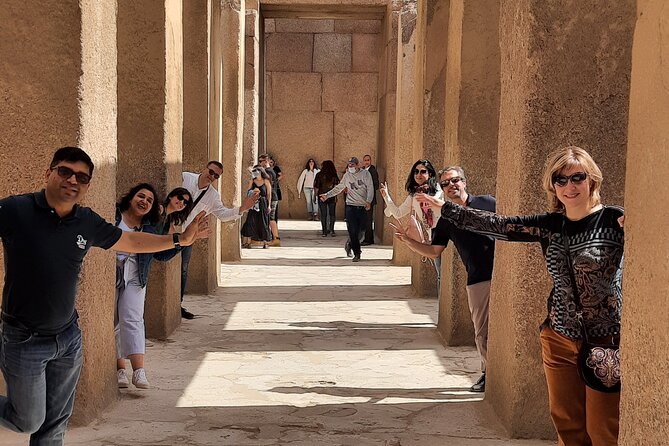
The Valley Temple belongs to the complex of Khafre, the pharaoh associated with the second pyramid. Its sturdy limestone walls and simple interior give you a different impression from the pyramids above. Here, the interest is in the construction, layout, and ceremonial role of the temple rather than in a grand view.
The walking visit is included in the planned route, and it is one of the places where a guide adds real value. Without explanation, the large stone chambers can look spare. With context, you can better understand how the temple connected to the pyramid complex and to the rituals surrounding the king’s burial.
The stop is also a welcome change of pace. After the open, exposed spaces around the pyramids, you get a chance to walk inside a substantial ancient building. Keep your expectations measured: this is not a room filled with intact furniture or painted treasures. Its power comes from the stonework, age, and connection to the Sphinx nearby.
More Cairo museums and collections:
- Cairo: Female-Guided Pyramids, Sphinx & Museum City Tour
★ 4.8 · 1,614 reviews - Private tour to Giza Pyramids,Sphinx,Egyptian Museum with Local Lunch
★ 5.0 · 1,530 reviews - Best Private Giza Pyramids,Sphinx, New Grand Egyptian Museum
★ 4.5 · 1,056 reviews - Cairo: Egyptian Museum, Citadel, and Old Cairo Guided Tour
★ 4.7 · 853 reviews
Seeing the Sphinx up close
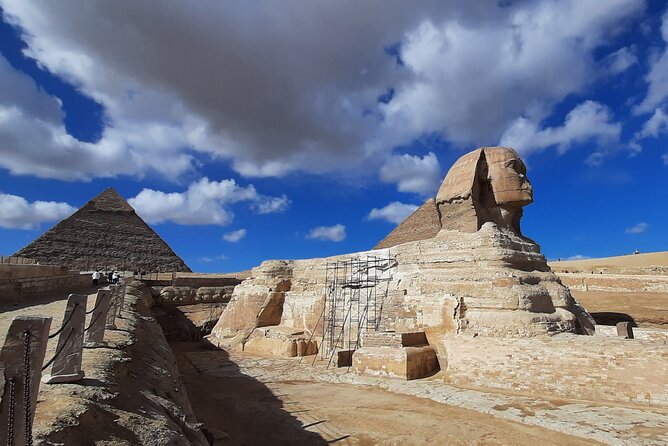
The Sphinx is one of the most recognizable statues on earth, yet its setting makes the visit more interesting than the famous face alone. Carved from limestone, it was designed as a guardian figure for the pyramid complex. The human head and lion’s body connect royal authority with strength and protection.
You will have time to walk around the Sphinx area and hear the guide’s explanation. This is a good moment to ask about what is certain, what is debated, and how the statue fits into Khafre’s complex. A strong guide should help you separate established evidence from the many dramatic stories told around the monument.
The Sphinx stop is particularly good for photographs, but the best angle depends on crowd movement and access on the day. Do not judge the visit only by the classic frontal image. Look at the scale of the body, the worn limestone, and the way the statue sits below the pyramids.
From monumental stone to museum treasures
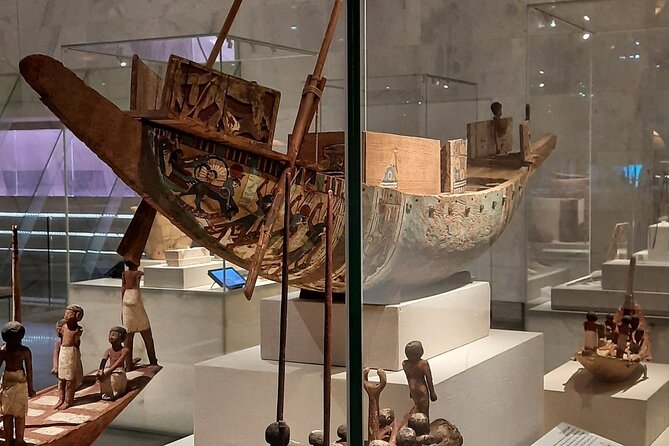
The Grand Egyptian Museum changes the mood completely. Instead of looking at enormous structures from the outside, you examine objects made for daily life, royal ceremony, burial, engineering, agriculture, music, and industry.
The museum visit is scheduled for about 90 minutes. That is enough for a guided first look, but it is not enough to read every label or linger over each gallery. The ticket is separate, listed at 1,270 LE, and you should allow for possible variations in admission arrangements or prices.
The tour description includes objects from more than 5,000 years of Egyptian history and refers to an ancient skeleton described as the oldest in the world. It also covers Egyptian skill in engineering and farming, as well as music and other crafts. The guide’s job here is to turn a large collection into a clear story, so tell the guide what interests you most.
The museum is especially worthwhile after Giza because you can connect the objects to the monuments. At the pyramids, you see what a state could build. In the museum, you see the tools, beliefs, artistic choices, and household items that made that society more than a collection of enormous tombs.
Ramses II, Hatshepsut, and Tutankhamun
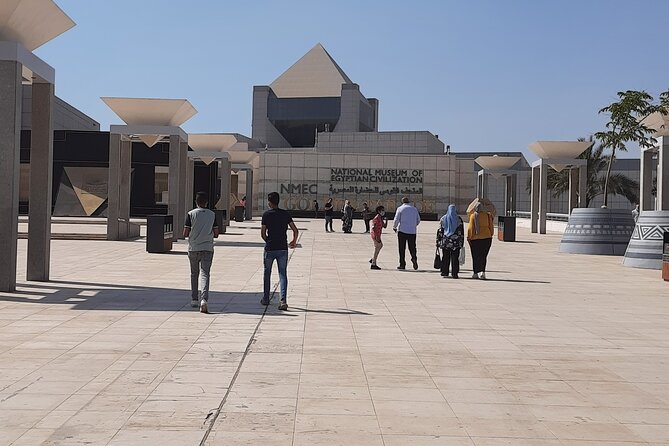
The major highlights listed for the museum include the great colossus of Ramses II and material connected with Queen Hatshepsut. These large royal works help explain how pharaohs used sculpture to project power and permanence.
You will also see objects associated with Tutankhamun, including his golden mask and golden furniture. These are the pieces many people have waited years to see, but they make more sense when you also give time to the less famous objects around them.
The guide is expected to explain the stories behind the statues and the techniques used to make them. That is one reason the private format can matter. You can stop and ask why a statue looks the way it does, what a symbol means, or how a royal object was used.
Do keep the 90-minute limit in mind. If Tutankhamun is your main reason for visiting, tell the guide at the start so you do not spend the entire museum visit on general displays before reaching the royal treasures.
Lunch, transport, and the private format
Lunch is included and described as a special local meal. The exact restaurant and menu are not specified, so you should treat this as a convenient local stop rather than booking the tour for a particular dish.
Bottled water is included, which is useful during the outdoor pyramid visit. An air-conditioned vehicle and private transportation also matter in Cairo, where heat, dust, and city traffic can make a short sightseeing day tiring.
Pickup is offered, and the stated meeting point is Pyramids Gardens in Al Haram, Giza Governorate. Since exact pickup arrangements are not detailed, confirm the place and time when you book. The experience is listed as private, so only your group participates.
The private setup is the tour’s biggest practical advantage. Mido is repeatedly described as friendly, attentive, organized, and good at adjusting explanations to individual interests. One unusual strength is language flexibility: he has been described as communicating in Spanish with help from a phone. Do not treat that as a formal language guarantee, but ask in advance if you need a particular language.
The shopping stop and how to handle it
About an hour is set aside for shopping for ancient Egyptian products and souvenirs. Some people enjoy this pause, especially if they want papyrus-style items, statues, jewelry, or other gifts. It can also be a chance to sit down after the outdoor sightseeing.
If shopping is not important to you, this is the main part of the schedule I would question. A four to six hour tour is compact, and one hour is a meaningful share of the day. Ask if the shopping stop is required and if it can be shortened. The guide associated with this experience is specifically praised for not forcing visits to friends’ or relatives’ shops, which is reassuring, but your preference should still be clear from the start.
Bring a firm but polite answer if you do not want to buy. You are not required to turn a pyramid visit into a shopping trip simply because products are offered.
Who will get the most from this tour
I would choose this experience if you want the major Giza sights, the Grand Egyptian Museum, and private transport without planning every transfer yourself. It suits first-time visitors, couples, families, and small groups that want a guide focused on their own questions.
It also makes sense for a short Cairo stop. One account describes the guide arranging a quick visit at short notice for a group of eight dealing with a flight reschedule. That does not guarantee the same flexibility every day, but it suggests the operator is used to adapting when timing changes.
You should look elsewhere if you want a slow museum day, extensive time inside the pyramid complex, or a full Cairo city tour with mosques, markets, and the Nile promenade. Those places are not part of this scheduled experience.
Most people can participate, and the activity is near public transportation. Still, the outdoor portion includes walking over an archaeological site and a camel or horse ride. Ask the operator about any personal mobility concern before booking, since detailed accessibility information is not provided.
Is the $80 price fair?
The $80 price has a clear logic. You are paying for a private guide, private air-conditioned car, transportation, lunch, water, and the included ride. If you split the cost across a group, it becomes more attractive than it first appears.
The extra entrance fees change the final total. At the stated prices, you need to add 700 LE for the pyramids and 1,270 LE for the museum, or 1,970 LE per person in listed admissions. Prices can change, so confirm them before you go.
For someone who values a personal guide and simple transport, this is a reasonable package. For a budget-minded solo visitor who is comfortable arranging taxis and reading museum displays alone, it may feel expensive after admissions are added.
Should you book it?
Book this tour if you want a well-packed first look at ancient Cairo, prefer a private group, and value a guide who can handle history, transport, photos, and timing. The combination of Giza and the Grand Egyptian Museum gives you both the monumental view and the human details behind it.
Ask two questions before paying: Are all entrance costs still as listed, and is Mido available for your date? Also confirm how much of the four to six hours will go to shopping, lunch, and driving.
I would not book it for a slow archaeological study. I would book it for a focused introduction, especially with a family, small group, or short Cairo stop. Keep your expectations realistic, protect your museum time, and you will get a lot from one compact day.
FAQ
How long does the tour last?
The experience lasts approximately four to six hours. The Giza portion is planned for about two hours, and the Grand Egyptian Museum visit for about one hour and 30 minutes.
Is hotel pickup included?
Pickup is offered, but the exact pickup arrangements are not specified. The stated meeting point is Pyramids Gardens in Al Haram, Giza Governorate, Egypt.
Is this a private tour?
Yes. Only your group participates, and the tour includes private transportation, an air-conditioned vehicle, and a private guide.
Are the pyramid and museum tickets included?
No. The listed price excludes admission. The supplied prices are 700 LE for the pyramids and 1,270 LE for the Grand Egyptian Museum.
Is a camel ride included?
Yes. A camel ride or horse ride around the pyramids is included.
Is lunch included?
Yes. Lunch and bottled water are included. The meal is described as a local lunch, but no specific restaurant or menu is provided.
Can I cancel for a full refund?
You can cancel at least 24 hours before the experience start time for a full refund. Cancellations or changes made less than 24 hours before the start time are not refunded, and poor weather may lead to a different date or a full refund.
Recently reviewed around Cairo
- White Desert Overnight Camping Sharing Tour in Egypt★ 5.0 · 15 reviews
- Cairo Best 2Days tour Pyramids, Saqqara & Old Cairo★ 5.0 · 15 reviews
- Tour to Giza pyramids Memphis Sakkara and Felucca on the Nile★ 5.0 · 16 reviews
- visit the pyramids of Giza + the necropolis of Saqqara + the Memphis site.★ 4.5 · 20 reviews
- sunset at Giza pyramids by camels★ 5.0 · 31 reviews
- Private Giza pyramid,sphinx, Mummification temple& inside pyramid★ 5.0 · 32 reviews
- Private guided shopping tour in Khan el-Khalili with Lunch★ 4.5 · 21 reviews
- Siwa Oasis private all inclusive from cairo and GIZA★ 5.0 · 75 reviews
Giza Pyramids & Sphinx Tours, compared.
Pyramids & Great Sphinx Private Tour with Camel Ride
Read our review →
Tour to Giza Pyramids and The Egyptian Museum
Read our review →
VIP All inclusive Best of the best Giza Pyramids,Sakkara,Memphis
Read our review →
Pyramids of Giza, Sphinx, Saqqara & Memphis Tour
Read our review →
Half-Day Tour to Pyramids of Giza and the Sphinx
Read our review →
Private ViP all-inclusive Giza Pyramids,Sphinx,Inside Pyramid
Read our review →
Grand Egyptian Museum, Pyramids, Sphinx Tour & Lunch
Read our review →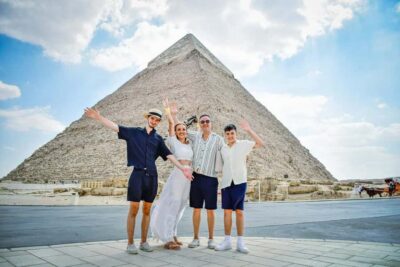
Cairo Pyramids, Sphinx & Egyptian Museum Day Trip
Read our review →Browse the lists this tour appears in