
Reviewed · WHITE DESERT SAFARIS
White Desert – Overnight Tour
The best part of this two-day trip is the night itself: you sleep in the White Desert beneath a huge sky, with dinner cooking over an open fire and wind-shaped chalk rocks glowing nearby. I like the Bedouin-led approach, and I like that you can choose your camp spot rather than being fixed in a large resort-style camp. The Black Desert, Crystal Mountain, and Agabat add real variety.
The tradeoff is time on the road. From Cairo, the drive to Bahariya Oasis takes about four hours each way, and Cairo pickup costs extra. You should also bring warm clothes, since the desert can turn cold after sunset, even when summer days are hot.
In This Review
- Key points before you book
- Why the White Desert is worth an overnight stay
- Day one: from black basalt to Agabat Valley
- Crystal Mountain and the search for small treasures
- Agabat Valley, once a camel route
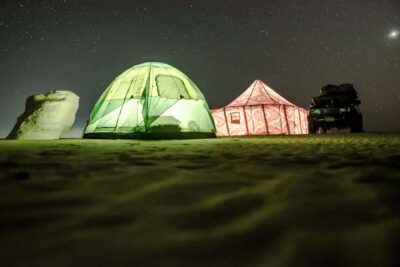
- Campfire dinner and a night under the stars
- Day two: the White Desert at its most surreal
- Finishing at Be’er Sejamm hot springs
- What the $235 price really buys
- Who will enjoy this desert trip most?
- Practical packing advice
- Should you book the White Desert overnight tour?
- FAQ
- Where does the White Desert overnight tour start?
- What time does the tour start?
- Is Cairo pickup included?
- What meals are included?
- Is the White Desert National Park entrance fee included?
- Where do you sleep?
- Is this a private tour?
- Can the tour be canceled because of weather?
Key points before you book
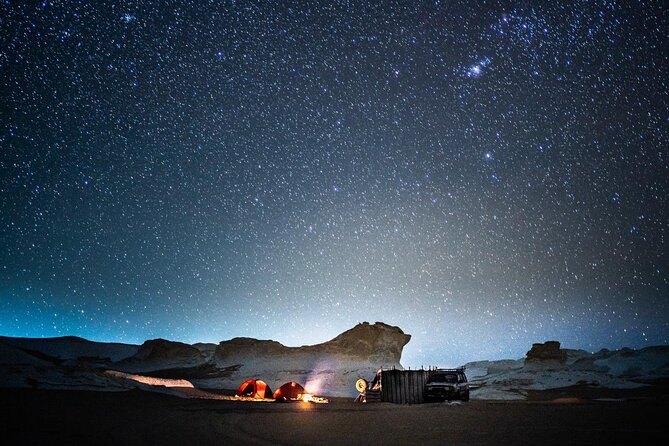
- Sleep beneath the White Desert stars: Choose a tent or sleep in the open, with blankets provided for the chilly night.
- Meet Mohammed and his Bedouin family: Mohammed guides the desert drive, cooks local food, and shares stories of his family’s long connection with the area.
- See five very different desert settings: Black basalt mountains, scattered crystals, Agabat Valley, chalk formations, and hot springs fill the two days.
- Expect a private booking, but ask about group arrangements: The advertised price is $235 per group of up to one person, while some departures have included small groups of around six people.
- Budget for the national park fee: Entrance to the White Desert National Park is not included, despite the sightseeing stops being described as ticketed attractions.
- Plan for a long transfer: The listed start is 7:00 a.m. on El Wahat Road, with transfers from Bahariya bus station included and Cairo pickup available as an extra.
Why the White Desert is worth an overnight stay
Egypt’s White Desert is not a quick photo stop. Its chalk formations are spread across a wide, bare area, and the mood changes completely as the light moves from afternoon gold to moonlit gray. During the day, the rocks look like odd sculptures. At night, they become silhouettes under the stars.
I like that this tour gives you enough time to see the desert in more than one light. A short daytime drive can show you the famous formations, but camping lets you experience the quiet after the vehicles leave. You also wake in the area rather than spending the whole day racing back to the oasis.
The personal scale matters. Mohammed and his family run the desert operation, and the guide may be joined by a cousin who also works as a guide. That family connection gives the trip a more local feel than a standard bus excursion. You can expect help with camp, food, blankets, and photography, along with stories about the Bedouin family’s life in the desert.
This is not luxury camping. It is an outdoor night in a remote setting, with basic equipment and a fire rather than hotel facilities. If you want a comfortable bed, private bathroom, and fixed meal times, stay in Bahariya Oasis instead. If you want to look up from a blanket and see the Milky Way, the overnight option earns its place.
Other Egypt days travellers weigh against this one:
- Hurghada: Luxor Valley of the Kings & Tutankhamun Tomb Trip
★ 4.7 · 13,208 reviews - Cairo: Pyramids & Great Sphinx Private Tour with Camel Ride
★ 4.9 · 6,335 reviews - Tour to Giza Pyramids and The Egyptian Museum
★ 5.0 · 6,016 reviews
Day one: from black basalt to Agabat Valley
The meeting time is 7:00 a.m. The tour information lists El Wahat Road in Giza Governorate as the start point, while the package also includes transfers from Bahariya bus station. Because Cairo pickup is described as an extra service, confirm your exact pickup plan before paying.
The road from Cairo to Bahariya takes roughly four hours, according to the practical reports attached to this trip. That is a serious transfer, not a minor footnote. I would avoid scheduling a major Cairo activity for the same evening, and I would keep water, snacks, and a light layer close at hand.
Once you reach the oasis and head into the desert, the scenery changes quickly. The first major stop is the Black Desert, a field of dark volcanic hills made from basalt. These are the remains of ancient volcanic activity, now worn into isolated mountains and ridges.
You have about an hour here. The useful thing to do is climb one of the hills for a wide view. The dark rock against the pale sand gives the Black Desert its name, and the height helps you understand how broad and empty the area is. Wear shoes with a firm grip and take the climb at your own pace. The stop is short, so you are there for a view and a sense of place, not a long hike.
Crystal Mountain and the search for small treasures
Crystal Mountain is a smaller, more tactile stop. Instead of one grand peak that you simply photograph, you explore a mountain area where crystals are scattered through the sand and rock.
You get about an hour to look around. The appeal is in the details: sunlight catches the quartz-like pieces, and every step may reveal a glint. Do not expect a polished mineral museum. This is a rough natural setting, and the crystals are part of the ground around you.
I like this pause because it breaks up the larger views. The Black Desert asks you to look outward. Crystal Mountain asks you to look down. The two stops feel different, even though both are reached by desert vehicle.
Use care when handling anything you find, and follow your guide’s advice about what may be collected. The supplied information says you can find crystals scattered over the sand, but it does not promise a particular size or quantity.
Agabat Valley, once a camel route
Agabat Valley is the day’s broadest viewpoint. The valley once formed part of a route between Farafra and Bahariya that was crossed by camel, and its open setting helps explain why it served as a passage through the Western Desert.
You have about an hour for panoramic views. This is a good place to slow down and let the scale register. The desert is not just a collection of strange rocks. It is also a network of old routes, water points, and crossings that made movement possible long before modern roads.
The trip may include sandboarding, according to the practical details shared by the operator in response to past bookings. Treat that as an optional activity to confirm ahead of time, rather than a guaranteed part of the published schedule.
A different kind of day out, same part of Egypt:
- From Hurghada: Cairo and Giza Highlights Full-Day Tour
★ 4.5 · 6,014 reviews - Hurghada: Luxury Cruise Trip to Orange Bay with Lunch
★ 4.9 · 5,451 reviews - Luxor Day Trip from Hurghada Small Group & Tutankhamun Tomb
★ 4.8 · 5,366 reviews - Hurghada: Orange Bay Island Boat Trip w/ Breakfast and Lunch
★ 4.9 · 5,345 reviews
Campfire dinner and a night under the stars
After the sightseeing, your guide sets up camp in the White Desert. One appealing feature is the freedom to choose the camp location. That does not mean you select any point without limits, since park rules and the guide’s judgment still apply, but it gives the night a more personal feel.
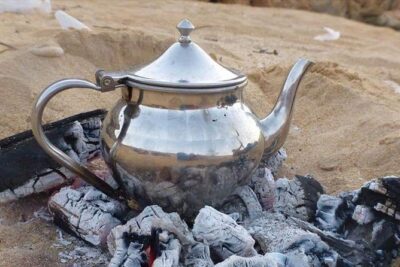
Dinner, breakfast, and lunch are included. Mohammed is also described as the cook, and the meals are local rather than standard packaged fare. The food is a major part of the evening: you sit near the fire, eat a freshly prepared dinner, and have time to talk with the guide and his family.
Past groups have also enjoyed songs from the family’s culture. That kind of moment is worth more than another rushed photo stop because it gives the evening a human center. Still, keep expectations sensible. This is a family-run desert camp, not a staged cultural show with a fixed performance schedule.
You can sleep in a tent or outside beneath the sky. Extra blankets are available, but you should pack warm clothes anyway. Desert nights lose heat fast, and several practical notes stress that evenings and early mornings can be cold. A fleece, long trousers, socks, and a warm outer layer will make the night much better.
The open-air option depends on the weather and your own comfort. A bright moon may make the rocks easier to see but can reduce the number of visible stars. On a darker night, the sky should be the main event. Either way, keep dust and sand in mind, and do not expect regular bathroom facilities in the camp unless your guide explains otherwise.
Day two: the White Desert at its most surreal
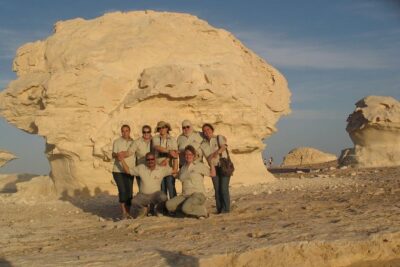
The second day centers on the White Desert, with about two hours to explore. The chalk formations here have been shaped by wind and weather into rounded, pointed, and oddly balanced forms. The effect is often compared to the surface of the moon, and the comparison makes sense once you are surrounded by pale rock with almost no vegetation.
This is the stop for your strongest photographs, but do not spend the entire visit looking through your phone. Walk around the formations and look at how each one changes from a different angle. A rock that appears flat from the vehicle may open into a more dramatic shape when you approach it.
The White Desert is also where the private format has the most value. You can ask to pause for a photograph, spend longer at a formation that interests you, or move on when the heat becomes tiring. With a large coach group, that flexibility would be harder.
There is an important cost detail here. The national park entrance fee is not included in the price. The schedule labels the sightseeing stops as having admission included, but the conditions specifically exclude the White Desert National Park entrance fee. Ask the operator for the current amount and payment method before departure so you are not surprised.
Finishing at Be’er Sejamm hot springs
The final stop is Be’er Sejamm, described as a hot-spring bathing area. After a night outdoors and a day of desert dust, the chance to soak for about an hour is practical as well as pleasant.
This is not just a decorative final stop. The hot spring gives the trip a clear change of pace. You move from open desert views and vehicle rides to warm water and a chance to clean up before returning to the meeting point.
The name is also rendered as Bath Hospitalization Be’er Sejamm in the supplied details, so confirm the exact location with the operator. The important point is that the tour ends with a hot-spring bath, not another long viewing stop.
What the $235 price really buys
The advertised price is $235 per group of up to one person. That wording is unusual, so confirm the price for your actual party size before booking. Since this is described as a private activity, the cost can be good value for a solo visitor or a small group if the final quote covers the vehicle, guide, camping equipment, and meals.
Included are lunch, dinner, and breakfast, plus a guide, camp gear, and transfers from Bahariya bus station. The package also includes the desert sightseeing and the return to the meeting point. The White Desert National Park entrance fee is extra.
Cairo transport needs special attention. Pickup is offered, but the practical details say that Cairo pickup can be arranged for an additional fee. For a solo visitor, that extra transfer could change the total price quite a bit. If you are already staying in Bahariya Oasis or can reach the bus station yourself, the basic price is easier to assess.
I see the value in the family-run service, the private format, the overnight camp, and three included meals. You are paying for access to a remote area, a desert vehicle, local guiding, cooking, and the time needed to see the sights without reducing the trip to a single afternoon.
The price is less attractive if you only want White Desert photographs and do not care about sleeping outdoors. In that case, a shorter desert outing may suit you better. The overnight portion is the reason to choose this particular format.
Who will enjoy this desert trip most?
I would recommend it to you if you want a memorable break from Egypt’s major archaeological sights and are comfortable with a basic camp. It suits photographers, couples, small private groups, and anyone who values open space, stars, and local guiding more than hotel comforts.
It is also a good choice if you want an active two days without a demanding trek. Most of the touring is by vehicle, with a climb in the Black Desert and walking around the rock formations. The tour says most people can participate, and service animals are allowed.
You may want to reconsider if you dislike long drives, cold nights, sand, or uncertain outdoor conditions. The experience requires good weather, and poor conditions can lead to a new date or a full refund. You should also know that the advertised private format may not match every departure, since some past arrangements included around six people and two drivers.
For families, ask directly about sleeping arrangements and the vehicle before booking. The available details say most participants can take part, but they do not give age limits, child pricing, or specific vehicle accessibility information.
Practical packing advice
Bring a warm layer even if you visit in summer. The early morning and evening can be pleasant or cold, and extra blankets do not replace a jacket and proper trousers.
Pack sturdy shoes for the Black Desert climb and walking around Crystal Mountain. Add sun protection, water, a hat, and a phone power bank. The supplied details do not promise charging facilities at camp.
A small bag is easier than a large suitcase in a desert vehicle. Keep your camera, toiletries, medications, and warm clothing within reach rather than buried in luggage.
Confirm four details before setting out:
- Your pickup point and the cost of Cairo pickup
- The current White Desert National Park entrance fee
- Whether your booking is strictly private or combined with a small group
- Whether a tent, open-air sleeping, or both are available for your departure
The tour accepts mobile tickets, confirmation is normally sent within 48 hours subject to availability, and cancellation is free up to 24 hours before the start time. Changes or cancellations inside that period are not accepted, and bad weather can lead to a new date or full refund.
Should you book the White Desert overnight tour?
I would book this if you want the desert to be the main event, not a side trip between Cairo’s sights. The strongest reasons are the range of scenery, the campfire meal, Mohammed’s personal guiding and cooking, and the chance to wake among the White Desert formations.
I would not book it without first confirming the total cost for your group, the Cairo transfer, the park fee, and the sleeping setup. Once those details are clear, this is a strong choice for an authentic, basic, and highly visual Western Desert adventure. Give it two days, pack for cold nights, and let the quiet do some of the work.
FAQ
Where does the White Desert overnight tour start?
The listed start point is El Wahat Road, El Wahat Road, Al Wahat Al Baharia, Giza Governorate. The tour also includes transfers from Bahariya bus station.
What time does the tour start?
The scheduled start time is 7:00 a.m.
Is Cairo pickup included?
Pickup is offered, but Cairo pickup may be arranged for an extra charge. Confirm the exact transfer cost before booking.
What meals are included?
Lunch, dinner, and breakfast are included.
Is the White Desert National Park entrance fee included?
No. The White Desert National Park entrance fee is excluded and must be paid separately.
Where do you sleep?
You camp in the White Desert and may choose a tent or sleep in the open, with blankets available.
Is this a private tour?
It is described as a private activity for your group. Some departure arrangements have included a small group of about six people, so confirm the setup for your date.
Can the tour be canceled because of weather?
Yes. The experience requires good weather. If poor weather causes cancellation, you will be offered another date or a full refund.
Recently reviewed around Egypt
- 2 Hours Catamaran and Semi Submarine with Snorkeling in Hurghada★ 5.0 · 39 reviews
- Hurghada Private Guided City Tour with Shopping★ 4.5 · 64 reviews
- From Hurghada: 5 Days 4 Nights Nile Cruise Luxor-Aswan With Tours★ 5.0 · 30 reviews
- Cleopatra Massage Sauna, Jacuzzi, Steam bath w/transfer-Hurghada★ 4.0 · 16 reviews
- Cairo pyramids tour from Hurghada and Nile boat without Stopping★ 4.5 · 42 reviews
- Full-Day Pyramids of Giza Tour from Hurghada★ 4.0 · 16 reviews
- Cleopatra’s Royal Spa Retreat – VIP Massage, Sauna & Jacuzzi Exp★ 5.0 · 18 reviews
- Private Giza Pyramids & Sphinx Day Tour with Lunch from hurghada★ 4.5 · 28 reviews
White Desert Safaris, compared.
Bahariya Oasis & White Desert A Private Day Adventure
Read our review →
White Desert & Bahariya oasis 3 days 2 nights Tour from Cairo
Read our review →
Black and White Desert and Bahariya Oasis Tour 2 Days 1 Night
Read our review →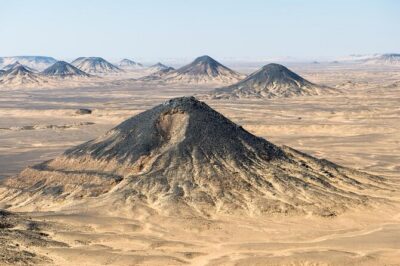
Overnight White Desert Safari Camping from Cairo
Read our review →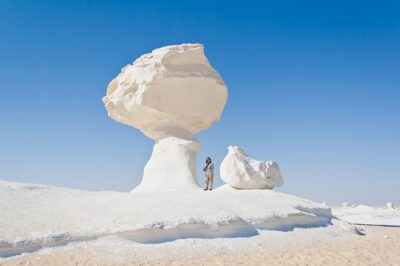
Private Day Tour To White Desert And Bahariya Oasis
Read our review →Browse the lists this tour appears in