
Reviewed · ABU SIMBEL TOURS
2 days 1 night Luxor,Aswan & Abu simbel by flight from Cairo
The big idea here is simple: fit Upper Egypt’s essential sights into two very long days. You fly south from Cairo, drive to Abu Simbel, sleep in Aswan, cross to Luxor by car, then fly back to Cairo. It is a clever route for a short Egypt visit.
I like the private air-conditioned vehicle, which gives you room to rest between temples, and I like the fact that flights and airport transfers are built into the plan. Guides including Ahmed, Samir, Maria, DoA, and Hamees have been singled out for clear explanations and good care. The catch is the pace: early starts, long road journeys, and a schedule that leaves little spare time.
In This Review
- Key points at a glance
- A two-day route built around Egypt’s biggest sights
- Abu Simbel: the reason to accept the early start
- Aswan’s three different faces
- Your overnight in Aswan
- The road from Aswan to Luxor
- Valley of the Kings and Hatshepsut’s temple
- The Colossi of Memnon
- Karnak: the largest stop on the East Bank
- Luxor Temple and the flight home
- Guides, drivers, and the quality of explanation
- Is $500 a fair price?
- Who should book this route?
- FAQ
- Is pickup from Cairo or Giza included?
- Are flights from Cairo to Aswan and Luxor to Cairo included?
- How long does the drive from Aswan to Abu Simbel take?
- Which temples are included at Abu Simbel?
- What is included at Aswan?
- Which Luxor sites are included?
- Where is the overnight accommodation?
- Is this a private tour?
- What is not included in the price?
Key points at a glance
- Abu Simbel is the star of day one, with both the temple of Ramesses II and the smaller temple of Queen Nefertari.
- Private transport keeps the route practical, especially during the three-hour drive from Aswan to Abu Simbel and the transfer to Luxor.
- Luxor gets a full sightseeing day, including the Valley of the Kings, Hatshepsut, Karnak, Luxor Temple, and the Colossi of Memnon.
- The schedule is intense, with a pickup around 4:00 a.m. on the first day and another early start for the Aswan to Luxor drive.
- Guide quality can shape the day, so request your preferred language and confirm who is guiding each section.
- At $500 per person, the tour can be good value if you would otherwise need separate flights, cars, hotel, admissions, and guides.
A two-day route built around Egypt’s biggest sights
This is not a relaxed Nile holiday. It is a sightseeing sprint, designed for you to see the major monuments of Aswan, Abu Simbel, and Luxor without taking a train, booking several hotels, or arranging separate domestic flights.
The package includes pickup at your Cairo or Giza hotel, a private vehicle, drivers, flights, entry fees, lunch, bottled water, a guide, and one night at Basma Aswan Hotel. That list matters because Upper Egypt is spread out. Without organized transport, the connections alone could eat up much of your visit.
The route also makes practical sense. You fly south first, visit Abu Simbel before returning to Aswan, then travel north by road to Luxor. After the Luxor sights, you fly back to Cairo. You are not wasting time retracing the same route by car.
The tradeoff is rest. The first morning begins at about 4:00 a.m., and the second day involves another long transfer before a full afternoon of temples. I would book this only if you are comfortable with early alarms and long stretches in a car.
More Cairo trips worth a second look
- Cairo: Nile Sunset Dinner Cruise, Show & Optional Transfer
★ 4.1 · 2,184 reviews - White & Black Desert tour 2 Days 1 night camping from Cairo.
★ 5.0 · 649 reviews - White & Black desert camping tour 2 Days 1 night From Cairo
★ 5.0 · 467 reviews
Abu Simbel: the reason to accept the early start
After pickup in Cairo or Giza, you transfer by private car to Cairo Airport for the flight to Aswan. At Aswan Airport, your local guide meets you before the road journey to Abu Simbel, which takes about three hours each way.
That drive is a major part of the day, but the reward is one of Egypt’s most memorable ancient sites. The larger temple was built by Ramesses II and has four huge seated statues of the king cut into the rock face. Inside, the halls and chambers carry the same message of royal power, with Ramesses presented beside major Egyptian gods.
The temple has a famous solar alignment. Sunlight reaches parts of the inner sanctuary twice a year, on October 22 and February 22. Those dates are especially notable, although this two-day tour does not describe a special visit timed for the event.
The nearby temple of Queen Nefertari is smaller but no less important. It was dedicated to Nefertari and the goddess Hathor, and its presence beside Ramesses II’s temple gives the site a strong sense of partnership between king and queen.
You should allow about six hours for the Abu Simbel portion, including the site visit and transport arrangements. Wear practical shoes, bring sun protection, and keep water close. The site is far from Aswan, so this is not a quick photo stop.
One important point: the product information uses both Abu Simbel and Abu Simple in places. They refer to the same destination. Make sure your flight and transfer details clearly identify Abu Simbel before departure.
Aswan’s three different faces
Once you return from Abu Simbel, the tour turns to Aswan’s main sights: the High Dam, the Unfinished Obelisk, and Philae Temple. The listed timing for this portion is about four hours, though the day already includes the long Abu Simbel road trip.
The Aswan High Dam is a modern engineering project rather than an ancient monument. It changed agriculture, power production, and the flow of the Nile, while also creating Lake Nasser. Your guide can help connect the modern dam to the major relocation projects that protected ancient monuments from flooding.
The Unfinished Obelisk gives you a close look at how stoneworkers worked granite. The huge piece remains attached to the bedrock, allowing you to see the cracks that ended the project. It is a useful counterpoint to the polished temples because it shows the work before the final stage.
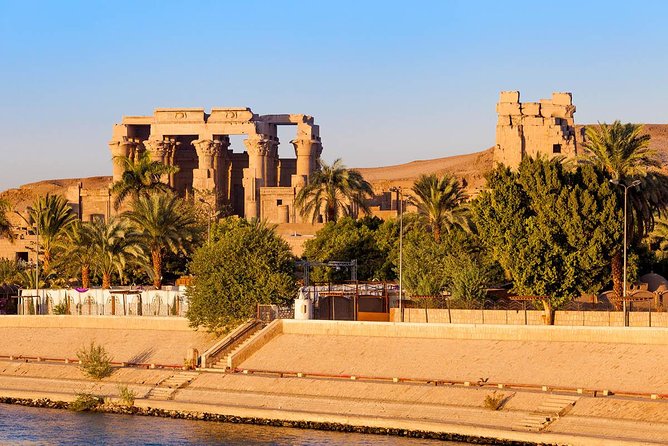
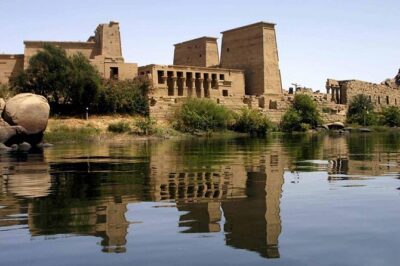
Philae Temple is the most atmospheric of the three. Dedicated mainly to Isis, the temple complex was moved to higher ground after the old Aswan Dam threatened to submerge it. The site’s survival is part of the story, not just a footnote.
The description says you will visit Philae, but it does not spell out the transport method used at the temple. Ask your operator to confirm the meeting point and timing, since the whole day depends on tight connections.
Your overnight in Aswan
The tour includes one night at Basma Aswan Hotel, described in the package as a four-star hotel. Some booking details and individual experiences have referred to different hotel names or standards, including Paradise in Aswan, so I would confirm the property before you leave Cairo.
That is a small but important practical step. After Abu Simbel and the Aswan visits, you will care less about luxury labels and more about a clean room, a shower, and enough sleep for the next morning. The accommodation is a stopover, not the central attraction.
Lunch is included, though the exact restaurants can vary. Some meals have been praised, while food choices have not always been a highlight. If you have dietary needs, state them when booking and repeat them to your guide.
A different kind of day out, same part of Egypt:
- Cairo: Pyramids & Great Sphinx Private Tour with Camel Ride
★ 4.9 · 6,335 reviews - Tour to Giza Pyramids and The Egyptian Museum
★ 5.0 · 6,016 reviews - VIP All inclusive Best of the best Giza Pyramids,Sakkara,Memphis
★ 5.0 · 3,164 reviews - From Cairo: Pyramids of Giza, Sphinx, Saqqara & Memphis Tour
★ 4.7 · 3,110 reviews
The road from Aswan to Luxor
Day two begins with a pickup from your Aswan hotel and a private car transfer to Luxor. The schedule groups this journey with the West Bank sightseeing, so expect a substantial amount of time on the road before or between the monuments.
The private car is a real advantage here. You can rest during the transfer, keep your bags with you, and avoid the uncertainty of public connections. Drivers have received strong praise for safe, careful service, including drivers paired with guides such as Hamees and Hosam.
Still, you should not mistake a private vehicle for a short transfer. Aswan and Luxor are separate destinations, and this is one reason the tour feels intense. If you want long visits at each tomb, time for a proper meal, or an unhurried afternoon by the Nile, a longer tour would suit you better.
Valley of the Kings and Hatshepsut’s temple
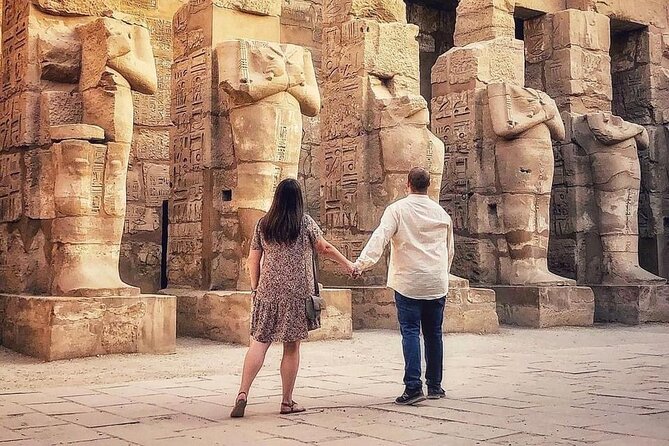
The West Bank begins with the Valley of the Kings, where you visit tombs from several dynasties. The ticket arrangements are included, but the specific number of tombs available is not stated. Your guide will point out the important features and explain how the royal burial ground fits into ancient Egyptian beliefs.
The tombs are the place to slow down mentally, even if the itinerary keeps moving physically. Painted scenes, burial texts, and narrow chambers reveal a different side of Egyptian royal life than the giant temple walls. Conditions inside can be warm and enclosed, so carry water and follow site rules.
Next comes the Temple of Hatshepsut at Deir el Bahari. Its broad terraces rise against the cliffs, making it one of Luxor’s most recognizable settings. Hatshepsut ruled for about 20 years during the 18th Dynasty, an unusual achievement in a system usually presented through male kings.
The temple is valuable not only for its architecture but also for the questions it raises about royal identity and power. A strong guide can explain the reliefs and the later damage to Hatshepsut’s images without turning the visit into a list of dates.
The schedule allows about two hours for the Valley of the Kings and another two hours for Hatshepsut. That sounds generous on paper, but transport, entry points, walking, and photographs all use part of the time.
The Colossi of Memnon
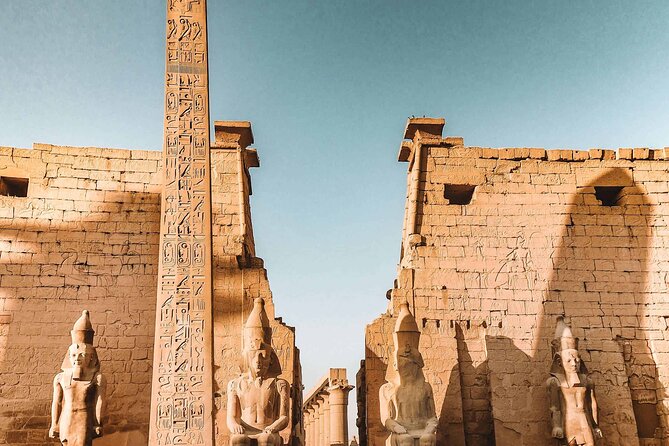
The Colossi of Memnon take about 30 minutes. These two seated statues represent Amenhotep III and once formed part of his mortuary temple.
This is a short stop, but it works well as a pause between the larger West Bank sites and the East Bank temples. You can get a clear view, take photographs, and hear how much of the original complex has disappeared.
Do not expect a full temple visit here. The value is scale and context. The statues make the point that Luxor’s ancient royal district was far larger than the surviving walls suggest.
Karnak: the largest stop on the East Bank
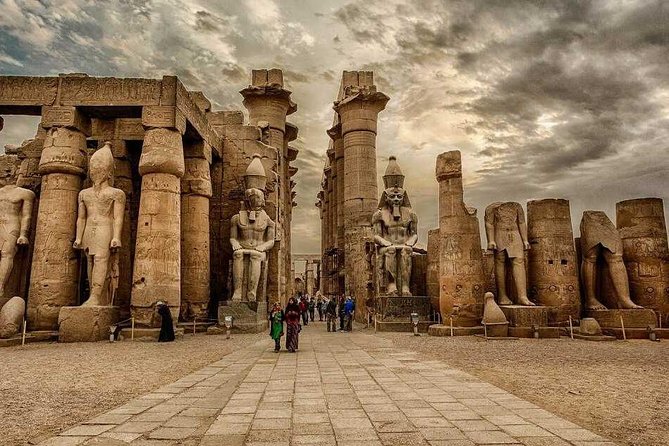
Karnak is the most demanding temple visit of the day because the complex is enormous. The route includes the Avenue of Sphinxes, the unfinished propylon, the Hypostyle Hall, obelisks linked to Hatshepsut and Thutmose III, the temple of Amun, the sacred lake, and the granite scarab associated with Amenhotep III.
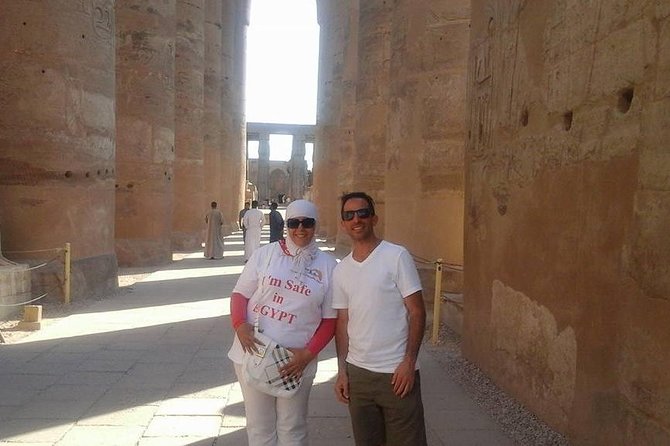
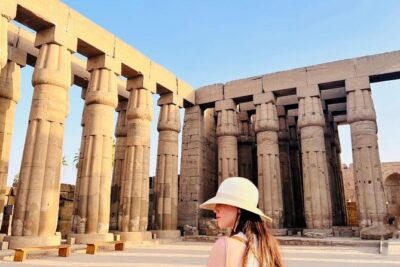
The Hypostyle Hall is the visual prize. Its 134 massive columns create a forest of stone, with carved and painted decoration still visible in places. You need a guide here because it is easy to walk past important details while focusing only on the scale.
The listed visit lasts about one hour. I would treat that as a fast introduction rather than a complete exploration. Karnak rewards careful looking, but this tour must also get you to Luxor Temple and the airport.
A carriage or bus transfer between the East Bank sights is mentioned in the route. Confirm the exact arrangement, since the day’s transport plan may change with flight times.
Luxor Temple and the flight home
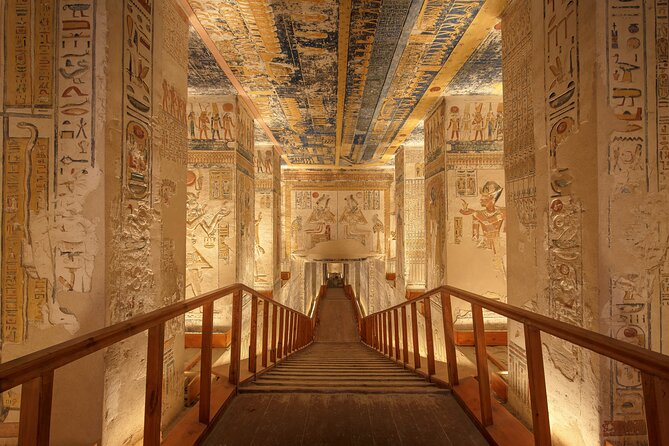
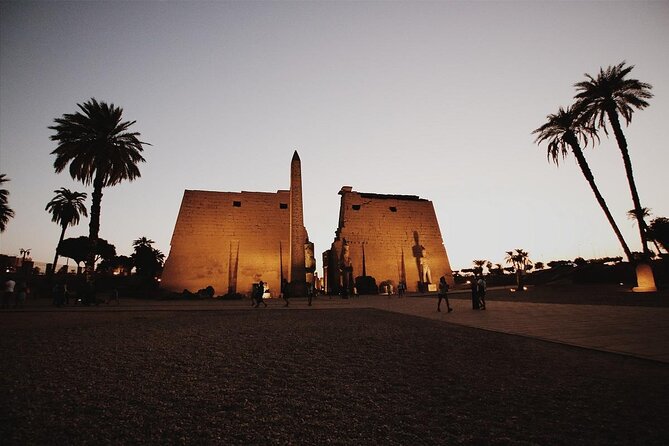
Luxor Temple follows Karnak. Built under Amenhotep III and completed by Ramesses II, it differs from Karnak in feeling and layout. It is more compact, which makes its courtyards, statues, columns, and processional spaces easier to grasp in a short visit.
The temple was linked to Karnak by the Avenue of Sphinxes, and the route begins at that ceremonial connection. Your guide can help you see how the two sites functioned together rather than treating them as unrelated ruins.
The final transfer is to Luxor Airport for the domestic flight to Cairo. On arrival, a representative meets you and transfers you to your Cairo hotel.
This is where communication matters most. Pickup times have changed for some bookings, and flight delays have affected the schedule. Ask for the flight numbers, exact pickup times, guide names, and airport meeting instructions in writing. A WhatsApp contact can be useful, but do not rely on last-minute messages alone.
Guides, drivers, and the quality of explanation
The strongest part of this experience is often the people handling the sightseeing. Guides named in connection with the route include Ahmed, Samir, Maria, DoA, Aida George, Ghada Khalsa, Hamees, Mustafa, Mohamed, Shereen, and Daria.
You may have one guide for Aswan and Abu Simbel and another for Luxor. That is sensible because each area needs different local knowledge, but it also means the quality and style can vary from day to day.
Some guides give a full explanation before letting you explore on your own. That approach works well at large sites because you get the story first, then time for photographs. Other experiences have involved less detailed commentary, language mismatches, or a guide who did not enter every monument with the group.
If you care about detailed archaeology, specify your preferred language and ask what level of guiding is included. If you mainly want transport, site access, and a clear overview, the arrangement may be enough.
Is $500 a fair price?
At $500 per person, the price is not cheap, but it covers many costly pieces: two domestic flights, airport transfers, private air-conditioned transport, guides, one hotel night, lunch, bottled water, and entry fees.
I see the value most clearly if you have only a short stay in Egypt. Arranging these parts independently could take time and create awkward gaps between flights, hotels, and long-distance road transfers. The private vehicle also gives you more control than a large coach.
The price is less attractive if you already have flights booked, can arrange local transport cheaply, or prefer a slower itinerary. You are paying for speed and coordination, not leisurely travel.
Tipping is excluded, as is the Egyptian visa. Group discounts may be available, and the activity is private, meaning only your own group participates. Most people can take part, and the tour is near public transportation, though the actual sightseeing relies on the included private vehicle.
Who should book this route?
I would choose this tour if you want Abu Simbel, Aswan, and Luxor in one compact package and have the stamina for long days. It suits first-time visitors who prefer a guide and want the major ancient sites handled in one arrangement.
It is also a good match for couples, families, and small groups who value a private car and do not want to negotiate every transfer themselves. The route gives you a strong first look at Upper Egypt without committing to a longer Nile program.
I would not choose it for a slow holiday, a detailed photography trip, or anyone who struggles with early mornings. A two-day plan cannot give every temple the time it deserves.
Cancellation terms are strict. A full refund requires cancellation at least six full days before the start time, while cancellations two to six days ahead receive 50 percent. Less than two days usually means no refund. Poor weather may lead to a new date or a full refund.
FAQ
Is pickup from Cairo or Giza included?
Yes. Pickup and drop-off are provided from hotels in Cairo or Giza City.
Are flights from Cairo to Aswan and Luxor to Cairo included?
Yes. The package includes the domestic flights between Cairo and Aswan, and from Luxor back to Cairo.
How long does the drive from Aswan to Abu Simbel take?
The drive takes about three hours. The tour returns to Aswan after visiting the Abu Simbel temple complex.
Which temples are included at Abu Simbel?
You visit the temple of Ramesses II and the nearby temple of Queen Nefertari.
What is included at Aswan?
The route includes Philae Temple, the Aswan High Dam, and the Unfinished Obelisk, along with the Abu Simbel visit.
Which Luxor sites are included?
You visit the Valley of the Kings, the Temple of Hatshepsut at Deir el Bahari, the Colossi of Memnon, Karnak Temple, and Luxor Temple.
Where is the overnight accommodation?
The package lists one night at Basma Aswan Hotel. Because hotel details can vary, confirm the exact property before the tour.
Is this a private tour?
Yes. Only your group participates, and transfers are by private air-conditioned vehicle with a personal driver.
What is not included in the price?
Tips and the Egyptian entry visa are not included. Lunch, bottled water, flights, entry fees, guides, transfers, and hotel accommodation are included.
Recently reviewed around Cairo
- White Desert Overnight Camping Sharing Tour in Egypt★ 5.0 · 15 reviews
- Cairo Best 2Days tour Pyramids, Saqqara & Old Cairo★ 5.0 · 15 reviews
- Giza Pyramids with (GEM) Grand Egyptian Museum★ 5.0 · 42 reviews
- sunset at Giza pyramids by camels★ 5.0 · 31 reviews
- Tour to Giza pyramids Memphis Sakkara and Felucca on the Nile★ 5.0 · 16 reviews
- visit the pyramids of Giza + the necropolis of Saqqara + the Memphis site.★ 4.5 · 20 reviews
- Private Giza pyramid,sphinx, Mummification temple& inside pyramid★ 5.0 · 32 reviews
- Private guided shopping tour in Khan el-Khalili with Lunch★ 4.5 · 21 reviews
Abu Simbel Tours, compared.
4-Days Nile Cruise From Aswan To Luxor including Abu Simbel and Hot Air Balloon
Read our review →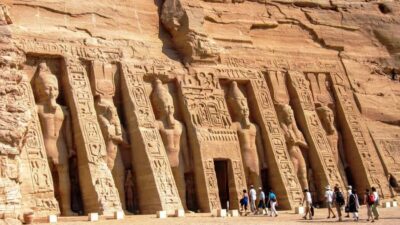
4-Day 3-Night Nile Cruise from Aswan to Luxor&Abu Simbel+Balloon
Read our review →
4-Day 3-Night Nile Cruise from Aswan to Luxor including Abu Simbel, Air Balloon
Read our review →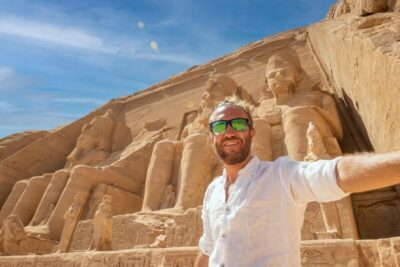
Abu Simbel Temple Private Guided Day Trip with Lunch
Read our review →4-Days Nile Cruise From Aswan To Luxor including Abu Simbel and Hot Air Balloon
Read our review →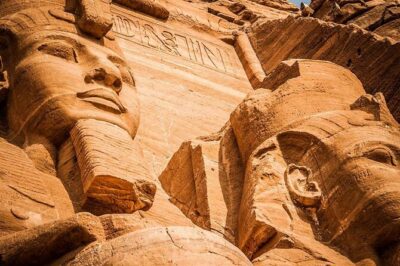
Private Day Tour to Abu Simbel Temples from Aswan
Read our review →4 Days Nile Cruise from Aswan to Luxor including Abu Simbel and Hot Air Balloon
Read our review →Browse the lists this tour appears in