
Reviewed · ABU SIMBEL TOURS
2 days 1 night Luxor,Aswan & Abu simbel by flight from Cairo
Abu Simbel is the big draw here: you leave Cairo before sunrise, fly south, then make the long road trip to one of Egypt’s most unforgettable temple sites. I like that this is a private tour, so your schedule and explanations are not tied to a large group.
I also like the smart use of flights. You cover Aswan and Luxor without losing several days to trains or long road transfers, and the package includes flights, entrance fees, lunch, bottled water, and private air-conditioned transport. The tradeoff is a demanding schedule, with an early pickup, hours on the road, and a late flight back to Cairo.
In This Review
- Key points to know before booking
- Abu Simbel first, before the monuments of Aswan
- Aswan’s monuments after the long road south
- What the private format changes
- Day two: Aswan to Luxor by road
- Karnak and Luxor Temple in the East Bank
- The return flight can make for a very late night
- Is $815 per person good value?
- Who will enjoy this two-day route?
- Should you book it?
- FAQ
- How long is the tour?
- Where does the tour begin?
- Which hotel is included in Aswan?
- Is Abu Simbel included?
- Which Luxor sites are visited?
- What languages are available for the guide?
- Are flights and entrance fees included?
Key points to know before booking
- Abu Simbel takes center stage: Reach Ramesses II’s great temple after roughly three hours of driving from Aswan Airport.
- A full Aswan circuit follows: Philae Temple, the High Dam, and the Unfinished Obelisk are included on day one.
- Luxor is packed into one day: The Valley of the Kings, Hatshepsut, Colossi of Memnon, Karnak, and Luxor Temple all appear on day two.
- Named guides have made a strong impression: Mohamed Amin, Mohamed Omar, Mustafa, and Samar Farrag are among the guides associated with highly praised visits.
- Basma Aswan Hotel is the overnight base: You spend the night at the listed four-star hotel in Aswan.
- The price buys speed and privacy: At $815 per person, this is costly, but it bundles domestic flights, a private vehicle, guides, admissions, lunch, and hotel arrangements.
Abu Simbel first, before the monuments of Aswan
This experience begins at about 4:00 a.m. at your Cairo or Giza hotel. A representative meets you in the lobby with a sign showing your name, then takes you by private air-conditioned car to Cairo Airport.
That early start is not a minor detail. You need to be ready before most of Cairo is properly awake, and the first day has a lot of ground to cover. Once you reach Aswan Airport, another guide meets you and the long drive to Abu Simbel begins.
The road trip takes about three hours. It is a substantial transfer, but it gets you to the reason many people choose this tour in the first place: the temples built by Ramesses II and dedicated to his power, family, and religious role.
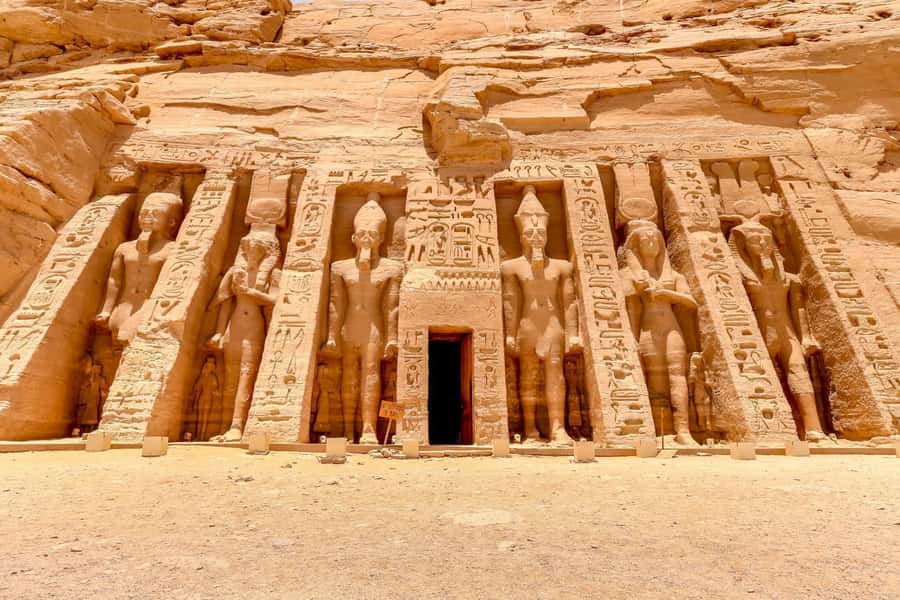
The main temple has four enormous seated figures of Ramesses II carved into the rock face. Inside, you find large halls and chambers decorated with scenes tied to the king’s rule and worship. The second temple belongs to Queen Nefertari, Ramesses II’s wife, and is smaller but finely detailed.
I consider Abu Simbel the strongest part of the program. It is far from Aswan, so arranging the visit yourself takes extra planning. Here, the long transfer is built into the day, and your guide handles the route, tickets, and timing.
Still, you should know what kind of day this is. You fly early, drive for hours, see two major temples, and then return toward Aswan for more sightseeing. If you need slow mornings and long unplanned stops, this will feel rushed.
More Cairo trips worth a second look
- Cairo: Nile Sunset Dinner Cruise, Show & Optional Transfer
★ 4.1 · 2,184 reviews - White & Black Desert tour 2 Days 1 night camping from Cairo.
★ 5.0 · 649 reviews - White & Black desert camping tour 2 Days 1 night From Cairo
★ 5.0 · 467 reviews
Aswan’s monuments after the long road south
After Abu Simbel, the schedule turns back toward Aswan’s main sights. The Unfinished Obelisk offers a different kind of visit from the finished temples. Instead of admiring a completed monument, you see how ancient stoneworkers began shaping a massive obelisk and then left it in the quarry after cracks appeared.
Your guide can help explain the scale of the project and why the site matters. The visit is fairly direct, but it gives useful context for the granite columns, statues, and obelisks you see elsewhere in Egypt.
Next comes the High Dam. This modern structure changed the Nile’s flow, helped control flooding, and created Lake Nasser. The stop is less ornate than Abu Simbel or Philae, but it helps connect ancient Egypt with the country’s modern engineering story.
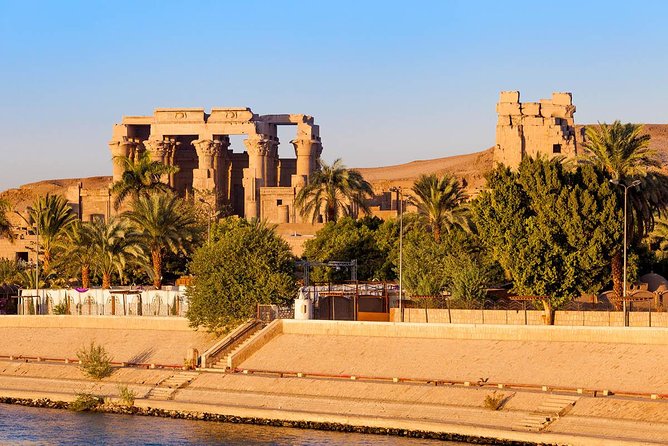
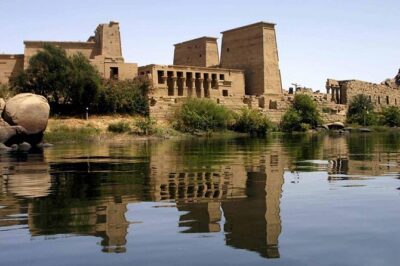
Philae Temple is the day’s other major highlight. Dedicated mainly to the goddess Isis, the temple complex contains courtyards, columns, reliefs, and later additions from different periods. The setting on an island adds to the appeal, although the provided program does not specify the exact transport arrangement for reaching the temple.
By this point, you will have had a very full day. The schedule then takes you to the listed four-star Basma Aswan Hotel. This is the one proper overnight stay, and the hotel is an important part of the price because it lets you avoid returning to Cairo between the southern sites.
What the private format changes
You are not joining a large coach group. Transfers are by private, air-conditioned vehicle, and the group itself is private. That gives you more control during stops, even though the overall itinerary remains tightly timed.
A private guide also matters at places such as the Valley of the Kings and Karnak. These sites can feel like a long sequence of names and rulers if you walk through them without context. A good explanation helps you understand why one tomb, hall, or column matters rather than simply taking photographs and moving on.
The guiding team has included Mohamed Amin and Mohamed Omar, both praised for clear explanations and enthusiasm for their work. Mustafa has also been singled out for strong guiding and attentive service. For Spanish speakers, Samar Farrag is associated with the Luxor portion and has been praised for her Spanish and knowledge of history and anthropology.
You should contact the provider after booking so flight availability can be checked promptly. The tour depends on domestic flights, and the exact flight schedule affects how much time you have at each site.
Day two: Aswan to Luxor by road
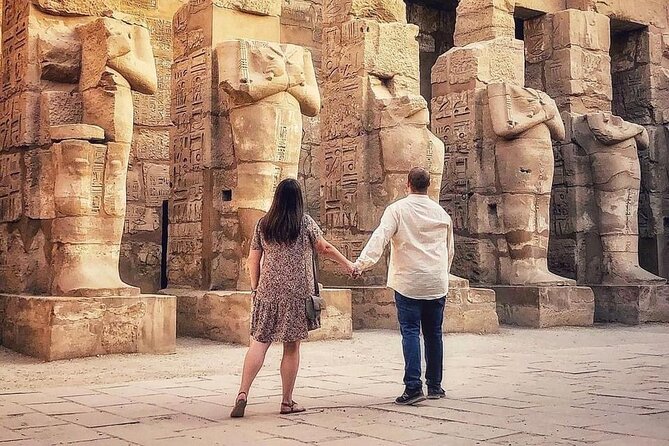
After breakfast and checkout, you are transferred from Aswan to Luxor by private car. The itinerary then focuses first on Luxor’s West Bank, where ancient royal tombs and grand memorial temples sit across the Nile from the modern city.
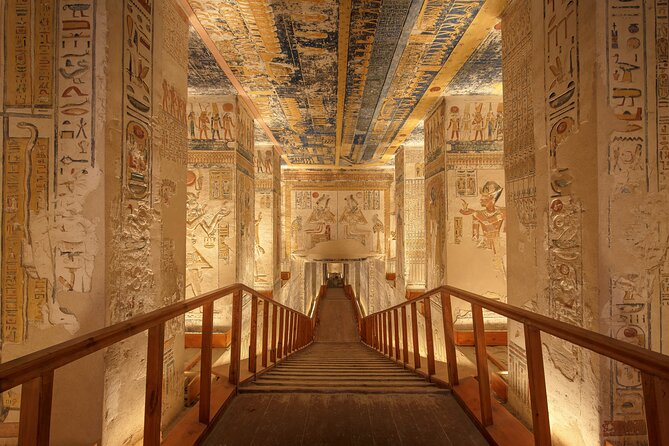
The Valley of the Kings is the most famous stop. This was the burial ground for rulers of several dynasties, and the visit includes tombs from different periods. Your admission usually covers a set number of tombs, while special tombs can require extra payment, but the provided information does not specify the exact ticket arrangement. Ask your guide what is included before entering.
The tombs are not all alike. Some are short and direct, while others extend farther into the rock. Their painted scenes were intended to guide and protect the dead king in the next life. The interiors can be narrow, so your experience may depend on crowd levels and which tombs are open that day.
The Temple of Hatshepsut at Deir El Bahari follows. Built for the woman who ruled Egypt for about two decades during the 18th Dynasty, it is arranged in broad terraces against the cliffs. Its design is very different from the deep chambers of the Valley of the Kings.
Hatshepsut’s position makes this stop especially interesting. She ruled as pharaoh, not simply as a royal wife or regent, and the temple presents her authority through architecture, reliefs, and religious imagery. I would give this site your full attention, even though the schedule gives you many other monuments to see.
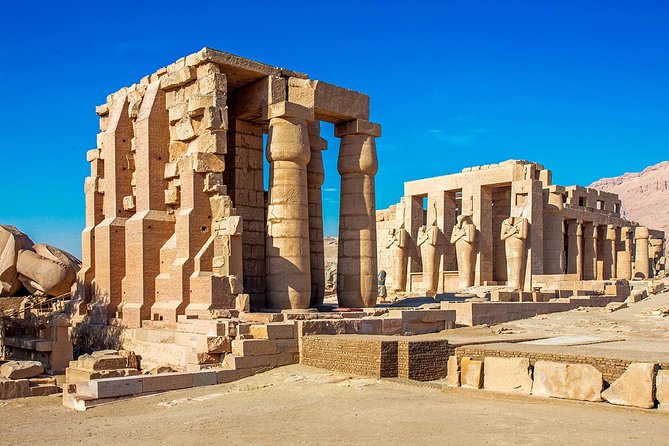
The Colossi of Memnon are a quick but worthwhile stop. These two huge seated statues once guarded the entrance to the mortuary temple of Amenhotep III. The temple itself has largely disappeared, leaving the statues as the most visible remains.
This stop is shorter than the Valley of the Kings or Hatshepsut. That is part of its appeal on a packed day: you can see the figures, hear their story, and continue without giving up a large part of your limited Luxor time.
A different kind of day out, same part of Egypt:
- Cairo: Pyramids & Great Sphinx Private Tour with Camel Ride
★ 4.9 · 6,335 reviews - Tour to Giza Pyramids and The Egyptian Museum
★ 5.0 · 6,016 reviews - VIP All inclusive Best of the best Giza Pyramids,Sakkara,Memphis
★ 5.0 · 3,164 reviews - From Cairo: Pyramids of Giza, Sphinx, Saqqara & Memphis Tour
★ 4.7 · 3,110 reviews
Karnak and Luxor Temple in the East Bank
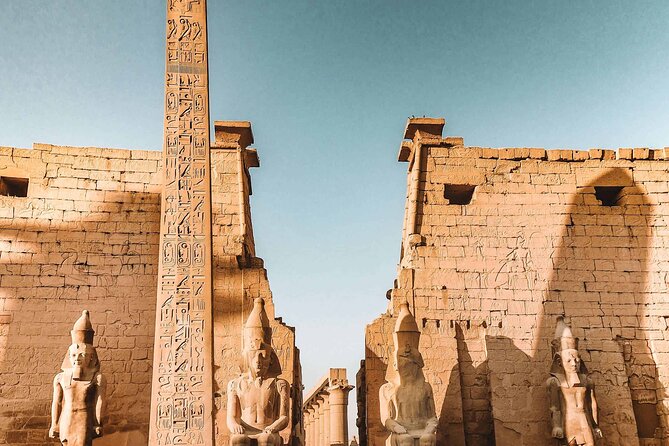
The afternoon moves to Luxor’s East Bank and the city’s two great temple complexes. The itinerary lists Luxor Temple and Karnak, with transport between them by carriage or bus.
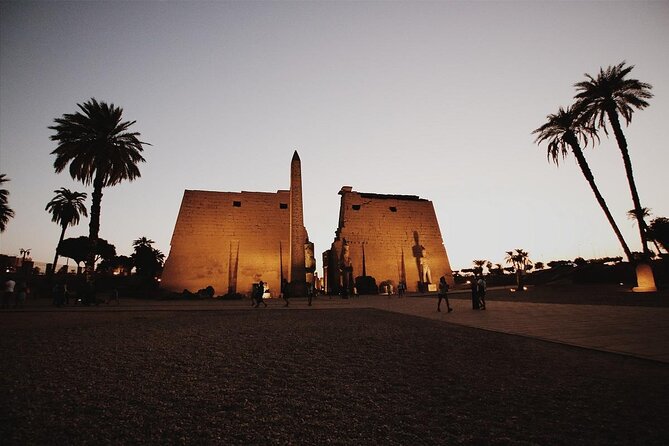
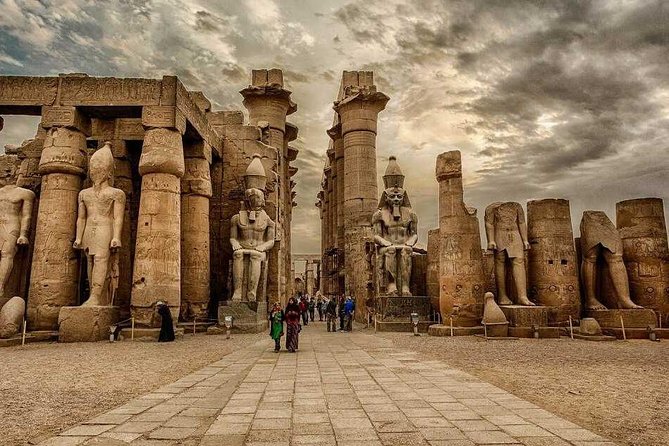
Luxor Temple was begun by Amunhotep III in the New Kingdom and completed by Ramesses II. Its courtyards, columns, statues, and granite figures show how later rulers added their own mark to an older sacred site.
The temple is closely tied to the ancient city’s religious life. The Avenue of Sphinxes once connected Luxor Temple with Karnak, and the route helps you understand that these were not isolated ruins. They formed part of one large ceremonial area.
Karnak is the larger and more sprawling complex. It was built and expanded by different rulers over many centuries, so you are not looking at one single temple created in one phase.
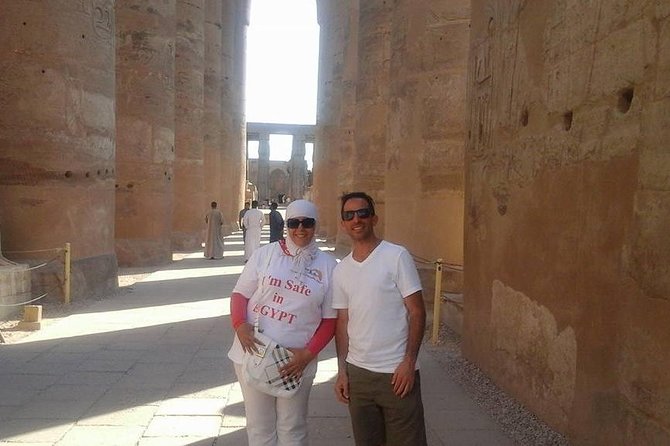
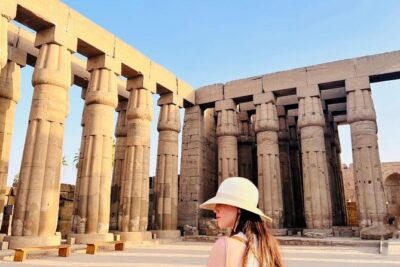
The Hypostyle Hall is the great showpiece, with 134 huge columns packed into a forest of stone. The scale is difficult to grasp in photographs. Look up at the carved and painted surfaces, then compare the smaller side passages with the central columns.
The itinerary also includes the Unfinished Propylon, obelisks linked to Queen Hatshepsut and Thutmosis III, the temple of Amun, the Sacred Lake, and the granite scarab of Amenophis III. These details reward a guide who can keep the names and building phases clear.
Karnak is the kind of site where a private tour is especially useful. Without an explanation, it can become a long walk among columns and broken walls. With a clear route, you can focus on the parts that tell the story of royal power, worship, and architectural ambition.
The return flight can make for a very late night
After the East Bank visits, you are transferred to Luxor Airport for the flight back to Cairo. On arrival, a representative meets you and takes you to your Cairo hotel.
The return timing deserves careful thought. One booking had a 9:00 p.m. flight from Luxor delayed by more than an hour, resulting in arrival in Cairo after midnight. Delays are not guaranteed, but a late flight after two days of early starts can leave you worn out.
The itinerary is therefore best for someone who values seeing the major sites over having spare time. You may have only a short hotel stop in Luxor before the airport, and the accommodation arrangement outside the Aswan night may feel basic. One stay in Aswan was especially well received, while a Luxor hotel used for a few hours was described as poor.
That difference points to the right expectation: this is primarily a sightseeing and transport package, not a hotel holiday.
Is $815 per person good value?
At $815 per person, the tour is not cheap. But you should compare it with the separate cost and effort of booking two domestic flights, a private car from Aswan to Abu Simbel, a second private transfer to Luxor, local guides, entrance fees, lunch, bottled water, and an overnight hotel.
The private format also affects the calculation. A cheaper group itinerary may reduce the price, but it can bring fixed departure times, larger vehicles, and less freedom to ask questions or adjust a short stop.
The package also says there are no hidden costs, though tips and an Egyptian entry visa are not included. You should set aside money for tipping your guides and drivers, and confirm your visa needs separately.
I see the price as reasonable only if your main goal is to cover southern Egypt quickly from Cairo. If you have four or five days available, a slower trip may offer better comfort and more time at the monuments. If your schedule is tight, this tour saves a great deal of planning.
Who will enjoy this two-day route?
I would recommend it most strongly to first-time visitors who want the headline sites of Aswan and Luxor but cannot spare a longer Nile itinerary. It also suits people who prefer a private guide and do not want to coordinate flights, cars, tickets, and hotel arrangements on their own.
The tour can work well for couples, families, or small private groups. The available guiding languages are Arabic, English, German, and Spanish, so you can request the language that best suits your group.
I would be more cautious if you dislike early starts, long drives, or full sightseeing days. Abu Simbel alone requires about six hours of road travel in both directions from Aswan, and day two combines a road transfer with six major Luxor stops before a late flight.
Free cancellation up to 24 hours before the activity and the option to reserve without paying immediately give you some flexibility. Still, flight availability needs to be checked after booking, so do not treat the departure times as final until the provider confirms them.
Should you book it?
Book this tour if Abu Simbel is high on your list and you want to add Luxor’s main monuments without spending several extra days arranging transport. The private vehicle, included admissions, flights, and strong guide options make the package practical for a short Cairo stay.
Skip it if comfort and free time matter more than coverage. Two days is enough to see the major sites, but not enough to linger. I would also avoid it if a delayed late flight would cause problems with your next morning’s plans.
For the right schedule, this is a powerful Egyptian highlights trip: Abu Simbel on day one, the royal tombs and temples of Luxor on day two, and very little time wasted on planning.
FAQ
How long is the tour?
The experience lasts two days and one night.
Where does the tour begin?
Pickup is provided from your hotel in Cairo or Giza at about 4:00 a.m. You are transferred to Cairo Airport for a flight to Aswan.
Which hotel is included in Aswan?
The listed hotel is Basma Aswan Hotel, described as a four-star hotel.
Is Abu Simbel included?
Yes. You drive from Aswan Airport to Abu Simbel, visit the temple of Ramesses II and the nearby temple of Queen Nefertari, then return toward Aswan.
Which Luxor sites are visited?
The Luxor portion includes the Valley of the Kings, the Temple of Hatshepsut, the Colossi of Memnon, Karnak Temple, and Luxor Temple.
What languages are available for the guide?
Guiding is available in Arabic, English, German, and Spanish.
Are flights and entrance fees included?
Yes. The package includes flight tickets and entry fees, along with private transfers, a tour guide, lunch, bottled water, and hotel pickup and drop-off. Tips and the Egyptian entry visa are not included.
Recently reviewed around Cairo
- White Desert Overnight Camping Sharing Tour in Egypt★ 5.0 · 15 reviews
- Cairo Best 2Days tour Pyramids, Saqqara & Old Cairo★ 5.0 · 15 reviews
- Giza Pyramids with (GEM) Grand Egyptian Museum★ 5.0 · 42 reviews
- sunset at Giza pyramids by camels★ 5.0 · 31 reviews
- Tour to Giza pyramids Memphis Sakkara and Felucca on the Nile★ 5.0 · 16 reviews
- visit the pyramids of Giza + the necropolis of Saqqara + the Memphis site.★ 4.5 · 20 reviews
- Private Giza pyramid,sphinx, Mummification temple& inside pyramid★ 5.0 · 32 reviews
- Private guided shopping tour in Khan el-Khalili with Lunch★ 4.5 · 21 reviews
Abu Simbel Tours, compared.
4-Days Nile Cruise From Aswan To Luxor including Abu Simbel and Hot Air Balloon
Read our review →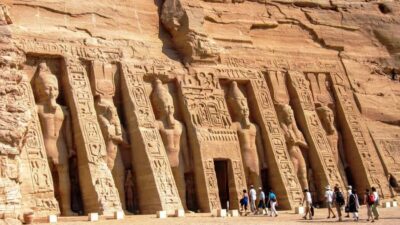
4-Day 3-Night Nile Cruise from Aswan to Luxor&Abu Simbel+Balloon
Read our review →
4-Day 3-Night Nile Cruise from Aswan to Luxor including Abu Simbel, Air Balloon
Read our review →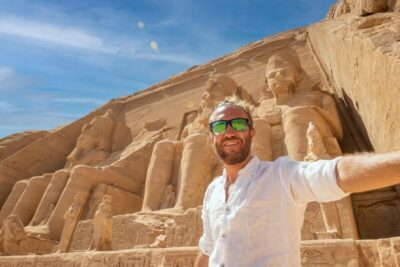
Abu Simbel Temple Private Guided Day Trip with Lunch
Read our review →4-Days Nile Cruise From Aswan To Luxor including Abu Simbel and Hot Air Balloon
Read our review →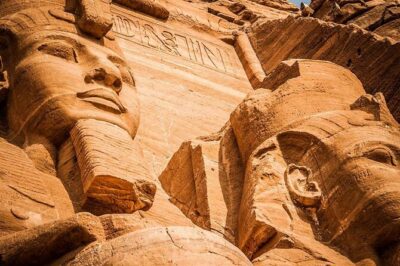
Private Day Tour to Abu Simbel Temples from Aswan
Read our review →4 Days Nile Cruise from Aswan to Luxor including Abu Simbel and Hot Air Balloon
Read our review →Browse the lists this tour appears in