
Reviewed · CAIRO TOURS
2 Days best of Cairo & Giza private guided tour
The best thing about this two-day Cairo and Giza tour is its range. You move from the Great Pyramid and Sphinx to the Step Pyramid, then from royal tombs and ancient statues to Coptic churches, an Ottoman-style mosque, and the lanes of Khan El-Khalili. It gives you a fast but meaningful look at the many faces of Egypt’s capital.
I like the private format, since your guide can explain the sites at your pace rather than delivering a fixed speech to a large group. I also like that transport, admission fees, bottled water, snacks, air conditioning, and onboard Wi-Fi are included. The main consideration is the packed schedule: two days is enough for Cairo’s major sights, but it leaves little room for slow wandering or extra stops.
In This Review
- Key points to know before booking
- A strong two-day introduction to Cairo
- Day one begins with the Great Pyramid
- Memphis connects the pyramids to Egypt’s first capital
- Saqqara shows how pyramid design developed
- Day two begins with the Egyptian Museum
- Coptic Cairo brings a different side of the city
- Saladin’s Citadel offers Cairo from above
- Khan El-Khalili is the right finish
- What the $154.29 price really covers
- Guides, vehicles, and the pace of the day
- Who should choose this Cairo tour?
- Should you book it?
- FAQ
- How long is the Cairo and Giza tour?
- What time does the tour start?
- Is this a private tour?
- Is pickup available?
- Is an Egyptologist guide included?
- Are entrance fees included?
- Are tickets to the inside of the pyramids included?
- Is the Solar Boat ticket included?
- Is transportation included?
- What else is included in the price?
- Can I cancel for a full refund?
Key points to know before booking
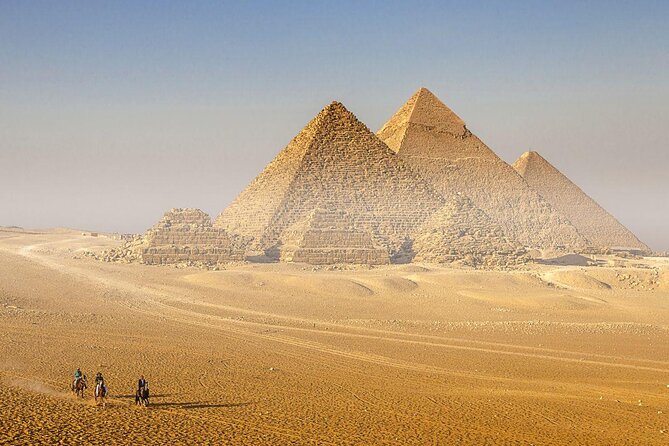
- Giza comes first: See all three main pyramids, the panoramic viewpoint, the Sphinx, and the Valley Temple area.
- Saqqara adds important context: The Step Pyramid shows how Egyptian pyramid building began.
- Day two covers several eras: The Egyptian Museum, Coptic Cairo, Saladin’s Citadel, and Islamic Cairo form a broad history lesson.
- A private Egyptologist guide leads the way: Guides associated with the operator include Ahmed, Mohammed, Mostafa, and Osama.
- The price covers more than transport: At $154.29 per person, admission fees, private air-conditioned transportation, Wi-Fi, water, snacks, and taxes are included.
- Extra pyramid tickets cost more: Going inside a pyramid or visiting the Solar Boat requires a separate ticket.
A strong two-day introduction to Cairo
Cairo is not a city that reveals itself in one neat story. Ancient royal monuments sit beside medieval fortifications, churches, mosques, shops, traffic, and ordinary neighborhoods. This tour works because it groups the main sights into two sensible themes.
Day one focuses on the pyramid fields south and west of Cairo. You see the famous monuments at Giza, then visit Memphis and Saqqara. Day two turns toward Cairo’s museums, religious quarters, medieval citadel, and market streets.
The start time is 8:00 a.m., and pickup is offered. Since this is a private activity, only your own group takes part. That matters in Cairo, where a guide who can keep the day moving is useful, especially when several major sites are involved.
The tour is designed for first-time visitors who want the major sights handled in one booking. It also suits a short Cairo stay, including the kind of visit where you have only two sightseeing days before moving elsewhere in Egypt.
More Cairo trips worth a second look
- White & Black Desert tour 2 Days 1 night camping from Cairo.
★ 5.0 · 649 reviews - Cairo: 2-Day Bahariya Oasis Camp and Desert Tour
★ 4.9 · 616 reviews - White & Black desert camping tour 2 Days 1 night From Cairo
★ 5.0 · 467 reviews
Day one begins with the Great Pyramid
Your first major stop is the Giza Plateau, where the Great Pyramid of Khufu dominates the view. The tour describes it as about 146 meters high when built, with more than 2.4 million stones. Those figures help explain the scale, but the real effect comes from standing beside the lower courses of stone and seeing how high the monument rises above you.
The Great Pyramid is the only surviving member of the ancient Seven Wonders. Your guide can put the monument in its royal and religious setting, then help you make sense of the plateau rather than leaving you to circle it without context.
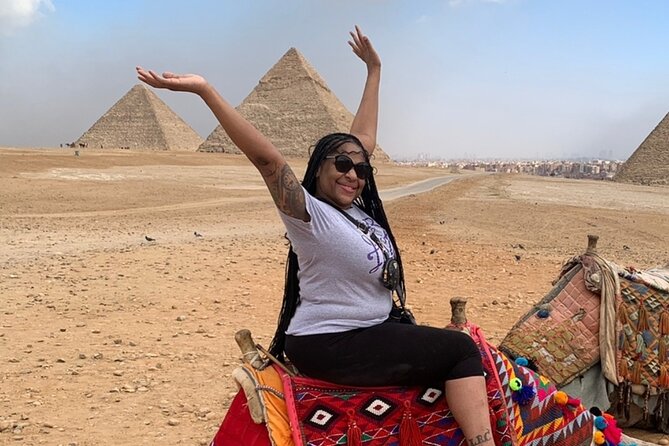
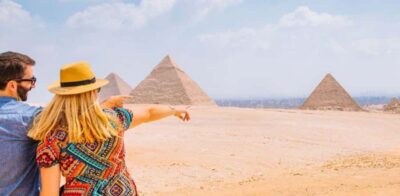
The listed visit lasts about three hours, including the other Giza monuments. You can walk around the Great Pyramid, then ride to the panoramic viewpoint, where all three main pyramids can appear in one line. This is one of the best places for photographs, especially if you want a wider view instead of a close-up of a single monument.
The second pyramid, built for Khafre, reaches about 139 meters and may still show some of its original casing near the top. The pyramid of Menkaure is smaller, at about 66 meters, but it completes the royal group. Seeing the three together gives you a better sense of the planned cemetery than visiting only the Great Pyramid.
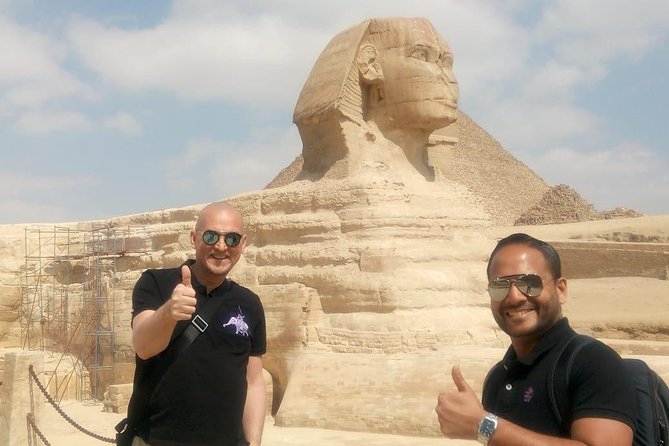
The tour then continues to the Great Sphinx, with the body of a lion and the head of a king. It lies near the Valley Temple of Khafre, so this part of the visit helps connect the pyramid to the wider funerary complex.
A practical point: entrance to the pyramids themselves is not included. The same applies to the Solar Boat. You can still see the exterior monuments without these extra tickets, but decide ahead of time if entering a pyramid matters to you. Interior passages can be tight, and the separate ticket changes the cost of the day.
Memphis connects the pyramids to Egypt’s first capital
After Giza, the tour heads to Memphis, described as the first federal capital of Egypt. The ancient name Mn-Nefer means beautiful town, while another name, Pr-hedj, means white house. This stop shifts the focus from enormous monuments to surviving pieces of a once-important city.
You have about an hour here. The collection includes remains linked with the period of Ramses II, including a large statue of Ramses II, an alabaster sphinx, and a representation of the Memphis triad: Ptah, Nefertem, and Sekhmet.
Memphis is not a fully preserved city in the way a visitor might imagine from the word capital. Much has disappeared, and the visit centers on the surviving sculptures and archaeological remains. I see its value in the connection it provides: Giza was a royal burial zone, while Memphis was a center of government, religion, and power.
Your guide’s explanation matters especially here. Without context, the statues can feel like isolated objects. With context, they help you understand how the pyramid fields related to the capital that supported them.
Saqqara shows how pyramid design developed
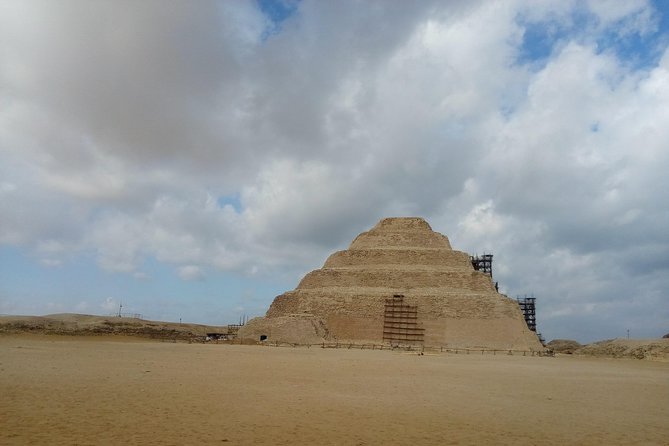
Saqqara is about 20 kilometers south of Giza and was the necropolis of Memphis. The main draw is the Step Pyramid of Djoser, ordered by King Djoser of the Third Dynasty and designed by Imhotep.
It is often described as the first pyramid and the first large complex built in stone. Its stepped form shows an early stage in the development of the smooth-sided pyramids at Giza. That makes Saqqara more than a second pyramid stop. It gives you the architectural story that Giza alone cannot provide.
The visit lasts about two hours. Saqqara served as a major cemetery from the early dynastic period through the Greek and Roman eras, so the area represents a long stretch of Egyptian history. The tour may include more than the Step Pyramid, depending on the day’s timing and site access, but the exact additional areas are not specified.
This is also the point where the schedule may feel demanding. After three hours at Giza and an hour at Memphis, two hours at Saqqara makes for a full morning and afternoon. Still, I would keep Saqqara on the plan. It is one of the most useful stops for understanding why the pyramids look the way they do.
A different kind of day out, same part of Egypt:
- Cairo: Pyramids & Great Sphinx Private Tour with Camel Ride
★ 4.9 · 6,335 reviews - Tour to Giza Pyramids and The Egyptian Museum
★ 5.0 · 6,016 reviews - VIP All inclusive Best of the best Giza Pyramids,Sakkara,Memphis
★ 5.0 · 3,164 reviews - From Cairo: Pyramids of Giza, Sphinx, Saqqara & Memphis Tour
★ 4.7 · 3,110 reviews
Day two begins with the Egyptian Museum
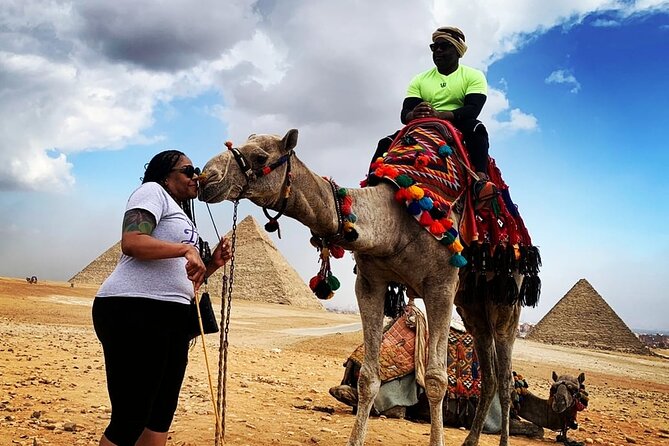
The second day starts at the National Egyptian Museum, built in 1901. The museum presents Egyptian material from prehistory through the Greek and Roman periods, with about 120,000 objects cited in the tour description.
The most famous collection is the treasure of Tutankhamun, discovered by Howard Carter in 1922 in the Valley of the Kings. The collection is described as containing more than 3,500 pieces. Even if you have seen photographs of the gold mask and royal objects, seeing the workmanship in person gives the story a different weight.
You have about two hours inside. That is enough for a guided introduction to the principal collections, but not enough to inspect every room carefully. The museum is large, and the number of objects can be tiring. I recommend treating this as a focused highlights visit rather than expecting to see everything.
The guide is especially useful here because the museum contains objects from many periods and places. A private guide can help you spend time on the pieces that best match your interests, though the exact route depends on the guide and current museum arrangements.
One detail worth checking before your visit is the wording around the museum’s collections. The tour description refers to major Tutankhamun treasures, while museum displays and collection arrangements can change. The tour includes entrance to the stated museum visit, but it does not promise that every gallery or special exhibit will be open.
Coptic Cairo brings a different side of the city
From the museum, you continue to Old Cairo, also called Coptic Cairo. This district includes the Babylon Fortress, the Hanging Church, the Greek Orthodox Church of St. George, and other historic churches.
The area is tied to the Christian story of Egypt. Tradition holds that the Holy Family visited and stayed near the Church of Saints Sergius and Bacchus, commonly called Abu Serga. The present churches were largely built or rebuilt after the Muslim conquest in the seventh century, but the district preserves an older Christian presence in Egypt.
The planned visit lasts about two hours. That gives you time to see several sites, though church access and the order of visits can vary. Dress modestly, particularly for church interiors, and keep in mind that these are active places of worship as well as historic monuments.
I like this stop because it prevents the tour from reducing Egypt to pharaohs and tombs. You see how the country’s Christian communities shaped Cairo, and how the older Roman and Byzantine layers remain part of the city today.
Saladin’s Citadel offers Cairo from above
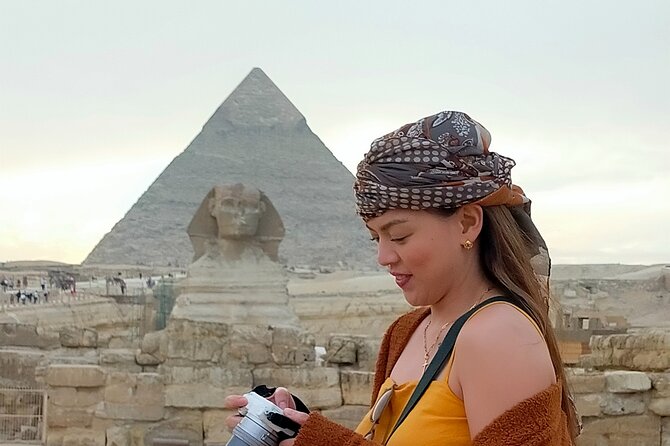
The Citadel of Cairo was commissioned by Saladin between 1176 and 1183 to protect the city from Crusader attacks. The fortress covers about 153,000 square meters and later served as a royal center.
The tour gives you about an hour here, focusing on the Citadel and the Mosque of Muhammad Ali. The mosque was built between 1828 and 1848 and is known for its alabaster surfaces and commanding position on the Citadel’s summit.
This is a brief stop, but it combines architecture, politics, and views. From the Citadel, you can look across Cairo and understand why this hill mattered for defense and government. The mosque’s large interior and Ottoman influence also create a sharp contrast with the pharaonic sites from day one.
The tour description says stones from the Giza pyramids were reused in the Citadel’s construction. That detail is often repeated in accounts of Cairo’s building history, but it should be treated as part of the guide’s historical explanation rather than a reason to skip the pyramids or judge the later fortress alone.
When entering the mosque, you need respectful clothing. Shoes may need to be removed in prayer areas, and the atmosphere can be quieter than the busy streets below.
Khan El-Khalili is the right finish
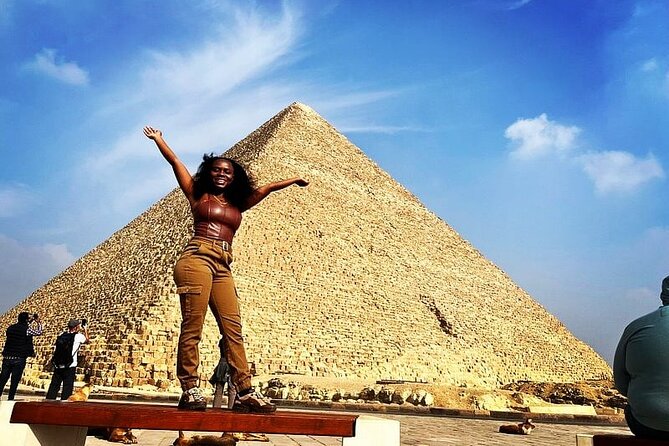
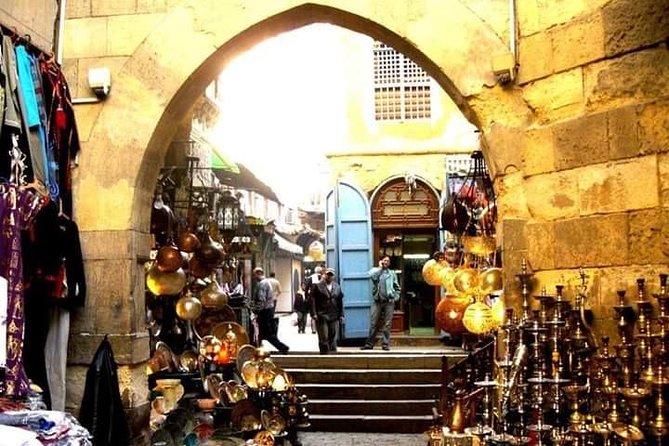
The final stop is Khan El-Khalili, Cairo’s historic souk in the center of Islamic Cairo. You have about an hour to walk through the market district and shop.
This is not a quiet museum visit. You might find jewelry, small souvenirs, textiles, decorative items, and ordinary neighborhood commerce mixed together. The point is less about one individual monument and more about seeing Cairo’s old commercial quarter in use.
Shopping here requires patience. Compare prices, decide what you actually want, and keep your belongings close in crowded lanes. The tour includes the stop, but personal purchases are not included.
I like ending here because it lets the day loosen up after churches, museum rooms, and fortress walls. You can walk, browse, and take in the sounds and smells of Islamic Cairo before returning to your start point.
What the $154.29 price really covers
At $154.29 per person, the value depends on your group size and how much planning you want to hand over. This is not simply a ride between monuments. The price includes a private Egyptologist guide, private air-conditioned transport with Wi-Fi, entrance fees for the listed sights, bottled water, snacks, and taxes.
That package can be useful in Cairo, where arranging several distant sites on your own takes time. Giza, Memphis, and Saqqara are not one compact attraction, and day two links districts that can otherwise require separate planning.
The price does not include extra pyramid interiors, the Solar Boat, personal expenses, or tips. Tipping is recommended, so include it in your budget. Group discounts are offered, which may improve the per-person value for families or friends traveling together.
A private tour also gives you comfort and control. You are not waiting for a large group to gather, and you can ask questions throughout the day. The tradeoff is that the tour has a fixed two-day scope, so it is not designed for travelers who want long, unplanned time at each site.
Guides, vehicles, and the pace of the day
The experience is sold with an Egyptologist guide who speaks your language. Names associated with the operation include Ahmed, Mohammed, Mostafa, and Osama. Specific guide assignments can change, so do not book on the assumption that one particular person will lead your tour unless the operator confirms it.
The strongest pattern in the available feedback is praise for the guides’ friendly manner, clear explanations, patience, and ability to make people feel looked after. Ahmed is singled out in several accounts, while Osama is noted for guiding at the pyramids and helping visitors find good photo locations. Those personal touches matter at Giza, where a good viewpoint and a well-timed explanation can make the visit feel much less confusing.
Transportation is private, air-conditioned, and equipped with Wi-Fi. Pickup is offered, but the exact pickup location should be confirmed at booking. The stated start time is 8:00 a.m., and each day returns to your start point after the final stop.
The schedule requires a reasonable level of stamina. You will walk across large archaeological areas, spend time outdoors, and move between several locations. The activity says most people can participate, but it does not provide detailed accessibility information.
Who should choose this Cairo tour?
I would choose this tour if you are visiting Cairo for the first time and want a strong overview without arranging several separate day trips. It is also a good fit for families, couples, and small groups who prefer their own vehicle and guide.
It suits you especially well if you want ancient monuments, museum objects, Christian sites, Islamic architecture, and shopping in one compact program. The guide can help connect those subjects instead of treating each place as a disconnected photo stop.
I would hesitate if your main goal is slow archaeology. Two hours at the museum and one hour at the Citadel are useful introductions, but not enough for close study. I would also think twice if you dislike early starts, long drives between sites, or busy shopping areas.
The reviews supplied for the operator repeatedly praise safe-feeling service, clean transport, strong communication, and guides who stay attentive to their groups. The overall rating is listed as 5 from 32 reviews, with 100 percent recommending the experience. That is encouraging, though you should still confirm the guide, pickup details, and any special entry tickets before paying.
Should you book it?
Book this tour if you want Cairo’s essential sights organized into two busy but sensible days. The mix is the real strength: Giza and Saqqara explain ancient Egypt, the museum puts its objects in one place, and Coptic Cairo, the Citadel, and Khan El-Khalili show how much later history surrounds the pyramids.
Skip it if you want an unhurried visit or plan to spend a full day inside the Egyptian Museum. For most first visits, though, the private transport, included admissions, language support, and flexible guide attention make $154.29 a reasonable price for a concentrated introduction.
Free cancellation is available up to 24 hours before the start time for a full refund. Changes made within 24 hours are not accepted, and poor weather may lead to a different date or a full refund.
FAQ
How long is the Cairo and Giza tour?
The experience lasts approximately two days.
What time does the tour start?
The stated start time is 8:00 a.m.
Is this a private tour?
Yes. Only your own group participates in the private activity.
Is pickup available?
Yes, pickup is offered. Confirm the exact pickup location when booking.
Is an Egyptologist guide included?
Yes. An Egyptologist guide who speaks your language is included.
Are entrance fees included?
Entrance fees for the sights listed in the program are included.
Are tickets to the inside of the pyramids included?
No. Extra tickets for entering the pyramids are not included.
Is the Solar Boat ticket included?
No. The Solar Boat is listed as an extra ticket.
Is transportation included?
Yes. Private transportation with air conditioning and Wi-Fi is included.
What else is included in the price?
Bottled water, snacks, and all taxes are included. Personal expenses and tipping are not included.
Can I cancel for a full refund?
Yes, if you cancel at least 24 hours before the experience start time. Cancellations made less than 24 hours in advance are not refunded.
Recently reviewed around Cairo
- White Desert Overnight Camping Sharing Tour in Egypt★ 5.0 · 15 reviews
- Cairo Best 2Days tour Pyramids, Saqqara & Old Cairo★ 5.0 · 15 reviews
- Giza Pyramids with (GEM) Grand Egyptian Museum★ 5.0 · 42 reviews
- sunset at Giza pyramids by camels★ 5.0 · 31 reviews
- Tour to Giza pyramids Memphis Sakkara and Felucca on the Nile★ 5.0 · 16 reviews
- visit the pyramids of Giza + the necropolis of Saqqara + the Memphis site.★ 4.5 · 20 reviews
- Private Giza pyramid,sphinx, Mummification temple& inside pyramid★ 5.0 · 32 reviews
- Private guided shopping tour in Khan el-Khalili with Lunch★ 4.5 · 21 reviews
Cairo Tours, compared.
Pyramids & Great Sphinx Private Tour with Camel Ride
Read our review →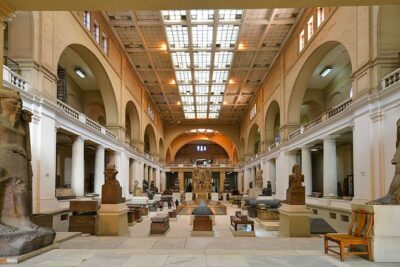
Tour to Giza Pyramids and The Egyptian Museum
Read our review →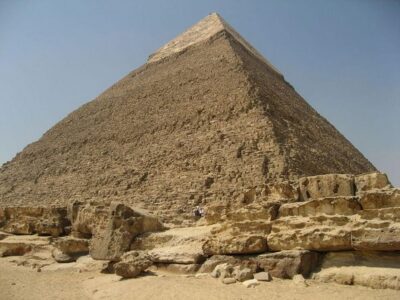
VIP All inclusive Best of the best Giza Pyramids,Sakkara,Memphis
Read our review →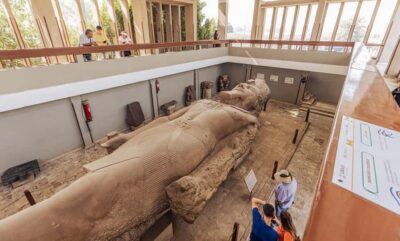
Pyramids of Giza, Sphinx, Saqqara & Memphis Tour
Read our review →
Cairo 8 Hour Private Tour of Pyramids, Egyptian Museum and Bazaar
Read our review →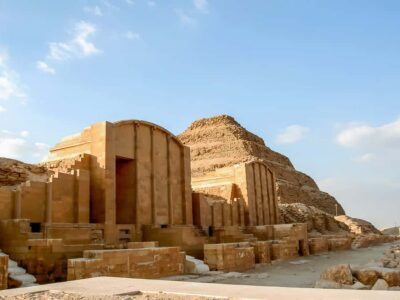
Private ViP all-inclusive Giza Pyramids,Sphinx,Inside Pyramid
Read our review →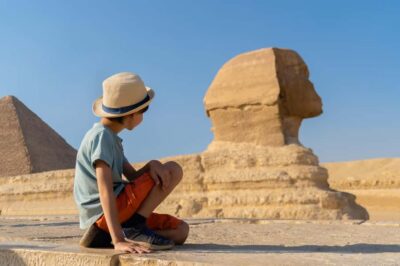
Grand Egyptian Museum, Pyramids, Sphinx Tour & Lunch
Read our review →Browse the lists this tour appears in