
Reviewed · ABU SIMBEL TOURS
3-Day Guided tours to Aswan, Abu Simbel and Luxor & Train and Transfers
This three-day trip packs some of southern Egypt’s biggest sights into one fast-moving route. You’ll see Aswan’s island temple, Abu Simbel’s colossal statues, and Luxor’s royal tombs and temples, with the long Aswan to Luxor journey handled by first-class train rather than another road transfer.
I like the small group limit of 15 people, which gives your guide a better chance to answer questions and keep everyone together. I also like the practical mix of private-style vehicle transfers and rail travel, especially when every minute matters. The tradeoff is simple: you’ll wake early, spend long hours on the road, and have little free time for wandering.
- Philae Temple by motorboat: Reach the island temple by boat and see a monument rescued from rising Nile waters.
- Abu Simbel in one demanding day: Spend about eight hours on the excursion to Ramses II’s monumental temples.
- First-class train to Luxor: Travel between the two historic cities with station transfers arranged.
- Five major Luxor sights: Visit the Valley of the Kings, Hatshepsut’s temple, the Colossi of Memnon, Karnak, and Luxor Temple.
- Guides with strong personal feedback: Guides including Hany Yassen, Khaled El Saady, Mina, and Talaat Abdo are praised for clear explanations, humor, patience, and careful organization.
- Low headline price, extra entry fees: The $167 price includes transport and guiding, but site admissions cost about $35 more and are paid separately.
In This Review
- What You Are Really Buying for $167
- Day One: Aswan’s Dam, Quarry, and Island Temple
- Philae Temple by Boat
- Day Two: The Long Run to Abu Simbel
- Day Three: Luxor’s West Bank and East Bank
- Valley of the Kings
- Hatshepsut’s Temple at Deir el Bahari
- Colossi of Memnon
- Karnak and Luxor Temple on the East Bank
- Guides and the Human Side of the Trip
- What to Pack and How to Prepare
- Who Should Book This Three-Day Route?
- Should You Book It?
- FAQ
- What is included in the $167 tour price?
- Are entrance tickets included?
- How long is the Abu Simbel excursion?
- How long is the train ride from Aswan to Luxor?
- Where can pickup and drop-off take place?
- How large is the group?
What You Are Really Buying for $167
At $167 per person, this is a transport-and-guiding package more than an all-inclusive sightseeing ticket. The price covers first-class train travel from Aswan to Luxor, air-conditioned vehicle transfers, guide services, meet-and-assist support, service charges, taxes, landing fees, and parking fees.
The major extra cost is admission. The listed total is about $35, payable in Egyptian pounds. The supplied information says international cardholders receive half-off admission, so carry the right payment method and confirm the current amount before setting out. Site prices can change, but you should budget for this extra rather than treating the advertised price as the final total.
I see good value here if you want to connect Aswan and Luxor without arranging several separate tours, taxis, train tickets, and hotel transfers. You are paying for a tightly organized route through the essential monuments, not for a relaxed Nile cruise or a slow cultural trip.
The value is strongest for a first visit. You’ll cover the places most people build an Upper Egypt itinerary around, and the guide gives the monuments context instead of leaving you to decode walls and statues on your own. The value is weaker if you already have transport arranged, prefer unhurried visits, or want time in local neighborhoods.
Day One: Aswan’s Dam, Quarry, and Island Temple
The first day begins with pickup at your Aswan hotel, airport, bus station, or train station. If you arrive by transport rather than staying in town, send your arrival details in advance so the meet-and-assist team can arrange the pickup.
The opening stop is the Aswan High Dam, an enormous modern project completed in the 1960s. From the top, you can look across Lake Nasser toward Kalabsha Temple to the south and the power station to the north. The stop lasts about 45 minutes, enough to understand the scale of the dam and its effect on the Nile.
This is not an ancient monument, but it helps explain modern Aswan. The dam changed water control, electricity production, and the fate of several ancient sites. The most important practical point is that entry is not included, so the admission fee comes separately.
Next comes the Unfinished Obelisk in Aswan’s granite quarries. Here you’ll see a massive monument still lying in the stone where workers abandoned it after discovering a crack. Your Egyptologist guide explains how ancient craftsmen shaped granite and why one structural flaw could end the project.
The quarry gives you something different from a finished temple. You can see the working material, the marks of extraction, and the scale of the stone before it became a column, statue, or obelisk elsewhere in Egypt. Allow about 45 minutes, and expect sun and exposed ground. Sunglasses are specifically recommended, and sensible footwear is useful.
More Aswan trips worth a second look
- 6 Days Nile Cruise:Luxor,Aswan,Abu Simbel with Train Tickets from Cairo
★ 4.5 · 188 reviews - 3-Day Aswan , Nubian Village ,Abu Simbel , Luxor & Train ticket
★ 4.5 · 17 reviews - Egypt on Budget – 8 Days ( Cairo , Aswan , Nile Cruise – Luxor ) Sleeper Train
★ 4.5 · 121 reviews
Philae Temple by Boat
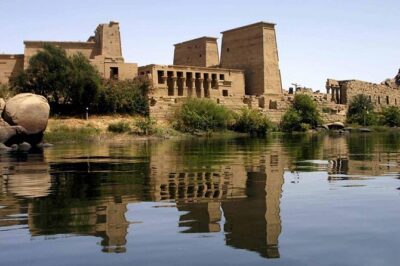
Philae is the emotional high point of the Aswan portion. You’ll take a short motorboat ride to the island, then walk through a temple complex dedicated to Isis. The setting is part of the appeal: water surrounds the temple, and the island was arranged to resemble the original site after the monument was moved to protect it from the High Dam’s rising waters.
The guided visit lasts about two hours. Your guide leads the main walk, then gives you free time to look around on your own. That balance matters. Philae has plenty to reward a slower look, from its grand entrance to its carved scenes and columned spaces.
The boat ride is short, but it adds a welcome change after the vehicle transfer. Admission is not included, and the boat is part of the arranged transfer to the island. After the visit, you return to your Aswan hotel.
This day is fairly manageable compared with what follows. You see three important sites, but the schedule still leaves a little room to recover before the early start for Abu Simbel.
Day Two: The Long Run to Abu Simbel
Abu Simbel is the trip’s biggest logistical test and one of Egypt’s most powerful sights. The excursion takes about eight hours, including the journey from Aswan and the return. You need to be comfortable with an early departure and a substantial amount of time in the air-conditioned vehicle.
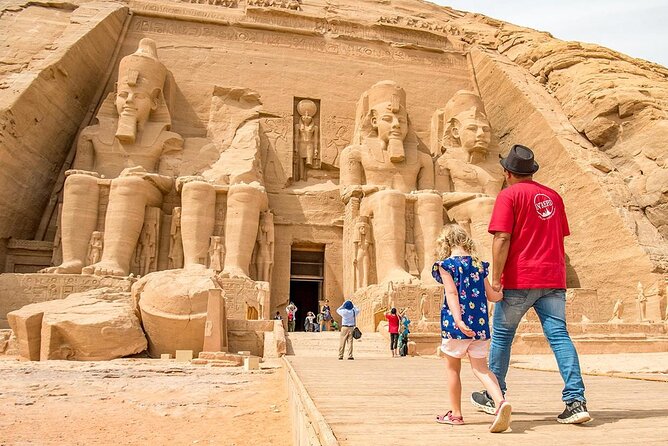
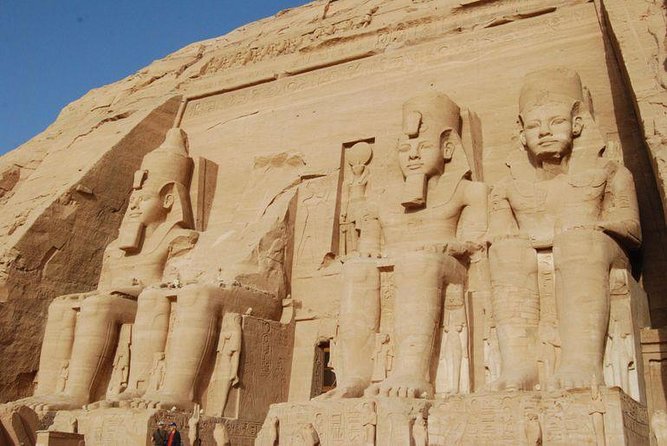
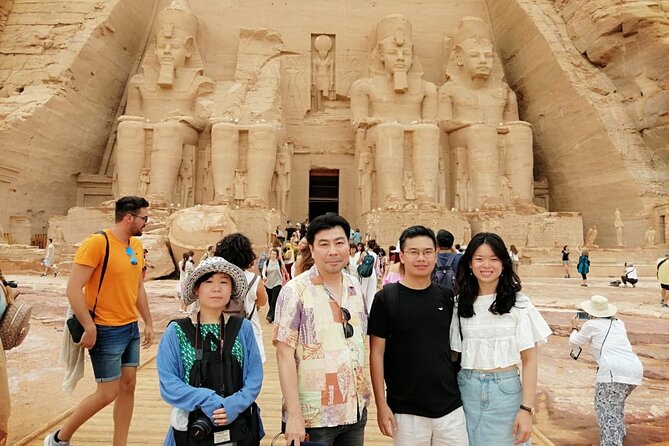
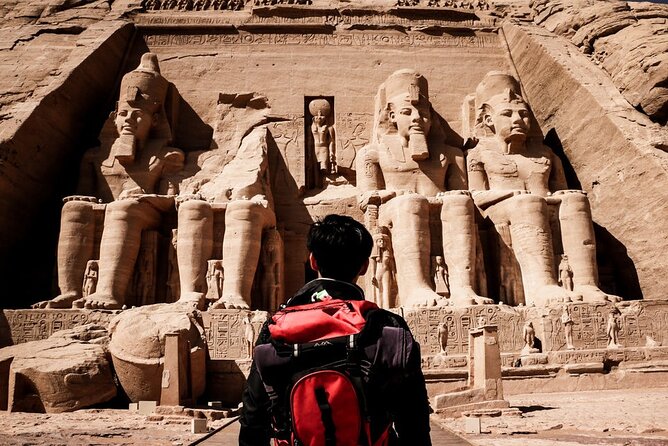
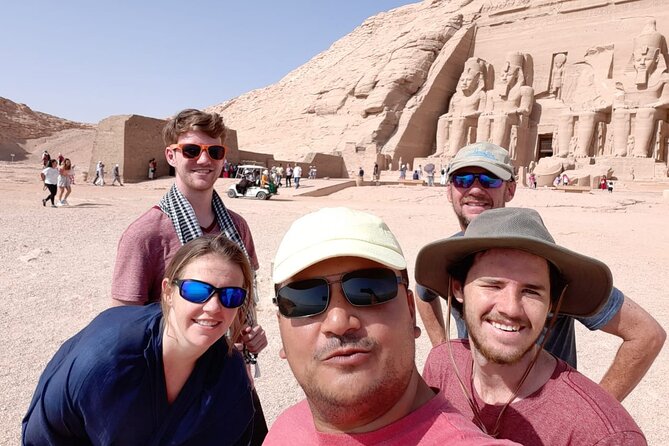
The reward is the great temple of Ramses II, cut into a sandstone cliff near the southern end of Egypt. Its huge façade, with four seated figures of the king, is designed to impress before you even step inside. Nearby, the smaller temple honors Queen Nefertari and the goddess Hathor.
Your guide helps turn the visit from a photo stop into a history lesson. You’ll learn how the temples express royal power and how the relationship between Ramses II, Nefertari, and the gods appears in the decoration. The complex is worth the long transfer, but you should not expect a leisurely day.
Admission is extra. Bring water, sunglasses, and your passport, which the tour information specifically asks you to carry. Keep your personal items compact so getting in and out of the vehicle is easy.
After Abu Simbel, you return to Aswan, then transfer to Aswan train station for the journey to Luxor. The train ride takes about three hours. First-class seating should make this leg more comfortable, but the timing creates a very full day. You are likely to arrive in Luxor tired, then meet your transfer to the hotel for the overnight stay.
This is the point where I would make a clear decision. If Abu Simbel is high on your wish list and you have only three days, accept the long day. If you want an easy pace, consider spending an extra night in Aswan or choosing a longer Nile itinerary instead.
Day Three: Luxor’s West Bank and East Bank
Luxor day begins with the West Bank, where the ancient royal burial grounds and funerary temples sit outside the modern city. The program then crosses to the East Bank for Karnak and Luxor Temple.
A different kind of day out, same part of Egypt:
- 4-Days Nile Cruise From Aswan To Luxor including Abu Simbel and Hot Air Balloon
★ 5.0 · 3,142 reviews - From Aswan: Abu Simbel Temple Day Trip with Hotel Pickup
★ 4.4 · 2,807 reviews - 4-Day 3-Night Nile Cruise from Aswan to Luxor&Abu Simbel+Balloon
★ 5.0 · 2,023 reviews - 4-Day 3-Night Nile Cruise from Aswan to Luxor including Abu Simbel, Air Balloon
★ 4.5 · 612 reviews
Valley of the Kings
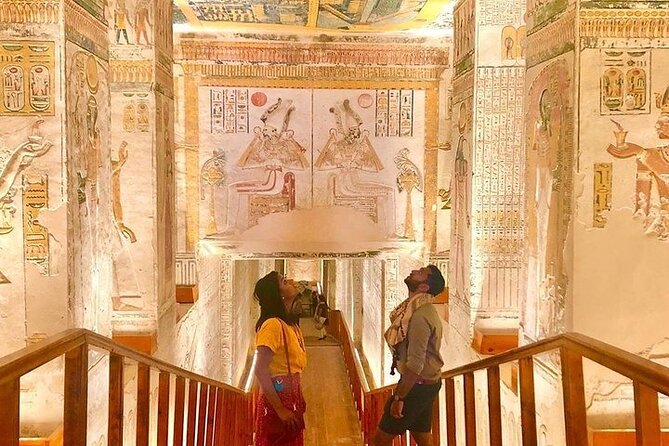
The Valley of the Kings contains 66 tombs from different dynasties. The visit lasts about 90 minutes, though the exact tombs open on the day can vary. Entry to the main valley is not included, and special tombs may require separate tickets if available.
The heat can be strong, and the valley has limited shade. A hat, water, and sunglasses will make the visit much easier. Your guide can explain the beliefs behind the tomb paintings and the reasons pharaohs were buried in hidden desert valleys rather than in large pyramids.
You should think of the included visit as an introduction rather than a chance to see every tomb. The site is spread out, and the schedule must keep moving so the group can reach the other Luxor monuments.
Hatshepsut’s Temple at Deir el Bahari
The next stop is the temple of Queen Hatshepsut, one of ancient Egypt’s most important female rulers. The monument is built in terraces against the cliffs, creating a strong visual contrast with the open desert around it.
You’ll spend about 90 minutes here. That gives your guide time to explain Hatshepsut’s rule, the temple’s purpose, and the reliefs that present her authority in traditional royal form. It also gives you time to appreciate the broad approach and the temple’s unusual design.
The climb and open setting can feel demanding under the sun. Pace yourself instead of trying to rush ahead for photographs. Admission is extra.
Colossi of Memnon
The Colossi of Memnon is a shorter stop, about 40 minutes, on the return from the West Bank. Two huge seated statues of Amenophis III face the Nile, and they provide an easy chance to admire the scale of ancient royal sculpture.
This stop is free according to the tour details. It works well as a pause between longer visits, though anyone expecting a complete temple complex will find the stop brief. The main attraction is the statues themselves and the chance to hear how they fit into the larger royal site that once stood here.
Karnak and Luxor Temple on the East Bank
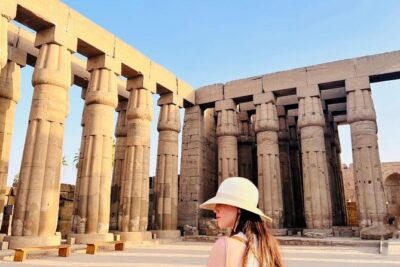
Karnak receives about two hours, and that time is useful. This is not one building but a vast collection of temples and additions made across different reigns. The scale can be confusing without a guide, so this is one of the places where clear explanations make a real difference.
Look for the monumental gateways, columns, courtyards, and carved surfaces. You’ll want to move at a steady pace, because the complex is too large to absorb every detail in one visit. Admission is not included.
The final major sight is Luxor Temple, visited for about 90 minutes. Here you’ll stroll through courtyards and see the granite statues of Ramses II. The temple feels different from Karnak, more compact and easier to take in after a full day of touring.
The two East Bank temples work well together. Karnak shows a large religious center built and expanded over many reigns, while Luxor Temple gives you a more focused setting for royal imagery and ceremonial space. Your guide can help connect the two instead of treating them as unrelated stops.
At day’s end, you can be transferred to your Luxor hotel, airport, train station, or another preferred drop-off point in Luxor. That flexibility is useful if you are continuing to Cairo, taking a flight, or joining another part of an Egypt itinerary.
Guides and the Human Side of the Trip
The strongest personal praise centers on the guides. Hany Yassen is repeatedly described as kind, funny, patient, punctual, and able to make the Valley of the Kings and Luxor’s temples easier to understand. Khaled El Saady is praised for detailed explanations, candid suggestions, and taking a group to a good restaurant near the Valley of the Kings.
Talaat Abdo is noted for keeping people informed about schedule changes and the next day’s plans. Mina is praised for clear information, a clean vehicle, and keeping the trip on time. Khaled, sometimes called Big-Mac, is described as lively, funny, highly informed about Egyptian history, and well known in the places visited.
You may not receive a particular guide, so treat these names as examples of the available guiding style rather than a guarantee. The important point is that the company uses local guides with Egyptology backgrounds, and the experience appears to benefit most when you ask questions and stay engaged.
The small-group cap of 15 helps here. It is not the same as a private tour, but it is more manageable than a large coach group. You can expect a group setting, shared timing, and the need to follow a schedule.
What to Pack and How to Prepare
Bring your passport and sunglasses. You’ll also want water, sun protection, comfortable clothing, and shoes suitable for walking around quarries, temple courtyards, and open archaeological sites.
Send your flight, train, or other arrival details so pickup can be arranged. The operator can also help with transport from places such as Hurghada for an added cost, and assistance is available for Cairo train tickets. The stated Cairo options are $25 one way for a seat or $80 per person one way for a sleeper in a double cabin.
The tour can also operate in reverse, from Luxor to Aswan, with the same sightseeing and inclusions. That makes it easier to fit into a wider Egypt route.
Free cancellation is available if you cancel at least 24 hours before the start time. Within 24 hours, the payment is not refunded, and changes are not accepted.
Who Should Book This Three-Day Route?
I would recommend this trip to you if you have limited time and want the major sights handled in one arrangement. It suits first-time Egypt visitors, couples, small friend groups, and anyone who values a guide’s explanations more than independent flexibility.
It also works well if you are already in Aswan and need to finish in Luxor. The included train ticket and transfers remove several tasks that can otherwise take time and patience.
I would hesitate if you dislike early mornings, long road journeys, or tightly timed sightseeing. Abu Simbel takes most of Day Two, and the train to Luxor comes afterward. You should also consider a longer trip if you want time for markets, village visits, felucca sailing, or quiet hours beside the Nile.
Should You Book It?
Book it if your priority is seeing Aswan, Abu Simbel, and Luxor in three days with a guide and organized transport. The route covers an impressive amount, and the combination of local guiding, first-class rail travel, and a group capped at 15 offers solid value at $167 before entry fees.
Skip it if you want a slow holiday. This is a concentrated history trip, not a restful one. Go in prepared for early starts, an eight-hour Abu Simbel day, separate admission costs, and a packed final day in Luxor, and you’ll get a lot of Egypt in return.
FAQ
What is included in the $167 tour price?
The price includes the first-class Aswan to Luxor train ticket, air-conditioned vehicle transfers, an expert tour guide, guided sightseeing in Aswan, Abu Simbel, and Luxor, meet-and-assist service in Aswan, taxes, service charges, landing fees, and parking fees.
Are entrance tickets included?
No. Admission fees are paid separately. The stated total for all visited sites is about $35, payable in Egyptian pounds. International cardholders receive half-off admission according to the tour information.
How long is the Abu Simbel excursion?
The Abu Simbel portion takes about eight hours, including the journey from Aswan and the return. It is scheduled for the early morning.
How long is the train ride from Aswan to Luxor?
The train journey takes about three hours. A transfer to Aswan train station and a pickup at Luxor train station are included.
Where can pickup and drop-off take place?
Pickup in Aswan is available from a hotel, airport, bus station, train station, or cruise ship. In Luxor, the final drop-off can be at your hotel, airport, train station, or another preferred point in the city.
How large is the group?
The tour has a maximum of 15 participants. Group discounts are available, and the activity provides a mobile ticket.
Recently reviewed around Aswan
- Sailing Nile Cruise from Aswan to Luxor for 2 Nights★ 4.5 · 139 reviews
- (3-Nights Cruise From Aswan To Luxor & Balloon, Abu Simbel)★ 4.5 · 23 reviews
- Philae Temple and Aswan High-Dam Half-day tour★ 5.0 · 49 reviews
- 4-Days Aswan sails Nile Cruise Luxor &Abu Simbel.Hot air Balloon★ 4.5 · 77 reviews
- Private Tour in Aswan : Felucca and Nubian village★ 5.0 · 29 reviews
- Day Tour to Abu Simbel from Aswan by Bus★ 4.5 · 25 reviews
- Abu Simbel Private Full-Day Tour from Aswan★ 5.0 · 114 reviews
- Nubian Village by Motorboat In Aswan★ 5.0 · 97 reviews
Abu Simbel Tours, compared.
4-Days Nile Cruise From Aswan To Luxor including Abu Simbel and Hot Air Balloon
Read our review →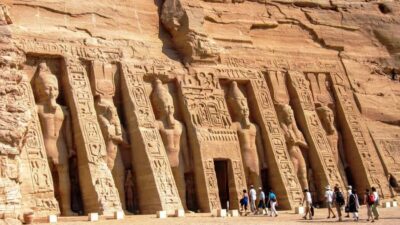
4-Day 3-Night Nile Cruise from Aswan to Luxor&Abu Simbel+Balloon
Read our review →
4-Day 3-Night Nile Cruise from Aswan to Luxor including Abu Simbel, Air Balloon
Read our review →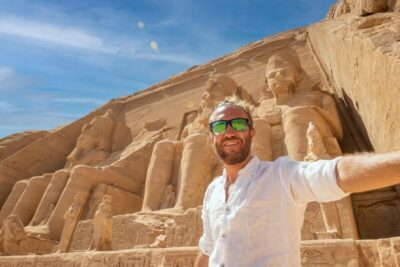
Abu Simbel Temple Private Guided Day Trip with Lunch
Read our review →4-Days Nile Cruise From Aswan To Luxor including Abu Simbel and Hot Air Balloon
Read our review →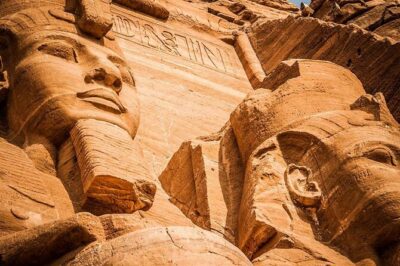
Private Day Tour to Abu Simbel Temples from Aswan
Read our review →4 Days Nile Cruise from Aswan to Luxor including Abu Simbel and Hot Air Balloon
Read our review →Browse the lists this tour appears in