
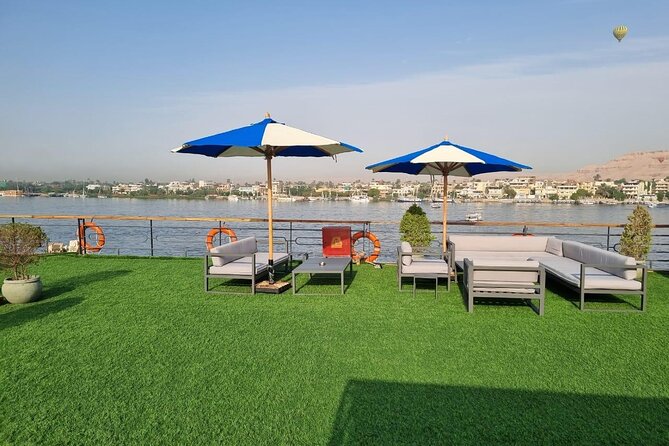
Reviewed · NILE CRUISES
3 Days and 2 Nights Nile Cruise from Aswan to Luxor
The real appeal here is the route: you begin with Abu Simbel’s giant statues, cruise north through the Nile Valley, and finish among the tombs and temples of Luxor. In three tightly packed days, you see many of Egypt’s major ancient sites without arranging separate hotels, transfers, and guides for every stop.
I like the way the cruise links the sights together, especially Kom Ombo and Edfu, two temples that are easy to miss when you travel overland. I also like that the price includes a 5-star ship, full-board meals, pickup, and drop-off. The main drawback is the pace. A 4 a.m. start, several short temple visits, and a full Luxor touring day will leave you tired.
In This Review
- Key Points at a Glance
- Why This Aswan to Luxor Route Works
- Day One: Abu Simbel Before Boarding the Ship
- Kom Ombo and the Temple Shared by Two Gods
- Day Two: Edfu by Horse-Drawn Carriage
- Day Three: Three Tombs in the Valley of the Kings
- Hatshepsut’s Temple and the Colossi of Memnon
- Karnak’s Columns and Luxor Temple After Dark
- Shopping Stops After the Temples
- What the $340 Price Really Covers
- Who Should Book This Cruise
- Should You Book the Aswan to Luxor Cruise?
- FAQ
- Where does the tour start?
- How long is the cruise?
- Is accommodation included?
- Are drinks included with the meals?
- Are entrance tickets included?
- Is Abu Simbel included in the itinerary?
- How do you reach Edfu Temple?
- Is the tour private?
Key Points at a Glance
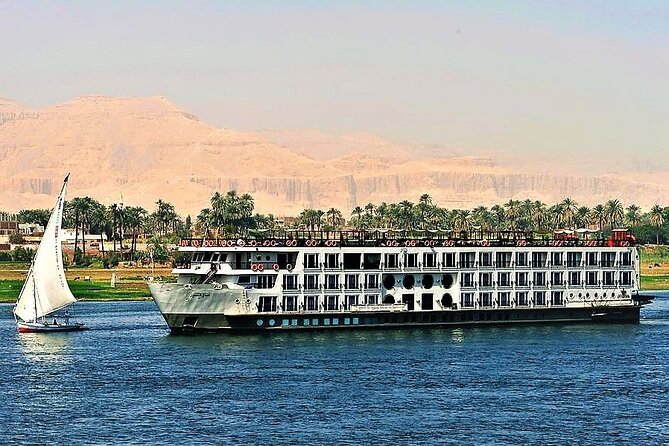
- Abu Simbel comes first: Begin with an early road transfer from Aswan before boarding the ship.
- Two nights on a 5-star cruise: Your cabin and buffet meals are included, but drinks and entrance tickets cost extra.
- Kom Ombo and Edfu add variety: See Kom Ombo’s unusual double shrine and Edfu’s well-preserved Temple of Horus.
- Luxor’s West Bank is packed into one morning: Visit three Valley of the Kings tombs, Hatshepsut’s Temple, and the Colossi of Memnon.
- Karnak and Luxor Temple finish the route: The final afternoon moves to the East Bank before hotel drop-off.
- A private group format: The activity is private to your booking, although the Abu Simbel transfer uses a small group.
Why This Aswan to Luxor Route Works
The Nile cruise is less about spending long, idle days on the water and more about using the river as a practical link between ancient sites. You board after the Abu Simbel visit, then wake near the next temple rather than dealing with a new road transfer each morning.
That makes the route especially useful if you have limited time in southern Egypt. Aswan, Kom Ombo, Edfu, and Luxor can be difficult to connect neatly on your own, particularly if you also want a guided visit at each temple.
The schedule is compact, though. The tour lasts about three days, but the first day begins at 4 a.m. and the final day continues after you leave the ship. You should choose this trip for the number of major sights it covers, not for a slow, leisurely cruise with hours of free time.
The activity is described as private, so only your own booking group takes part in the tour itself. The Abu Simbel transport is described as a small-group ride in an air-conditioned vehicle. That distinction matters if you are comparing this with a fully private road transfer.
More Boat Tours in Aswan
- 4-Days Nile Cruise From Aswan To Luxor including Abu Simbel and Hot Air Balloon
★ 5.0 · 3,142 reviews - 4-Day 3-Night Nile Cruise from Aswan to Luxor&Abu Simbel+Balloon
★ 5.0 · 2,023 reviews - 4-Day 3-Night Nile Cruise from Aswan to Luxor including Abu Simbel, Air Balloon
★ 4.5 · 612 reviews
Day One: Abu Simbel Before Boarding the Ship
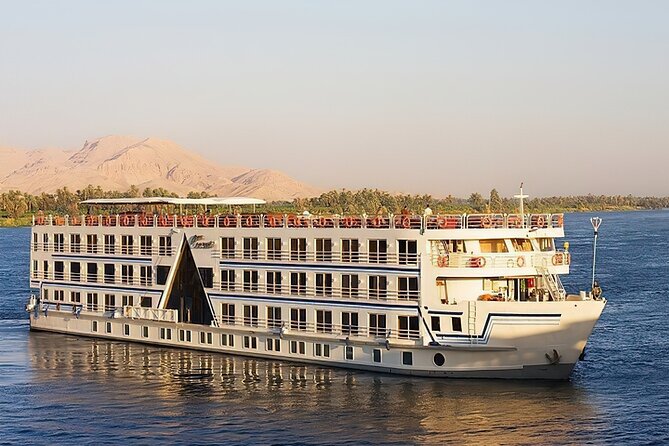
Your first morning starts before sunrise. Pickup is offered from your hotel or the train station in Aswan, followed by a road journey to Abu Simbel in an air-conditioned vehicle with a guide.
The early departure is necessary to fit Abu Simbel into the cruise schedule, but it is still the hardest part of the trip physically. You will want to keep the previous evening simple and have anything you need ready before bed. The provided schedule allows about three hours at the temple site, enough time for a guided visit and some independent looking around.
Abu Simbel is famous for the four colossal seated statues of Ramses II on the Great Temple. The scale is the first thing you notice, but the interior carvings matter just as much. Your guide can help explain the royal and religious scenes rather than leaving you to read the site as a collection of enormous stone figures.
Admission is not included, so budget separately for entrance tickets. The tour information does not give a ticket price, and it also does not say which Abu Simbel ticket categories are included in the local admission. Confirm the current amount before departure.
After Abu Simbel, you are transferred to the cruise ship. Lunch is served on board, and the ship begins sailing through the Nile Valley. This is a good transition from a demanding morning on the road to a quieter afternoon on the water.
Kom Ombo and the Temple Shared by Two Gods
The ship continues toward Kom Ombo after lunch. The temple visit lasts about two hours, with a guide accompanying you from the ship into the site.
Kom Ombo is unusual because its design reflects a double dedication. One side honors Sobek, the crocodile god, and the other honors Horus. The arrangement gives the temple a different feel from the single-god sanctuaries you see elsewhere in Egypt, and it gives your guide plenty to point out in the reliefs and layout.
You will have time to study the carvings and ancient architecture before returning to the ship. The stop is shorter than the Luxor visits, but that is part of its value. Kom Ombo breaks up the cruise with a compact, focused temple visit rather than another large complex that requires several hours.
Again, entrance tickets are not included. The ship provides lunch and dinner on this first day, and meals are buffet style. Drinks are excluded, so keep that in mind when judging the advertised price.
Day Two: Edfu by Horse-Drawn Carriage
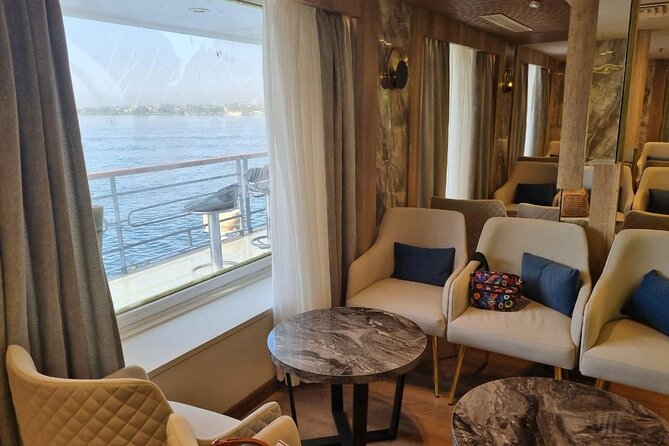
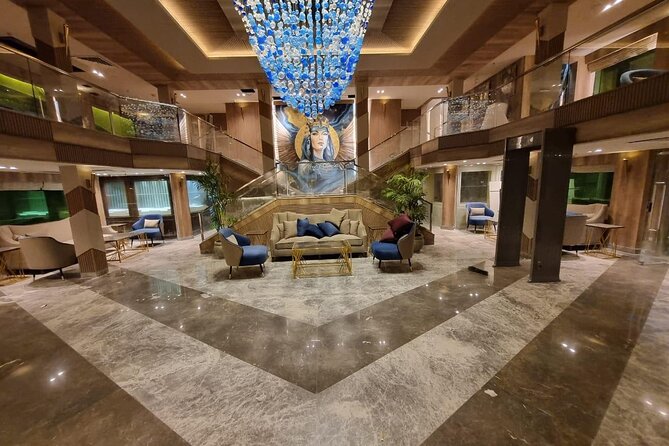
The ship is scheduled to reach Edfu between 7 and 8 a.m. Your guide meets you in the ship’s lobby, and the excursion to the temple uses a traditional horse-drawn carriage.
That carriage ride is a practical part of the visit, since it connects the ship with Edfu Temple. It also adds a local transport element that you would not get from simply stepping off a coach at the entrance. The tour information does not specify the length of the carriage ride or the exact arrangements, so ask your guide where the carriage waits and how the return works.
Edfu Temple is dedicated to Horus, the falcon god. Its sanctuaries and halls are unusually well preserved, making it one of the clearest places to understand how an ancient Egyptian temple was organized. Allow about three hours for the guided excursion and return to the ship.
This is one of the strongest parts of the itinerary for anyone who wants to see temple details rather than only famous names. Edfu gives you broad walls, large gateways, and interior spaces that help the religious purpose of the building make sense.
You return to the cruise afterward and continue toward Luxor. Breakfast is included on the ship, as are lunch and dinner. Since the cruise offers full-board lodging, you do not need to arrange meals during the sailing portion, but the package does not cover drinks.
More Nile Cruises in Aswan
- From Aswan: 4-Day Nile Cruise from Aswan to Luxor with Guide
★ 4.1 · 593 reviews - 4-Days Nile Cruise From Aswan To Luxor including Abu Simbel and Hot Air Balloon
★ 4.5 · 509 reviews - 4-Day 3-Night Nile Cruise from Aswan to Luxor – Private Tour
★ 5.0 · 369 reviews - 4 Days Nile Cruise from Aswan to Luxor including Abu Simbel and Hot Air Balloon
★ 4.5 · 356 reviews
Day Three: Three Tombs in the Valley of the Kings
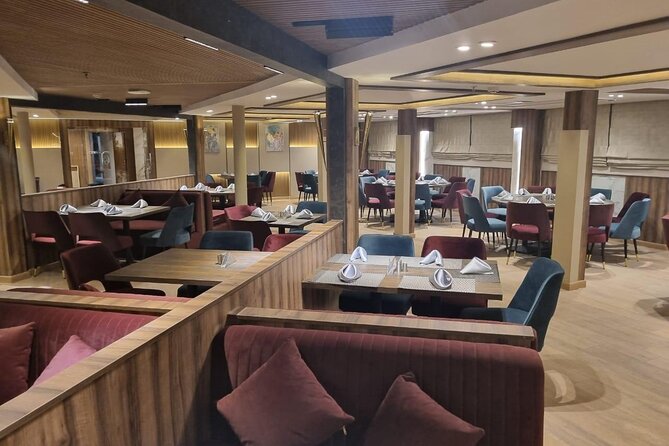
After breakfast, you check out of the ship and place your bags in the lobby for departure. A driver and English-speaking guide then take you across Luxor for a full day of sightseeing in an air-conditioned car.
The first stop is the Valley of the Kings on Luxor’s West Bank. The tour includes entry to three different tombs, though the names of the tombs are not specified in the information provided. Entrance tickets are extra, so confirm whether the standard ticket covers the three tombs selected for your visit and whether any special tombs require another fee.
The Valley is not a museum in the usual sense. You walk into the rock-cut burial chambers, where painted scenes and hieroglyphs cover the walls. The rooms can be narrow, and the short one-hour schedule means you will need to keep moving. Still, three tombs offer a useful comparison of decoration, layout, and condition.
Your guide’s explanations are especially helpful here because the artwork is full of symbols and ritual scenes. Without context, it is easy to see only colorful walls. With a good explanation, the tombs become records of how pharaohs prepared for the afterlife.
Hatshepsut’s Temple and the Colossi of Memnon
The next stop is the Temple of Hatshepsut at Deir el-Bahari, with about an hour allocated for the visit. The temple rises in terraces against the cliffs, giving it one of the most distinctive settings on Luxor’s West Bank.
Hatshepsut was a powerful ruler who presented herself as pharaoh in a male-dominated royal tradition. The temple’s terraces and reliefs help tell the story of her reign, including the religious claims that supported her right to rule. You will see a grand structure, but the real interest lies in how architecture and royal identity work together.
The schedule then moves to the Colossi of Memnon. These two statues of Amenhotep III are nearly 18 meters high and once guarded the entrance to a much larger mortuary temple. That temple has largely disappeared, leaving the statues to carry the visual impact of the stop.
One hour is more than enough for a photo stop and a short explanation. The Colossi are beside the road, so this is not a long site visit. Their connection with the ancient stories of mysterious sounds, later linked to the Greek figure Memnon, adds a memorable bit of folklore to the morning.
Karnak’s Columns and Luxor Temple After Dark
After the West Bank, you cross to Luxor’s East Bank for Karnak Temple. The scheduled visit lasts about an hour, which is enough for the major areas but not enough to wander every corner of this huge complex.
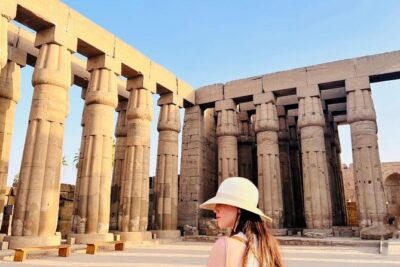
Karnak was dedicated to the Theban gods Amun, Mut, and Khonsu. The Hypostyle Hall is the visual centerpiece, with massive columns covered in inscriptions. You can also see the sacred lake and the long layers of construction that make Karnak feel more like a city of temples than a single building.
A one-hour visit requires discipline. Stay close to your guide at the beginning so you understand the plan, then use any spare minutes for photographs and closer looks at the columns. If you prefer slow archaeological study, this part may feel rushed.
Luxor Temple is the final major ancient site. Built initially under Amenhotep III and later completed by Ramses II, it sits close to the Nile and focuses on royal renewal and the worship of Amun-Ra. Its colonnades and halls are more compact than Karnak, so the hour allotted here feels easier to manage.
The order of the East Bank visits may make the day feel long, but it also gives you a strong finish. Karnak supplies scale, while Luxor Temple offers a more concentrated view of royal architecture.
Shopping Stops After the Temples
After Luxor Temple, the guide takes you to local shops. The planned stops include a papyrus factory, an alabaster factory, and perfume shops.
These visits can be useful if you want to see how papyrus sheets, alabaster objects, and perfume products are presented for sale. They also create a chance to buy souvenirs, but you should treat them as shopping stops rather than archaeological visits. The schedule does not state how long you will spend at each shop or whether purchases are expected.
If you are not interested in buying anything, tell your guide early and keep your expectations clear. The most important part of the day is the temple route, and the shopping comes afterward.
A driver then takes you back to your hotel in Luxor. Drop-off is included, which is helpful because you leave the ship before finishing the day’s sightseeing.
What the $340 Price Really Covers
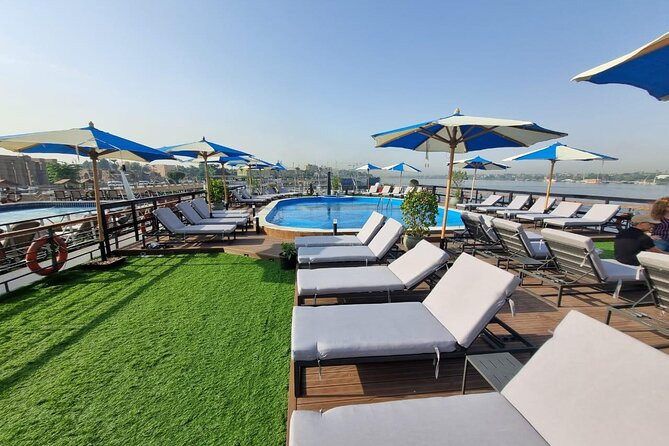
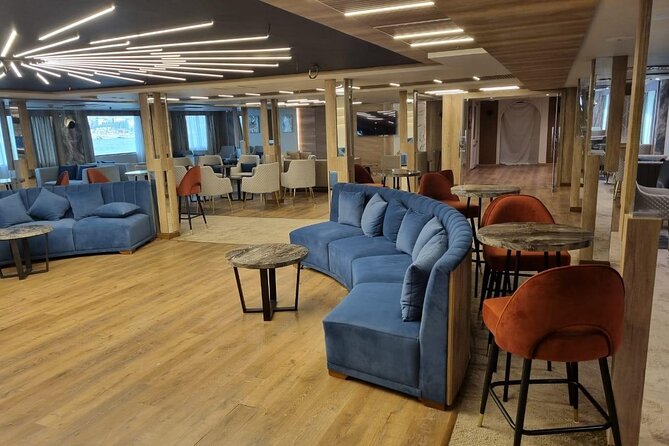
At $340 per person, the package offers solid value if you want accommodation, meals, transport, and guiding bundled together. You receive two nights on a 5-star Nile cruise, full-board food, pickup and drop-off, an English-speaking guide, and the road transfers needed to connect the main sights.
The package includes two breakfasts, two lunches, and two dinners. Food is served buffet style. A past cruise experience connected with this tour praised the size and luxury of the cabin, while finding the food ordinary. The restaurant staff and housekeeping were described as helpful, so you should expect comfortable ship facilities but keep your dining expectations moderate.
There was also a complaint about reception and check-out service on one cruise, while the tour manager, Enjy, was praised for listening to concerns and solving problems where possible. That suggests the human side of the experience may vary by department. Enjy is a useful contact if an issue comes up during the tour.
The price does not include entrance tickets or drinks. Since the itinerary visits Abu Simbel, Kom Ombo, Edfu, the Valley of the Kings, Hatshepsut’s Temple, Karnak, and Luxor Temple, admission costs can add a noticeable amount. Before booking, ask for the current combined ticket estimate so the final cost does not surprise you.
Who Should Book This Cruise
I would choose this trip if you want a time-efficient first visit to southern Egypt and prefer having the transport and sightseeing organized. It suits people who like a clear schedule, guided context, and the convenience of sleeping on one ship rather than changing hotels.
It also works well for couples, families, or a small private group that wants the tour to stay within its own booking party. Most people can participate, and the tour offers pickup from a hotel or train station.
I would think twice if your main goal is rest. Day one starts at 4 a.m., and day three combines five major stops with shopping before hotel drop-off. The cruise itself offers time to watch the river, but the sightseeing program is active.
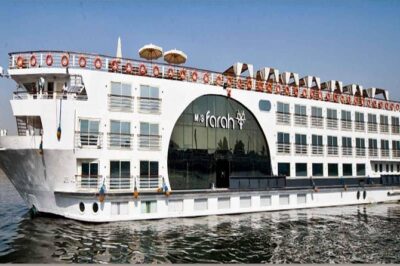
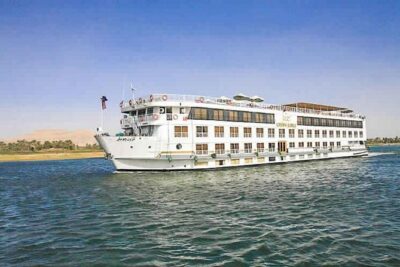
You should also confirm the exact ship name, cabin arrangements, ticket costs, and how the private group format applies to the Abu Simbel transfer. One cruise associated with this experience was called MS Nile Crown III, but the ship name for every departure is not specified.
Should You Book the Aswan to Luxor Cruise?
Book it if seeing Abu Simbel, Edfu, Kom Ombo, and Luxor matters more to you than having a relaxed timetable. The route is well chosen, the inclusions are useful, and the two nights on the Nile remove much of the transport hassle.
Skip it if you dislike early starts, organized shopping stops, or extra charges for every temple entrance. At a 4.7 rating from 42 reviews and a 90 percent recommendation rate, it has a strong record, but the uneven comments about reception and food are worth keeping in mind.
For the right person, this is a practical Nile introduction: busy, substantial, and focused on the monuments that make the Aswan to Luxor route special.
FAQ
Where does the tour start?
The tour starts in Aswan at 4 a.m. Pickup is offered from your hotel or the train station.
How long is the cruise?
The experience lasts about three days and includes two nights on a 5-star cruise ship.
Is accommodation included?
Yes. Accommodation on the cruise is included, along with full-board meals.
Are drinks included with the meals?
No. Drinks are specifically excluded from the package price.
Are entrance tickets included?
No. Entrance tickets for the visited sites are not included.
Is Abu Simbel included in the itinerary?
Yes. The first day includes a guided visit to Abu Simbel before you board the cruise.
How do you reach Edfu Temple?
You travel from the ship to Edfu Temple by traditional horse-drawn carriage, accompanied by your guide.
Is the tour private?
Yes. The activity is private to your group, although the Abu Simbel transfer is described as using a small group.
More 3-Day Experiences in Aswan
- From Aswan: 3-Day Cruise to Luxor with Hot Air Balloon
★ 4.3 · 598 reviews - 3-Day 2-Night Tour to Aswan, Abusimbel & Luxor
★ 5.0 · 24 reviews - 3 Day Nile Cruise from Aswan to Luxor and Hot Air Balloon
★ 5.0 · 20 reviews - From Aswan: 2 Night-3 Day Nile Cruise & Hot Air Balloon Ride
★ 5.0 · 19 reviews
Recently reviewed around Aswan
- Sailing Nile Cruise from Aswan to Luxor for 2 Nights★ 4.5 · 139 reviews
- (3-Nights Cruise From Aswan To Luxor & Balloon, Abu Simbel)★ 4.5 · 23 reviews
- Philae Temple and Aswan High-Dam Half-day tour★ 5.0 · 49 reviews
- 4-Days Aswan sails Nile Cruise Luxor &Abu Simbel.Hot air Balloon★ 4.5 · 77 reviews
- Private Tour in Aswan : Felucca and Nubian village★ 5.0 · 29 reviews
- Day Tour to Abu Simbel from Aswan by Bus★ 4.5 · 25 reviews
- Abu Simbel Private Full-Day Tour from Aswan★ 5.0 · 114 reviews
- Nubian Village by Motorboat In Aswan★ 5.0 · 97 reviews
Nile Cruises, compared.
4-Days Nile Cruise From Aswan To Luxor including Abu Simbel and Hot Air Balloon
Read our review →
Dinner Cruise on the Nile River with Entertainment
Read our review →
4-Day 3-Night Nile Cruise from Aswan to Luxor&Abu Simbel+Balloon
Read our review →
4-Day 3-Night Nile Cruise from Aswan to Luxor including Abu Simbel, Air Balloon
Read our review →
4-Day Nile Cruise from Aswan to Luxor with Guide
Read our review →
Browse the lists this tour appears in