
Reviewed · CAIRO TOURS
3 Days Private Guided Cairo Tour Package
Cairo’s ancient core is spread across a huge, noisy city, so having a private car and guide can save you from wasting half your day finding the next site. This three-day plan takes you from Giza’s famous pyramids to the quieter monuments at Saqqara and Dahshur, then into Cairo’s Islamic and Coptic quarters.
I like two things right away: you get a personal guide rather than a large coach group, and the route covers far more than the standard pyramid visit. Water, lunch, transport, and entry fees are included, which makes the $150 price attractive. The main drawback is Day 1, which packs so many monuments into one stretch that you may need to ask your guide to slow down or trim stops.
In This Review
- Key points to know before booking
- Why a private car makes Cairo easier
- Day 1: From the Sphinx to Egypt’s earliest stone pyramid
- Saqqara and the Step Pyramid of Djoser
- Dahshur’s Bent Pyramid and a packed afternoon
- Day 2: Tutankhamun, Saladin’s Citadel, and the market
- Day 3: Old Cairo’s churches, synagogue, and mosques
- The guides can make or break the experience
- Lunch, tickets, and the real value of $150
- Who should book this Cairo tour?
- Should you book it?
- FAQ
- How long is the tour?
- What attractions are included?
- Is transportation included?
- Are entrance fees included?
- Is lunch provided?
- Can I cancel for a full refund?
Key points to know before booking
- The first day reaches far beyond Giza: You visit Memphis, Saqqara, Dahshur, and several individual pyramids in addition to the Sphinx and the three main Giza pyramids.
- Your own car matters in Cairo: A private air-conditioned vehicle lets you move between scattered archaeological areas without negotiating taxis at every turn.
- Day 2 mixes antiquities and city life: The Egyptian Museum, Cairo Citadel, Muhammad Ali Mosque, and Khan el-Khalili give you a useful change of pace.
- Day 3 covers several faiths and eras: Coptic churches, Ben Ezra Synagogue, Amr Ibn Al-As Mosque, Sultan Hassan Mosque, and Al-Rifai Mosque reveal Cairo’s layered past.
- Guide quality shapes the trip: Past bookings have praised guides including Ahmed Zaki, Habib, Ehab, Maged, Ahmed Yassin, Mo Salah, Tonsi, and Hossam for clear explanations and flexibility.
- The price is strong, with one important catch: Entry fees are included, but going inside any pyramid is not.
Why a private car makes Cairo easier
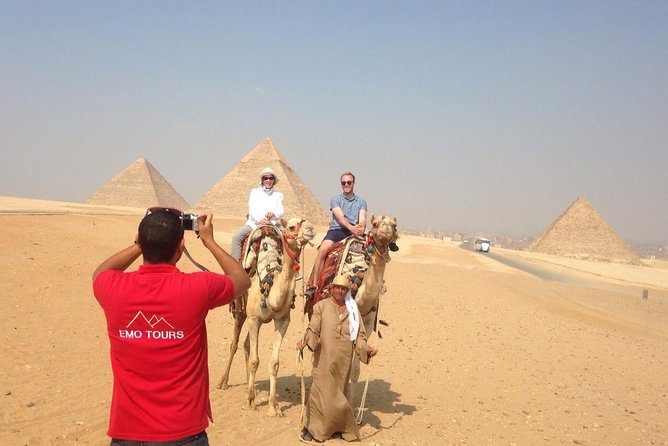
Cairo is not a city you experience by casually wandering from one major sight to the next. Giza lies away from central Cairo, Memphis and Saqqara are farther south, and the Citadel, Old Cairo, and Khan el-Khalili each require their own approach.
That is where this tour earns its keep. Your guide and driver handle the movement between sites while you concentrate on the monuments. The private format also means only your group participates, so you can ask questions, request a little more time at a favorite site, or adjust the pace within the day’s limits.
The air-conditioned car is especially useful after time in the sun. Bottled water and complimentary refreshments help, too. Just remember that a private car does not make Cairo traffic disappear. Transfer times can vary, and Day 1 has an unusually long list of stops.
The package is priced at $150 per person. For three days of private guiding, private transport, lunch, water, and listed entry fees, that is a low price compared with arranging separate taxis, tickets, and guides. Group discounts may make it even better for families or friends traveling together.
I would still confirm exactly which entry fees are covered before paying. The package says entry fees are included, while also excluding entry inside the pyramids. Those are different costs, and the distinction matters if entering a pyramid is high on your list.
More Cairo trips worth a second look
- Siwa Oasis All inclusive 3 days Tour from Cairo or Giza
★ 5.0 · 310 reviews - Siwa Oasis Tour All inclusive 3 Days Experience from Cairo&Giza
★ 5.0 · 227 reviews - White Desert & Bahariya oasis 3 days 2 nights Tour from Cairo
★ 5.0 · 135 reviews
Day 1: From the Sphinx to Egypt’s earliest stone pyramid
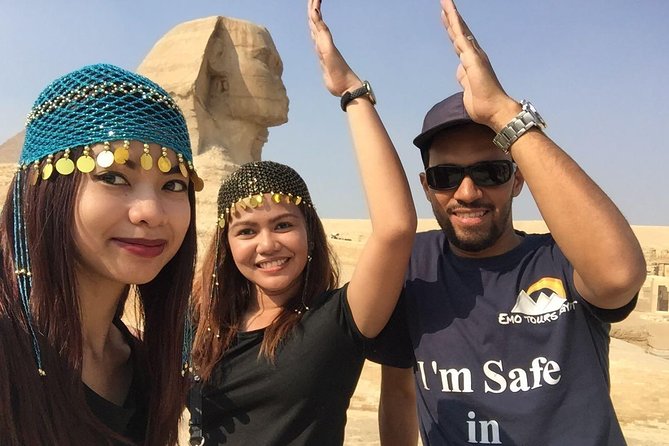
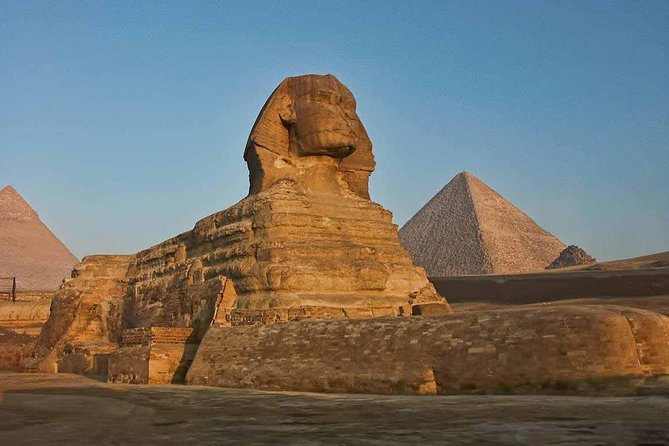
The first day begins with the monuments most people picture when they think of Egypt. At the Great Sphinx, you see the lion-bodied guardian with the head associated with King Khafre. Thirty minutes is enough for an introduction and photographs, but your guide’s explanation is what gives the statue meaning.
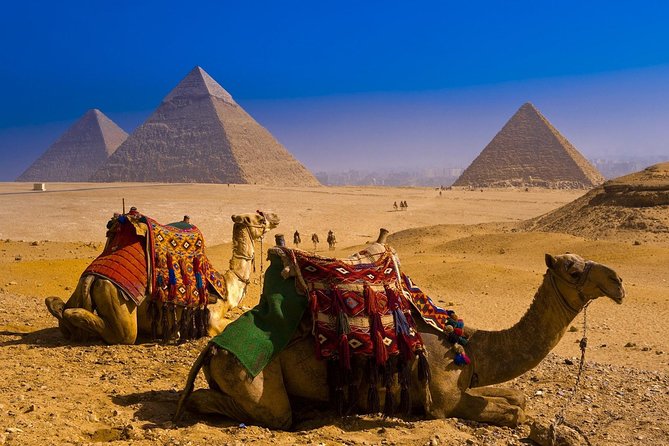
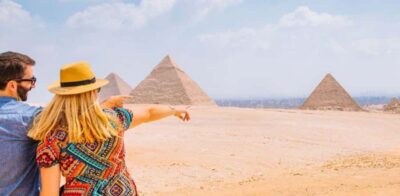
The nearby Giza Plateau receives about three hours. You see the pyramids of Khufu, Khafre, and Menkaure, along with the Valley Temple connected with Khafre’s funerary complex. The Valley Temple is important because it was used by priests during the preparation of the king’s body.
The Giza portion is the emotional high point for many people, but do not rush it. Ask your guide to make sure you get a proper look at all three pyramids, not just the Great Pyramid. One past itinerary left too little time near Khafre and Menkaure, so it is sensible to clarify the order at the start of the day.
From Giza, the route moves into older and less visited areas. Memphis was the ancient capital of Egypt and dates to about 3100 BC. The main sights here include the colossal statue of Ramses II and the Alabaster Sphinx.
A short stop at the Sphinx of Memphis adds another layer. This stone figure is thought to date from the 18th Dynasty, between roughly 1700 and 1400 BC, although the pharaoh it honors is not known. It is a small stop, but a useful reminder that Egypt’s monuments are not limited to the famous plateau.
Saqqara and the Step Pyramid of Djoser
Saqqara is one of the most rewarding stops because it shows Egypt experimenting with pyramid design. The Step Pyramid of Djoser is a six-tiered structure and the earliest colossal stone building in Egypt.
You have about two hours here, which gives your guide time to explain how the stepped form differs from the smooth-sided pyramids at Giza. The site is also a good place to pay attention to the wider funerary complex rather than treating the pyramid as a single object.
The itinerary also includes the pyramids of Teti and Unas. Teti’s pyramid is smooth-sided and is the second known pyramid to contain Pyramid Texts. Unas built his pyramid between the complexes of Sekhemkhet and Djoser, with a causeway linking the site to a valley temple near an ancient lake.
The Mastaba of Ti offers a different experience. Instead of a royal pyramid, you see a private tomb decorated with scenes of daily life. The walls show work, farming, and ordinary activities, giving you a better sense of ancient Egyptian society than royal monuments alone.
Here, the quality of the guide matters. A good explanation can connect the tomb scenes, pyramid texts, and royal complexes into one story. Without that context, Saqqara can feel like a long sequence of ruins.
Dahshur’s Bent Pyramid and a packed afternoon
Dahshur is about 30 kilometers south of the Giza Pyramids and forms part of the great cemetery zone associated with ancient Memphis. Its pyramids include monuments from the Fourth and Twelfth Dynasties, including the Bent Pyramid and the Red Pyramid area, along with pyramids linked to Amenemhat II and Amenemhat III.
The Bent Pyramid is especially useful for understanding how pyramid builders solved structural problems. Its changing angle gives it a distinctive shape and shows that pyramid design was still developing.
The tour allows about two hours at Dahshur. That sounds generous, but Day 1 includes roughly a dozen stops, many of them separated by road travel. The stated schedule is best treated as a framework rather than a promise that every stop will receive equal time.
I would tell your guide early which sights matter most. If you are fascinated by pyramid construction, protect your time at Giza, Saqqara, and Dahshur. If you prefer tomb decoration, ask for more attention at the Mastaba of Ti. A private tour should allow this kind of conversation, though the total route remains ambitious.
The day also lists separate visits to Khufu, Khafre, Menkaure, Teti, and Unas. These entries help show the scope of the route, but they can make the experience feel repetitive if you are already tired. Comfortable shoes, water, and realistic expectations will help.
A different kind of day out, same part of Egypt:
- Cairo: Pyramids & Great Sphinx Private Tour with Camel Ride
★ 4.9 · 6,335 reviews - Tour to Giza Pyramids and The Egyptian Museum
★ 5.0 · 6,016 reviews - VIP All inclusive Best of the best Giza Pyramids,Sakkara,Memphis
★ 5.0 · 3,164 reviews - From Cairo: Pyramids of Giza, Sphinx, Saqqara & Memphis Tour
★ 4.7 · 3,110 reviews
Day 2: Tutankhamun, Saladin’s Citadel, and the market
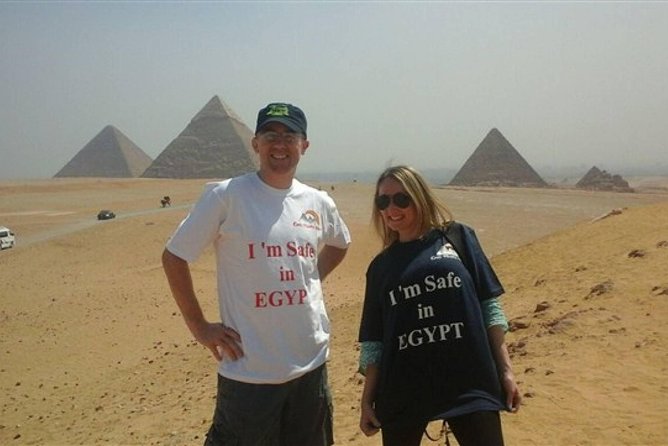
Day 2 shifts from open archaeological sites to the city center. The Museum of Egyptian Antiquities receives about three hours, and that is a sensible amount of time for its large collection.
Inside the old pinkish building, you find royal objects, jewelry, mummies, household vessels, toys, and burial goods. The treasures of Tutankhamun are the headline attraction, but I would not ignore the less famous objects. They show how people lived, ate, worked, and prepared for death across many centuries.
Ask your guide to help you set priorities. Three hours can disappear quickly, and a room-by-room march through the museum is exhausting. The guide can explain what you are looking at and help separate major works from pieces that deserve only a quick glance.
Next comes the Citadel of Cairo, also called Saladin’s Citadel. Built by Salah ad-Din and expanded by later rulers, it served as Egypt’s seat of government and the residence of its rulers for nearly 700 years, from the 13th through the 19th century.
The Citadel gives you a broad view of Cairo’s Islamic-era development. You then visit the Mosque of Muhammad Ali, often called the Alabaster Mosque. It was commissioned by Muhammad Ali Pasha between 1830 and 1848 and is known for its pale stone surfaces and grand interior.
Dress modestly for mosque visits. You will need to be respectful of religious spaces, and your guide can explain local expectations. The Citadel and mosque together provide a welcome architectural change after the museum’s cases and labels.
The final stop is Khan el-Khalili, Cairo’s historic bazaar district. You have about an hour to walk through the market, browse souvenirs, and watch commerce unfold around you.
Do not expect a quiet museum-like setting. This is a place for bargaining, people-watching, and taking in the narrow lanes. If you want to buy something, compare prices and take your time. If shopping is not your priority, use the hour to enjoy the streets and the surrounding historic quarter.
Day 3: Old Cairo’s churches, synagogue, and mosques
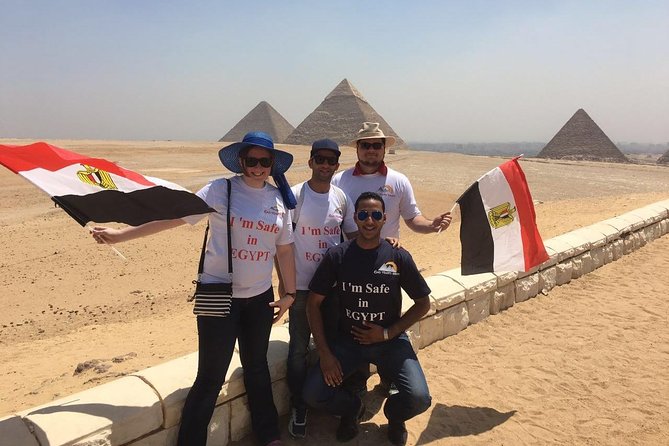
The final day focuses on Cairo’s religious and architectural layers. Coptic Cairo receives about two hours and begins near the southern part of the modern city, where early settlements grew around an ancient canal route connecting the Nile and the Red Sea.
The Hanging Church is one of the area’s best-known sights. Its formal name is Saint Virgin Mary’s Coptic Orthodox Church, and its elevated position gives it the familiar nickname. The visit helps you understand the long Coptic Christian presence in Egypt.
The Ben Ezra Synagogue adds a Jewish chapter to the same district. It is also called the El-Geniza Synagogue. With an hour scheduled here, you have time to consider the building’s place within Old Cairo rather than simply ticking it off as another stop.
The Mosque of Amr Ibn Al-As was originally built in 641 to 642 AD at the center of Fustat, the newly founded capital of Egypt. It was the first mosque built in Egypt and on the African continent.
That makes this stop historically important even if the building has changed over time. Your guide can help you understand the difference between the original foundation and the structure you see today.
The route then moves to the Mosque-Madrasa of Sultan Hassan, built between 1356 and 1363 during the Bahri Mamluk period. Its scale and design make it one of Cairo’s major Islamic monuments. The one-hour visit should give you time to appreciate the courtyard, stonework, and role of the complex as both mosque and school.
Al-Rifai Mosque sits beside the Cairo Citadel and serves as the mausoleum of the Muhammad Ali royal family. The itinerary allows an hour here, making it a useful companion to the Muhammad Ali Mosque from Day 2.
Day 3 covers a lot of religious history in a short period. I like the range, but you may find the repeated transitions tiring. This is another day when a private guide is valuable because the buildings can blur together without a clear explanation of dates, communities, and changing rulers.
The guides can make or break the experience
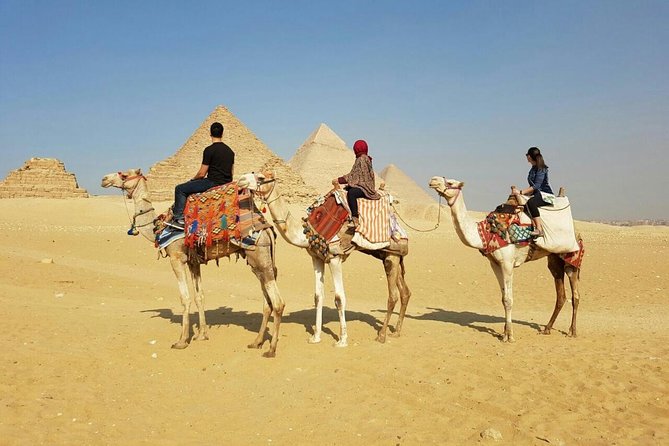
The strongest part of this tour is the human element. Several guides associated with past bookings received specific praise for their clear English, historical explanations, humor, patience, and willingness to adjust the day.
Ahmed Zaki was praised for giving detailed explanations at each site. Habib was described as welcoming, honest, helpful, and good at finding practical savings. Ehab received praise for a clean private car, flexible meeting times, and thoughtful service.
Other named guides include Maged Abdelazim Elbehairy, Ahmed Yassin, Mo Salah, Tonsi, Hossam, and Ahmed Hamed. Their strengths were described in similar terms: clear communication, local knowledge, good organization, and flexibility.
You cannot assume you will receive a particular guide unless the provider confirms it. If a named guide is important to you, ask before booking. The overall rating is 4.7 from 42 ratings, and 90 percent of customers recommend the experience, but the lower-scoring accounts point to an important truth: service can vary.
One complaint involved a guide who gave too little time to some pyramid areas. Another raised concerns about operator conduct. There was also criticism of lunch quality. Those issues do not erase the tour’s strengths, but they are reasons to confirm your guide, schedule, lunch arrangements, and included tickets in advance.
Lunch, tickets, and the real value of $150
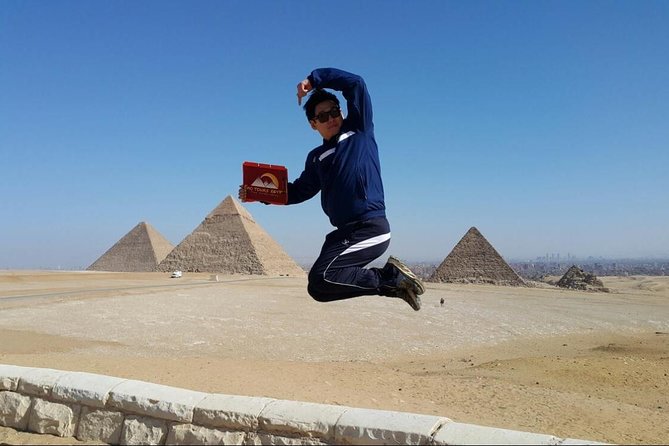
The package includes lunch, bottled water, a private guide, private air-conditioned transport, and entry fees. Tipping and personal purchases are extra, and entry inside the pyramids is excluded.
At $150 per person, the package offers especially good value for a small group that wants structure and transport without joining a large bus. For one person, the same price feels less remarkable, but the convenience can still justify it if you are visiting Cairo for only a few days.
Lunch appears to be the least consistent part of the package. I would not book this tour for a special food experience. Treat the meal as practical fuel between sites, and ask what is included if food matters to you.
The biggest value comes from covering distant places in one plan. Memphis, Saqqara, and Dahshur are not sensible additions for someone who wants only a quick Giza visit. Here, they are folded into the same private transport arrangement.
Who should book this Cairo tour?
I would choose this package if you are visiting Cairo for three days and want to see the major ancient, Islamic, and Coptic sites without arranging each day yourself. It suits first-time visitors, families, and small groups that value a private car and the ability to discuss the pace.
It is also a good fit if you want more than the standard pyramid photograph. Saqqara, Dahshur, Memphis, the Mastaba of Ti, and the city’s religious buildings give you a fuller picture of Egypt.
I would hesitate if you dislike early starts, long road transfers, or tightly packed sightseeing days. The schedule covers an enormous amount, and the first day in particular may feel like a historical marathon.
Free cancellation is available up to 24 hours before the start time. Changes or cancellations made later are not accepted for a refund. Most people can participate, and the tour is near public transportation, though your included private vehicle is the main way you will move between sites.
Should you book it?
Book it if your priority is coverage, convenience, and a private guide at a low per-person price. The route gives you the pyramids, major museums, ancient cemeteries, medieval fortifications, mosques, churches, synagogue, and market in three days.
Before booking, confirm the guide, the exact ticket inclusions, lunch arrangements, and how much freedom you have to shorten the long first day. If you set those expectations clearly, this is a practical introduction to Cairo with unusually broad coverage.
FAQ
How long is the tour?
The experience lasts approximately three days. It is a private activity for only your group.
What attractions are included?
The route includes the Great Sphinx, the Giza Pyramids, Memphis, Saqqara, Dahshur, the Egyptian Museum, Cairo Citadel, Muhammad Ali Mosque, Khan el-Khalili, Coptic Cairo, Sultan Hassan Mosque, Amr Ibn Al-As Mosque, Al-Rifai Mosque, Ben Ezra Synagogue, and the Hanging Church.
Is transportation included?
Yes. Transport is provided in a private air-conditioned vehicle, and pickup is offered.
Are entrance fees included?
Entry fees are included according to the package details. Entry inside any of the pyramids is not included.
Is lunch provided?
Yes. Lunch and bottled water are included. Personal items and tips are not included.
Can I cancel for a full refund?
You can cancel at least 24 hours before the experience start time for a full refund. Cancellations or changes made less than 24 hours in advance are not accepted for a refund.
Recently reviewed around Cairo
- White Desert Overnight Camping Sharing Tour in Egypt★ 5.0 · 15 reviews
- Cairo Best 2Days tour Pyramids, Saqqara & Old Cairo★ 5.0 · 15 reviews
- Giza Pyramids with (GEM) Grand Egyptian Museum★ 5.0 · 42 reviews
- sunset at Giza pyramids by camels★ 5.0 · 31 reviews
- Tour to Giza pyramids Memphis Sakkara and Felucca on the Nile★ 5.0 · 16 reviews
- visit the pyramids of Giza + the necropolis of Saqqara + the Memphis site.★ 4.5 · 20 reviews
- Private Giza pyramid,sphinx, Mummification temple& inside pyramid★ 5.0 · 32 reviews
- Private guided shopping tour in Khan el-Khalili with Lunch★ 4.5 · 21 reviews
Cairo Tours, compared.
Pyramids & Great Sphinx Private Tour with Camel Ride
Read our review →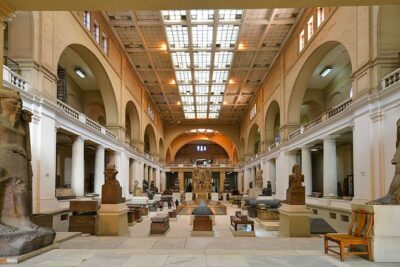
Tour to Giza Pyramids and The Egyptian Museum
Read our review →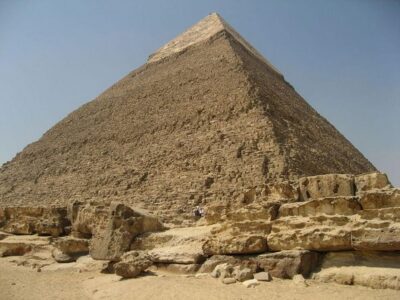
VIP All inclusive Best of the best Giza Pyramids,Sakkara,Memphis
Read our review →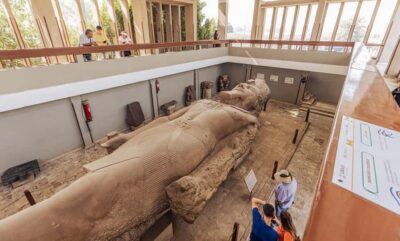
Pyramids of Giza, Sphinx, Saqqara & Memphis Tour
Read our review →
Cairo 8 Hour Private Tour of Pyramids, Egyptian Museum and Bazaar
Read our review →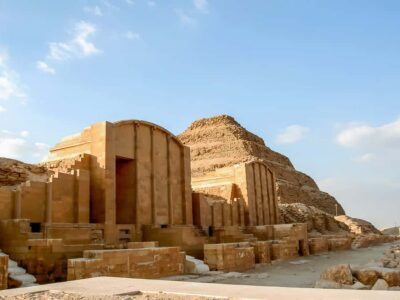
Private ViP all-inclusive Giza Pyramids,Sphinx,Inside Pyramid
Read our review →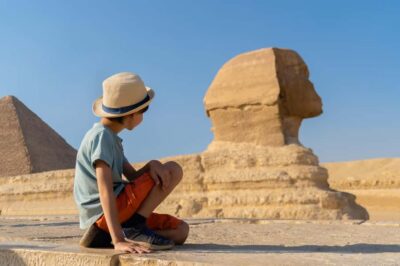
Grand Egyptian Museum, Pyramids, Sphinx Tour & Lunch
Read our review →Browse the lists this tour appears in