
Reviewed · GIZA PYRAMIDS & SPHINX TOURS
8 hours Cairo day Tour to Giza Pyramids, Memphis City, Sakkara and Dahshur
The big appeal here is the sheer sweep of ancient Egypt in one day. You move from the familiar Great Pyramid and Sphinx to Saqqara’s Step Pyramid, Memphis, and Dahshur’s Bent and Red Pyramids, with a private car linking the sites. It is a lot of history for $70.
I like the private format, since your guide can adjust the pace, explain things at your level, and help with photos. I also like the hotel pickup and air-conditioned vehicle, which matter in Cairo’s heat and traffic. The catch is simple: this is an ambitious schedule, and eight hours can feel rushed, especially if you want to enter pyramids or linger at Giza.
In This Review
- Key points to know before booking
- A full day across Egypt’s oldest pyramid fields
- Giza Plateau: the essential first look
- Inside and around the pyramids of Khufu, Khafre, and Menkaure
- The Great Sphinx and the best photo angles
- Memphis: Egypt’s first capital
- Saqqara and the Step Pyramid of Djoser
- Dahshur and the Bent Pyramid’s strange shape
- Why the private guide matters here
- Transport, timing, and the real pace of the day
- Lunch and shopping stops
- Who should book this Cairo pyramid tour?
- Should you book it?
- FAQ
- How long is the Cairo pyramid tour?
- Is hotel pickup included?
- Is this a private tour?
- What sites are included?
- Are entrance fees included?
- Is lunch included?
- Is bottled water provided?
- Can I ride a camel during the tour?
- What is the cancellation policy?
Key points to know before booking
- Four major ancient sites in one day: Giza, Memphis, Saqqara, and Dahshur give you a broad view of Egypt’s Old Kingdom.
- Private guide and driver: Only your group participates, with hotel pickup and drop-off in Cairo or Giza.
- Excellent guide feedback: Guides including Amr Fouad, Khaled, Sue, Marwa, Osama, and Tigo are praised for clear explanations, warmth, and photo help.
- Basic admission is included: Extra charges apply for entering the Great Pyramid and for some ticket options.
- The schedule is full: Expect a long, dusty day with plenty of time in the car between sites.
- Be firm at shopping stops: Ask to skip perfume, carpet, or papyrus presentations if you are not interested in buying.
A full day across Egypt’s oldest pyramid fields
This is not a slow, single-site pyramid visit. It is a fast-moving tour through the main monuments south and west of Cairo, beginning with hotel pickup at about 8 a.m. You get a private vehicle, bottled water, guide, driver, and listed entry fees.
The route gives you useful context. Giza is the famous finish line for many Cairo visitors, but Saqqara and Dahshur show how Egyptian builders developed pyramid design over time. Memphis connects the monuments to the ancient capital that once controlled Lower Egypt.
That wider view is the main reason to choose this outing over a basic Giza excursion. You will not only see the postcard monuments. You will also see earlier and less polished pyramid forms, royal burial sites, and the remains of an old capital.
The price is strong for a private experience. At $70 per person, you are paying for transport, a guide, hotel service, and basic entrance fees rather than arranging several taxis and admission tickets yourself. Still, check the exact option you select, since the supplied details note that fees can vary by tour choice.
More City Tours in Cairo
- Cairo: Female-Guided Pyramids, Sphinx & Museum City Tour
★ 4.8 · 1,614 reviews - Private tour: GIza Pyramids, Memphis City & Sakkara Pyramid
★ 5.0 · 637 reviews - Great Giza Pyramids, Sphinx , saqqara step Pyramid , Memphis city
★ 5.0 · 244 reviews
Giza Plateau: the essential first look
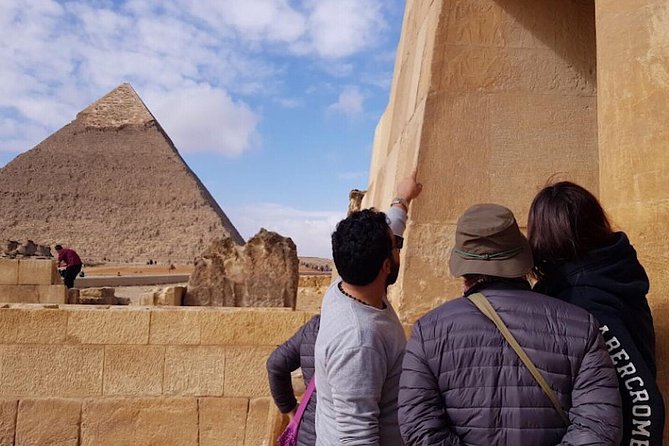
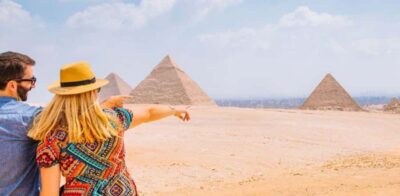
Giza is the day’s most famous stop and the place where the scale of ancient Egypt hits hardest. The plateau holds the Great Pyramid of Khufu, the Pyramid of Khafre, the smaller Pyramid of Menkaure, the Great Sphinx, cemeteries, and remains connected with the workers who built and supported the complex.
You can expect time to look across the plateau, walk near the pyramids, and take the classic photographs. The broad view helps you understand that these are not isolated monuments. They form a large royal cemetery with temples, roads, tombs, and service areas.
The schedule gives roughly 30 minutes at some Giza sections, followed by separate visits to the three main pyramids and the Sphinx. On paper, that sounds generous. In practice, roads, queues, security, heat, and photo stops can eat into the clock.
Your guide should help you decide what matters most. Sue, for example, is praised for suggesting good viewpoints and choosing pyramid interiors based on interest and physical comfort. That kind of advice is valuable here because you cannot do everything at length in one day.
Inside and around the pyramids of Khufu, Khafre, and Menkaure
The Great Pyramid of Cheops, also called Khufu, is the largest and most famous of the three. Its original complex included a valley temple, a paved route, and other structures, though parts are buried or lost beneath modern settlement.
Basic entry does not automatically include going inside the Great Pyramid. The supplied information lists an additional ticket of $23 for the interior. If you want that experience, confirm the price and availability before you arrive.
The interior visit is not just another photo stop. It can involve narrow passages and physical effort, so decide honestly how much time and energy you want to spend there. A private guide can explain the layout and help you compare it with the other options, but the extra ticket remains your responsibility.
Khafre’s Pyramid is easy to recognize because its upper casing stones remain near the top. Its complex included a valley temple, causeway, mortuary temple, and the Sphinx temple, with statues of Khafre found in the valley temple.
Menkaure’s Pyramid is smaller than the other two, but its complex adds another piece to the story of royal building. The valley temple once held statues of the king, and later work added a smaller front temple.
I like this three-stop approach because it prevents Giza from becoming one giant blur. You get to compare size, setting, and design rather than simply seeing the pyramids as one object.
The Great Sphinx and the best photo angles
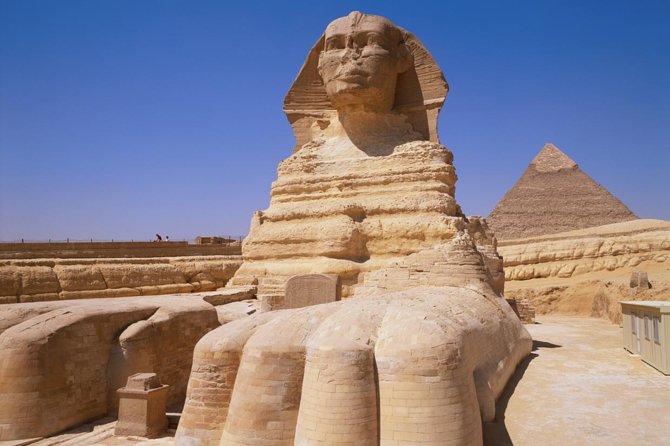
The Great Sphinx is one of those monuments that looks familiar until you are close to it. The human-headed, lion-bodied figure sits beside the pyramid complex and is usually one of the day’s most anticipated stops.
Your guide can point out the relationship between the Sphinx, its temple, and Khafre’s pyramid. The setting also offers some of the tour’s best photographs, especially when you want the Sphinx and pyramid in the same frame.
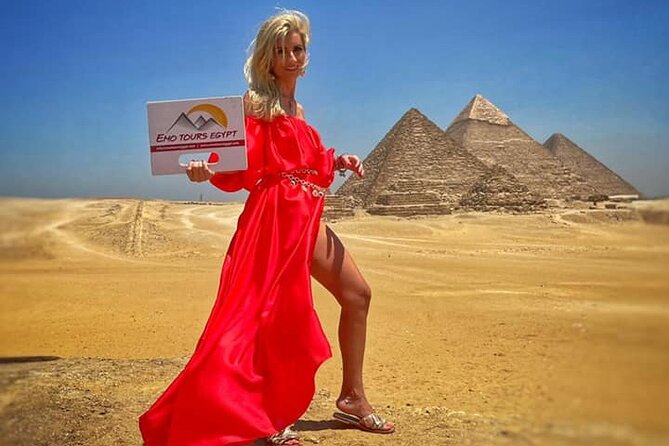
The panoramic viewpoint is another useful part of the Giza visit. You can see several pyramids from a wider angle and take the playful perspective photographs that guides often help arrange. Marwa is specifically praised for taking photos and videos, while Tigo is praised for finding creative photo spots and making the day fun.
Do not feel obliged to pay for a camel or horse ride to reach a photo viewpoint. One detailed account describes the camel as slow and unnecessary, with walking proving quicker. If you choose an animal ride, settle the price first and understand exactly what is included.
More Cairo city days:
- Private Departure Transfer from Cairo City to Cairo Airport
★ 5.0 · 195 reviews - Private Tour To Giza Pyramids, Memphis City, Dahshur And Sakkara Pyramids
★ 5.0 · 128 reviews - Top Day Tour To Giza Pyramids & Memphis City & Sakkara Pyramid
★ 5.0 · 117 reviews - Best Two-Day Private Guided City Tour of Cairo Giza and Saqqara
★ 5.0 · 85 reviews
Memphis: Egypt’s first capital
Memphis lies about 20 kilometers south of Giza near modern Mit Rahina. It was the first capital of a united Egypt, founded around 3100 BC, and it once served as the political center for Lower Egypt.
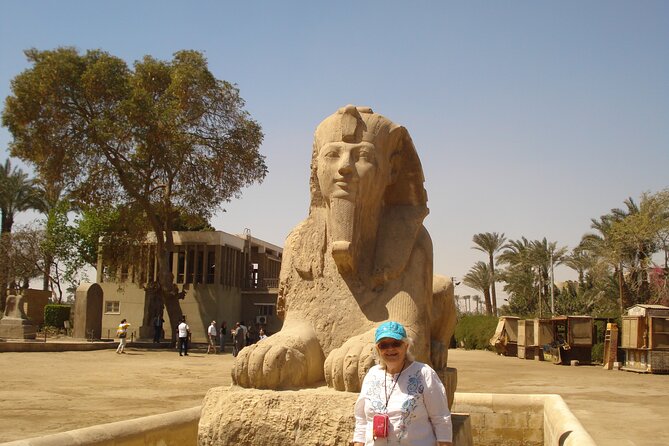
The open-air and museum displays here include a large statue of Ramesses II and an alabaster Sphinx. The stop is smaller and quieter than Giza, but it adds an important political layer to the day. Pyramids make more sense when you remember that they were part of a state system with a capital, royal administration, temples, craftsmen, and workers.
The Memphis visit is scheduled for about an hour. That should give you time to see the main displays without trying to cover an enormous archaeological area. It is a good contrast after the wide, exposed spaces of Giza.
Saqqara and the Step Pyramid of Djoser
Saqqara was the necropolis of Memphis and covers a large area south of modern Cairo. Its most famous monument is the Step Pyramid of Djoser, often described as the earliest major stone pyramid.
This is where the day’s architectural story becomes especially interesting. The Step Pyramid looks different from Giza because it grew from stacked levels rather than the smooth-sided form you already know. Nearby mastaba tombs and royal monuments show that Saqqara was not just a single pyramid, but a major burial ground used by kings and officials.
The tour allows about an hour here, with entry to the basic area included. That time is useful, but it is still short if you want to explore every tomb or study the site slowly.
The itinerary also includes the Pyramid of Unas and the Pyramid of Teti. Their importance lies partly in the Pyramid Texts, ancient religious inscriptions associated with royal burial chambers. The listed time for each is only about 15 minutes, so expect a brief look rather than a long archaeological session.
Saqqara is one of the strongest reasons to book this route. It gives you a less repetitive day and helps you see how pyramid building changed before and after the great monuments at Giza.
Dahshur and the Bent Pyramid’s strange shape
Dahshur is another ancient pyramid field south of Cairo. It is known mainly for the Bent Pyramid and the Red Pyramid, both built during the reign of Sneferu around 2613 to 2589 BC.
The Bent Pyramid is famous for its sudden change in angle. The lower section rises steeply, then the upper section becomes shallower, giving the monument its unusual profile. It is an excellent reminder that pyramid construction was a process of testing, correction, and improvement.
The Red Pyramid is one of the oldest, largest, and best-preserved pyramids in Egypt. The provided schedule allows about an hour at Dahshur, though the admission note says the basic area is free for this portion. Confirm what your chosen ticket option covers before setting out.
Dahshur is more exposed and can feel dusty, especially in strong sun. Bring water, a hat, and shoes suitable for uneven ground. Bottled water is included, but you will still want to pace yourself.
Why the private guide matters here
A private tour is more than a car with a driver. The quality of the guide can shape the whole day because the sites are spread out and the schedule needs constant adjustment.
Several guides receive especially warm praise. Amr Fouad is described as welcoming and clear. Khaled is praised for enthusiasm, family-friendly explanations, and excellent photo locations. Sue is noted for managing a full schedule and making good choices about viewpoints and pyramid interiors.
Tigo, also called Islam in one account, is praised for his humor, patience, historical explanations, and willingness to adjust the day. Osama is described as prompt and well informed, while Marwa is praised for strong English, site explanations, and taking photos.
Guide assignments can change, so you should not assume a particular person will lead your tour unless the operator confirms it. The important point is that this format gives you room to ask questions, skip an interior, change the pace, or request more time at a favorite site.
Transport, timing, and the real pace of the day
Pickup is offered from hotels in Cairo or Giza, and the tour ends with drop-off at your hotel. The air-conditioned vehicle is a major practical benefit. Cairo’s traffic can be tiring, and the distances between Giza, Saqqara, Memphis, and Dahshur make private transport far easier than arranging separate rides.
The stated duration is about eight hours, but the listed stops add up to nearly that much before allowing for traffic. You should treat the schedule as a framework, not a promise that every stop will receive a full, uninterrupted hour.
One account points out that winter closing times can make the final Giza visit too short when the route is arranged in chronological order. If Giza is your top priority, ask the guide to protect enough time there. You may prefer to see the plateau earlier, even if that changes the natural historical sequence.
The day can be dusty and tiring. That is not a flaw unique to this tour. It is the price of covering four separate archaeological zones in one outing. Take short breaks, drink water, and tell the guide when you need a slower pace.
Lunch and shopping stops
Lunch at a local restaurant, with koshari as an optional choice, is not included in the base price. Koshari is a filling Egyptian dish made with ingredients such as rice, pasta, lentils, chickpeas, and tomato sauce. The supplied details describe the lunch as ordinary, so think of it as practical fuel rather than a major food event.
Be aware that the day may include stops at perfume or oil shops, carpet workshops, and papyrus stores. These presentations can be part of the commercial side of Egyptian sightseeing, and you may feel pressure to buy.
If you do not want to shop, say so clearly at the start. You can also ask to skip a stop. Complimentary drinks may be offered at such places, but accepting one can make the sales pitch feel harder to leave. A polite refusal keeps the visit shorter.
Tips and personal purchases are not included. Keep small expenses separate from the $70 tour price, and agree on any optional ride or extra service before it begins.
Who should book this Cairo pyramid tour?
I would choose this tour if you have only one full day for the pyramid fields and want a guide to handle the driving and site order. It suits first-time visitors who want Giza plus the less familiar monuments at Saqqara, Memphis, and Dahshur.
Families can also benefit from the private format. A guide such as Khaled or Tigo can adjust explanations for children, add playful photographs, and give you more control than a large group excursion.
This is less suitable if you want a slow archaeological study. You will see a great deal, but the day’s success depends on accepting short visits, driving time, heat, and a firm schedule.
The tour also works well for people who value personal attention. You can ask about the Old Kingdom, request a different photo angle, or decide not to enter a pyramid without holding up a busload of strangers.
Should you book it?
Book this experience if your priority is maximum coverage in one private day. For $70 per person, the combination of hotel service, air-conditioned transport, guide, bottled water, and basic entry fees offers good value, especially compared with arranging four sites on your own.
Before booking, confirm the exact entrance package, the extra $23 Great Pyramid ticket, lunch arrangements, and whether shopping stops can be skipped. Ask for enough time at Giza if that is your main reason for visiting.
I would not choose it for a relaxed day. I would choose it for a well-guided overview that connects the famous pyramids with the older monuments that made them possible.
FAQ
How long is the Cairo pyramid tour?
The experience lasts about eight hours, beginning around 8 a.m. The day includes Giza, Memphis, Saqqara, and Dahshur, with hotel drop-off afterward.
Is hotel pickup included?
Yes. Pickup and drop-off are offered from hotels in Cairo or Giza.
Is this a private tour?
Yes. Only your group participates, with a private guide and vehicle.
What sites are included?
The route includes the Giza Plateau, the pyramids of Khufu, Khafre, and Menkaure, the Great Sphinx, Memphis, Saqqara, Dahshur, the Pyramid of Unas, and the Pyramid of Teti.
Are entrance fees included?
Basic entry fees are included, but the information notes that fees depend on the tour option selected. Entry inside the Great Pyramid costs an additional listed $23.
Is lunch included?
No. Lunch at a local restaurant is optional and is not included in the base price. Koshari is listed as one possible meal.
Is bottled water provided?
Yes. Bottled water is included.
Can I ride a camel during the tour?
A camel or horse ride may be offered at a panoramic viewpoint, but it is not listed among the included features. Agree on the price first, and remember that walking may be quicker.
What is the cancellation policy?
You can cancel at least 24 hours before the start time for a full refund. Cancellations or changes made less than 24 hours before the experience are not accepted for a refund.
Recently reviewed around Cairo
- White Desert Overnight Camping Sharing Tour in Egypt★ 5.0 · 15 reviews
- Cairo Best 2Days tour Pyramids, Saqqara & Old Cairo★ 5.0 · 15 reviews
- Giza Pyramids with (GEM) Grand Egyptian Museum★ 5.0 · 42 reviews
- visit the pyramids of Giza + the necropolis of Saqqara + the Memphis site.★ 4.5 · 20 reviews
- sunset at Giza pyramids by camels★ 5.0 · 31 reviews
- Tour to Giza pyramids Memphis Sakkara and Felucca on the Nile★ 5.0 · 16 reviews
- Private Giza pyramid,sphinx, Mummification temple& inside pyramid★ 5.0 · 32 reviews
- Private guided shopping tour in Khan el-Khalili with Lunch★ 4.5 · 21 reviews
Giza Pyramids & Sphinx Tours, compared.
Pyramids & Great Sphinx Private Tour with Camel Ride
Read our review →
Tour to Giza Pyramids and The Egyptian Museum
Read our review →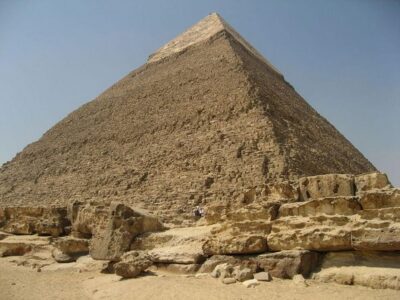
VIP All inclusive Best of the best Giza Pyramids,Sakkara,Memphis
Read our review →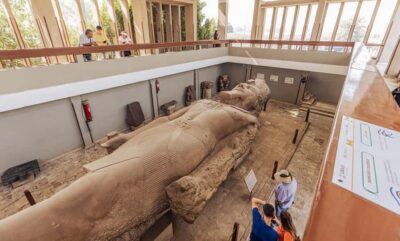
Pyramids of Giza, Sphinx, Saqqara & Memphis Tour
Read our review →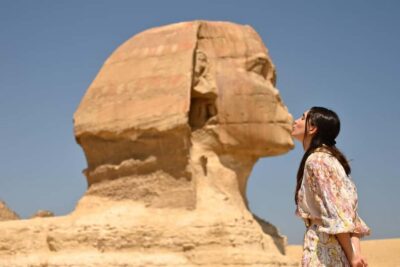
Half-Day Tour to Pyramids of Giza and the Sphinx
Read our review →
Private ViP all-inclusive Giza Pyramids,Sphinx,Inside Pyramid
Read our review →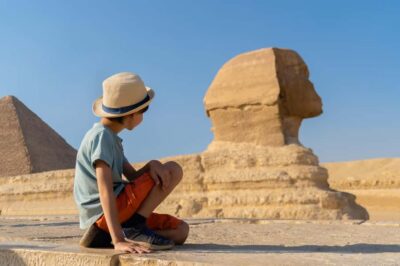
Grand Egyptian Museum, Pyramids, Sphinx Tour & Lunch
Read our review →
Cairo Pyramids, Sphinx & Egyptian Museum Day Trip
Read our review →Browse the lists this tour appears in