
Reviewed · ALEXANDRIA TOURS
Alexandria: Archeological Day Tour
Alexandria’s past comes in layers: Greek, Roman, Christian, Islamic, and royal. This $80 archaeology tour links those layers in one long day, from underground tombs and Roman ruins to the site of the ancient lighthouse. I like the wide range of stops, and I like that a good guide can adjust the order around traffic, heat, or your time limits.
The main drawback is pace. You cover a lot of ground in six to seven hours, and some Roman sites are viewed only from outside. The Library of Alexandria also closes on Fridays, Saturdays, and public holidays, so check the date before you book.
In This Review
- Key points at a glance
- Why this Alexandria tour works for archaeology lovers
- Catacombs of Kom El Shokafa: the day’s strongest archaeological stop
- Pompey’s Pillar and the Serapeum area
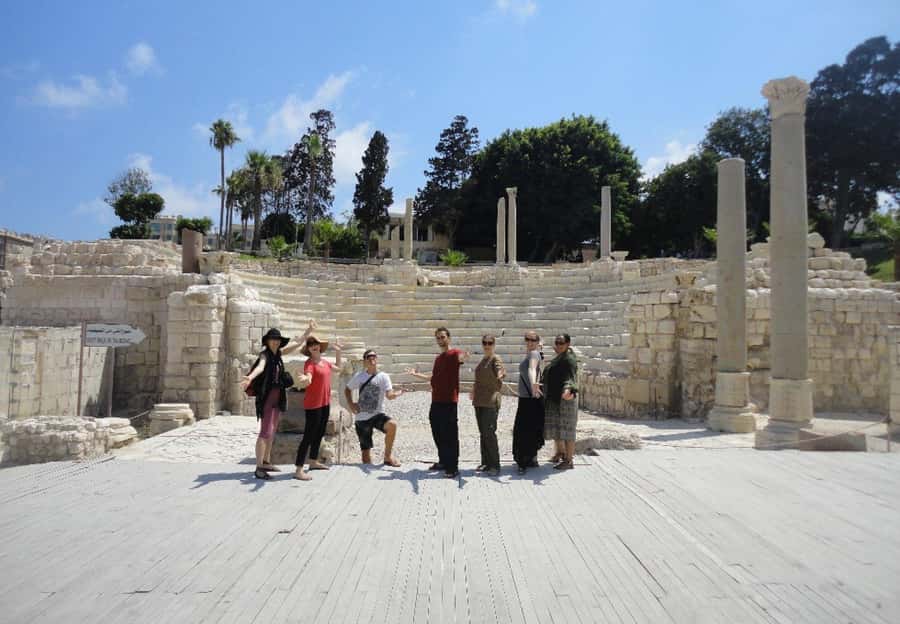
- Roman theatre and the old city at Kom El-Deka
- The Library of Alexandria and its modern mission
- St. Mark’s Church and Alexandria’s Christian past
- Abu al-Abbas Mosque and the old harbor
- Qaitbay Citadel and the vanished lighthouse
- Montaza Palace gardens and King Farouk’s royal retreat
- Lunch and the practical rhythm of the day
- Guides, vehicles, and the value of local explanation
- Who should book this tour?
- Should you book the Alexandria Archaeological Day Tour?
- FAQ
- How long does the Alexandria Archaeological Day Tour last?
- Where does pickup take place?
- Is lunch included in the price?
- Is the Alexandria Library open every day?
- Which languages are available for the live guide?
- What should I bring?
Key points at a glance
- Three levels below ground: Walk through the Catacombs of Kom El Shokafa, Alexandria’s largest Roman cemetery.
- Ancient lighthouse location: Visit Qaitbay Citadel and see where one of the Seven Wonders of the Ancient World once stood.
- History beyond ruins: Add St. Mark’s Church, Abu al-Abbas Mosque, Montaza Gardens, and Alexandria’s old harbor.
- A useful city overview: The route takes you through Roman, Christian, Islamic, and royal Alexandria in one day.
- Flexible guiding matters: Guides such as Karim, Waleed, Eman, Heba, and Norhan have been praised for clear explanations and helpful adjustments.
- Plan around the library: The Reading Hall requires an extra ticket, and the library is closed on Fridays, Saturdays, and public holidays.
Why this Alexandria tour works for archaeology lovers
I like tours that explain how a city changed over time instead of treating each monument as an isolated photo stop. Alexandria is ideal for that approach. Its ancient Greek foundations were reshaped by Roman rule, Christianity, Islamic traditions, and the modern Egyptian state.
This route gives you that broad picture. You go underground at the catacombs, walk around Roman remains, see churches and mosques, visit the modern Library of Alexandria, and finish with royal gardens and the Mediterranean coast.
You also get an air-conditioned vehicle and hotel pickup in Alexandria. That matters here. The attractions are spread across the city, and crossing Alexandria by car is far easier than trying to arrange separate taxis between every stop.
The tour costs $80 per person. That includes transfers, a guide, service charges, and taxes. Entrance fees are included if you choose the option that includes them, so read the booking choice carefully. Lunch and other extras are not included. At this price, the tour offers fair value if you want one organized day covering the major sights, especially if you would otherwise pay separately for transport and several local guides.
Other Alexandria days travellers weigh against this one:
- Alexandria Full Day Trip
★ 4.5 · 191 reviews - Alexandria Full Day Tour
★ 5.0 · 144 reviews - Private Alexandria Highlights Guided Day Tour
★ 4.5 · 121 reviews
Catacombs of Kom El Shokafa: the day’s strongest archaeological stop
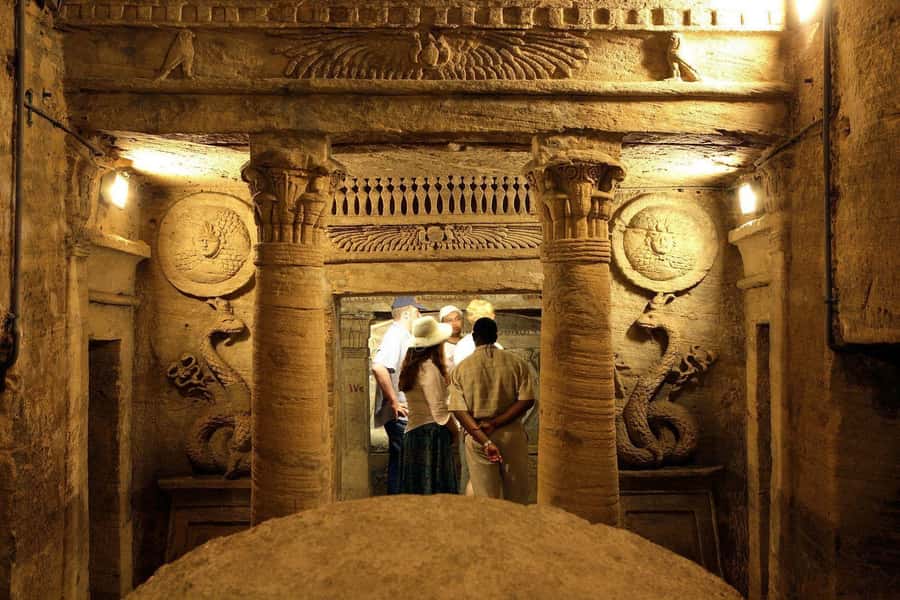
The Catacombs of Kom El Shokafa are the most distinctive stop on the route. This Roman cemetery was cut into rock and extends through three underground levels. You enter the tomb complex rather than simply viewing it from the street, which gives the visit a stronger sense of place.
The name means Mound of Shards, linked to the broken pottery found at the site. The important point for you is the mixture of influences. The burial complex reflects Egyptian, Greek, and Roman traditions, showing how Alexandria’s communities borrowed from one another.
This is a site where a guide adds real value. Without explanation, underground chambers can look like a maze of stone passages. A guide can point out the burial spaces, decoration, and unusual blend of religious styles.
Wear shoes with a good grip. Comfortable footwear is specifically advised, and you should expect stairs and uneven surfaces. The catacombs are not the right place for delicate shoes or a rushed visit.
Pompey’s Pillar and the Serapeum area

The route includes a stop for a photograph at Pompey’s Pillar, a tall red granite column linked to the Serapeum area. The stop is brief, but it gives you a clear look at one of Alexandria’s best-known surviving ancient monuments.
The formal name can cause confusion. The pillar was not actually erected for Pompey, despite the familiar name. Your guide can explain the monument’s later associations and its place within the ancient city.
The Serapeum of Alexandria is also included as a guided walk. This was a major religious complex dedicated to Serapis, a deity connected with the Greek and Egyptian traditions. The remains help explain Alexandria’s mixed cultural identity, but do not expect a huge intact temple complex.
This part of the day is best for people who want context and close views of surviving ruins. It is less satisfying if you expect complete buildings or a long museum-style visit.
Roman theatre and the old city at Kom El-Deka
At Kom El-Deka, you walk near the remains of the Roman theatre and the excavation area of old Alexandria. The wider site includes Roman villas, an amphitheater, a large tomb excavation, and other ruins.
There is an important limitation: you are not allowed to enter the excavation sites. You see them from outside, with the guide explaining what is visible. That makes this a useful orientation stop, but not a full archaeological excavation visit.
I would keep your expectations realistic here. Alexandria has lost much of its ancient city beneath later construction and modern streets. The scattered nature of the remains is part of the story, but it means this stop has less visual impact than the catacombs or Qaitbay Citadel.
The walk is still worthwhile because it shows how much of ancient Alexandria survives in fragments. It also breaks up the day with time out of the vehicle.
A different kind of day out, same part of Egypt:
- ALL inclusive Tour to Giza Pyramids Sakkara from Alexandria Port
★ 5.0 · 80 reviews - Alexandria day tour.The catacomb, pompy’s pillar,the citedal
★ 5.0 · 65 reviews - Cairo: 9-day Egypt Private Tour with Flights and Nile Cruise
★ 4.2 · 64 reviews - From Alexandria Port: Alexandria Day Tour
★ 4.0 · 54 reviews
The Library of Alexandria and its modern mission
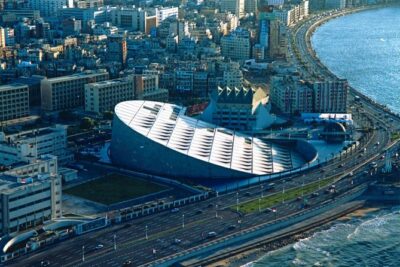
The Library of Alexandria is the tour’s link between ancient Alexandria and the present day. The modern building recalls the city’s famous ancient library, while serving as a major cultural and research center.
The open court includes a statue of Alexander the Great and a statue of Ptolemy I, which was found underwater nearby. These details give the visit a direct connection to the city’s Greek and Ptolemaic past.
The complex is described as holding eight million books, and the tour can include the President Sadat Museum and the Impressions of Alexandria Museum inside the library. These additions make the stop more than an exterior photograph.
The Reading Hall is not included in the standard visit unless you pay an extra ticket. If seeing the interior reading space is important to you, confirm the additional cost before arriving.
Schedule this carefully. The library is closed on Fridays, Saturdays, and public holidays. If it is closed, the rest of the tour can still operate, but this major stop will be missed.
St. Mark’s Church and Alexandria’s Christian past
St. Mark’s Church provides a change of mood after the ancient sites. It is presented as the oldest church in Africa, and it connects the tour to Alexandria’s long Christian tradition.
The visit also helps you see why Alexandria cannot be understood through Greek and Roman monuments alone. The city became an important center of early Christianity, and St. Mark’s remains part of that living religious story.
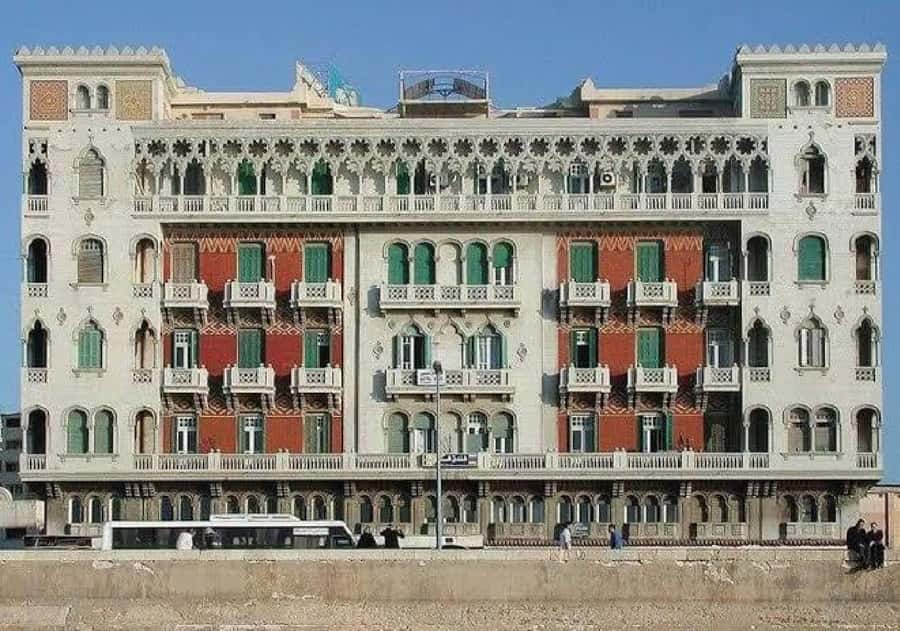
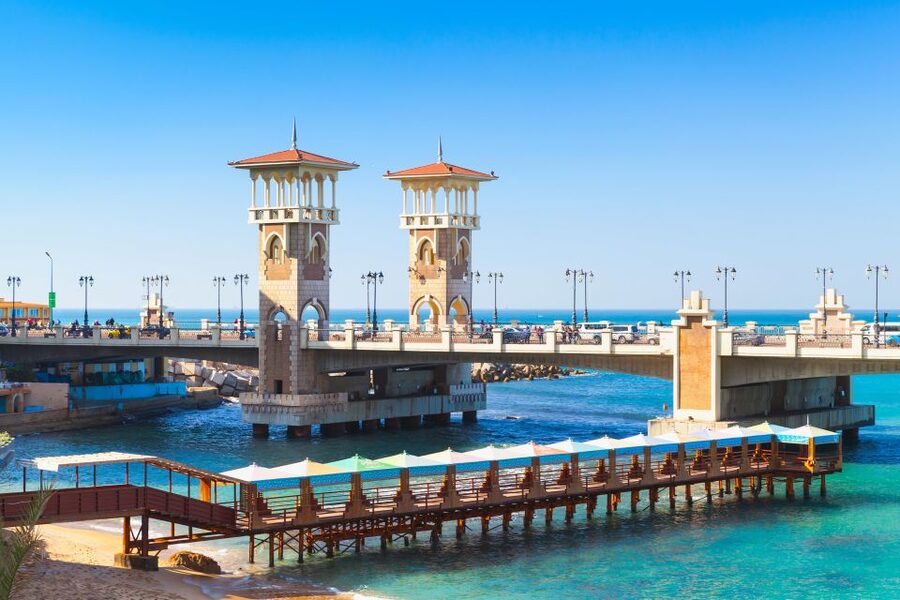
Your drive through the old downtown adds another layer. You pass historic buildings with Baroque designs and Italian and French influences. These streets show Alexandria as a Mediterranean port city shaped by many communities, not just an ancient ruin field.
This portion may appeal especially to you if you enjoy architecture. It is less about grand archaeological remains and more about seeing how later residents changed the city.
Abu al-Abbas Mosque and the old harbor
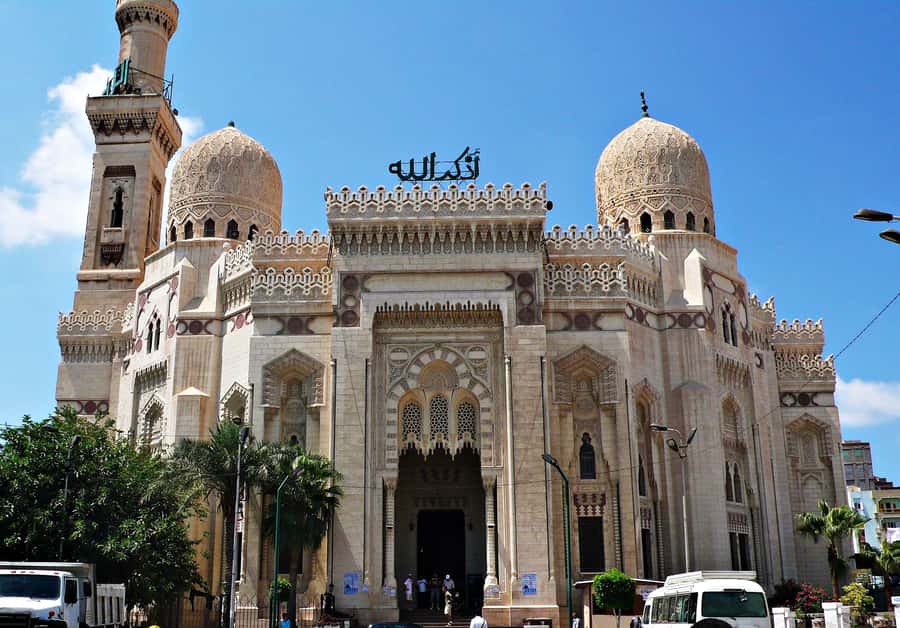
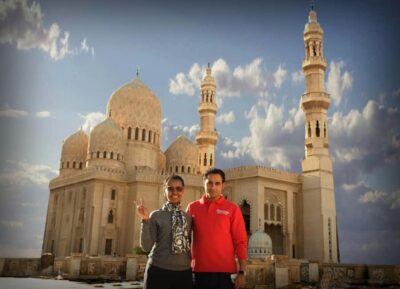
Abu al-Abbas Mosque is described as the prettiest and largest mosque in Alexandria. The exterior and interior visit offer a look at the city’s Islamic identity and its continuing religious life.
Outside the mosque is an unusual local scene: an old funfair with antique rides and cotton candy. It is a wonderfully ordinary contrast to the formal mosque beside it. This is the kind of detail that gives the day a human scale.
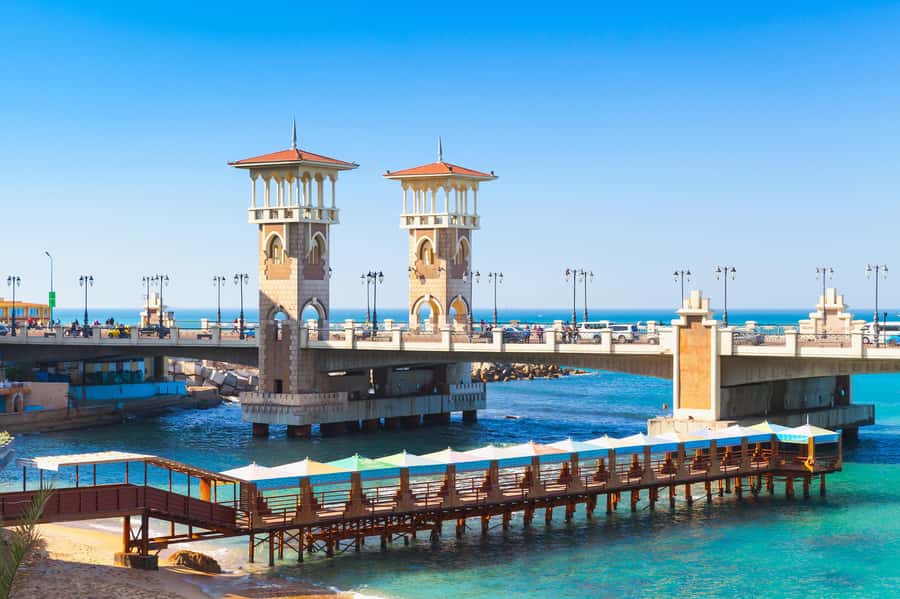
Across the street, the corniche and old harbor bring you close to working waterfront life. You may see old fishing boats, men fishing, and traditional fishermen making nets. The area is not presented as a polished attraction, and that is precisely its value.
I would allow yourself a moment to watch the harbor rather than rushing straight back to the vehicle. The tour covers famous monuments, but these everyday scenes may tell you just as much about Alexandria today.
Qaitbay Citadel and the vanished lighthouse
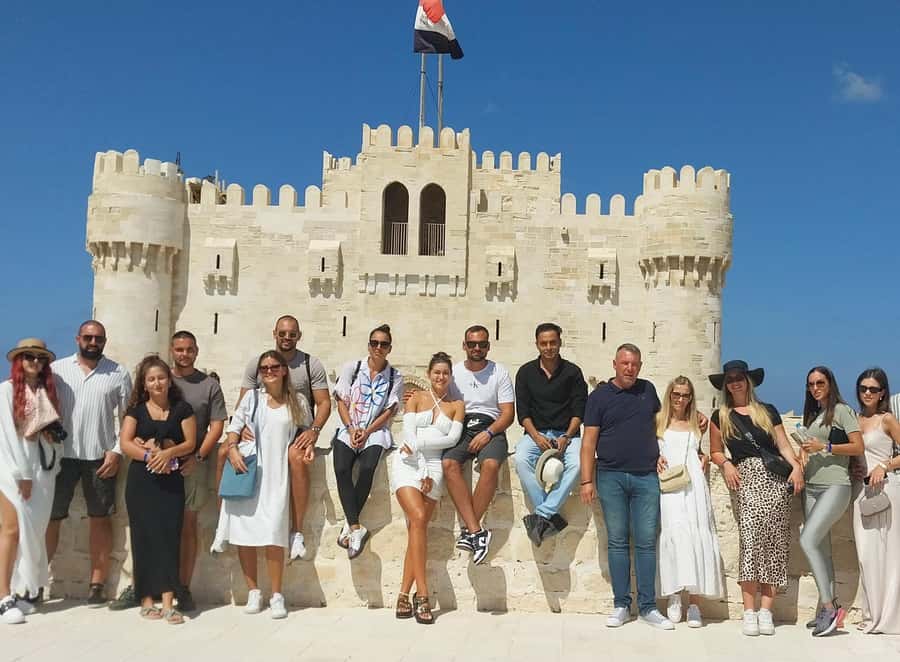
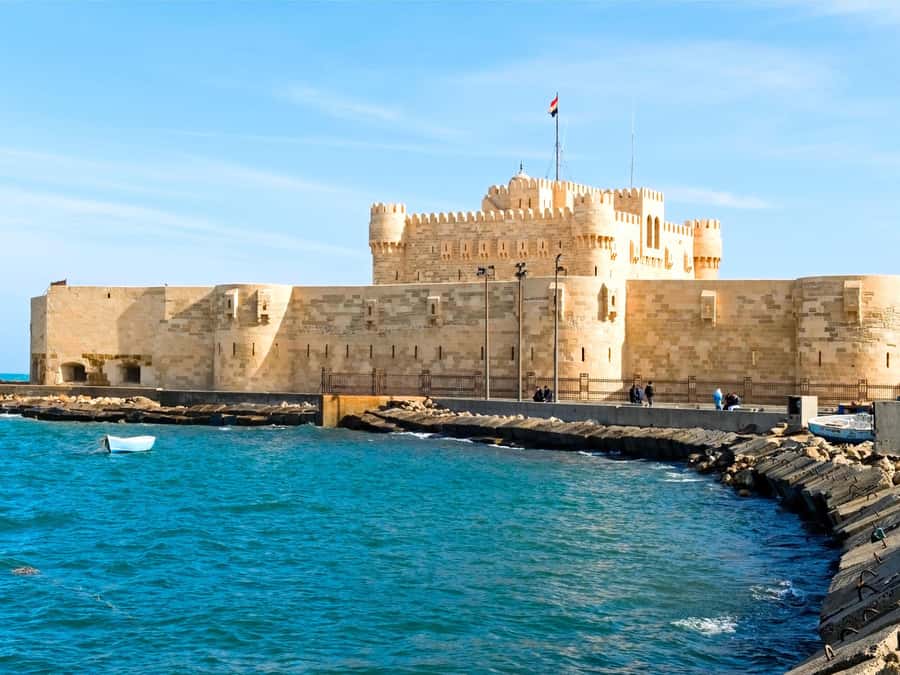
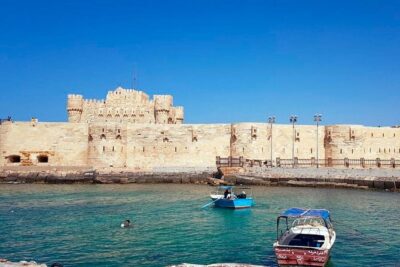
Qaitbay Citadel occupies the site associated with the ancient Lighthouse of Alexandria, one of the Seven Wonders of the Ancient World. The lighthouse itself is gone, but the location gives the visit its power.
The tour focuses on seeing the citadel from outside rather than promising a full interior visit. You still get the key historical connection: this waterfront position once guided ships toward Alexandria, and the later fortress was built on the same site.
The sea views are an added reward. Bring sunglasses and a hat, since this stop can expose you to sun and wind. Comfortable shoes will help during the walk around the area.
For archaeology lovers, the value is partly imaginative. You are not looking at the original lighthouse, but you are standing where it once stood. A good guide can make that lost monument easier to picture.
Montaza Palace gardens and King Farouk’s royal retreat
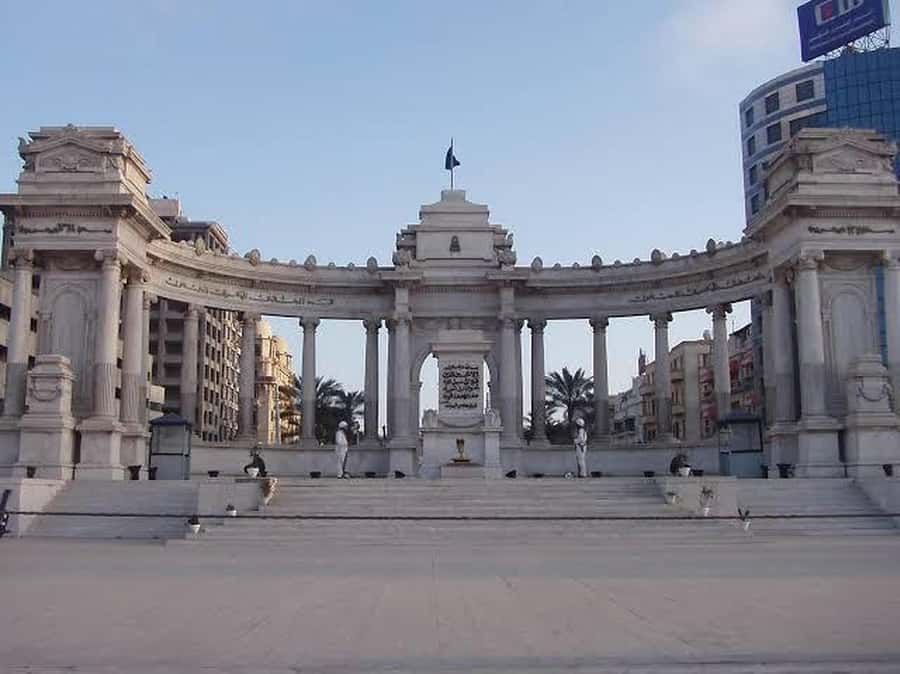
Montaza Palace Gardens show a very different Alexandria. These are the royal gardens of King Farouk, the last king in Egypt’s history. You stop for a photograph of the royal palace and see the beaches associated with the queens.
The gardens give the tour welcome breathing room after the underground tombs and city ruins. You can stretch your legs, take photographs, and see how Egypt’s royal family used the coast as a retreat.
One guide, Karim, reportedly added a stop at the tropical plant house in Montaza while adjusting the route around traffic and the heat. That kind of flexibility can improve the day, though extra stops depend on timing and the guide assigned to you.
Montaza is not an archaeological site in the strict sense. If your main goal is ancient masonry, it may feel like a detour. If you want a fuller picture of Alexandria, the gardens show the city’s modern royal chapter and offer a useful change of pace.
Lunch and the practical rhythm of the day
Lunch at a local fish restaurant is optional and costs extra. Alexandria’s coastal setting makes seafood a natural choice, and one guide arranged baked fish at Branzino, a restaurant overlooking the waves. That particular restaurant is not guaranteed, so ask what is available on your date.
The lunch stop can be a good use of time if you want a proper break. It can also make the schedule feel tight if you have a fixed departure or cruise deadline. One person with limited time was dropped back at the hotel early, which shows that some guides can adjust the route when needed.
Expect driving between several stops. Alexandria traffic can affect the order and timing, so the precise sequence may change. A guide may begin at Montaza, Qaitbay, or the catacombs to avoid crowds and the hottest part of the day.
The tour lasts six to seven hours, but that is still a packed schedule. Tell your guide early if you need extra sitting breaks or must return by a firm time. Guides such as Macy and Heba were praised for allowing more rest during the walking portions.
Guides, vehicles, and the value of local explanation
The strongest part of this experience is the guide. Names attached to especially positive experiences include Karim, Waleed, Eman, Heba, Norhan, Mahmoud Abd Elrahman, Macy, and Mohammed. You are not guaranteed one of them, but the operator offers live guides in English, Arabic, and French.
Guides from Alexandria can add local stories and help you understand why a site matters beyond its official description. Eman, for example, was praised for explaining the city’s landmarks through local knowledge and stories. Waleed was repeatedly described as funny, kind, and full of historical detail.
Language availability needs a little care. English, Arabic, and French are offered, but guides in languages other than English depend on availability and may cost more on certain dates. If your preferred guide language is not available, an English-speaking guide with an audio guide in your chosen language may be provided.
Transfers take place in an air-conditioned vehicle. A courteous driver is important in Alexandria, where traffic can be demanding. The vehicle quality may vary, so do not expect a luxury coach by default. One booking noted that the bus was not especially clean, although the guide and route were still considered good.
Who should book this tour?
I would choose this tour if you have one full day in Alexandria and want the major historical points handled in a sensible package. It suits first-time visitors, archaeology fans, couples, families who prefer a private vehicle, and anyone who wants a guide to explain the city rather than simply provide transport.
It is also useful if you are arriving by cruise and need a planned route. Tell the operator your fixed departure time, since traffic and the number of stops can make a six to seven hour day feel longer.
You may want a different arrangement if you prefer slow museum visits, long time at each ruin, or independent wandering. The Roman excavation sites are external views, Qaitbay is visited from outside according to the description, and the Reading Hall requires another ticket.
Bring comfortable shoes, sunglasses, and a hat. Check the library closure dates, ask whether entrance fees are included in your selected option, and budget separately for lunch and the Reading Hall.
Free cancellation is available up to 24 hours before the start for a full refund, and you can reserve now and pay later. Those terms are useful if your Alexandria plans may shift.
Should you book the Alexandria Archaeological Day Tour?
Book it if you want breadth, transport, and explanation in a single day. The catacombs, Qaitbay site, library, churches, mosque, Roman remains, and Montaza Gardens create a strong overview of Alexandria’s changing identity.
At $80, the value is best when entrance fees are included in your chosen package and you make good use of the guide. The tour is not perfect for slow exploration, and some sites are seen only from outside. Still, for a first visit, it gives you the city’s main historical outline without the stress of arranging every ride yourself.
FAQ
How long does the Alexandria Archaeological Day Tour last?
The tour lasts approximately six to seven hours, including visits, walks, driving, and the optional lunch stop.
Where does pickup take place?
Pickup is available from your hotel or place of residence in Alexandria.
Is lunch included in the price?
No. Lunch at a local fish restaurant is optional and is not included in the tour price.
Is the Alexandria Library open every day?
No. The library is closed on Fridays, Saturdays, and public holidays. The Reading Hall also requires an extra ticket.
Which languages are available for the live guide?
Live guides are offered in English, Arabic, and French. Languages other than English depend on availability and may involve an additional charge on some dates.
What should I bring?
Wear comfortable shoes and bring sunglasses and a hat. These are useful for the underground catacombs, walking stops, gardens, and open waterfront areas.
Recently reviewed around Alexandria
- Trip To Cairo from Alexandria★ 4.5 · 25 reviews
- Private Tour to Giza pyramids & Grand Museum from Alexandria Port★ 4.5 · 17 reviews
- The pyramids & Museum day tour★ 4.5 · 20 reviews
- Alexandria day tour.The catacomb, pompy’s pillar,the citedal★ 5.0 · 65 reviews
- Mirette Tour in Alexandria from Alexandria hotels and Alexandria Port★ 5.0 · 38 reviews
- Alexandria Group Tour from Cairo★ 5.0 · 18 reviews
- Egypt Shore tours to Giza Pyramids & Museum& bazaar from Alexandria or Port said★ 5.0 · 20 reviews
- Private Shore Excursion Giza Pyramids and Sakkara with Lunch from Alexandria★ 4.5 · 21 reviews
Alexandria Tours, compared.
ALL inclusive Tour to Giza Pyramids Sakkara from Alexandria Port
Read our review →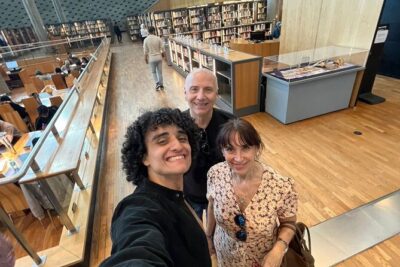
Alexandria day tour.The catacomb, pompy’s pillar,the citedal
Read our review →
9-day Egypt Private Tour with Flights and Nile Cruise
Read our review →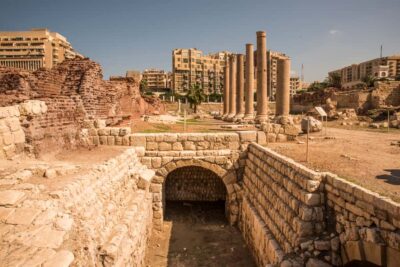

Browse the lists this tour appears in