
Reviewed · HISTORICAL TOURS
From Alexandria: Full-Day Guided Tour of Historical Sights
Alexandria’s past is packed into a surprisingly small area. In one day, you can walk through a Roman theater, descend into ancient tombs, see Pompey’s Pillar, stop outside the modern Library of Alexandria, and finish beside a 15th-century fortress on the Mediterranean.
I like the way this tour combines major archaeological sites with a local lunch and door-to-door transport. I also like having a guide to explain the mix of Egyptian, Greek, Roman, and later Islamic history, since Alexandria’s story can be hard to follow from ruins alone. The main caution is timing: the advertised 6 to 8 hours includes pickup and drop-off, and poor traffic or a late start can cut short the sightseeing.
In This Review
- Key points to know
- Why this Alexandria day tour works
- Kom El-Deka and the Roman theater
- Kom El Shoqafa, Alexandria’s underground world
- Pompey’s Pillar and the Roman city
- The Library of Alexandria from the outside
- Lunch at a local restaurant
- Qaitbay Citadel beside the Mediterranean
- The guide makes the ruins readable
- Transport, timing, and group choices
- Is $71 a fair price?
- Should you book this Alexandria tour?
- FAQ
- How long does the tour take?
- Is the Library of Alexandria included inside?
- Are entrance fees included?
- Is lunch included?
- What languages are available?
- Is the tour suitable for wheelchair users?
Key points to know
- Kom El-Deka’s Roman theater once held more than 800 people and includes mosaic floors, baths, and villas.
- Kom El Shoqafa’s catacombs show Egyptian, Greek, and Roman design in one underground complex.
- Pompey’s Pillar is a single Roman triumphal column linked to Emperor Diocletian.
- Qaitbay Citadel sits on Alexandria’s coast and offers the day’s strongest setting for photos.
- The Library of Alexandria is an outside stop only, so do not expect an interior visit.
- Private tours offer the most control, especially if you want more time at the catacombs or fortress.
Why this Alexandria day tour works
Alexandria is easy to underestimate. Cairo gets the pyramids, Luxor gets the temples, and Alexandria can look like a simple seaside escape. But the city holds a distinct story shaped by Alexander the Great’s successors, Roman rule, Egyptian traditions, and centuries of Mediterranean trade.
This tour gives you a useful first look at that story without asking you to plan several separate taxi rides or negotiate each site on your own. Hotel pickup in Alexandria, an air-conditioned vehicle, an Egyptologist guide, entrance fees, mineral water, and lunch are included in the private options described for the experience.
The route is also sensible. It begins with the inland Roman remains at Kom El-Deka, continues to the underground catacombs and Pompey’s Pillar, then moves toward the coast for the Library of Alexandria photo stop and Qaitbay Citadel. You get a steady change of setting instead of spending the entire day among similar ruins.
The listed price is $71 per person. That can be good value if you want transport, guiding, admission, and lunch bundled together. The exact value depends on the option you choose, since one group option does not include entrance tickets, while private options include tickets, and one private version adds lunch. Check the selected package carefully before paying.
More Alexandria trips worth a second look
- From Cairo: Private Full-Day Tour of Historical Alexandria
★ 4.1 · 1,155 reviews - Sunrise Hot Air Balloon Over the Historical sites in Luxor
★ 5.0 · 697 reviews - Old Cairo Guided Walk Tour: History, Culture & Street Bites
★ 4.6 · 633 reviews
Kom El-Deka and the Roman theater
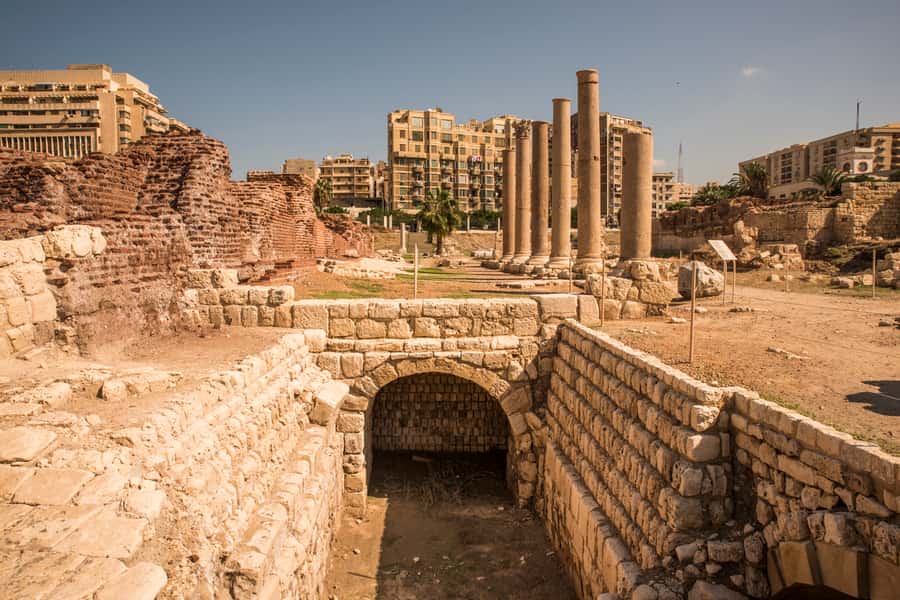
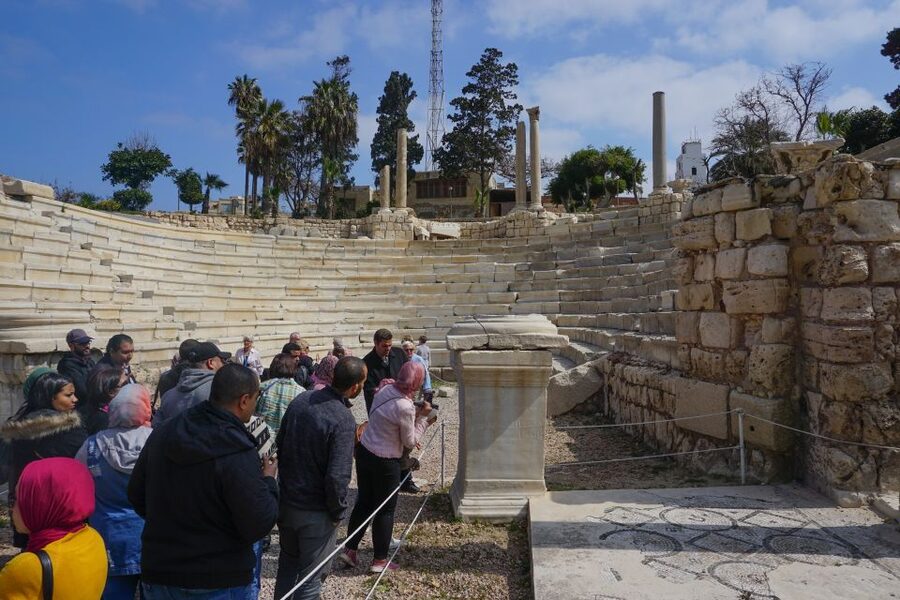
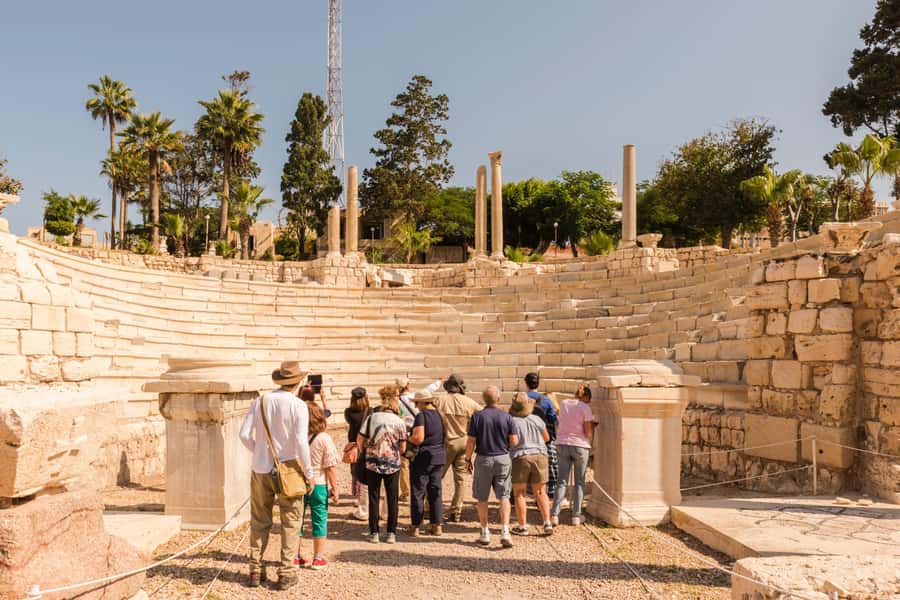
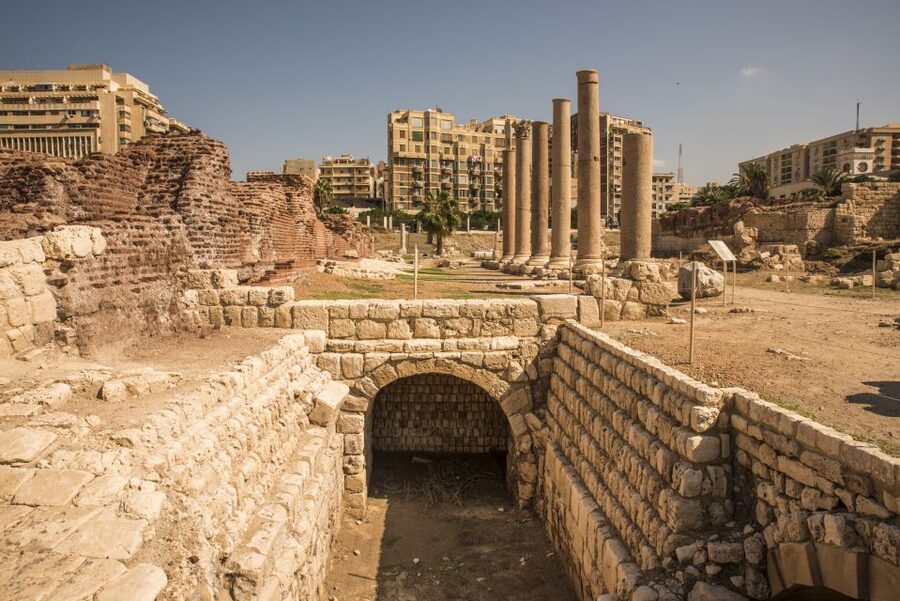
Kom El-Deka is a strong opening stop because it gives you more than one Roman ruin in the same area. The marble theater is the headline sight. It once accommodated more than 800 people, which helps you picture the scale of public life in ancient Alexandria.
You can walk through the curved seating area and imagine performances, lectures, or public gatherings taking place here. The theater is not a giant monument, so the guide’s explanation matters. Without context, you might walk through quickly and see only rows of pale stone.
The surrounding garden adds several useful details. Look for the mosaic floors from Roman baths and villas. These smaller remains show how daily life fit around public buildings. The mosaics and floor plans are less dramatic than a towering column, but they help turn the site from a theater into part of a working city.
Allow yourself time to look down as well as up. The marble seating attracts attention, but the floor patterns and remains of private buildings often reward a slower look.
There is one serious timing concern here. If the tour starts late, Kom El-Deka may be affected first. One badly delayed departure meant the site was closed by the time the group arrived, so the visitors could not enter. Traffic between Cairo and Alexandria was the reason for that delay, although this particular tour is intended for pickup in Alexandria. If seeing the theater matters most to you, ask for a clear pickup time and consider a private option.
Kom El Shoqafa, Alexandria’s underground world
The catacombs of Kom El Shoqafa are likely to be the most memorable stop. This burial complex contains hundreds of tombs and is famous for its blend of Egyptian, Greek, and Roman forms.
You descend below ground and encounter a setting that feels very different from Kom El-Deka. The design reflects a city where cultures overlapped rather than staying neatly separate. Egyptian symbols appear beside classical architectural details, giving the complex an unusual visual language.
This is where a guide earns the fee. Tombs can look similar when you do not know what to notice. Your guide can point out the changing artistic influences, explain the burial areas, and help you understand how Alexandria’s local traditions met Roman rule.
The site was once counted among the seven wonders of the medieval age, an indication of how unusual and impressive it was to earlier visitors. The description is old, but the underground setting still gives the stop real impact.
Expect stairs and uneven surfaces. The tour is not suitable for wheelchair users, and the catacombs may feel difficult if you have trouble with steps or enclosed spaces. Large bags and luggage are not allowed, so carry only what you need for the day.
I would give this stop priority if you are choosing where to spend extra time. The theater is important, Pompey’s Pillar is iconic, and Qaitbay has the best coastal view, but the catacombs offer the most distinctive experience.
Pompey’s Pillar and the Roman city
Pompey’s Pillar is one of Alexandria’s most recognizable ancient remains. It is a Roman triumphal column associated with Emperor Diocletian, and its height makes it easy to appreciate even before the guide begins explaining the site.
The name can confuse you. Despite the title, the column is not a simple memorial to Pompey. Your guide can help separate the later name from the Roman context and explain why the monument is connected with Diocletian.
The surrounding area also gives you a sense of how much ancient Alexandria has disappeared. One surviving column can seem isolated, but it once formed part of a larger urban setting. This is a good place to ask your guide how the Roman city was organized and what happened to the surrounding buildings.
Pompey’s Pillar is usually a shorter stop than the catacombs or fortress. That is not a weakness. It helps the day keep moving, and the column works well as a compact historical visit between two larger attractions.
Bring water and protect yourself from the sun. Mineral water is included, but drinks during lunch are not, so you will need to pay for any beverages at the restaurant.
A different kind of day out, same part of Egypt:
- Alexandria Full Day Trip
★ 4.5 · 191 reviews - Alexandria Full Day Tour
★ 5.0 · 144 reviews - Private Alexandria Highlights Guided Day Tour
★ 4.5 · 121 reviews - ALL inclusive Tour to Giza Pyramids Sakkara from Alexandria Port
★ 5.0 · 80 reviews
The Library of Alexandria from the outside
The modern Library of Alexandria is included as an outside photo stop. This distinction matters. You will see the building and have a chance to take pictures, but the tour does not include an interior visit or access to its collections.
The library connects the modern city with Alexandria’s ancient reputation as a center of learning. The original ancient library no longer survives in its historic form, while the present building is a modern institution designed to recall that intellectual legacy.
Use this stop as a brief visual pause rather than a full museum visit. If you hoped to spend time inside, reading exhibits or seeing the library’s interior spaces, you will need a separate plan.
For a one-day route, the photo stop is still useful. It breaks up the archaeological visits and gives you a look at one of Alexandria’s best-known modern buildings. Just keep your expectations exact.
Lunch at a local restaurant
Lunch is included with the private option that adds a meal, and a local restaurant stop is built into the day. One reported menu choice was a fish restaurant with a spacious, clean dining room, good service, and well-regarded food. That makes sense in a coastal city, although the exact restaurant and menu are not specified.
The meal is practical as much as pleasant. Alexandria’s sites require walking and standing, and a proper break gives you time to sit down before the coastal part of the route.
Drinks are not included. Ask about the lunch arrangement when you book, especially if you are comparing the group package with private options. The difference between a lower headline price and a package with entrance fees and lunch can be significant.
A local meal also adds something a standard sightseeing loop can miss. You get a short look at how the city eats, not just how it preserves monuments. Still, do not assume the restaurant will meet a particular dietary need unless you confirm it ahead of time.
Qaitbay Citadel beside the Mediterranean

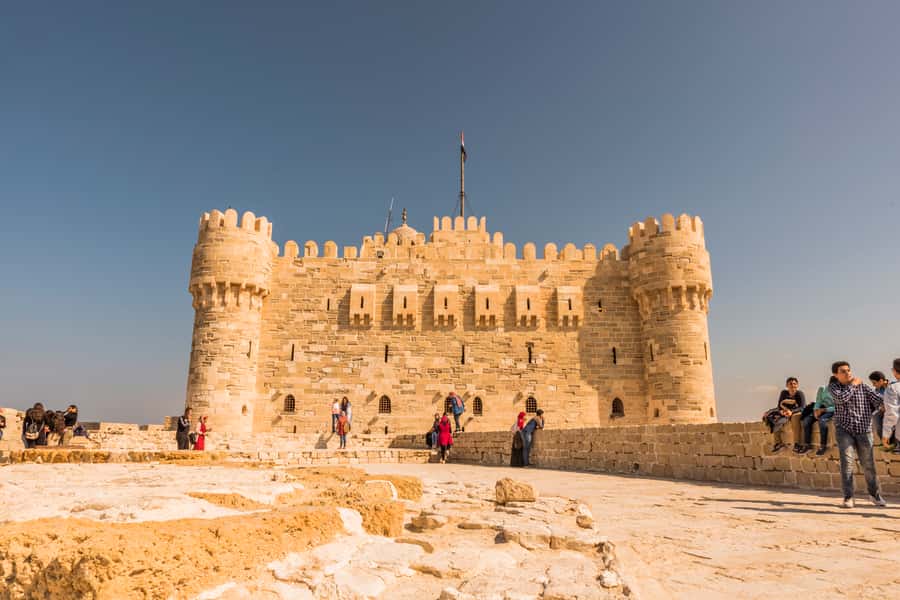
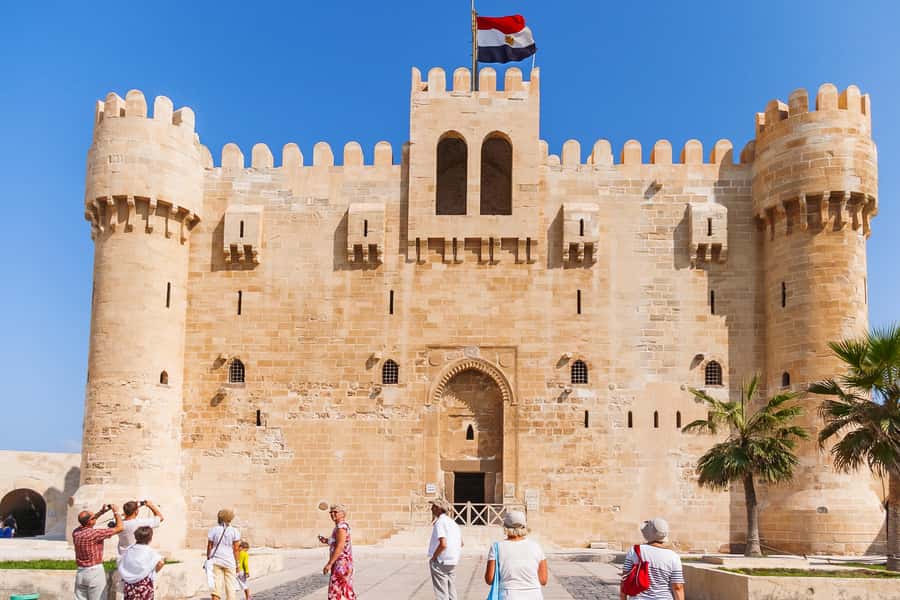
Qaitbay Citadel is the day’s grand finale. This 15th-century defensive fortress sits on Alexandria’s coast and is tied to the long military importance of the harbor.
The setting does much of the work. After underground tombs and inland Roman remains, you arrive beside open sea and heavy stone walls. The contrast helps you see Alexandria as a port city, not only an archaeological site.
The fortress is one of the longest surviving structures associated with the traditional list of the ancient world’s seven wonders, though the present citadel itself is a later building. Your guide can help explain that distinction and place the fortress within Alexandria’s later history.
You will want your camera here. The coastal position offers some of the best photographs of the day, especially from angles that show the fortress against the water. Wind and bright sun can be strong, so a hat and sunscreen are sensible.
Allow enough time to enjoy the setting rather than treating Qaitbay as a final box to tick. If earlier delays have shortened the schedule, this is another place where a private tour may help. A guide who gives you time to explore and take pictures adds real value here.
The guide makes the ruins readable
The strongest part of this experience is the human explanation. Guides named in the tour feedback include Heba, Hany, Nancy Mahmoud, Dina, and Achmed. Their languages include Arabic, English, Italian, German, and Spanish.
Heba was praised for bringing Alexandria’s history to life, showing the sights, explaining the background, and then allowing time for independent looking and photography. Hany was described as speaking clear English and giving detailed explanations. These are useful qualities to look for because the route has several stops where a short lecture can easily become too long or too vague.
A good guide should help you connect the sites rather than recite isolated dates. At Kom El-Deka, that means explaining public and private Roman life. At Kom El Shoqafa, it means making sense of mixed artistic styles. At Qaitbay, it means placing a later fortress within the city’s long coastal story.
The guide should also manage pace. One family with a 12-year-old found the day held attention well, helped by a comfortable vehicle and a balanced schedule. That suggests the tour can work for families, although very young children may not enjoy underground tombs or long explanations.
Transport, timing, and group choices
Pickup and drop-off at your Alexandria accommodation remove much of the day’s friction. You travel between sites in an air-conditioned vehicle, and mineral water is provided.
The advertised duration is 6 to 8 hours, but that total includes the road time at the beginning and end. The actual time at the monuments can be shorter, particularly when lunch and traffic are included. One account described only about four hours from departure to return after a major delay, while another felt the schedule covered Alexandria’s key sights well in a single day.
This is why pickup location matters. The serious delay involved a vehicle coming from Cairo through traffic before reaching Alexandria. Confirm that your pickup is truly arranged from your Alexandria accommodation, especially if you have a train, flight, or cruise departure later.
You can choose among:
- A group option without entrance tickets
- A private option with entrance tickets
- A private option with entrance tickets and lunch
A group tour may suit you if price matters most and you are comfortable with less control. It requires at least two participants to operate, so it can be canceled or rescheduled if the minimum is not reached.
A private tour costs more but gives you a better chance of asking questions, adjusting the pace, and protecting time at the catacombs or citadel. That matters if you have only one day in Alexandria or if you are traveling with children.
The tour is not suitable for wheelchair users. Pets, large bags, and luggage are not allowed, and minors cannot join without an accompanying adult. International travel insurance is recommended.
Is $71 a fair price?
At $71 per person, the experience can be a practical buy if your selected package includes entrance fees and lunch. You are paying not only for the sites but also for hotel pickup, an air-conditioned vehicle, a guide, water, and the convenience of having the route arranged.
The price becomes less attractive if you choose a group package that excludes admission and then pay those fees separately. Compare the final cost, not just the starting figure.
Private touring is especially useful in Alexandria because the day contains several short stops with different kinds of value. You may want a longer explanation at the catacombs, more photo time at Qaitbay, or a quicker visit at the column. A private guide can respond to that better than a fixed group schedule.
I would book it for a first Alexandria visit, particularly if you want the main historic sights in one day without arranging transport yourself. I would be more cautious if you have a strict evening departure or if the theater is the one site you cannot miss. In that case, confirm the start time and choose the package with the most control.
Should you book this Alexandria tour?
Book this tour if you want a well-covered first day in Alexandria, with the main Roman, underground, coastal, and modern landmarks tied together by an Egyptologist guide. It suits couples, families, and first-time visitors who value clear explanations and simple transport.
The best reasons to go are Kom El Shoqafa’s unusual tomb complex, Qaitbay’s seaside setting, and the chance to see several periods of Alexandria’s past in a single route. The strongest guides, including Heba, Hany, Nancy Mahmoud, Dina, and Achmed, can make a real difference.
Choose a private option if your schedule is tight, you want lunch included, or you care about controlling the pace. Skip it or arrange a shorter custom visit if you dislike fixed routes, need wheelchair access, or expect a full day inside the Library of Alexandria.
FAQ
How long does the tour take?
The stated duration is 6 to 8 hours, including pickup and drop-off. The time spent at the sights can be shorter because transport and lunch are part of the day.
Is the Library of Alexandria included inside?
No. The tour only visits the outside of the Library of Alexandria for photographs.
Are entrance fees included?
Entrance fees depend on the package. The group option does not include them, while the private options listed include entrance fees.
Is lunch included?
Lunch is included in the private option that specifically includes lunch. Drinks during lunch are not included.
What languages are available?
Live guiding is available in Arabic, English, Italian, German, and Spanish.
Is the tour suitable for wheelchair users?
No. The experience is listed as unsuitable for wheelchair users. Pets, luggage, and large bags are also not allowed, and minors must be accompanied by an adult.
Recently reviewed around Alexandria
- Trip To Cairo from Alexandria★ 4.5 · 25 reviews
- Private Tour to Giza pyramids & Grand Museum from Alexandria Port★ 4.5 · 17 reviews
- The pyramids & Museum day tour★ 4.5 · 20 reviews
- Alexandria day tour.The catacomb, pompy’s pillar,the citedal★ 5.0 · 65 reviews
- Mirette Tour in Alexandria from Alexandria hotels and Alexandria Port★ 5.0 · 38 reviews
- Alexandria Group Tour from Cairo★ 5.0 · 18 reviews
- Egypt Shore tours to Giza Pyramids & Museum& bazaar from Alexandria or Port said★ 5.0 · 20 reviews
- Private Shore Excursion Giza Pyramids and Sakkara with Lunch from Alexandria★ 4.5 · 21 reviews
Historical Tours, compared.
Private Full-Day Tour of Historical Alexandria
Read our review →
Sunrise Hot Air Balloon Over the Historical sites in Luxor
Read our review →
Old Cairo Guided Walk Tour: History, Culture & Street Bites
Read our review →
Historical Alexandria Shared Day Tour with Lunch
Read our review →
3-Day Siwa Oasis Tour, Safari, Camp & Historical Site
Read our review →

Full-Day Private Tour: Historic Alexandria From Cairo
Read our review →Browse the lists this tour appears in