
Reviewed · HISTORICAL TOURS
Discover The Historical Mosques In Cairo
Cairo’s mosque tour is a fine change of pace from pyramids and pharaohs. In about six hours, you move through Fatimid, Mamluk, Ottoman, and modern Egyptian history, from the first mosque built in Cairo to the hilltop Citadel and its famous Alabaster Mosque. The architecture changes sharply from stop to stop, which keeps the day lively.
I like the private car and hotel pickup, especially in a city where crossing town can eat up time. I also like that entry fees and bottled water are included, so the $45 price is easy to understand. The main consideration is the schedule: with several sites packed into one day, some mosque visits last only 30 minutes.
In This Review
- Key points at a glance
- Why this is a useful Cairo history day
- A private start from Cairo or Giza
- Al-Azhar Mosque and the Fatimid beginning
- Sultan Hassan’s huge Mamluk ambition
- The Citadel of Saladin above Cairo
- Mosque of Muhammad Ali, Cairo’s Alabaster landmark
- Amr Ibn Al-As in Old Cairo
- Al-Rifai Mosque facing Sultan Hassan
- How the timing affects the experience
- Is $45 a fair price?
- What to wear and how to behave
- Who should book this mosque tour?
- Should you book Discover The Historical Mosques in Cairo?
- FAQ
- How long does the mosque tour last?
- Does the tour include hotel pickup and drop-off?
- Are mosque entrance fees included?
- Is the tour private?
- Is lunch included?
- Can I cancel for a full refund?
Key points at a glance
- See Cairo’s first mosque: Al-Azhar dates to 970 and was commissioned for the Fatimid capital.
- Compare two grand monuments: Sultan Hassan and Al-Rifai Mosque face each other, yet come from very different periods.
- Reach the Citadel without transport hassle: A private air-conditioned vehicle handles pickup, transfers, and your return to the hotel.
- Visit active places of worship: Mosque visits call for respectful clothing and a calm, quiet manner.
- Meet the city beyond ancient Egypt: The tour focuses on Islamic Cairo rather than pyramids and pharaonic sites.
- Keep the cost predictable: The $45 fee includes private transport, a guide, bottled water, and admission fees.
Why this is a useful Cairo history day
Many first visits to Cairo revolve around Giza, ancient temples, and royal tombs. This experience gives you another way to read the city. Instead of looking thousands of years into the past, you follow the story of Cairo as a center of Islamic government, scholarship, worship, and urban life.
The route covers a broad span of time. Al-Azhar represents the Fatimid foundation of Cairo in the 10th century. Sultan Hassan brings you to the ambitious Mamluk period of the 14th century. The Citadel connects military power and royal government, while the Mosque of Muhammad Ali reflects Ottoman influence and 19th-century modernization.
That range is the tour’s real strength. You are not simply ticking off similar buildings. You are comparing different ideas about power, prayer, education, defense, and public display.
The experience is private, so only your group participates. That matters when you want to ask questions, pause for photographs, or spend less time at a site that does not hold your interest. Guides who have led this experience include Salua, Youssef, and Mahmoud Afifi. Guide assignments can change, but the strongest part of the tour is clearly the human explanation: the buildings make more sense when someone connects them to the rulers and periods that produced them.
More Cairo trips worth a second look
- From Cairo: Private Full-Day Tour of Historical Alexandria
★ 4.1 · 1,155 reviews - Old Cairo Guided Walk Tour: History, Culture & Street Bites
★ 4.6 · 633 reviews - From Cairo: Historical Alexandria Shared Day Tour with Lunch
★ 4.4 · 260 reviews
A private start from Cairo or Giza
Your guide picks you up from your hotel in Cairo or Giza, then you travel between the sites in a private, air-conditioned, late-model vehicle. Hotel drop-off is included at the end.
That arrangement is worth more than it may first appear. Cairo’s major historic sites are spread across different parts of the city. A private vehicle saves you from arranging several taxis and gives you a place to cool down between visits. Bottled water is also provided, a small but practical inclusion during a day of walking and sightseeing.
The total experience lasts about six hours. The listed site times add up to several hours, with the rest used for transfers and the opening and closing hotel portions. Cairo traffic can affect the pace, so I would treat the schedule as a guided half-day rather than a minute-by-minute program.
The pickup location is one detail to confirm when booking. The service covers hotels in Cairo or Giza, but the supplied information does not specify exact pickup hours or a list of individual hotels.
Al-Azhar Mosque and the Fatimid beginning
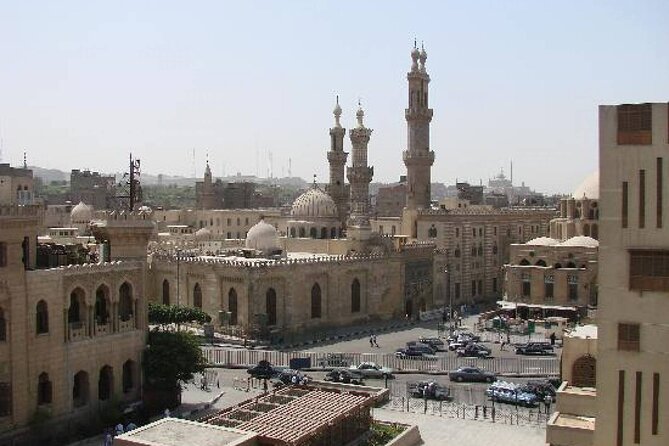
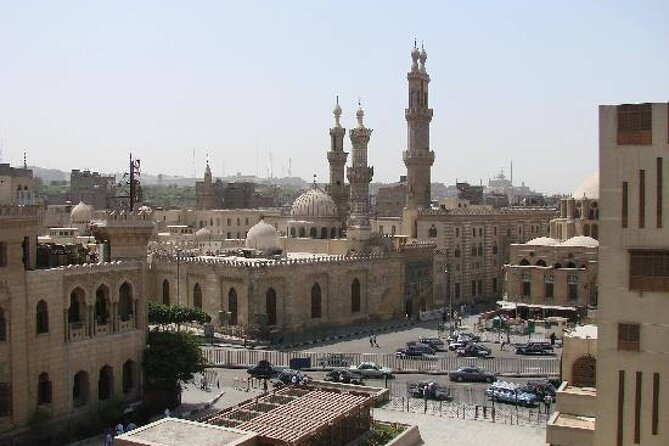
Al-Azhar is the oldest major stop on the route and one of the best places to begin understanding Cairo’s Islamic identity. Construction began in 970 under the Fatimid ruler Al-Muizz li-Din Allah, shortly after the new capital was established. The name is usually linked to az-Zahra, meaning the shining one, a title associated with Fatimah.
You have about an hour here, with admission included. That is enough time for your guide to explain the mosque’s place in Cairo and point out its architectural layers. Al-Azhar was the first mosque established in the city, and it later became closely associated with Islamic learning.
The value of this stop is not just visual. It gives you a starting date and a political setting for the city. Cairo was not an accidental cluster of old buildings. It was founded as a capital, and Al-Azhar was part of that early project.
Because this remains a religious site, you should dress modestly and follow your guide’s instructions about where to walk and when to speak quietly. The information provided does not promise a particular prayer area or interior route, so expect access to depend on conditions at the time of your visit.
Sultan Hassan’s huge Mamluk ambition
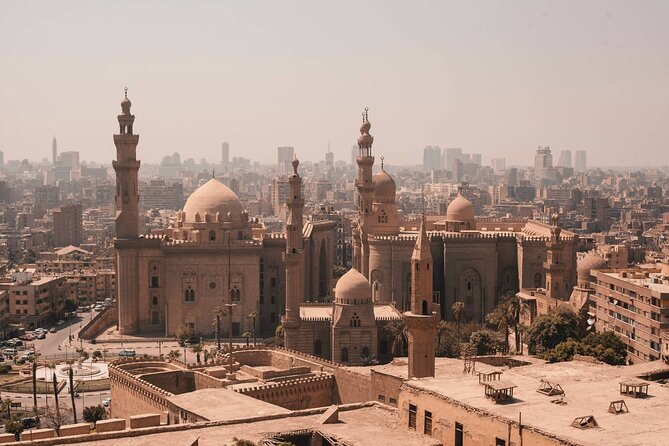
The Mosque-Madrassa of Sultan Hassan receives about 30 minutes, but its scale makes a quick visit worthwhile. Built between 1356 and 1363 during the Bahri Mamluk period, it was commissioned by Sultan an-Nasir Hasan.
This is not a delicate little neighborhood mosque. The monument was designed to impress, with a vast form and ambitious architectural elements. Its madrassa function is important: this was a place of worship and education, not just a ceremonial building.
Thirty minutes is enough to appreciate the size, listen to the guide’s explanation, and take in the relationship between the courtyard, walls, and surrounding city. It is not enough for an unhurried architectural study. If you have a special interest in Mamluk design, ask your guide to focus on the features that make Sultan Hassan unusual.
The short stop also reflects the practical shape of this tour. You see many major sites in one outing, but you do not receive a long, museum-style visit at each one.
A different kind of day out, same part of Egypt:
- Cairo: Pyramids & Great Sphinx Private Tour with Camel Ride
★ 4.9 · 6,335 reviews - Tour to Giza Pyramids and The Egyptian Museum
★ 5.0 · 6,016 reviews - VIP All inclusive Best of the best Giza Pyramids,Sakkara,Memphis
★ 5.0 · 3,164 reviews - From Cairo: Pyramids of Giza, Sphinx, Saqqara & Memphis Tour
★ 4.7 · 3,110 reviews
The Citadel of Saladin above Cairo
The Cairo Citadel changes the mood of the tour. Instead of entering a single mosque in the old city, you visit a fortified complex on the Mokattam hills. Salah ad-Din, known in the West as Saladin, began the medieval fortification, and later rulers expanded it.
For nearly 700 years, the Citadel served as the seat of government and the residence of Egypt’s rulers. Its position gave leaders a strategic view over Cairo and helped control access to the city. Today, the preserved site includes mosques and museums.
You have about an hour here, making it one of the longer stops. That extra time is useful because the Citadel is a compound rather than one simple building. Your guide can place the mosques within the wider story of military rule, royal administration, and Cairo’s changing skyline.
The Citadel also provides a visual break from enclosed courtyards and interiors. You might find the open setting helpful after several close architectural visits, though the tour details do not specify exactly which viewpoints or museums are included beyond access to the Citadel itself.
Mosque of Muhammad Ali, Cairo’s Alabaster landmark
Inside the Citadel, the Mosque of Muhammad Ali is one of the most recognizable buildings on the route. It is often called the Alabaster Mosque because alabaster covers its outer walls.
The visit lasts about 30 minutes. That may sound brief, but the mosque’s appearance gives your guide plenty to explain: its material, its place within the Citadel, and the way 19th-century rulers used architecture to express authority.
This is a useful contrast with Sultan Hassan. Sultan Hassan belongs to the Mamluk period, while Muhammad Ali Mosque reflects a later era and a different visual language. Looking at them together helps you notice that Cairo’s Islamic architecture did not develop in one fixed style.
You should not expect the same kind of ancient atmosphere here as at the older mosques. The attraction is its later date, strong silhouette, and alabaster exterior. If you want a tour focused only on medieval buildings, this stop may feel less central. For a broad overview of Cairo’s Islamic monuments, it earns its place.
Amr Ibn Al-As in Old Cairo
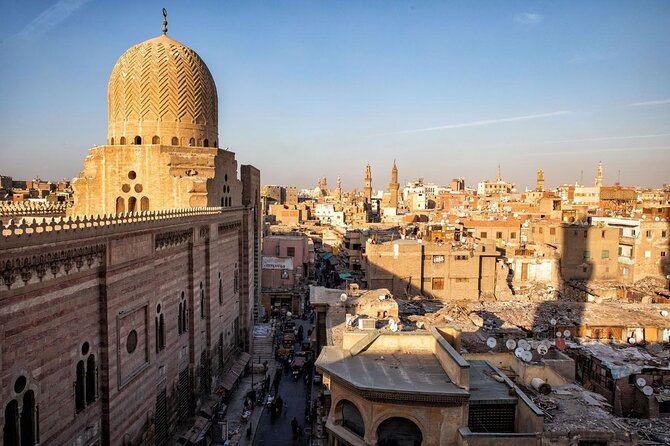
The Mosque of Amr ibn al-As takes you to the earliest Islamic chapter in Egypt. The original mosque was built between 641 and 642 in Fustat, the newly founded capital of the time. It was the first mosque built in Egypt and in Africa.
The present building has been reconstructed many times, and none of the original structure remains. That is an important detail to keep in mind. You are visiting a place with an ancient foundation and continuing religious importance, not a building that has survived unchanged since the seventh century.
The mosque remains active, and visitors may enter when prayers are not taking place. Your visit lasts about 30 minutes, so your guide’s explanation is especially useful. The location is also linked to Amr ibn al-As’s military camp and includes the tomb of his son, Abd Allah ibn Amr ibn al-As.
This stop adds a different kind of value. It is less about preserved stonework from one precise period and more about continuity, rebuilding, and the way a sacred site remains part of Cairo’s daily life.
Al-Rifai Mosque facing Sultan Hassan
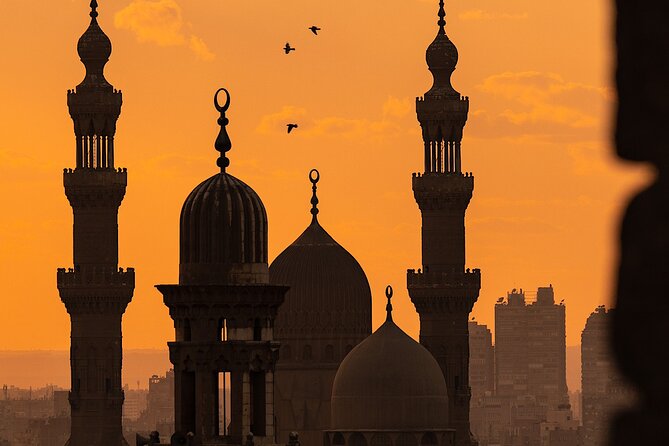
Al-Rifai Mosque sits opposite Sultan Hassan Mosque-Madrassa, creating one of the most useful comparisons on the tour. The older monument dates from around 1361, while Al-Rifai was part of a 19th-century campaign by Egypt’s rulers to connect themselves with the prestige of earlier Islamic eras and modernize Cairo.
The two buildings face one another, but they do not belong to the same moment. That pairing lets you see how later rulers borrowed older forms while pursuing their own political goals.
The visit lasts about 30 minutes. I would pay attention to the relationship between the two facades rather than treating Al-Rifai as an isolated stop. Its meaning becomes clearer when you look across at Sultan Hassan and consider why a later government would place a new monument beside an older one.
The supplied tour details do not list specific tombs or interior features at Al-Rifai, so your guide’s presentation will shape how much historical detail you receive there.
How the timing affects the experience
The route gives you a lot in six hours. You visit six named mosques or mosque complexes, plus the Citadel, with the longer stops at Al-Azhar and the Citadel. The shorter 30-minute visits keep the day moving, but they also limit time for quiet reflection, extended photography, or close study of details.
I would choose this tour if you want a strong first look at Cairo’s Islamic monuments. You get the main names, the major historical periods, and a private guide to connect them. I would choose a slower, more specialized visit if you already know these sites well or want to spend an hour at each building.
One review describes a group visiting five mosques on its personal list, while another describes Youssef adding two churches and a synagogue because there was time and they were nearby. That suggests the private format may allow some flexibility, but those extra religious sites are not part of the stated package. Do not assume they will be included. Ask before departure if you want to discuss a possible adjustment.
The guide also makes a major difference. Salua, Youssef, and Mahmoud Afifi are names associated with especially strong guide feedback, with praise focused on clear historical explanations, attentive service, and the calm, spiritual quality of the mosque visits. You cannot guarantee a particular guide unless the provider confirms one, but you can ask who will lead your group.
Is $45 a fair price?
At $45 per person, the tour offers good value if you want private transport and a guide rather than arranging each site yourself. The price includes hotel pickup and drop-off, a private air-conditioned vehicle, bottled water, entry fees, and the guide.
Those inclusions remove several common extra costs. You do not need to pay separate admission at each listed stop, and you are not sharing the vehicle with a large group. Group discounts may also be available, though the amount is not specified.
Lunch is not included. You can add an optional meal at a local restaurant, with koshari listed as the example. Tipping is also outside the price. Since the day already covers several sites, I would treat lunch as an optional add-on rather than assume it is built into the schedule.
The value is strongest for couples, families, and small groups who want control over the pace. Solo visitors should compare the $45 private-tour price with other options, since a shared group trip might cost less, but the private vehicle and personal guide can make the higher rate worthwhile.
What to wear and how to behave
These are active mosques and places of worship, not only monuments. Wear clothing that covers shoulders and knees, and bring a respectful attitude. Your guide will direct you about appropriate areas, photography, and visiting times.
The tour is described as suitable for most people and is near public transportation, although the experience itself includes private hotel transfers. The supplied information does not give detailed mobility guidance, so anyone with specific accessibility needs should confirm the arrangements before booking.
Carry only what you need. You will have water in the vehicle, but a small personal bottle, comfortable shoes, and modest clothing will make the day easier. Exact walking distances are not provided, so I would avoid assuming that every stop involves only a short step from the vehicle.
Free cancellation is available if you cancel at least 24 hours before the local start time. Changes or cancellations made inside that 24-hour window are not accepted for a refund.
Who should book this mosque tour?
I would recommend it to you if you have already seen, or plan to see, Cairo’s ancient Egyptian monuments and want the city’s later history. It also suits first-time visitors who prefer a guide to explain religious architecture rather than simply taking photographs outside.
Families can benefit from the private format, since the guide can adjust explanations and the vehicle offers a break between stops. Small groups can also spread the price across several people while keeping the convenience of private transport.
I would hesitate if you want a slow, contemplative morning at only one or two mosques. The schedule is broad and efficient. It gives you range, not unlimited time.
Should you book Discover The Historical Mosques in Cairo?
Book this tour if you want a practical introduction to Cairo’s Islamic monuments, with transport, admissions, and a private guide handled in one package. The strongest reasons are the variety of periods, the Citadel setting, and the chance to compare Sultan Hassan directly with Al-Rifai.
The main trade-off is pace. Several stops last only 30 minutes, and traffic can affect the day. Ask about the guide assigned to your group, confirm your hotel pickup, and mention any preferred sites or possible additions before setting off. At $45, it is a sensible choice for a broad, guided look at Cairo’s mosques without the work of organizing the route yourself.
FAQ
How long does the mosque tour last?
The experience lasts approximately six hours, including hotel pickup, transfers between sites, sightseeing, and return to your hotel.
Does the tour include hotel pickup and drop-off?
Yes. Pickup and drop-off are provided for hotels in Cairo or Giza.
Are mosque entrance fees included?
Yes. Entry fees for the listed attractions are included in the tour price.
Is the tour private?
Yes. Only your group participates, and transfers are provided in a private air-conditioned vehicle.
Is lunch included?
No. Lunch is not included, though an optional meal at a local restaurant, such as koshari, may be available.
Can I cancel for a full refund?
Yes, if you cancel at least 24 hours before the experience start time. Cancellations or changes made less than 24 hours in advance are not accepted for a refund.
Recently reviewed around Cairo
- White Desert Overnight Camping Sharing Tour in Egypt★ 5.0 · 15 reviews
- Cairo Best 2Days tour Pyramids, Saqqara & Old Cairo★ 5.0 · 15 reviews
- Giza Pyramids with (GEM) Grand Egyptian Museum★ 5.0 · 42 reviews
- sunset at Giza pyramids by camels★ 5.0 · 31 reviews
- Tour to Giza pyramids Memphis Sakkara and Felucca on the Nile★ 5.0 · 16 reviews
- visit the pyramids of Giza + the necropolis of Saqqara + the Memphis site.★ 4.5 · 20 reviews
- Private Giza pyramid,sphinx, Mummification temple& inside pyramid★ 5.0 · 32 reviews
- Private guided shopping tour in Khan el-Khalili with Lunch★ 4.5 · 21 reviews
Historical Tours, compared.
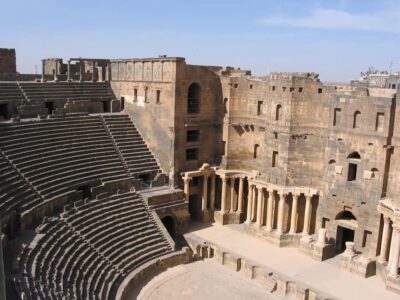
Private Full-Day Tour of Historical Alexandria
Read our review →
Sunrise Hot Air Balloon Over the Historical sites in Luxor
Read our review →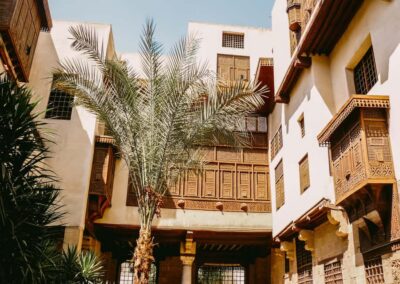
Old Cairo Guided Walk Tour: History, Culture & Street Bites
Read our review →
Historical Alexandria Shared Day Tour with Lunch
Read our review →
3-Day Siwa Oasis Tour, Safari, Camp & Historical Site
Read our review →
Full-Day Private Tour: Historic Alexandria From Cairo
Read our review →Browse the lists this tour appears in