
Reviewed · HISTORICAL TOURS
Old Cairo Guided Walk Tour: History, Culture & Street Bites
Old Cairo is best understood on foot, one weathered stone, quiet courtyard, and crowded lane at a time. This tour takes you through Bab al-Futuh, grand Fatimid and Mamluk monuments, an Ottoman house, and the trading lanes of Khan el Khalili, with an Egyptologist guide to connect the pieces.
I like the strong mix of major sights and ordinary street life, and I like that entrance fees, bottled water, snacks, and a local meal are included. Guides such as Nahed and Randa have earned repeated praise for warm, witty explanations and for helping visitors handle the market. The main drawback is physical: rough streets, stairs, heat, and little time for a proper rest can make the three to four hours tiring.
In This Review
- Key points before you book
- Starting through Bab al-Futuh
- Al-Hakim Mosque and the Fatimid beginning
- Bayt al-Suhaymi, a home rather than a monument
- Walking El Moez Street
- Sultan Barquq and the Mamluk monuments
- The Qalawun Complex in 25 minutes
- Al-Hussein Mosque and a moment of quiet
- Khan el Khalili, shopping with your eyes open
- Street food: koshary, Egyptian pie, and sweets
- What the $31 price really covers
- The guides make the difference
- Pace, clothing, and what to carry
- Who should book this Old Cairo walk?
- Should you book it?
- FAQ
- Where does the Old Cairo walking tour start?
- How long does the tour last?
- What sites are included?
- Is food included?
- What languages are offered?
- Are entrance fees included?
- What should I wear?
- Is the tour suitable for wheelchair users or strollers?
Key points before you book
- Start at Bab al-Futuh: Enter Cairo’s old walled city through one of its most impressive surviving gates.
- See several eras in one walk: Fatimid, Mamluk, and Ottoman architecture appear along the same route.
- Visit Bayt al-Suhaymi: This 17th-century home gives you a look at domestic Cairo, not only religious monuments.
- Eat local food: Koshary or Egyptian pie comes with Zalabya, Halabessa, or a similar Egyptian snack.
- Expect active walking: Narrow lanes, uneven paving, and stairs rule out wheelchairs and baby strollers.
- Pay one clear price: At $31 per person, admission, guide service, water, snacks, and food are included.
Starting through Bab al-Futuh
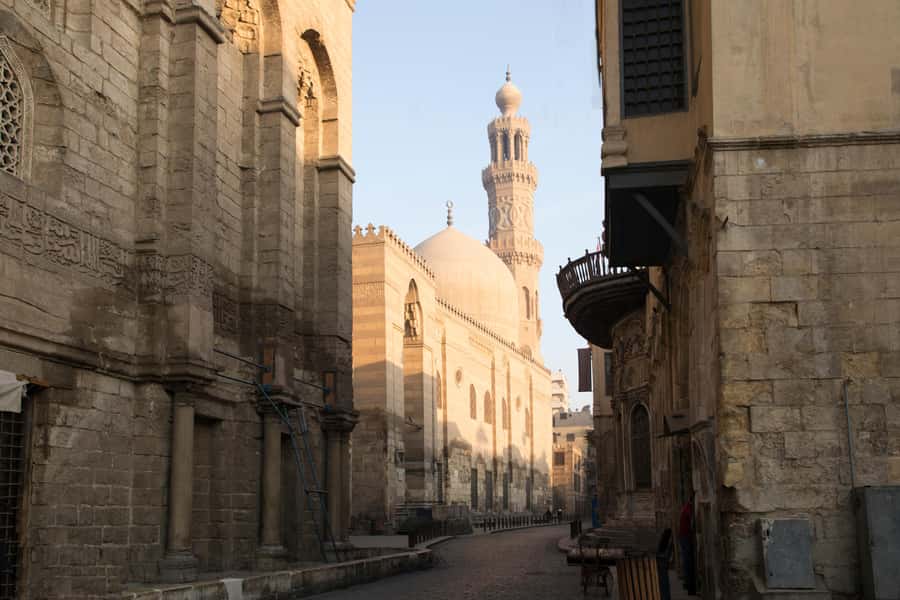
Your meeting point is in front of Bab al-Futuh, unless you book the optional hotel pickup. Arrive on time and look for your guide at this historic gate, one of the principal entrances in Cairo’s old defensive walls.
Bab al-Futuh is more than a place to gather. Its heavy stonework and broad towers immediately show the scale of medieval Cairo. Your guide sets the scene here, explaining why this area mattered and how the old city developed around its walls, mosques, schools, homes, and markets.
The listed visit here takes about 15 minutes. That is enough for an introduction and some sightseeing, but not a long architectural study. If you like taking photographs, have your camera ready before the group moves into the streets.
If you choose hotel pickup, service is available from hotels or selected locations within Cairo or Giza city limits. The exact time is confirmed by WhatsApp, email, or phone the day before. Traffic can cause delays, so tell the provider early if you have a flight or another fixed appointment. One guide helped a visitor keep track of time for an airport departure, while another pickup was delayed by more than 30 minutes because the driver struggled with Cairo’s roads.
More Cairo trips worth a second look
- From Cairo: Private Full-Day Tour of Historical Alexandria
★ 4.1 · 1,155 reviews - From Cairo: Historical Alexandria Shared Day Tour with Lunch
★ 4.4 · 260 reviews - Cairo: Egyptian Heritage Tanoura Dancing Troupe Show
★ 4.7 · 54 reviews
Al-Hakim Mosque and the Fatimid beginning
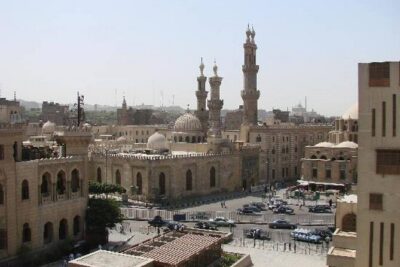
The first major stop is Al-Hakim Mosque, one of Cairo’s oldest and largest Fatimid mosques. Allow about 25 minutes here for the guided visit and nearby walking.
The mosque is known for its large minarets, stone walls, and open courtyard. The setting is calmer than the market streets you will visit later, making it a useful first pause. Look at the contrast between the severe exterior stonework and the spacious courtyard. Your guide can help you understand the mosque as both a place of worship and a surviving piece of Cairo’s early Islamic city.
This is one of the places where a guide adds real value. Architectural details are easy to pass without context, especially when you are still adjusting to Cairo’s scale and noise. Guides including Nahed, Randa, Ruby, and Ehab have been praised for explaining religious and historical subjects in clear, lively language. The available languages are English, Arabic, French, Spanish, and German.
Dress respectfully from the start. Wear loose clothing covering your shoulders, arms, legs, and knees. Women should carry a scarf for religious sites. You may need to remove shoes or follow local instructions inside religious buildings, so practical footwear matters.
Bayt al-Suhaymi, a home rather than a monument
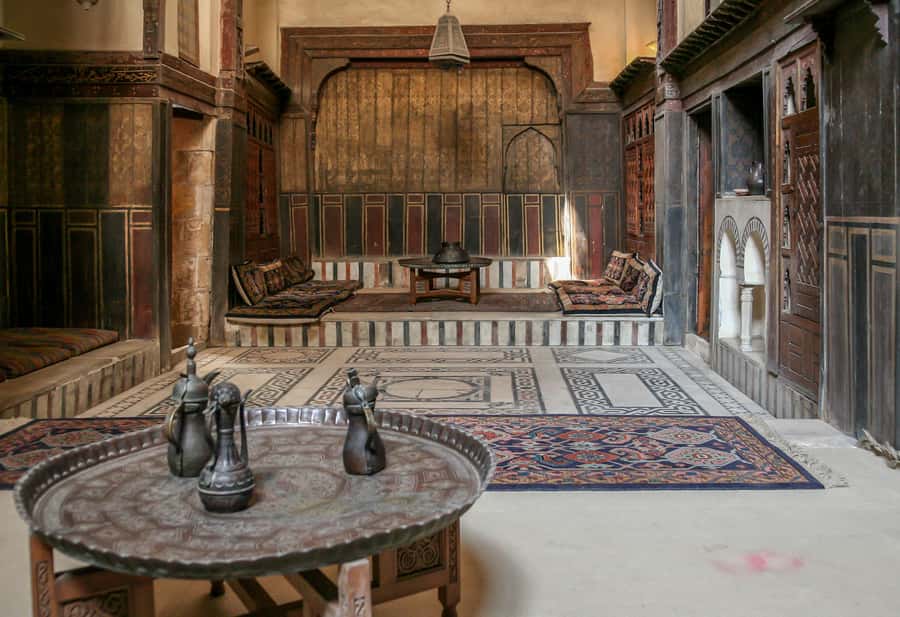
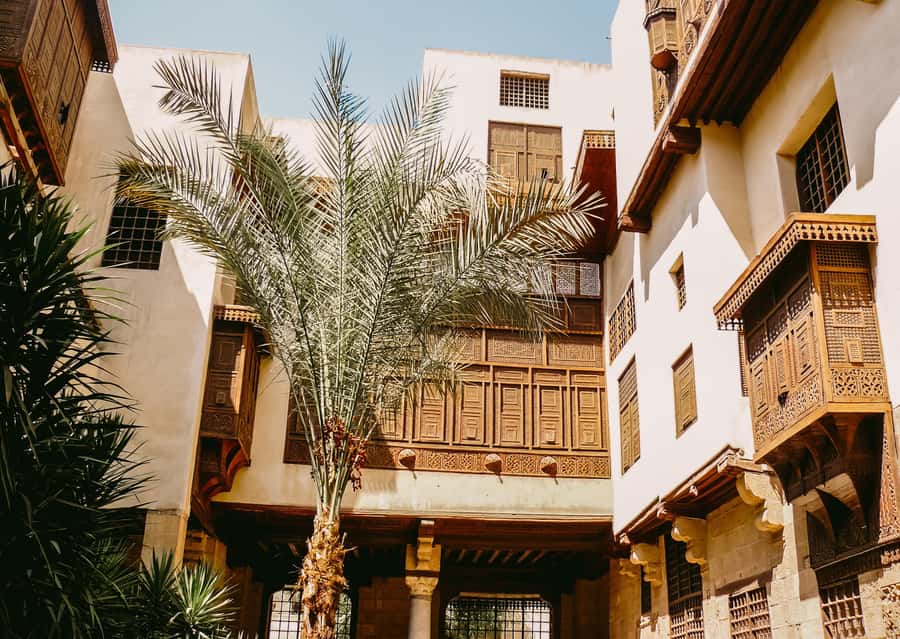
Bayt al-Suhaymi takes you away from the grand mosque scale and into a 17th-century Ottoman residence. The visit lasts about 25 minutes and focuses on rooms, courtyards, and the way people once lived in Cairo.
This is one of the tour’s most useful stops because it broadens the story. Mosques and mausoleums tell you about rulers, faith, and public life. Bayt al-Suhaymi lets you consider domestic architecture, privacy, shade, and household routines. Its traditional Islamic design is easier to appreciate when your guide points out how rooms and open spaces worked together.
Do not expect a long, leisurely house museum visit. The schedule moves at a steady pace, and the group has several more sites ahead. Still, this stop gives the walk welcome variety and helps you picture Old Cairo as a lived-in neighborhood rather than an outdoor collection of monuments.
Walking El Moez Street

El Moez Street is the tour’s main connecting route. The listed guided walk takes about 15 minutes, though the overall movement between sites adds more time.
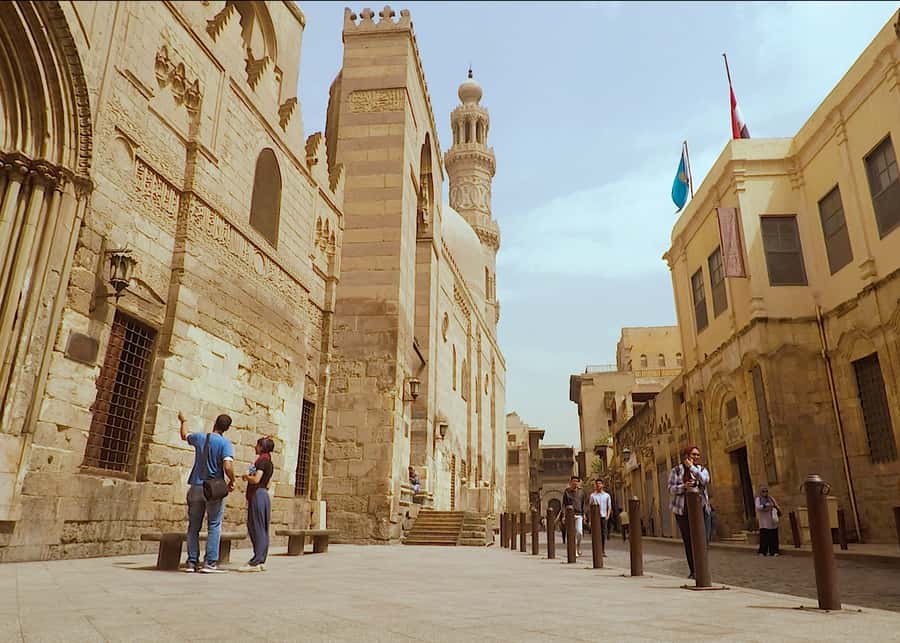
This historic street is lined with Islamic buildings, local vendors, cafés, and old facades. It is also where the tour becomes less formal. You move from courtyard to courtyard through lanes where daily life carries on around the monuments. That mixture is the point. You see architecture in its real setting, not behind a museum rope.
Keep your group close here. The streets are narrow, and the market atmosphere can be distracting. You may find people offering souvenirs or encouraging you into shops. Guides such as Randa and Ruby have helped visitors understand how to behave in the market and directed them toward shops with fair prices. Nahed has also been praised for helping her group feel comfortable when sales approaches became persistent.
There is not much room for wandering alone if you want to stay with the schedule. Treat El Moez Street as a moving lesson, not free shopping time. You will have more opportunity to browse at Khan el Khalili later.
A different kind of day out, same part of Egypt:
- Cairo: Pyramids & Great Sphinx Private Tour with Camel Ride
★ 4.9 · 6,335 reviews - Tour to Giza Pyramids and The Egyptian Museum
★ 5.0 · 6,016 reviews - VIP All inclusive Best of the best Giza Pyramids,Sakkara,Memphis
★ 5.0 · 3,164 reviews - From Cairo: Pyramids of Giza, Sphinx, Saqqara & Memphis Tour
★ 4.7 · 3,110 reviews
Sultan Barquq and the Mamluk monuments
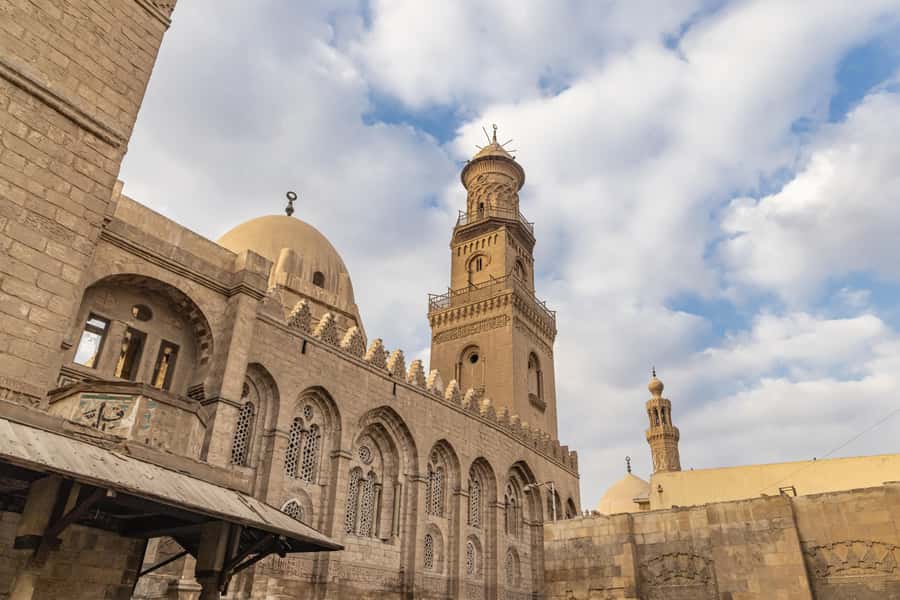
The Mosque and Khanqah of Al-Nasir Faraj Ibn Barquq is listed as a 20-minute visit. It is often described in the tour plan alongside the Sultan Barquq Mosque, whose elaborate Mamluk design forms one of the architectural highlights.
The building served several roles: mosque, madrasa, and Sufi lodge. That combination matters. It shows how religious education, worship, and spiritual practice were tied together in medieval Cairo. Your guide can also point out the decorative details that make Mamluk architecture so memorable, from carved stone to patterned surfaces and carefully planned spaces.
The exact order can change. The planned route may place Khan el Khalili before the Barquq and Qalawun stops, while the expected sequence presents the Mamluk monuments first and ends at the bazaar. Sites can also be rearranged if one is closed. The core value remains the same: you see a concentrated group of major Islamic Cairo buildings without having to work out the route yourself.
The walking surface is not always easy. One visitor described rough streets and many stairs, and that is useful advice for anyone with limited mobility. This tour is not suitable for wheelchair users, and baby strollers and large bags are not allowed.
The Qalawun Complex in 25 minutes
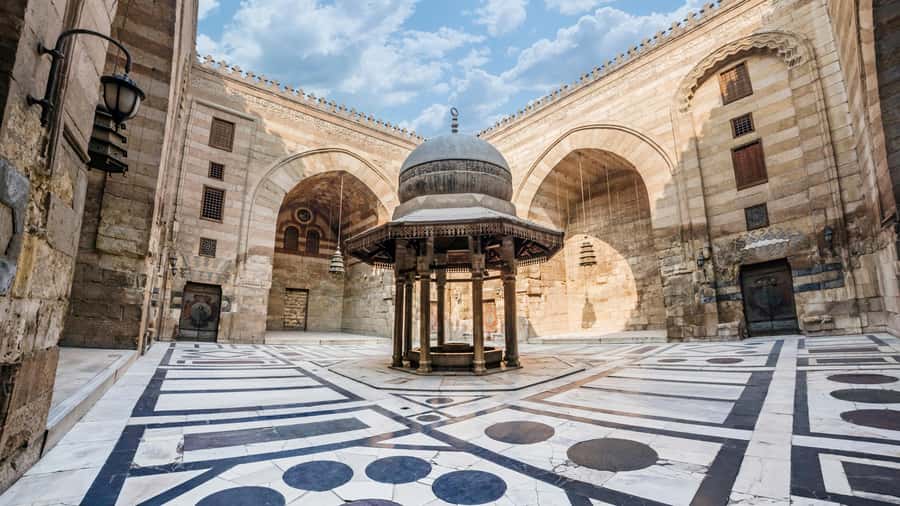
Next comes the Qalawun Complex, a group containing a mosque, madrasa, and mausoleum. The planned visit is about 25 minutes.
This complex is a good place to see how a ruler could use architecture to express power, faith, and public responsibility. Instead of treating the building as one isolated monument, listen for the connections between its different functions. A mosque served worshippers, a madrasa supported study, and a mausoleum preserved the memory of the founder.
Twenty-five minutes gives you a useful overview, not a detailed architectural survey. If you want to study inscriptions or photograph every carved panel, you will probably wish for more time. The benefit is breadth: in a single half-day, you see several buildings that would be difficult to connect on your own.
Al-Hussein Mosque and a moment of quiet
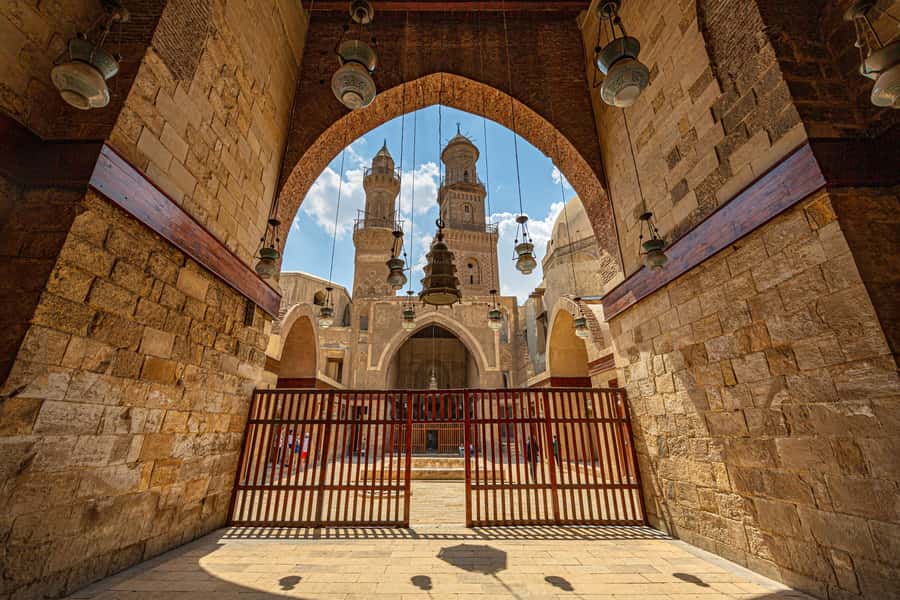
The route includes a 20-minute stop at Al-Hussein Mosque, in the heart of Islamic Cairo. After the stone gates, historic homes, and market lanes, this offers a more reflective part of the walk.
The mosque carries major spiritual importance and has a quiet atmosphere inside. You should enter respectfully, follow the guide’s instructions, and keep clothing appropriate. The visit is not only about seeing another decorated building. It gives you a chance to notice how the neighborhood functions as a living religious center.
The stated drop-off point is Al Emam El Hussein Mosque. If you booked hotel transportation, confirm where your return transfer will meet you, especially if you plan to continue exploring the bazaar afterward.
Khan el Khalili, shopping with your eyes open
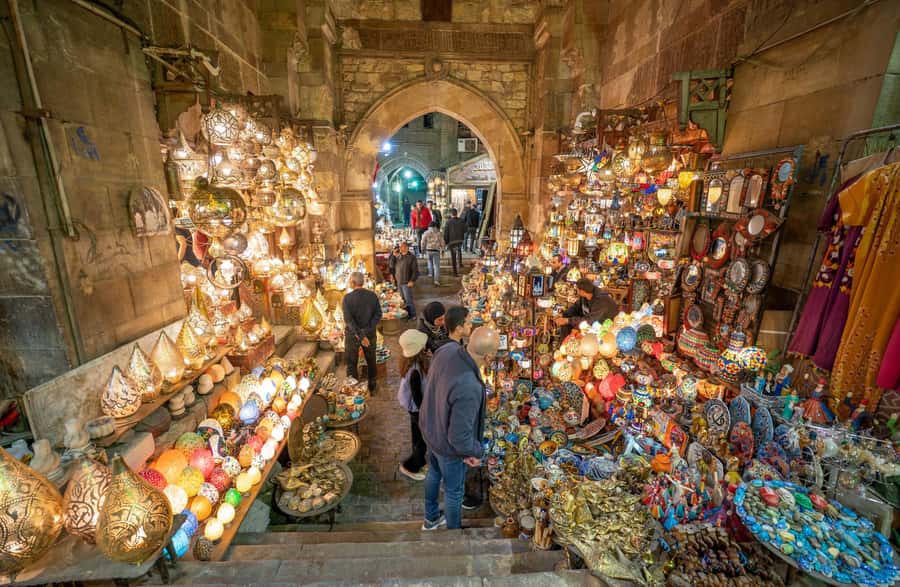
Khan el Khalili is the final market stop, with about 15 minutes listed for sightseeing and shopping. The bazaar is filled with spices, jewelry, textiles, souvenirs, and small stalls competing for attention.
Fifteen minutes is enough to get a taste of the market, but it is not enough for a relaxed shopping afternoon. If you want to bargain, choose one or two items and keep moving. Carry cash for optional purchases, and agree on a price before buying. Your guide can help you understand the tone of the bargaining and steer you away from unwanted pressure.
This is also the point where the tour’s practical side matters. The lanes can be confusing, and a guide helps you stay oriented. Several guides have been praised for looking after solo visitors and for making people feel safer in the market. That does not remove the need for ordinary caution, but it makes the first visit less stressful.
Street food: koshary, Egyptian pie, and sweets
Food is included, not an add-on. Depending on availability and your choice, you may try authentic koshary or Egyptian pie, followed by Zalabya, Halabessa, or a similar local snack. Some participants also enjoyed a traditional drink along the way.
Koshary is a filling Egyptian dish, while Egyptian pie gives you a pastry-based option. The food is intended as a local meal rather than a formal restaurant experience. Several people found the Egyptian pie especially tasty, and vegetarian food was available for at least one booking.
The snack element helps turn the walk into a cultural outing instead of a string of ticketed buildings. Still, make your dietary needs clear when booking or at the start. The information promises choices, but it does not specify a fixed menu for every departure.
What the $31 price really covers
At $31 per person, this tour offers solid value if you want a guided introduction to Islamic Cairo. The price includes all listed entrance fees, an Egyptologist guide, bottled water, local snacks, street food, service tax, and hotel pickup and drop-off if you select that option.
The included admissions are important. You do not have to keep reaching for cash at each monument, and the activity offers skip-the-ticket-line access. The hotel transfer costs may vary by the option you choose, so check the booking choice carefully rather than assuming every departure includes transport.
The strongest value comes from the route and the interpretation. You could walk parts of Old Cairo independently, but finding each entrance, understanding the buildings, and managing the market would take time. At the same time, this is not a private, slow-paced architectural tour. You are paying for a compact overview with food and transport options, not unlimited time at each site.
The guides make the difference
The clearest strength of this experience is the guide. Nahed and Randa receive especially frequent praise for warmth, humor, patience, and clear explanations. Other well-regarded guides include Ruby, Ehab, Dina, Ahmed, Samaa, Bassant, David, Rehab, and Haisam, whose Spanish was praised by one participant.
That variety means you cannot assume a particular guide will lead your departure. You can, however, expect the provider to offer live guiding in five languages. The best guides on this route do more than recite dates. They explain religion, architecture, local customs, and everyday Egyptian life in a way that makes the narrow streets easier to read.
The personal care is useful for solo visitors, first-time Cairo visitors, and anyone uneasy about bargaining. One guide accommodated a last-minute flight delay, while another adjusted timing for a visitor with plans later in the day. Do not rely on unlimited flexibility, but contact the provider early if your schedule is tight.
Pace, clothing, and what to carry
Plan on three to four hours of steady walking. The route includes uneven streets, stairs, open areas, and crowded lanes. Comfortable shoes are essential, and you should bring sunscreen, a hat, and water even though bottled water is provided.
Loose clothing covering shoulders, arms, legs, and knees is the safest choice for the whole day. Women should carry a scarf for religious sites. Large bags, luggage, and baby strollers are not allowed, so leave airport baggage at your hotel or arrange storage before meeting the guide.
There may not be a long break in the middle. One participant felt that a longer rest would improve the experience. If you tire easily, eat beforehand, tell your guide early, and avoid scheduling this immediately before an important departure unless you have plenty of extra time.
The tour offers free cancellation up to 24 hours before the start and a reserve-now, pay-later option. These terms help if your Cairo plans are still shifting, but check the exact option selected at booking.
Who should book this Old Cairo walk?
I would choose this tour for a first visit to Cairo, especially if you want a guided introduction before returning to the area on your own. It suits solo visitors, couples, and people who want history balanced with food and shopping.
It is also useful if you have only half a day. The route covers Bab al-Futuh, Al-Hakim Mosque, Bayt al-Suhaymi, El Moez Street, Mamluk monuments, Al-Hussein Mosque, and Khan el Khalili in a compact span.
I would not choose it if you need a wheelchair-friendly route, dislike stairs, or want a slow photography tour. Visitors with large luggage should also make other arrangements. And if you already know Islamic Cairo well, you may prefer a private guide who can spend longer inside fewer buildings.
Should you book it?
Book this Old Cairo Guided Walk if you want good historical coverage, local food, and practical help in the market for $31. The repeated praise for guides such as Nahed and Randa is deserved in spirit: this route depends heavily on a guide who can explain quickly, protect the group’s time, and keep the mood light.
Go in ready to walk, dress modestly, carry cash, and accept that the sequence may change. If you do, this is a useful and fairly priced way to meet the mosques, homes, lanes, and flavors of Old Cairo in one energetic afternoon.
FAQ
Where does the Old Cairo walking tour start?
The standard meeting point is in front of Bab al-Futuh. If you select the pickup option, hotel pickup and drop-off are available from hotels or selected locations within Cairo or Giza city limits.
How long does the tour last?
The tour lasts approximately 3 to 4 hours. Starting times depend on availability.
What sites are included?
The route includes Bab al-Futuh, Al-Hakim Mosque, Bayt al-Suhaymi, El Moez Street, Khan el Khalili, the Mosque and Khanqah of Al-Nasir Faraj Ibn Barquq, the Qalawun Complex, and Al-Hussein Mosque.
Is food included?
Yes. The tour includes street food such as koshary or Egyptian pie, plus Zalabya, Halabessa, or similar local snacks. Options can vary, and vegetarian food is available.
What languages are offered?
Live guiding is available in English, Arabic, French, Spanish, and German.
Are entrance fees included?
Yes. Entrance fees to all listed attractions are included, along with bottled water and service tax.
What should I wear?
Wear loose clothing covering your shoulders, arms, legs, and knees. Women should carry a scarf for religious sites.
Is the tour suitable for wheelchair users or strollers?
No. The tour is not suitable for wheelchair users, and baby strollers and luggage or large bags are not allowed.
Recently reviewed around Cairo
- White Desert Overnight Camping Sharing Tour in Egypt★ 5.0 · 15 reviews
- Cairo Best 2Days tour Pyramids, Saqqara & Old Cairo★ 5.0 · 15 reviews
- Giza Pyramids with (GEM) Grand Egyptian Museum★ 5.0 · 42 reviews
- sunset at Giza pyramids by camels★ 5.0 · 31 reviews
- Tour to Giza pyramids Memphis Sakkara and Felucca on the Nile★ 5.0 · 16 reviews
- visit the pyramids of Giza + the necropolis of Saqqara + the Memphis site.★ 4.5 · 20 reviews
- Private Giza pyramid,sphinx, Mummification temple& inside pyramid★ 5.0 · 32 reviews
- Private guided shopping tour in Khan el-Khalili with Lunch★ 4.5 · 21 reviews
Historical Tours, compared.
Private Full-Day Tour of Historical Alexandria
Read our review →
Sunrise Hot Air Balloon Over the Historical sites in Luxor
Read our review →
Historical Alexandria Shared Day Tour with Lunch
Read our review →
3-Day Siwa Oasis Tour, Safari, Camp & Historical Site
Read our review →
Full-Day Private Tour: Historic Alexandria From Cairo
Read our review →Browse the lists this tour appears in