
Reviewed · ASWAN TOURS
Aswan to Luxor: 4-Day Private Nile Journey
The best part of this four-day journey is the way the Nile cruise links Egypt’s major ancient sites without forcing you to repack every morning. You move from Aswan’s island temples to Kom Ombo, then on to Luxor’s great sanctuaries and royal tombs.
I especially like the small group size, capped at 10 people, and the fact that your Egyptologist guide stays with you through the main visits. The ship includes three breakfasts, lunches, and dinners, which makes the $840 price easier to understand. The main drawback is the early pace, especially if you add Abu Simbel, and you should confirm exactly which entrance fees are included before departure.
In This Review
- Key points to know
- Why this Aswan to Luxor cruise works
- Day 1: Philae, island temple of the goddess Isis
- Day 2: The optional road trip to Abu Simbel
- Kom Ombo and the unusual crocodile god
- Day 3: Horus, Karnak, and Luxor’s east bank
- Day 4: Hatshepsut and the royal tombs
- Life aboard the three-night cruise
- Who should book this Nile journey
- Should you book the Aswan to Luxor cruise?
- FAQ
- Where does the tour begin?
- Where does the tour end?
- How long is the experience?
- On which days does the cruise operate?
- Is Abu Simbel included?
- Are meals included?
- Is Tutankhamun’s tomb included?
- How many people are in the group?
Key points to know
- Three nights on the Nile: You sleep aboard a five-star standard cruise ship while moving between Aswan and Luxor.
- Philae requires a boat ride: The Temple of Isis sits on Agilika Island, so your first major visit begins with a short motorized boat trip.
- Abu Simbel is optional: The road journey takes about three and a half hours each way from Aswan.
- Luxor gets two full sightseeing days: You visit Karnak, Luxor Temple, Hatshepsut, the Colossi of Memnon, and the Valley of the Kings.
- The group is limited to 10: That should make questions and guide time easier than on a large coach tour.
- Tamer receives special praise: The supplied feedback singles out guide Tamer, while the ship’s crew is described as attentive and polite.
Why this Aswan to Luxor cruise works
A Nile cruise is one of the easiest ways to connect southern Egypt’s major monuments. Instead of arranging separate cars, hotels, guides, and meals, you have one moving base for three nights.
That matters in Aswan and Luxor, where the sites are spread along both banks of the river. You will still have early starts and vehicle transfers, but the cruise cuts down on hotel changes and gives you time to watch the river pass by.
The group limit of 10 is another useful detail. Ancient sites are more enjoyable when your guide can answer questions without shouting across a large bus group. It also helps during visits such as the Great Hypostyle Hall at Karnak, where a good explanation gives meaning to the forest of columns.
The advertised price is $840 per person. That includes accommodation aboard the ship, full-board meals, guides, site visits listed in the plan, airport assistance, and private vehicle transfers. It does not include domestic flights, drinks, tips, Abu Simbel, or a Luxor hot-air balloon ride.
There is one point worth checking in writing. Individual stop descriptions say admission is not included, while the inclusions say entrance fees to the listed sites are covered. Also, Tutankhamun’s tomb requires an extra ticket on the spot. Ask for a clear list of included admissions before you pay, especially if your budget is tight.
More Aswan trips worth a second look
- 4-Day 3-Night Nile Cruise from Aswan to Luxor&Abu Simbel+Balloon
★ 5.0 · 2,023 reviews - 4-Day 3-Night Nile Cruise from Aswan to Luxor including Abu Simbel, Air Balloon
★ 4.5 · 612 reviews - From Aswan: 4-Day Nile Cruise from Aswan to Luxor with Guide
★ 4.1 · 593 reviews
Day 1: Philae, island temple of the goddess Isis
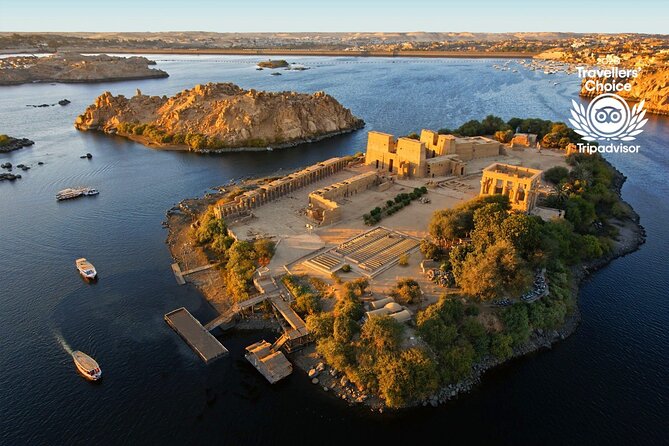
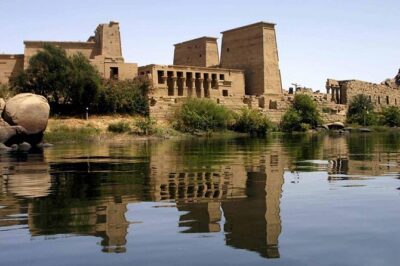
Your guide meets you at Aswan Airport at the exit door, holding a sign with your name. The first major stop is the Temple of Philae, reached by motorized boat across the water to Agilika Island.
Philae was dedicated to Isis, one of the most important goddesses in ancient Egypt. The complex also shows Greek and Roman influence, so you are not looking at one tidy period of Egyptian history. Carved scenes, columns, and later additions reveal how the sacred site continued to matter long after the pharaohs.
The temple’s location is part of its appeal. You approach by water, with the stone buildings appearing on an island rather than beside a modern road. The setting helps you understand why the site feels separate from Aswan’s city life.
Philae was dismantled and rebuilt when the Aswan High Dam threatened to flood it. That rescue effort is a major part of the site’s modern story. You are seeing an ancient temple, but also the result of a huge twentieth-century preservation project.
Allow about two hours for the visit. Admission is described inconsistently in the supplied details, so confirm whether the ticket is part of your package. The boat transfer is part of the practical experience, and you should stay with your guide when moving between the landing point and the temple.
After Philae, you visit the granite quarries and the Unfinished Obelisk. This enormous stone gives you a useful look at how Egyptian masons worked before a monument was completed. A crack in the granite halted the project, leaving the obelisk attached to the quarry floor.
The Unfinished Obelisk is not as polished as the temples, but that is precisely why it is valuable. You can see the scale of the work and the risk involved in cutting a single block of stone. The description notes that it would have been one-third taller than any other ancient Egyptian obelisk.
Day 2: The optional road trip to Abu Simbel
The second morning gives you the option of visiting Abu Simbel by car. This is not a quick side trip. The road journey takes about three and a half hours each way from Aswan, so you should expect a long day before returning to the cruise schedule.
Abu Simbel contains the twin temples of Ramses II and Queen Nefertari. Ramses II’s temple has four colossal seated statues on its façade, each about 70 feet tall. Even in a country full of oversized monuments, that approach is hard to forget.
The temples were also dismantled and moved to protect them from the waters created by the Aswan High Dam. Like Philae, Abu Simbel combines ancient craftsmanship with a modern rescue effort.
I would choose Abu Simbel if you have the energy and this is your main visit to southern Egypt. I would skip it if you already have a packed schedule, dislike long road rides, or want a slower morning aboard the ship. The additional cost is not included, and the available details do not state the exact price or departure time.
If you do not take the optional excursion, the ship cruises toward Kom Ombo. The river journey is not simply transportation. It gives you a break from stone walls, car rides, and guide commentary. You can watch the banks change as the ship moves north.
Kom Ombo and the unusual crocodile god
At Kom Ombo, you leave the ship to visit a Greco-Roman temple dedicated to Haroeris, the sun god, and Sobek, the crocodile god. The site is often memorable because it presents two religious traditions within one temple complex.
Sobek was associated with the Nile, fertility, and creation. Ancient Egyptians did not view crocodiles only as threats. In some settings, they could also represent divine power and the forces that shaped life along the river.
The temple sits on a raised area beside the Nile. The name Kom Ombo is translated in the supplied information as hill of gold. Your guide can help explain the reliefs and the shared layout, which make more sense once you know that two gods were honored here.
The planned visit takes about two hours. Check the exact admission arrangement before you leave Aswan, since the individual stop information and the overall inclusions do not match perfectly.
A different kind of day out, same part of Egypt:
- 4-Days Nile Cruise From Aswan To Luxor including Abu Simbel and Hot Air Balloon
★ 5.0 · 3,142 reviews - From Aswan: Abu Simbel Temple Day Trip with Hotel Pickup
★ 4.4 · 2,807 reviews - From Aswan: 3-Day Cruise to Luxor with Hot Air Balloon
★ 4.3 · 598 reviews - 4-Days Nile Cruise From Aswan To Luxor including Abu Simbel and Hot Air Balloon
★ 4.5 · 509 reviews
Day 3: Horus, Karnak, and Luxor’s east bank
The third day includes a visit to the Temple of Horus at Edfu in the written schedule, although the stop heading refers to Karnak. The description of the site clearly identifies the falcon-headed sky god Horus and the Ptolemaic construction dating to 230 BC. This appears to be a scheduling or labeling issue, so confirm whether Edfu is included and when you will visit it.
The Temple of Horus is one of Egypt’s best-preserved ancient sanctuaries. Its walls, columns, and colored details help you picture how temple worship worked. The building was created during the Ptolemaic period, long after the earliest pharaohs, which gives you a useful reminder that ancient Egyptian religion continued for thousands of years.
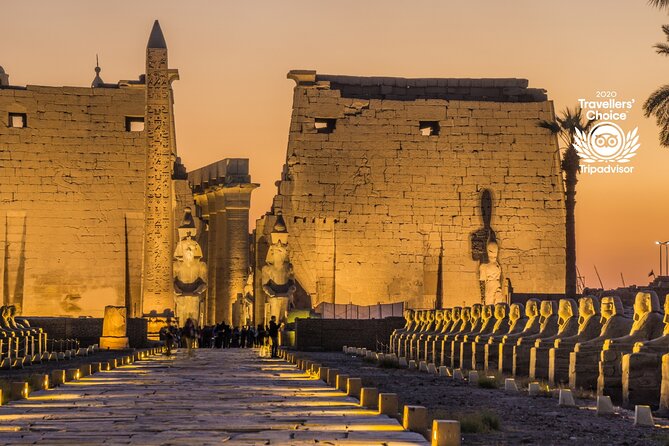
After cruising onward, you reach Luxor and visit the east bank. Karnak is the major stop here. It was expanded by generations of pharaohs, each adding buildings, statues, and inscriptions to the sacred complex.
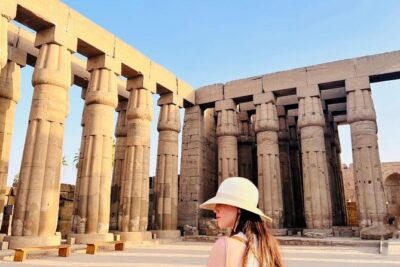
The Great Hypostyle Hall is the visual centerpiece. Its enormous columns rise about 80 feet, arranged in disciplined rows that make the space feel both architectural and ceremonial. A guide is especially helpful here because the scale can blur together without a clear explanation of the rulers and religious scenes.
You then continue to Luxor Temple. Look for the statues of Ramses II at the front, the courtyard bearing his name, and the long colonnade linked to Amenhotep III. The temple was not built as a single project, so its changing styles and rulers are part of what you are meant to notice.
The timing is listed as about two hours for the Luxor visits. That is enough for a guided introduction, but not for slow photography of every wall. Keep your expectations sensible. This is a highlights tour, not an archaeological study session.
Day 4: Hatshepsut and the royal tombs
The final sightseeing day crosses to Luxor’s west bank, the ancient Necropolis of Thebes. You begin with the Colossi of Memnon, two huge statues that once guarded a temple complex.
Next comes the Temple of Hatshepsut. She ruled as Egypt’s first female pharaoh and is remembered as one of its most successful leaders. Her temple is built in broad levels against the cliffs, giving it a different feel from the enclosed sanctuaries at Karnak and Luxor.
The site is a good place to ask about royal power and public image. Hatshepsut presented herself as a pharaoh, not merely as a temporary caretaker, and the temple’s scale reflects that claim.
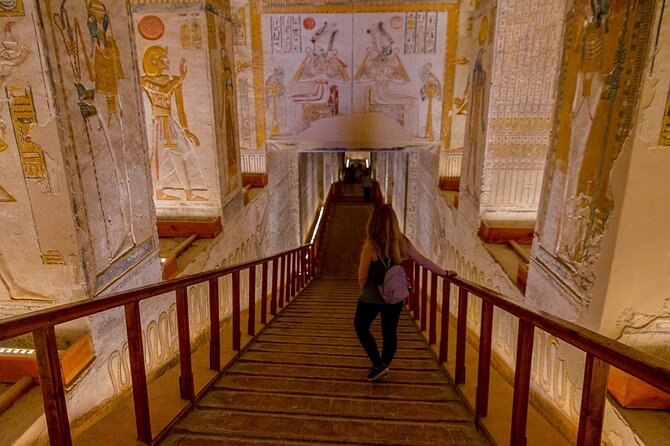
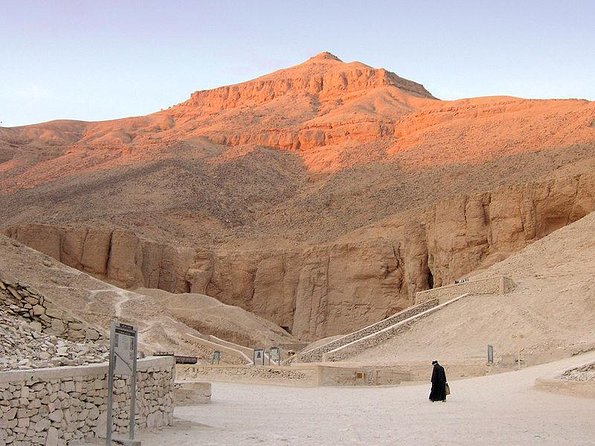
The main event is the Valley of the Kings, a UNESCO World Heritage Site and burial ground for pharaohs and nobles. Tombs were cut here for roughly 500 years beginning in the sixteenth century BC. Unlike the open courtyards and towering pylons on the east bank, the Valley takes you underground into painted burial chambers.
Your visit includes the Valley itself and the chance to enter Tutankhamun’s tomb for an extra ticket purchased on site. The tomb was found in 1922 by Howard Carter, and its fame comes partly from the large number of objects recovered from it.
Tutankhamun’s tomb is important, but it is not the largest or most decorated tomb in the Valley. You are paying for the connection to one of archaeology’s most famous discoveries. If you prefer painted walls and larger chambers, ask your guide which other tombs are open and included.
The full west-bank visit is listed at about four hours. Wear practical shoes and bring water, since the day includes several stops and walking between ancient monuments. The tour then transfers you to Luxor Airport.
Life aboard the three-night cruise
The ship is described as a five-star standard cruise vessel with full-board accommodation. Your package includes three breakfasts, three lunches, and three dinners. Drinks are extra, so budget for those separately.
The food is served as daily buffets, with plenty of choice according to the supplied feedback. That does not mean every meal will suit every palate, but you should not need to search for restaurants during the cruise.
The ship’s crew receives strong praise for being polite and attentive. Guide Tamer is singled out for excellent service and organization. Another crew member’s name appears only partially in the available material, so I would rely on the company to confirm your guide and ship details before departure.
Cruise quality can vary between ships even when both are described as five-star standard. The information does not name the vessel, cabin size, deck facilities, or sailing hours. If those details matter to you, ask before booking rather than assuming a luxury hotel on water.
The river portions are a useful change of rhythm. You will spend part of the day at temples and part of it watching the Nile from the ship. That combination gives the trip more breathing room than a string of road transfers, although the sightseeing mornings can still be early.
Who should book this Nile journey
I would recommend this experience to someone visiting Egypt for the first time who wants the main Aswan and Luxor sights arranged in one package. It suits you especially well if you prefer a small guided group, full-board meals, and a one-way route that begins at Aswan and ends near Luxor Airport.
It is also a good fit if you want an Egyptologist to explain the monuments rather than simply drive you between them. The temples are enormous, and context helps you notice the difference between Isis at Philae, Sobek at Kom Ombo, Horus at Edfu, and the royal cults at Luxor.
I would think twice if you want long, unstructured visits or a quiet luxury cruise. The four-day schedule covers a lot, and Abu Simbel adds a demanding road trip. You should also confirm the cruise ship, the Edfu and Karnak scheduling, and the entrance-fee details.
Pickup and drop-off are offered between Aswan and Luxor, with airport assistance at both ends. The experience runs on Fridays, Mondays, and Wednesdays, so your broader Egypt plans need to fit those sailing days.
Free cancellation is available up to 24 hours before the local start time. Changes or cancellations inside that window are not accepted for a refund. The activity is open to most people, but the provided details do not give a specific accessibility assessment.
Should you book the Aswan to Luxor cruise?
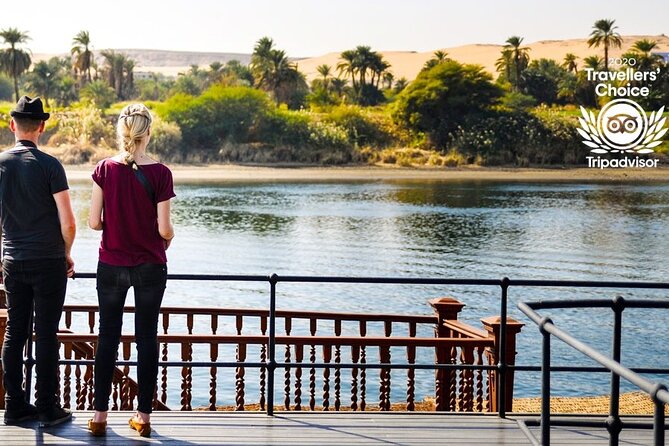
Book it if you want a well-organized first look at the Nile corridor, with major temples, meals, transfers, and guided visits handled together. The price is reasonable for three nights of accommodation, three full days of meals, private vehicle transfers, and a small group, provided the entrance fees are confirmed as included.
Skip it if Abu Simbel is your central goal but you do not want a long road day, or if you need a fully specified luxury ship before paying. For most first-time visitors, though, this is a practical route with strong guide and crew support, excellent monuments, and just enough time to understand why the Nile remains Egypt’s main travel road.
FAQ
Where does the tour begin?
The tour begins in Aswan, in Aswan Governorate. Airport pickup is offered, and the guide meets you at the exit door holding a sign with your name.
Where does the tour end?
The journey ends in Luxor, with a transfer to Luxor Airport after the west-bank sightseeing on Day 4.
How long is the experience?
The journey lasts approximately four days and includes three nights aboard the Nile cruise.
On which days does the cruise operate?
Cruises are scheduled to operate every Friday, Monday, or Wednesday.
Is Abu Simbel included?
No. The Abu Simbel visit from Aswan by car is optional and costs extra. The road journey takes about three and a half hours each way.
Are meals included?
Yes. The package includes three breakfasts, three lunches, and three dinners aboard the cruise. Drinks on board are not included.
Is Tutankhamun’s tomb included?
Entry to Tutankhamun’s tomb requires an extra ticket purchased on the spot.
How many people are in the group?
The activity has a maximum of 10 participants.
Recently reviewed around Aswan
- (3-Nights Cruise From Aswan To Luxor & Balloon, Abu Simbel)★ 4.5 · 23 reviews
- Philae Temple and Aswan High-Dam Half-day tour★ 5.0 · 49 reviews
- Sailing Nile Cruise from Aswan to Luxor for 2 Nights★ 4.5 · 139 reviews
- 4-Days Aswan sails Nile Cruise Luxor &Abu Simbel.Hot air Balloon★ 4.5 · 77 reviews
- Private Tour in Aswan : Felucca and Nubian village★ 5.0 · 29 reviews
- Abu Simbel Private Full-Day Tour from Aswan★ 5.0 · 114 reviews
- Nubian Village by Motorboat In Aswan★ 5.0 · 97 reviews
- Day Tour to Abu Simbel from Aswan by Bus★ 4.5 · 25 reviews
Aswan Tours, compared.
4-Days Nile Cruise From Aswan To Luxor including Abu Simbel and Hot Air Balloon
Read our review →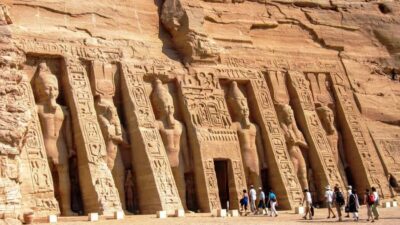
4-Day 3-Night Nile Cruise from Aswan to Luxor&Abu Simbel+Balloon
Read our review →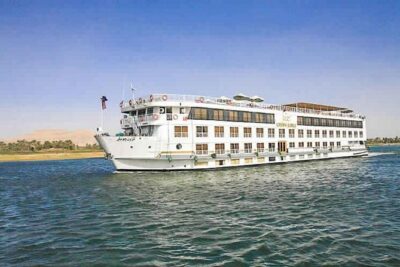
4-Day 3-Night Nile Cruise from Aswan to Luxor including Abu Simbel, Air Balloon
Read our review →

4-Day Nile Cruise from Aswan to Luxor with Guide
Read our review →4-Days Nile Cruise From Aswan To Luxor including Abu Simbel and Hot Air Balloon
Read our review →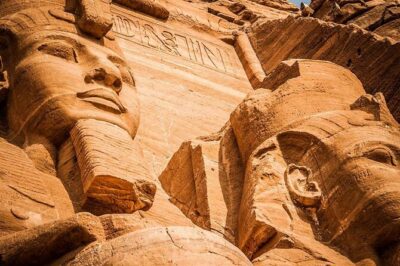
Private Day Tour to Abu Simbel Temples from Aswan
Read our review →Browse the lists this tour appears in