
Reviewed · GIZA PYRAMIDS & SPHINX TOURS
Cairo: Grand Egyptian Museum, Giza Pyramids and Sphinx Tour
The most unusual part of this seven-hour Cairo tour is the chance to pair the new Grand Egyptian Museum with the Great Pyramids in one well-organized day. You see the museum’s Hanging Obelisk, Ramses II, Grand Staircase, and 12 exhibition halls, then head to the Giza Plateau for the monuments everyone comes to Egypt to see.
I like the direct combination of Egypt’s past and present, from the museum’s bold modern building to the ancient pyramids and Sphinx. I also like the small maximum group of 10, the hotel pickup, and the chance to have a guide such as Paula, Menna, Mahmoud Bahaa, or Doaa Sabry explain what you are seeing. The main caution is that not every museum section may be open, and guides in languages other than English depend on availability and may cost extra.
In This Review
- Key points to know before booking
- Why this Cairo combination works so well
- Starting at the Grand Egyptian Museum
- Seeing the Great Pyramids from the Giza Plateau
- The Sphinx and the Valley Temple
- What the guides add to the day
- Transport, group size, and pace
- Is the $80 price good value?
- Who should book this tour?
- Should you book it?
- FAQ
- How long does the tour last?
- What sights are included?
- Is transportation included?
- Are entrance fees included?
- Will I see the entire Grand Egyptian Museum?
- What languages are available for the live guide?
- Is an audio guide available?
- How many people are in the group?
- Can I cancel or pay later?
Key points to know before booking
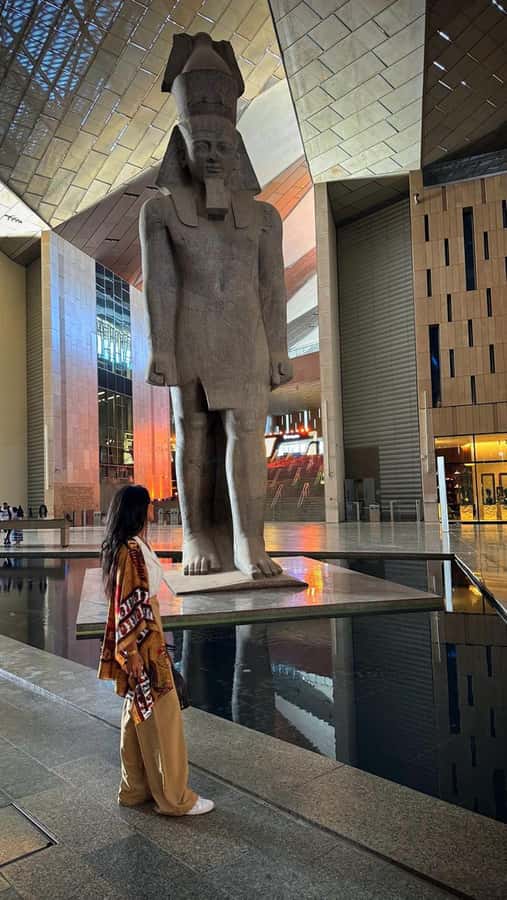
- The Grand Egyptian Museum comes first, with the Hanging Obelisk, Ramses II statue, Grand Hall, Grand Staircase, gardens, and 12 exhibition halls.
- Giza delivers the classic trio, the pyramids of Cheops, Chephren, and Mykerinus, followed by the Sphinx and Valley Temple.
- A guide adds real value, especially when explaining how the Valley Temple was used in the king’s burial process.
- The group is capped at 10 people, with a private option available if you want more control over the pace.
- The $80 price can be good value, but confirm that transport, guide service, and entrance fees are included in the option you select.
- The museum visit is still evolving, so check current access if seeing the complete collection is your main reason for booking.
Why this Cairo combination works so well
Cairo sightseeing can feel scattered. The Grand Egyptian Museum is near Giza, while your hotel may be across the city, so having one vehicle and one guide handle the day saves effort. You do not need to arrange separate tickets, find transport between the museum and plateau, or work out how the stops fit together.
The route also gives you a useful contrast. At the museum, you see Egypt presented through a large, modern cultural project. At Giza, the setting is open, monumental, and far less controlled. One stop helps you understand objects and royal power through displays. The other puts you face to face with stone structures built on a scale that photographs cannot quite capture.
The tour lasts seven hours, which is long enough to cover the main sights but not long enough for an unhurried study of every museum hall and every pyramid area. I would treat it as a strong first visit, not as a specialist archaeology day.
Your guide meets you at your Cairo pickup point and stays with you during the drive. That matters in a city where traffic, entrances, and crowds can affect the day. Guides named in past bookings include Paula, Menna, Mahmoud Bahaa, Doaa Sabry, Ayoup, and Lamia, though your assigned guide will depend on the date, language, and operator availability.
More Museum Tours in Cairo
- Tour to Giza Pyramids and The Egyptian Museum
★ 5.0 · 6,016 reviews - Cairo 8 Hour Private Tour of Pyramids, Egyptian Museum and Bazaar
★ 5.0 · 2,931 reviews - Cairo: Grand Egyptian Museum, Pyramids, Sphinx Tour & Lunch
★ 4.7 · 2,282 reviews
Starting at the Grand Egyptian Museum
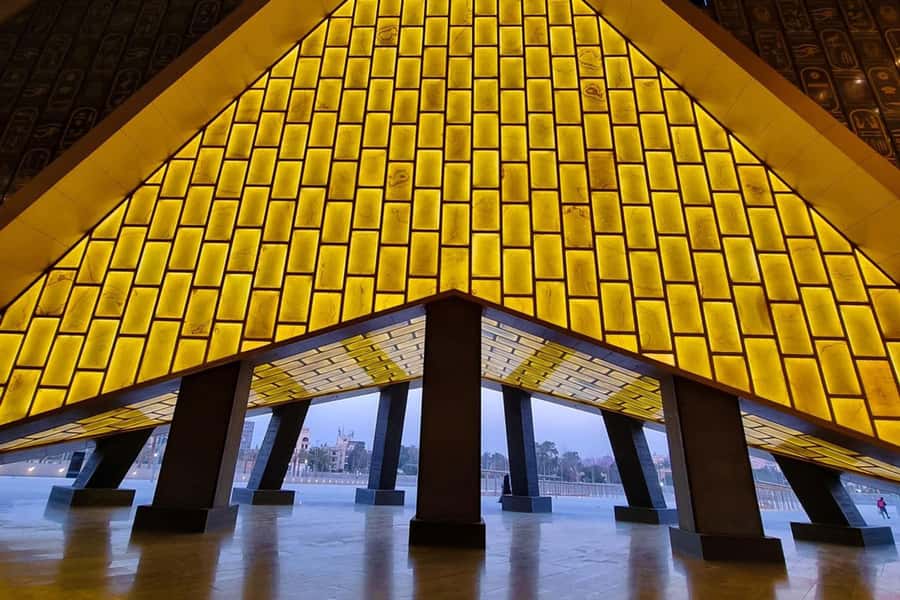
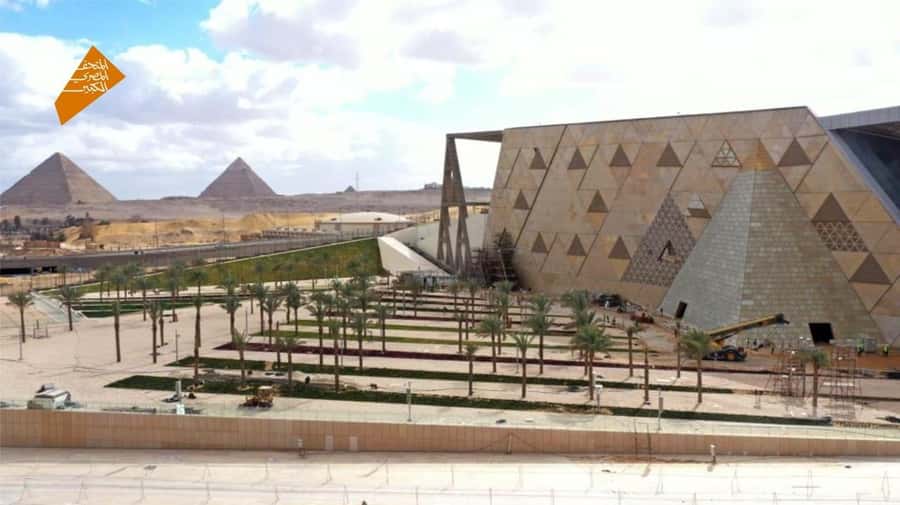
The Grand Egyptian Museum visit begins outside, where the building and its gardens make their first impression. The scale is part of the experience. You are not entering a small historic house museum. You are approaching a major modern institution designed to present ancient Egyptian objects in a new setting.
Inside, the Grand Hall acts as the main arrival space. It also introduces the museum’s story and purpose, which helps you understand why the building is more than a place to store old objects. Your guide can give the setting some context before you move toward the displays.
The Hanging Obelisk is one of the most distinctive features. It is suspended so you can view it from below, creating an unusual angle on a form usually seen from the ground. This is a quick stop, but it is a worthwhile one for photographs and for thinking about how the museum mixes ancient objects with modern engineering.
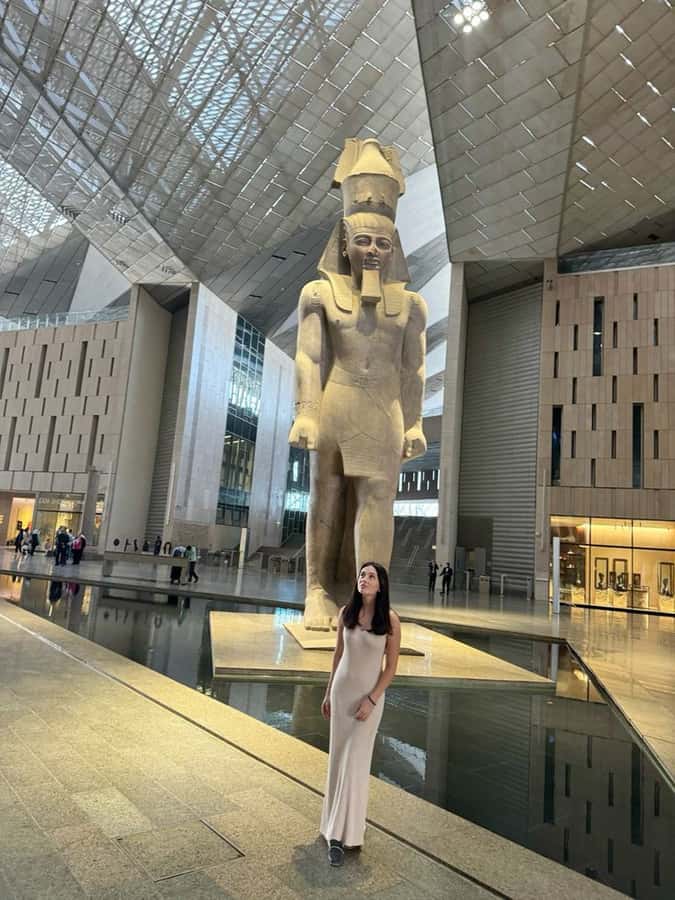
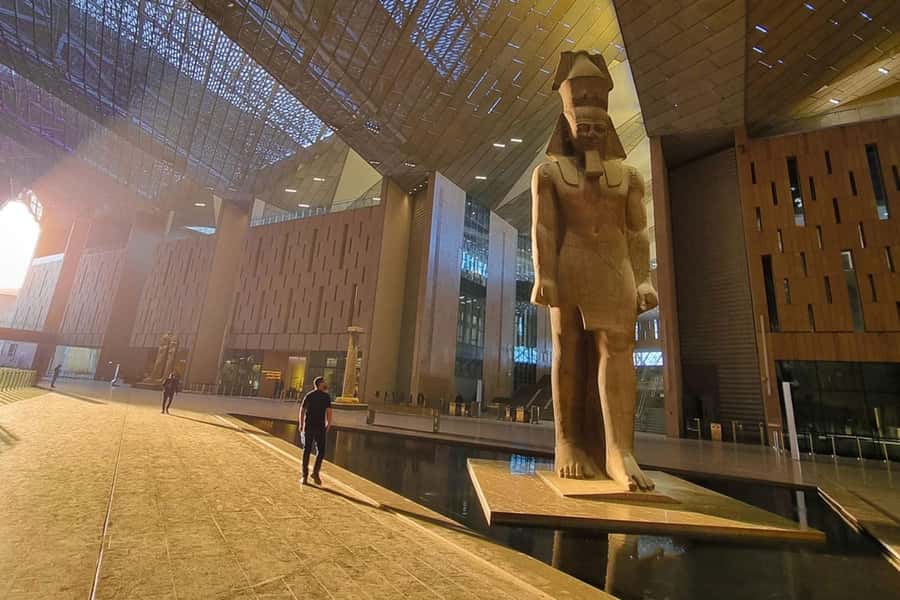
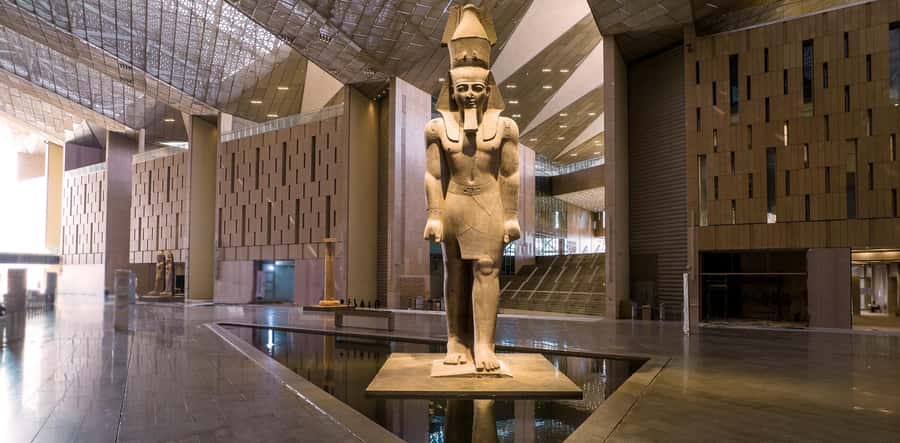
The statue of Ramses II is another major focal point. Ramses II is one of Egypt’s best-known pharaohs, and the statue gives the Grand Hall a powerful center. Your guide can connect the object to royal imagery and explain why large-scale statues were so important in ancient Egypt.
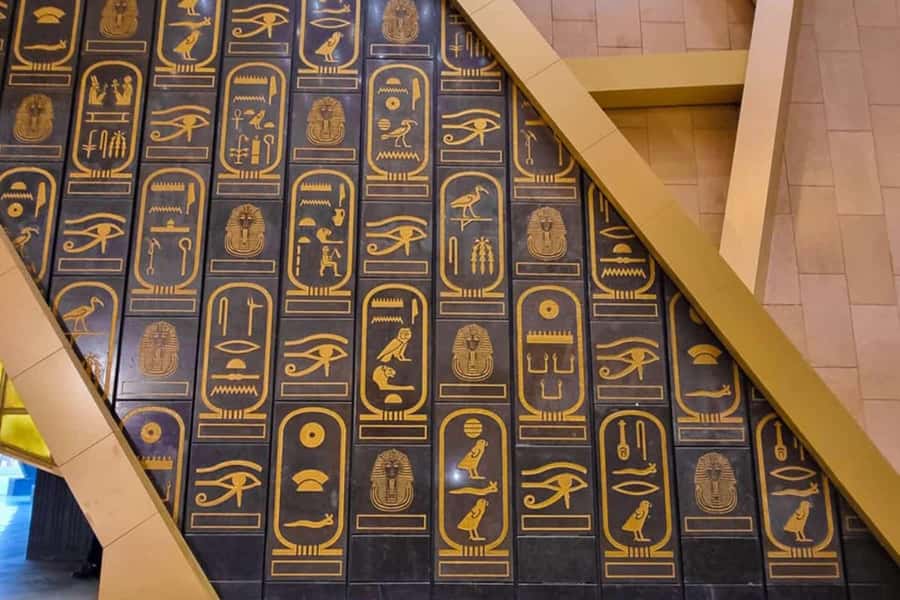
Next comes the Grand Staircase, lined with large and notable artefacts. It is not just a passageway. The stairs give you a gradual introduction to the collection, with objects arranged to create a sense of scale and historical sequence.
The tour includes 12 exhibition halls, covering material from Egypt’s prehistoric era through the Roman period. That span is a major strength, especially if you want a broad introduction rather than a narrow focus on one ruler or dynasty. You can see how Egyptian culture changed over a long period, while your guide helps you avoid getting lost in names and dates.
There is an important limitation. At this stage, access to the museum may include only selected sections before the full opening. The information provided for this tour describes limited access and encourages you to stay updated about future openings. If you have already visited Cairo’s older museums and are booking mainly to see one particular collection, confirm exactly what is open on your date.
The gardens provide a calmer finish to the museum portion. They are useful for photos and a short reset before the outdoor monuments. Still, the museum stop is only one part of a packed day, so you should not expect time to inspect every object at length.
Seeing the Great Pyramids from the Giza Plateau
From the museum, the tour continues to the Giza Plateau. This is where the day shifts from indoor displays to huge open spaces, bright light, and the physical presence of the pyramids.
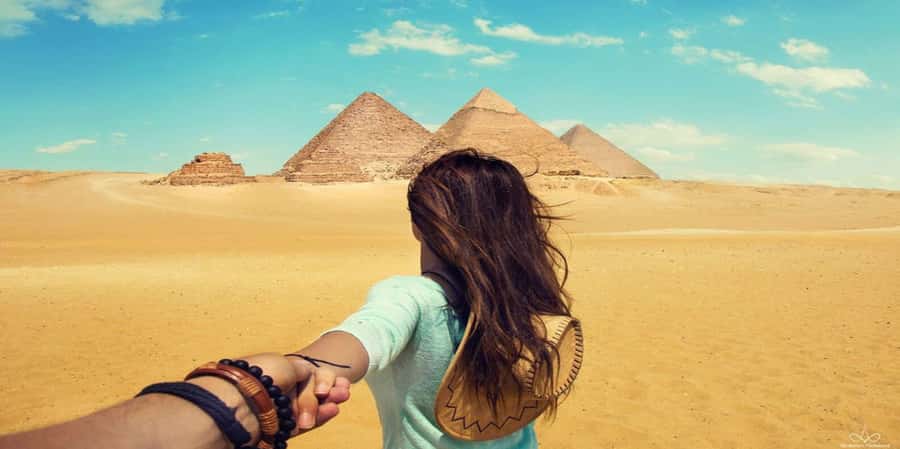
You see the pyramids of Cheops, Chephren, and Mykerinus. Cheops, also called Khufu, is the largest of the three and the one most people picture first. Chephren, or Khafre, can appear taller from some viewpoints because of its position and remaining capstone. Mykerinus, or Menkaure, is smaller but completes the central group.
The tour includes panoramic viewpoints, giving you the chance to photograph all three monuments together. This is one reason a guide and driver are useful. Rather than simply arriving at one entrance and walking without a plan, you can be taken to the main viewpoints listed for the visit.
The plateau is not a single compact photo spot. You move between separate areas, and the guide helps turn those stops into a connected story. Ask your guide to explain how the pyramids relate to one another, rather than treating each one as an isolated structure.
This portion can also be tiring. Seven hours covers a lot, and outdoor visits require walking between stops. The provided information does not specify a meal stop, so plan your expectations around sightseeing rather than a full dining experience. Comfortable footwear and protection from the sun are sensible, though the exact weather and walking conditions depend on your date.
You should also understand what this tour does not promise. The schedule describes panoramic views and visits to the plateau, Sphinx, and Valley Temple. It does not say that entry inside a pyramid is included. If going inside one is essential to you, ask before booking instead of assuming it is part of the package.
The Sphinx and the Valley Temple
The Great Sphinx is one of the day’s essential stops. Its human-headed, lion-bodied form is instantly recognizable, but seeing it in person gives you a better sense of its setting and scale. The Sphinx is not simply a separate statue placed near the pyramids. It belongs to the wider royal complex around the Giza monuments.
The nearby Valley Temple of Khafre gives the guide a useful place to explain ancient burial customs. The temple was used to purify the king’s mummy before burial and to support the mummification process. That makes the stop more than another photo opportunity. It connects the visible monuments with the rituals that prepared a ruler for the afterlife.
I especially like this part of the route because it adds purpose to the stones. Without explanation, you may see the pyramids as enormous tombs and the Valley Temple as another old building. With a good guide, you can understand how the complex functioned as a sequence of spaces connected to royal death and burial.
Time here may be affected by crowds and the pace of the group. The maximum of 10 people is helpful, but it is not the same as a fully private tour. If you want to stop often for photographs or spend longer asking questions, the private option should suit you better.
More Cairo museums and collections:
- Cairo: Female-Guided Pyramids, Sphinx & Museum City Tour
★ 4.8 · 1,614 reviews - Private tour to Giza Pyramids,Sphinx,Egyptian Museum with Local Lunch
★ 5.0 · 1,530 reviews - Best Private Giza Pyramids,Sphinx, New Grand Egyptian Museum
★ 4.5 · 1,056 reviews - Cairo: Egyptian Museum, Citadel, and Old Cairo Guided Tour
★ 4.7 · 853 reviews
What the guides add to the day
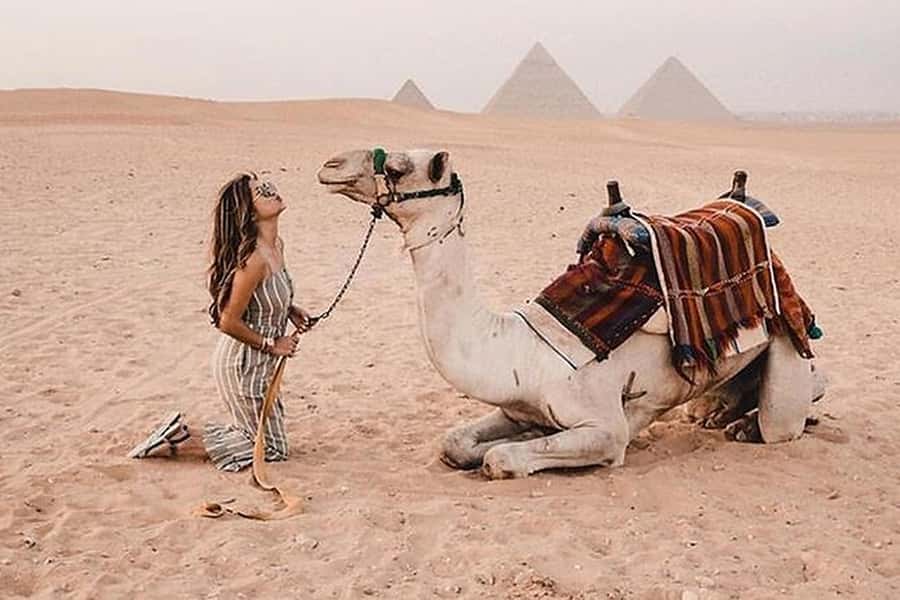
The strongest feature of this experience is the human one. A guide can help you make sense of an enormous amount of information in a short period, manage the order of stops, and adjust explanations to your interests.
Past guide assignments have included Paula, who was praised for coordinating the day and taking photographs, Menna, whose explanations and humor made the Giza visit more engaging, and Mahmoud Bahaa, who was described as attentive, organized, and especially strong on historical detail. Doaa Sabry was also noted for handling crowded areas while responding closely to the group’s needs.
These names are useful examples, not a promise that one particular guide will be assigned to you. Still, they suggest what to request when booking: a guide who can explain both the museum collection and the Giza burial complex, rather than simply escorting you from one entrance to the next.
English, Arabic, French, Spanish, and Italian live guides are listed. Other languages may be supported through an audio guide, with an English-speaking guide assisting in person if a live guide in your preferred language is not available. Extra charges can apply for some non-English guide requests and certain dates, so check before paying.
An audio guide is also listed in a very large range of languages. That is useful if your preferred language is not available live, but it will not replace the flexibility of asking questions. For a first visit, I would choose the live language option if it is available and fits your budget.
Transport, group size, and pace
Transportation is by modern air-conditioned vehicle when that option is selected. Cairo’s heat and traffic make air conditioning more than a luxury, especially after time on the plateau. Pickup is offered from Cairo, but supplements apply for Heliopolis, the airport area, 6th of October, and similar outlying areas.
The standard group size reaches a maximum of 10 people. That is small enough for a more personal feel than a large coach excursion, and it should make it easier to hear the guide at the museum and monuments. A private group is available if you want the guide’s attention focused only on your party.
The day is designed for convenience rather than total flexibility. The guide and driver manage the transfers, and the main sights are already arranged. In return, you give up the freedom to spend half a day in one museum hall or linger at a single pyramid viewpoint.
I would choose the shared small group for a first Cairo visit when you want a practical overview. I would pay for private service if you have limited mobility, specific photography plans, children with different interests, or a strong desire to control the timing.
The tour is listed as wheelchair accessible, but the information does not explain which vehicle, routes, or monument areas are adapted. If this affects your booking, ask the operator for the exact arrangements before confirming.
Is the $80 price good value?
At $80 per person, this tour can offer solid value if your selected package includes transportation, a guide, and all entrance fees. Those inclusions are marked as dependent on the option selected, so do not assume every $80 booking contains the same package. Check the details at checkout.
The price covers a demanding route with the Grand Egyptian Museum, Giza Plateau, Sphinx, and Valley Temple in seven hours. You are paying not only for admission, but also for a vehicle, route planning, and an interpreter who can explain what you are seeing.
The value is strongest if you are staying in Cairo for a short time. You can cover the city’s most important ancient sights without spending a day arranging separate transfers. It is less compelling if you want a slow museum visit, plan to enter a pyramid, or prefer to organize each stop yourself.
The option to cancel up to 24 hours ahead for a full refund and reserve without paying immediately gives you useful flexibility. That is particularly helpful while you are still arranging Cairo hotel plans and pickup location.
Who should book this tour?
I would recommend this experience to a first-time Cairo visitor who wants the museum and pyramids in one day. It suits couples, families, and small groups who value a guide, air-conditioned transport, and a clear route through several major sights.
It is also a good fit if you want photographs. The tour includes museum gardens, panoramic pyramid viewpoints, the Sphinx, and other photo stops. One guide also took and sent photographs during a past booking, but you should not treat that as a guaranteed service.
You may want another arrangement if the complete Grand Egyptian Museum collection is your top priority right now. Limited sections may be open, and seven hours is not enough for a detailed museum study plus a leisurely Giza visit.
Should you book it?
Book this tour if you want an efficient introduction to Cairo’s two biggest sights, with a guide to connect the museum displays to the monuments at Giza. The small group limit, hotel pickup, language choices, and strong guide assignments make it a practical choice at $80, provided your selected option includes the fees and transport you need.
Before booking, confirm the museum access available on your date, the language and cost of your guide, your pickup supplement if staying outside central Cairo, and whether pyramid interiors are included. If those details match your plans, this is a sensible way to see a remarkable amount of ancient Egypt in one well-filled day.
FAQ
How long does the tour last?
The tour lasts seven hours, including the Cairo pickup, museum visit, Giza Plateau, Sphinx, Valley Temple, and return to Cairo.
What sights are included?
The route includes the Grand Egyptian Museum, Giza Plateau, the pyramids of Cheops, Chephren, and Mykerinus, the Great Sphinx, and the Valley Temple of Khafre.
Is transportation included?
Transportation by modern air-conditioned vehicle is included when the transportation option is selected. Pickup from Heliopolis, the airport area, 6th of October, or similar areas may require a supplement.
Are entrance fees included?
All entrance fees are included when that option is selected. Check the exact package details before booking.
Will I see the entire Grand Egyptian Museum?
Not necessarily. The tour includes selected museum sections before the full opening, and access may change. Confirm which areas are available on your date.
What languages are available for the live guide?
Live guides are listed in Arabic, English, French, Spanish, and Italian. Other language requests depend on availability and may involve an additional charge.
Is an audio guide available?
Yes. An audio guide is included in a wide range of languages. If a live guide in your chosen language is unavailable, an English-speaking guide may assist with the audio guide.
How many people are in the group?
The group has a maximum of 10 travelers. A private group option is also available.
Can I cancel or pay later?
You can cancel up to 24 hours in advance for a full refund. The reserve-now, pay-later option lets you hold your place without paying immediately.
Recently reviewed around Cairo
- White Desert Overnight Camping Sharing Tour in Egypt★ 5.0 · 15 reviews
- Cairo Best 2Days tour Pyramids, Saqqara & Old Cairo★ 5.0 · 15 reviews
- Giza Pyramids with (GEM) Grand Egyptian Museum★ 5.0 · 42 reviews
- sunset at Giza pyramids by camels★ 5.0 · 31 reviews
- Tour to Giza pyramids Memphis Sakkara and Felucca on the Nile★ 5.0 · 16 reviews
- visit the pyramids of Giza + the necropolis of Saqqara + the Memphis site.★ 4.5 · 20 reviews
- Private Giza pyramid,sphinx, Mummification temple& inside pyramid★ 5.0 · 32 reviews
- Private guided shopping tour in Khan el-Khalili with Lunch★ 4.5 · 21 reviews
Giza Pyramids & Sphinx Tours, compared.
Pyramids & Great Sphinx Private Tour with Camel Ride
Read our review →
Tour to Giza Pyramids and The Egyptian Museum
Read our review →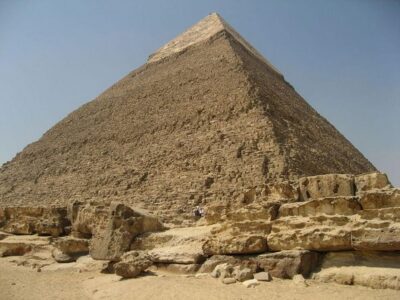
VIP All inclusive Best of the best Giza Pyramids,Sakkara,Memphis
Read our review →
Pyramids of Giza, Sphinx, Saqqara & Memphis Tour
Read our review →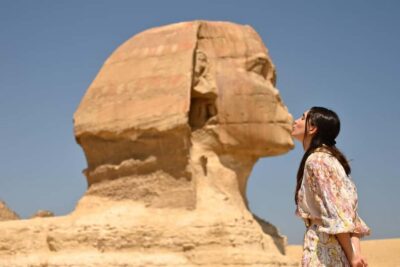
Half-Day Tour to Pyramids of Giza and the Sphinx
Read our review →
Private ViP all-inclusive Giza Pyramids,Sphinx,Inside Pyramid
Read our review →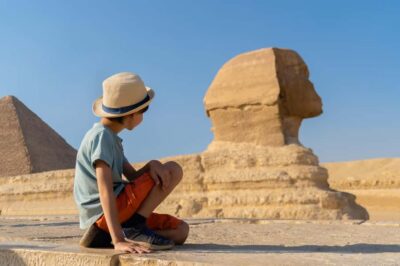
Grand Egyptian Museum, Pyramids, Sphinx Tour & Lunch
Read our review →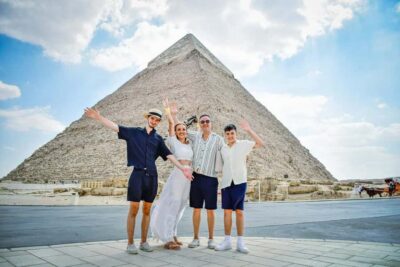
Cairo Pyramids, Sphinx & Egyptian Museum Day Trip
Read our review →Browse the lists this tour appears in