Reviewed · CAIRO TOURS
Cairo Private Day Tours: Discover Islamic and Coptic Cairo
Cairo’s most revealing day is not spent only at the pyramids. This six-hour private outing moves through Coptic Cairo and Islamic Cairo, linking churches, a synagogue, medieval mosques, the Citadel, and the lanes of Khan El-Khalili. It gives you a useful first look at how several faiths and ruling dynasties shaped one city.
I like the private car and hotel pickup, especially in Cairo traffic, where getting from one historic quarter to another can eat up a morning. I also like the flexible format: you can book basic transport or add a guide, entrance tickets, and lunch. The main caution is that the low advertised price does not include every extra, and the quality of the guiding can vary.
In This Review
- Key points to know before booking
- What the six-hour Cairo route really gives you
- Coptic Cairo: a concentrated look at Christian Egypt
- The Hanging Church and its suspended interior
- Ben Ezra Synagogue and the Cairo Geniza
- Abu Serga, St. Barbara, and the Holy Family tradition
- Sultan Hassan and Al-Rifa’i: Cairo’s grand architectural pairing
- The Cairo Citadel and Saladin’s hilltop fortress
- Amr Ibn Al-As Mosque and the beginning of Islamic Cairo
- Khan El-Khalili: shopping, lanes, and a change of pace
- Choosing the guide option and lunch
- Transport, timing, and what can go wrong
- Who should book this private Cairo day tour?
- Should you book it?
- FAQ
- How long does the private Cairo tour last?
- What areas of Cairo does the tour visit?
- Is hotel pickup and drop-off included?
- Is a tour guide included in the $8 price?
- Are entrance fees included?
- Is lunch included?
- Is this a group tour?
- Can I cancel for a full refund?
Key points to know before booking
- Coptic Cairo combines several major sites in one compact area, including the Hanging Church, Ben Ezra Synagogue, and Abu Serga.
- The Citadel, Sultan Hassan Mosque, and Al-Rifa’i Mosque create the strongest Islamic Cairo sequence, with impressive architecture and royal connections.
- The $8 starting price is mainly a transfer bargain, not an all-inclusive sightseeing package.
- A private vehicle keeps the day simple, with pickup and drop-off available from addresses across Cairo and Giza.
- A good guide can transform the experience, as guides such as Rania, Fatima, Isaac, Khalaf, and Tarek have done for some visitors.
- Khan El-Khalili is included, but shopping depends on timing, especially during Ramadan or an early start.
What the six-hour Cairo route really gives you
This is best understood as a private overview of two historic districts rather than a slow, scholarly tour. You move between nine stops, with roughly 30 minutes at several sites and up to an hour at the Hanging Church, the Cairo Citadel, and Khan El-Khalili.
That pace lets you see a lot. It also means you should not expect to study every church, mosque, inscription, or museum room at length. I would choose this outing when I wanted the main religious and architectural sights in one day, not when I wanted a relaxed morning in one neighborhood.
The private setup matters. Your group travels in an air-conditioned vehicle, and the driver handles the awkward transfers between Old Cairo, the Citadel area, and the bazaar. Bottled water is included. Traffic can be heavy, so the six-hour estimate is approximate rather than a promise that every minute will be spent inside the monuments.
The price needs a close look. At $8 per person, the base rate is unusually low for private transport, but guide service, entry fees, and lunch are optional additions. The package details also describe admission tickets at individual stops, so confirm exactly what your selected option includes before paying. One unhappy booking experience involved confusion over guide and ticket charges, which is a good reason to request a clear total.
More Cairo trips worth a second look
- Cairo: Pyramids & Great Sphinx Private Tour with Camel Ride
★ 4.9 · 6,335 reviews - Cairo 8 Hour Private Tour of Pyramids, Egyptian Museum and Bazaar
★ 5.0 · 2,931 reviews - Private ViP all-inclusive Giza Pyramids,Sphinx,Inside Pyramid
★ 5.0 · 2,448 reviews
Coptic Cairo: a concentrated look at Christian Egypt
Coptic Cairo is the natural opening chapter. The area includes the remains of the Babylon Fortress, old churches, and several sites tied to Egypt’s long Christian tradition. Local Christian tradition also connects the district with the Holy Family’s visit to Egypt, particularly the Church of St. Sergius and Bacchus.
The first stop is a short introduction to the quarter, followed by more time at the Hanging Church. This order makes sense: you get the setting first, then enter one of the area’s best-known buildings.
The district is historically layered. Christianity was firmly established in Egypt before the Islamic conquest in the seventh century, yet many buildings you see today took their present form after Muslim rule began. That detail helps prevent a common mistake: treating Coptic Cairo as a perfectly preserved single period. It is a place rebuilt, repaired, and used across centuries.
For you, the value lies in the close grouping of the sites. You can walk into several sacred spaces without spending the whole day crossing Cairo. The drawback is that the short stop times may leave you wanting more explanation, especially if Coptic Christianity is new to you.
The Hanging Church and its suspended interior
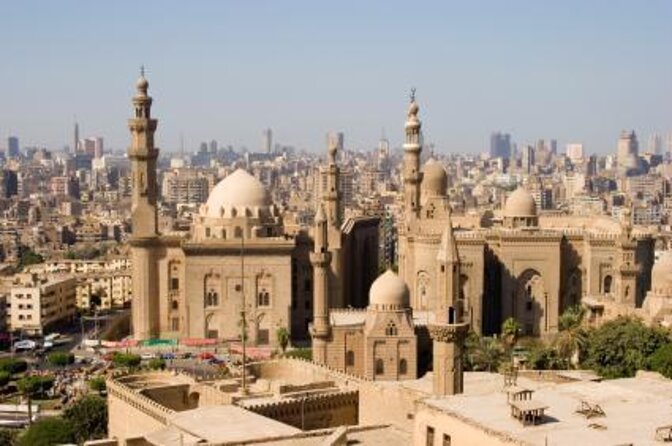
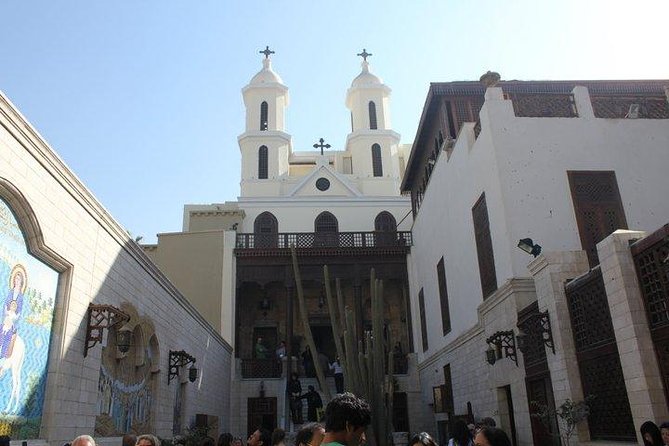
The Hanging Church, also called El Muallaqa or St. Mary, is built above the ground level associated with the old Roman fortress. Its raised position gives it the familiar name, while the interior offers the visual reward: carved wooden details, religious icons, and biblical artwork.
You get about an hour here, making it one of the less rushed stops. That extra time is useful because the church is not just a quick photograph. Look up at the woodwork, notice the arrangement of the icons, and give yourself time to take in the unusual sense of height created by the structure.
A guide is particularly helpful here. Without context, you may see an attractive old church and move on. With a strong guide, the building’s place in Egyptian Christian life becomes clearer. Rania is praised for explaining with energy and warmth, while Fatima is singled out for a friendly, informed approach across both Christian and Muslim sites. Those guides are not guaranteed, but their style illustrates how much this stop depends on the person leading it.
Dress and behavior should be respectful. This is an active sacred place, not simply an architectural exhibit. The tour description does not spell out a detailed dress code, so modest clothing is the sensible choice.
Ben Ezra Synagogue and the Cairo Geniza
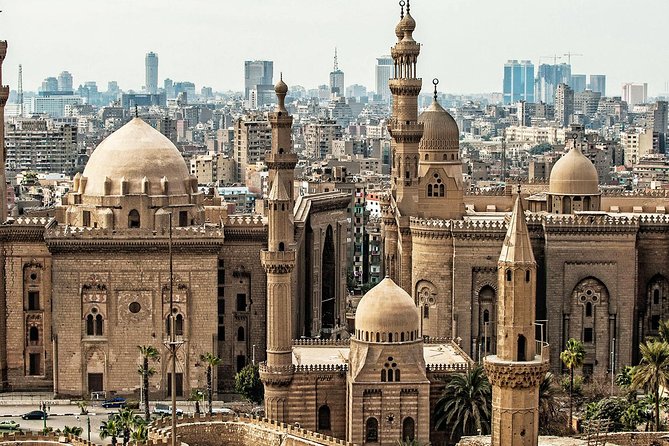
The Ben Ezra Synagogue adds a different voice to Old Cairo. Local folklore links the site with the place where the infant Moses was found. Its most important wider connection is the Cairo Geniza, a storeroom where thousands of Hebrew, Aramaic, and Judeo-Arabic manuscripts were found in the nineteenth century.
The manuscripts were later dispersed among academic libraries, with the largest share held at Cambridge University Library. You will not see that full collection inside the synagogue, but the background gives the building unusual weight. This stop reminds you that Cairo’s religious past was not divided into two simple camps.
The visit lasts around 30 minutes. That is enough for a focused look, but not a long study session. If your guide explains the Geniza clearly, the stop becomes far more memorable than a quick pass through an old building. If the commentary is thin, you may feel you could have read just as much from a plaque.
A different kind of day out, same part of Egypt:
- Tour to Giza Pyramids and The Egyptian Museum
★ 5.0 · 6,016 reviews - VIP All inclusive Best of the best Giza Pyramids,Sakkara,Memphis
★ 5.0 · 3,164 reviews - From Cairo: Pyramids of Giza, Sphinx, Saqqara & Memphis Tour
★ 4.7 · 3,110 reviews - Cairo: Pyramids, Sakkara & Memphis Tour with Lunch
★ 4.6 · 2,493 reviews
Abu Serga, St. Barbara, and the Holy Family tradition
The Church of St. Sergius and Bacchus, commonly called Abu Serga, is another important Coptic site. It is associated with the Holy Family tradition and is valued for its old setting, religious importance, and architectural details.
The stop is scheduled for about 30 minutes. That makes it a complement to the Hanging Church rather than a second long church visit. You can compare the atmosphere and design of the two buildings while your guide explains why Abu Serga has such a central place in Coptic Cairo.
The itinerary also refers to St. Barbara Church in connection with Abu Serga. Ask your guide what is open and what you are seeing on the day, since the exact visit can depend on local access. This is one place where a flexible private tour helps. You can ask for clarification instead of simply following a large group from room to room.
Sultan Hassan and Al-Rifa’i: Cairo’s grand architectural pairing
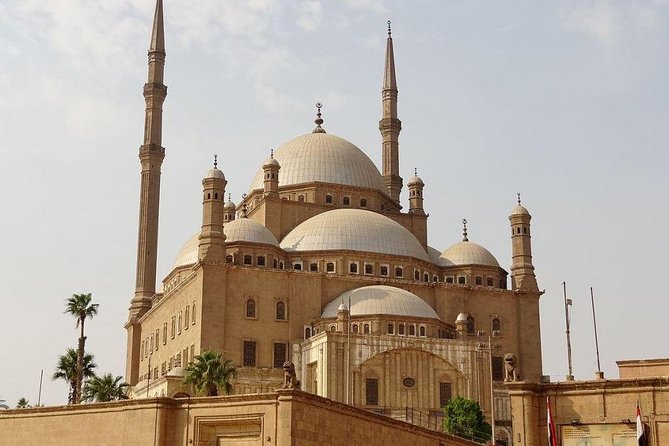
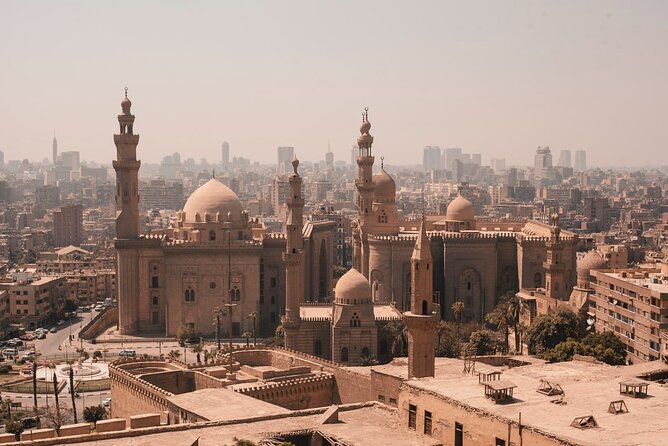
The Islamic Cairo portion begins with two neighboring monuments that work best as a pair. The Mosque-Madrasa of Sultan Hassan was built between 1356 and 1363 under the Mamluk Sultan an-Nasir Hasan. It served as both mosque and religious school, and its scale gives you an immediate sense of the ambition of medieval Cairo.
Al-Rifa’i Mosque sits opposite it. The later building was designed as a companion to Sultan Hassan, and it also serves as the royal mausoleum for Muhammad Ali’s family. The contrast is useful: one monument represents the Mamluk period, while the other connects to Egypt’s modern royal era.
Each stop receives roughly 30 minutes. That is enough to admire the huge entrances, courtyards, stonework, and interior spaces, but you may find the schedule brisk if you enjoy architectural detail. I would spend less time trying to photograph every angle and more time noticing the relationship between the two buildings.
Your guide should explain how religious, educational, and royal functions overlap here. A quiet or poorly prepared guide can reduce the visit to names and dates. Several strong guide experiences in this tour have been praised for answering questions, adjusting the pace, and explaining the monuments with real enthusiasm. The difference is not minor. It changes the day from site collecting into an understandable story.
The Cairo Citadel and Saladin’s hilltop fortress
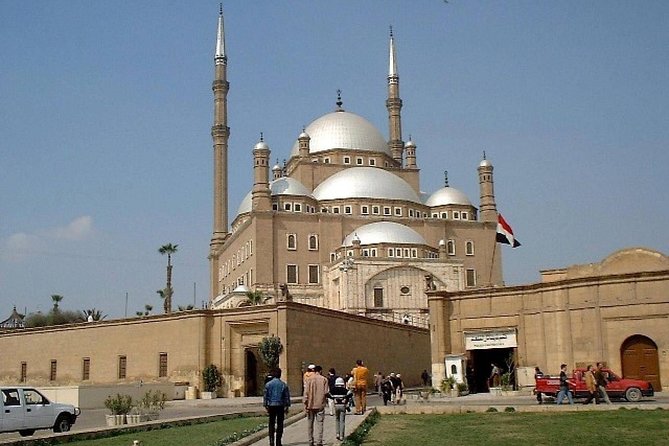
The Cairo Citadel gets a full hour, and it deserves it. Built by Salah ad-Din and expanded by later rulers, the fortress served as Egypt’s seat of government and royal residence for nearly 700 years, from the thirteenth through the nineteenth century.
You come here for the broad city views as well as the fortifications and mosques. The Citadel gives physical shape to Cairo’s political past: rulers could govern from a fortified position above the old city. The visit also breaks up the church and mosque interiors with open space and a wider view.
The route does not specify every building or museum included inside the Citadel, so treat this as a Citadel visit rather than a promise of access to every attraction within the complex. Confirm the entry arrangement if a particular mosque or museum is important to you.
One hour is a reasonable amount of time for a first visit. It gives you room to see the main areas without turning the day into a single-site tour. The driver’s role is also valuable here, since the road approach and pickup point can be less straightforward than an ordinary hotel transfer.
Amr Ibn Al-As Mosque and the beginning of Islamic Cairo
The itinerary then points to the Mosque of Amr Ibn Al-As in the Fustat area. It was built in 642 AD by Amr Ibn Al-As, the Muslim leader associated with the founding of Islamic Cairo.
The scheduled visit is about 30 minutes. This is a short introduction to one of Cairo’s earliest Islamic mosques, not an extended exploration of Fustat. The site gives useful chronological balance after the much later Mamluk monuments at Sultan Hassan and Al-Rifa’i.
The mosque is an active religious place, so your visit should remain respectful and follow local instructions. As with the churches, the guide’s explanation matters. Dates alone do not explain why this mosque belongs in a day focused on Cairo’s religious development.
Khan El-Khalili: shopping, lanes, and a change of pace
Khan El-Khalili is the final major stop and receives about an hour. The bazaar began as a Mamluk-era trading center built around caravanserais and remains one of central Cairo’s main shopping districts.
This is where the day becomes less formal. After churches, synagogues, mosques, and a fortress, you have time to browse goods, walk through narrow lanes, and see Cairo’s commercial side. You can shop for souvenirs, but the experience is not limited to buying things. The market shows how trade still shapes the old center of the city.
A private guide can be useful if you want help with the layout or prefer recommendations for a typical restaurant. Khalaf is praised for accommodating shopping requests and suggesting local places to eat. At the same time, be alert to pressure to visit a particular shop. One poor experience involved a guide who seemed more interested in taking the group to a friend’s store than explaining the city. You can politely state that you want sightseeing first and shopping only on your terms.
Timing affects the market. During Ramadan, the schedule may shift earlier, and the bazaar can be quiet when it first opens. That gives you a calmer walk, but fewer shops may be ready for business. If shopping is a priority, ask about the start time before booking.
Choosing the guide option and lunch
The basic package includes private transfers, hotel pickup and drop-off, and bottled water. You can add a guide, entrance fees, and lunch at a local restaurant or by the Nile.
I would strongly consider adding a guide if you want the religious and historical connections explained. The churches and mosques are not hard to enter, but their importance is easy to miss. A good guide can also adjust the pace, answer questions, and help you understand what you are looking at.
If you already read about the sites and prefer independence, the driver-only option can be good value. Several people had an enjoyable day without a guide because the driver, including one named Ahmed, dropped them as close as possible to each site and helped with transport. That choice works best if you are comfortable purchasing tickets and managing your own explanations.
Lunch is optional. Some organized days include a local meal, with koshari specifically offered as an option. Other experiences describe lunch as acceptable rather than a major highlight, so I would add it for convenience, not as the main reason to book.
Transport, timing, and what can go wrong
Pickup is offered from addresses across Cairo and Giza, including hotels outside the usual zone in at least one successful arrangement. You receive a private vehicle rather than joining a large group, and the tour is open to most people who can participate in ordinary sightseeing.
The car is a key part of the value. Cairo traffic can make short distances slow, and a dedicated driver means you do not need to arrange several taxis. Vehicle quality has not been perfectly consistent, however. Most accounts describe safe, useful transport, while one serious complaint involved a car in poor condition and another involved a late driver.
Communication deserves attention. Pickup details may be handled by WhatsApp, and one driver used it effectively for meeting arrangements. Confirm your hotel address, pickup time, guide fee, ticket fee, and lunch price in writing. The experience can be excellent when those details are clear, but confusion over add-ons can sour an otherwise good day.
Free cancellation is available if you cancel at least 24 hours before the local start time. Changes or cancellations inside that window are not accepted for a refund.
Who should book this private Cairo day tour?
I would choose this tour if you want a broad first look at Old Cairo and value door-to-door transport. It suits couples, families, and small groups who want control over the pace without paying for a fully private luxury itinerary.
It is also a good fit for travelers with one free day who have already seen, or plan to see separately, the pyramids and Egyptian Museum. Coptic Cairo and Islamic Cairo offer a different side of the capital, one built around living faith, medieval power, royal memory, and trade.
I would hesitate if you want long visits at each monument or a specialist explanation of Coptic art, Mamluk architecture, or Jewish history. The route is ambitious for six hours. A weak guide can make the stops feel like a checklist, and the base price can be misleading if you assume tickets and commentary are included.
The strongest guide names associated with this experience include Rania, Fatima, Isaac, Khalaf, Tarek, Menna, and Sayed Admin. That does not mean you will be assigned one of them, but it shows the range of service possible. Ask for a fluent, engaged guide and confirm the full package price before you commit.
Should you book it?
Book it if you want an efficient private introduction to Cairo’s Christian and Islamic quarters, with the freedom to add only the services you need. The route covers an impressive amount: the Hanging Church, Ben Ezra Synagogue, Abu Serga, Sultan Hassan, Al-Rifa’i, the Citadel, Amr Ibn Al-As Mosque, and Khan El-Khalili.
My advice is simple: treat $8 as the transport starting point, not the final cost. Add a guide if history matters to you, verify entrance fees, and set clear limits around shopping. With those expectations, this can be a very useful Cairo day. Without them, the rushed schedule and uneven guiding may leave you feeling that the city’s best stories were left outside the car.
FAQ
How long does the private Cairo tour last?
The experience lasts approximately six hours.
What areas of Cairo does the tour visit?
It visits Coptic Cairo, Islamic Cairo, the Cairo Citadel, the Fustat area, and Khan El-Khalili.
Is hotel pickup and drop-off included?
Yes. Round-trip private transfers and hotel pickup and drop-off are included for addresses across Cairo and Giza.
Is a tour guide included in the $8 price?
No. A tour guide is listed as an optional addition, so confirm the package choice and total cost before booking.
Are entrance fees included?
Entrance fees depend on the tour option selected. They are listed as optional, so check which tickets are covered in your booking.
Is lunch included?
Lunch is optional. You can add a meal at a local restaurant, including an option featuring koshari, or by the Nile.
Is this a group tour?
No. This is a private activity, and only your group participates.
Can I cancel for a full refund?
Yes, if you cancel at least 24 hours before the experience start time. Cancellations or changes made less than 24 hours in advance are not accepted for a refund.
Recently reviewed around Cairo
- White Desert Overnight Camping Sharing Tour in Egypt★ 5.0 · 15 reviews
- Cairo Best 2Days tour Pyramids, Saqqara & Old Cairo★ 5.0 · 15 reviews
- Giza Pyramids with (GEM) Grand Egyptian Museum★ 5.0 · 42 reviews
- Tour to Giza pyramids Memphis Sakkara and Felucca on the Nile★ 5.0 · 16 reviews
- visit the pyramids of Giza + the necropolis of Saqqara + the Memphis site.★ 4.5 · 20 reviews
- sunset at Giza pyramids by camels★ 5.0 · 31 reviews
- Private Giza pyramid,sphinx, Mummification temple& inside pyramid★ 5.0 · 32 reviews
- Private guided shopping tour in Khan el-Khalili with Lunch★ 4.5 · 21 reviews
Cairo Tours, compared.
Pyramids & Great Sphinx Private Tour with Camel Ride
Read our review →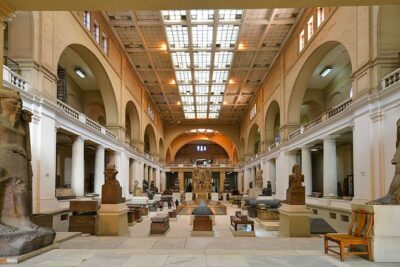
Tour to Giza Pyramids and The Egyptian Museum
Read our review →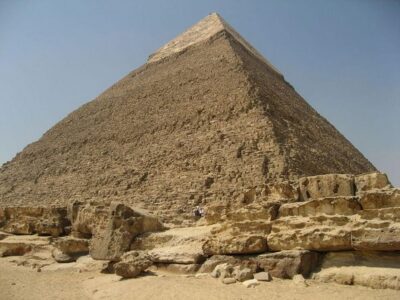
VIP All inclusive Best of the best Giza Pyramids,Sakkara,Memphis
Read our review →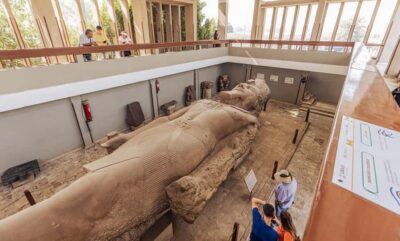
Pyramids of Giza, Sphinx, Saqqara & Memphis Tour
Read our review →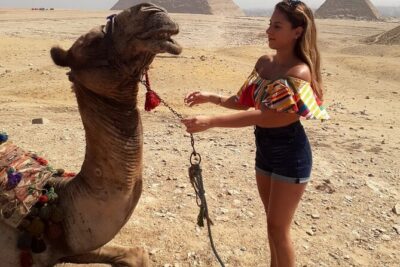
Cairo 8 Hour Private Tour of Pyramids, Egyptian Museum and Bazaar
Read our review →
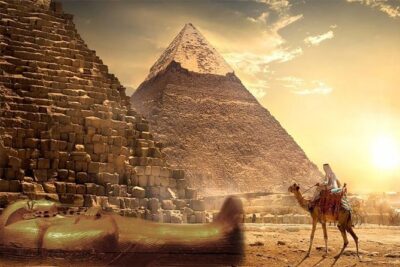
Private ViP all-inclusive Giza Pyramids,Sphinx,Inside Pyramid
Read our review →