
Reviewed · NILE CRUISES
From Aswan: 4 Days Nile River Cruise with Guided Tours
The best part of this four-day Nile cruise is the way it links Egypt’s great sights by water. You wake up near a new temple, watch Nubian villages and desert cliffs pass from the sun deck, and let the ship handle the long move from Aswan to Luxor.
I like the excellent range of temples, from the island setting of Philae to the massive columns at Karnak. I also like the practical package: three nights aboard ship, all meals from the first lunch through the final breakfast, air-conditioned transfers, a guide, and the horse-and-carriage ride to Edfu.
The main caution is timing. Sailing schedules can change, and the time at some sights may feel short. A recent itinerary change left one party with two days docked in Aswan and a rushed Luxor morning, so you should treat the schedule as flexible rather than carved in stone.
In This Review
- Key points to know before booking
- Why a four-day Nile cruise works so well
- Day one: the High Dam and island temple of Philae
- Day two: Kom Ombo at the river’s edge
- Day two continued: Edfu Temple and the horse-drawn ride
- Day three: the Valley of the Kings on Luxor’s West Bank
- Hatshepsut and the story of a powerful queen
- Howard Carter House and the Tutankhamun connection
- Day four: Karnak Temple and Luxor Temple
- Cabins, meals, and life aboard ship
- Guides, transfers, and the pace of the visits
- Is $570 a fair price?
- Who should book this Nile cruise?
- Should you book it?
- FAQ
- Where does the cruise begin?
- Where does the cruise finish?
- How long is the cruise?
- Which major sites are included?
- Are meals included?
- Are entrance fees included?
- Is WiFi included on the cruise?
- Is a tour guide included?
- Can the sailing schedule change?
Key points to know before booking
- Philae begins the journey on an island, reached by motorboat after visiting the Aswan High Dam.
- Kom Ombo and Edfu are built into the sailing route, with a horse-drawn carriage used for the trip to Edfu Temple.
- George and Semi are named guides associated with the tours, and George has been praised for detailed explanations and careful attention to an older passenger.
- The cruise ship is a smaller vessel, with one report describing the MS Marousha as holding about 120 people and offering spacious, clean cabins.
- The $570 price covers a lot, but entrance fees, drinks, and WiFi are extra.
- Luxor’s West Bank gets the strongest history lesson, with the Valley of the Kings, Hatshepsut’s temple, and Howard Carter House in one outing.
Why a four-day Nile cruise works so well
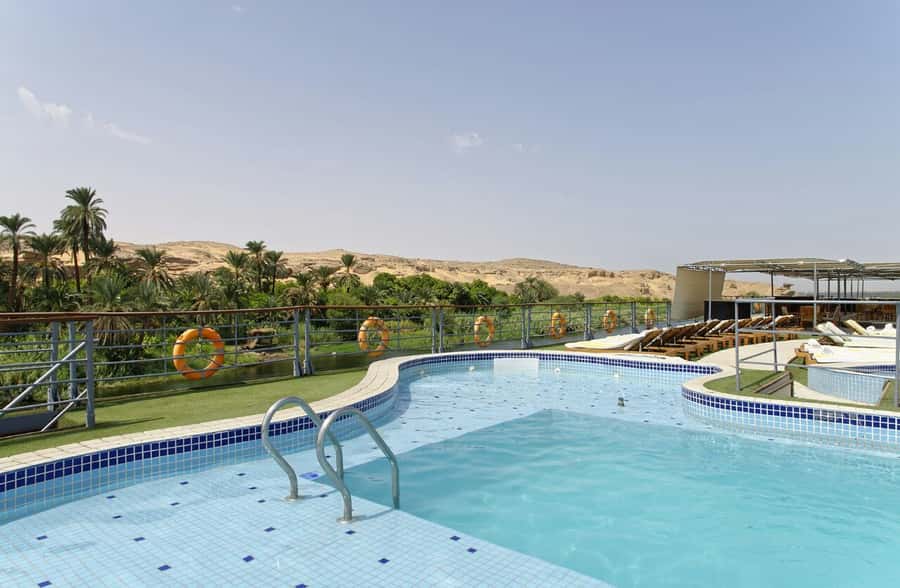
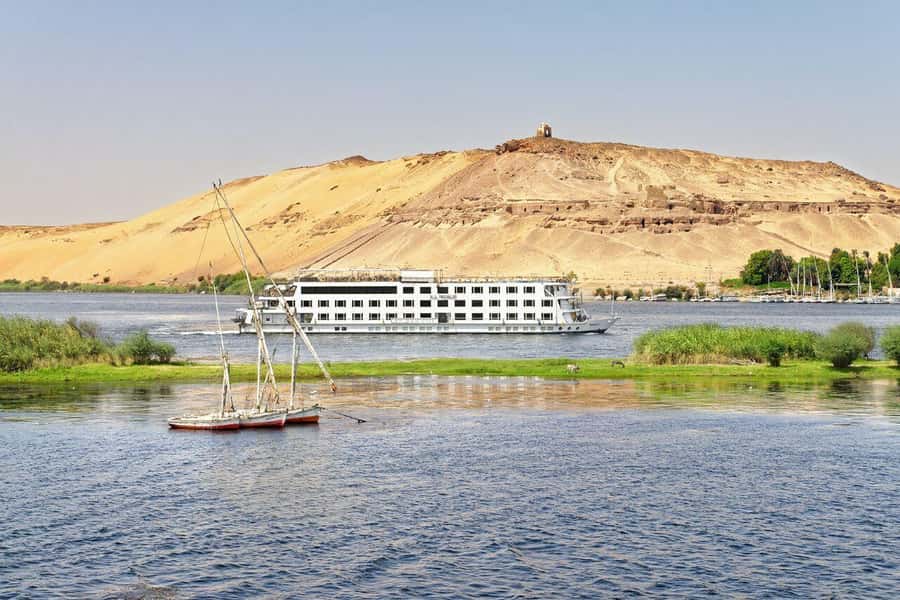
The Nile is not just the route between the sights. It is part of the experience. On this trip, you can sit on the sun deck with tea, photograph both banks, and watch the river change from city edges to cultivated fields and dry desert country.
That slow movement is a welcome break from four days of road transfers. You still ride in an air-conditioned minibus for the shore visits, but the ship gives the middle of the trip an easy rhythm. Meals are served aboard, your cabin stays with you, and you do not have to repack every night.
This is a guided cruise rather than a free-form sailing holiday. Your English-speaking Egyptologist guide explains the sites and ancient Egyptian culture, then transports you between the ship and the monuments. That matters in Egypt, where a good explanation can turn a forest of columns and broken walls into a readable story.
The cruise is listed at $570 per person. The value depends on what you would otherwise arrange yourself, but the price includes three nights, all meals, transport, guiding, and a cabin with facilities. You still pay entrance fees, drinks, and WiFi, so allow room in your budget for those extras.
More Boat Tours in Aswan
- 4-Days Nile Cruise From Aswan To Luxor including Abu Simbel and Hot Air Balloon
★ 5.0 · 3,142 reviews - 4-Day 3-Night Nile Cruise from Aswan to Luxor&Abu Simbel+Balloon
★ 5.0 · 2,023 reviews - 4-Day 3-Night Nile Cruise from Aswan to Luxor including Abu Simbel, Air Balloon
★ 4.5 · 612 reviews
Day one: the High Dam and island temple of Philae
Pickup is listed from El-Shaheed Abd El-Fattah Hassanein, with hotel pickup in Aswan included. From there, the first stop is the Aswan High Dam, one of the major modern engineering projects on the Nile.
The dam is a useful opening stop because it explains the modern river you are about to cruise. It changed flood control, irrigation, and electricity production, while also forcing the relocation of several ancient sites. Your guide can connect that modern story to the preservation work that saved Philae.
You then take a motorboat to Philae Island. The short boat ride adds a pleasant sense of arrival, and the island setting gives the temple a different mood from the land-based monuments later in the trip.
Philae Temple was dedicated mainly to the goddess Isis. The complex contains courtyards, pylons, columns, and reliefs that show how Egyptian religious traditions continued into later periods. The water around the island also helps you understand why the site required careful relocation work when the Nile was reshaped by modern dams.
After the guided visit, you board the cruise ship for the first night. This is when the trip changes pace. Instead of moving straight to another road stop, you can settle into the cabin, take photos from the deck, or listen to your guide explain Nubian culture and ancient Egyptian life.
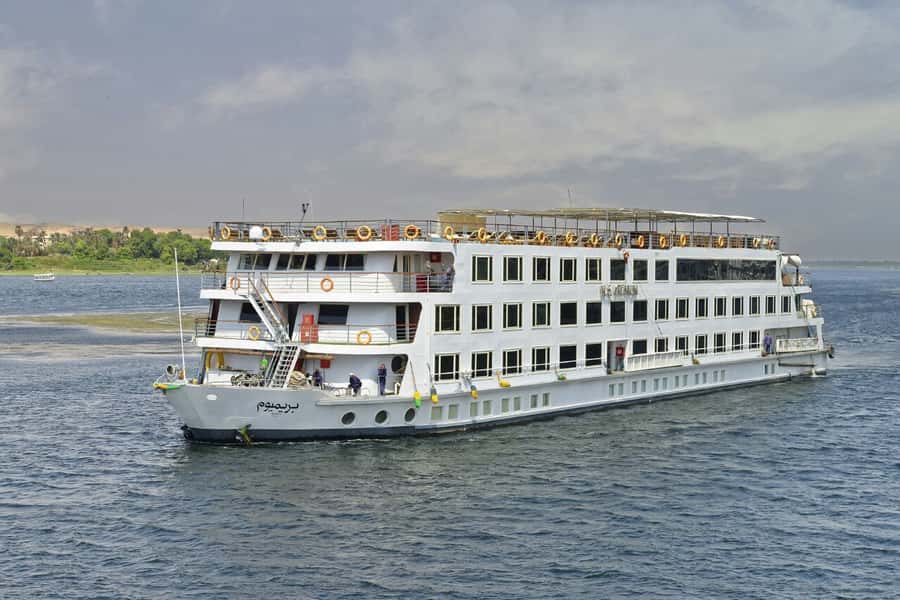
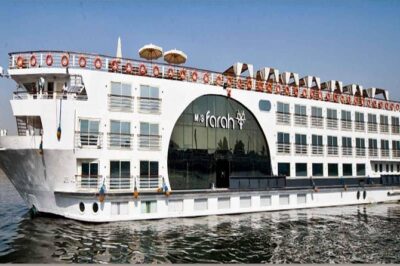
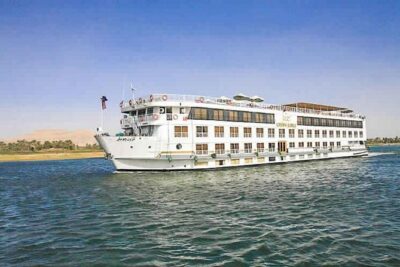
The ship is described as a 5-star vessel, though you should read that label as a cruise category rather than a guarantee of luxury in every detail. A report about the MS Marousha describes spacious, clean rooms with windows, although the windows could not be opened. Another booking used the Steigenberger Minerva, so the exact ship can vary.
Day two: Kom Ombo at the river’s edge
After breakfast, you have free time to explore Aswan before sailing north. The amount of free time and the exact sailing sequence can change, so ask the guide or cruise staff for the day’s plan.
Kom Ombo is unusual because it has two main religious sections. One side honored Sobek, the crocodile god, and the other honored Horus the Elder. The paired design gives your guide plenty to explain, including the different deities, reliefs, and the temple’s role along the river route.
The stop can be striking at sunset, but timing has a tradeoff. One detailed account found Kom Ombo heavily crowded at that hour. If your visit falls near sunset, the warm light can be lovely, but you may have less room and a slower path through the site.
After the temple, you return to the ship and continue toward Edfu. The river portion between stops is one of the reasons to choose a cruise instead of a simple point-to-point tour. You can rest, eat, and watch the banks pass without losing a full day to a vehicle.
Day two continued: Edfu Temple and the horse-drawn ride
At Edfu, a horse-drawn carriage takes you to the temple of Horus. This is included, and it saves you from making the approach on foot in the heat. The carriage ride is also one of the more distinctive parts of the program, though the comfort and pace can vary.
Edfu is one of Egypt’s best-preserved major temples. Its scale is easy to grasp, with a huge entrance pylon, broad courts, and strong wall reliefs. Since the building is dedicated to Horus, your guide can explain the myths and symbols that appear throughout the complex.
The timing here may seem odd. The visit is described as taking place around the temple’s opening, reportedly because of the lock schedule, but one account noted that the ship still remained in port for about an hour and a half afterward. If you finish early, use that pause to look over the riverfront or simply rest.
You return to the ship for the night and continue north. The sailing schedule may be altered by local regulations. The operator says these changes should not affect accommodation, tours, or check-in time, but the order and length of stops can shift.
More Nile Cruises in Aswan
- From Aswan: 4-Day Nile Cruise from Aswan to Luxor with Guide
★ 4.1 · 593 reviews - 4-Days Nile Cruise From Aswan To Luxor including Abu Simbel and Hot Air Balloon
★ 4.5 · 509 reviews - 4-Day 3-Night Nile Cruise from Aswan to Luxor – Private Tour
★ 5.0 · 369 reviews - 4 Days Nile Cruise from Aswan to Luxor including Abu Simbel and Hot Air Balloon
★ 4.5 · 356 reviews
Day three: the Valley of the Kings on Luxor’s West Bank
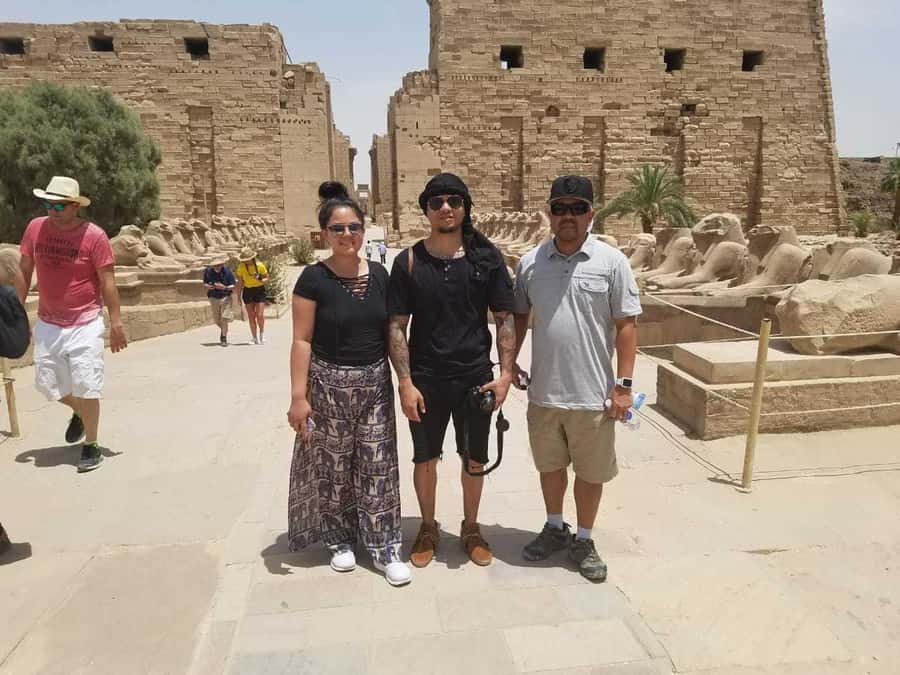
Luxor brings the most famous part of the trip. On the West Bank, you visit the Valley of the Kings, where rulers of the New Kingdom were buried in rock-cut tombs.
The value of having an Egyptologist here is clear. The tombs are not simple rooms with pretty pictures. Their paintings and texts relate to the dead king’s passage into the next world, and the symbols repeat with a purpose. A guide can help you read the scenes instead of seeing only colorful walls.
Entrance fees are not included, and tomb access can vary. The provided details do not specify which individual tombs are included, so confirm this with the operator before you go if a particular tomb is important to you.
The valley is open and exposed, so comfortable walking shoes and protection from the sun are sensible. The tour information does not list a set amount of free time, and the overall Luxor schedule may feel compressed. Stay close to the guide and listen for the meeting time before entering a tomb.
Hatshepsut and the story of a powerful queen
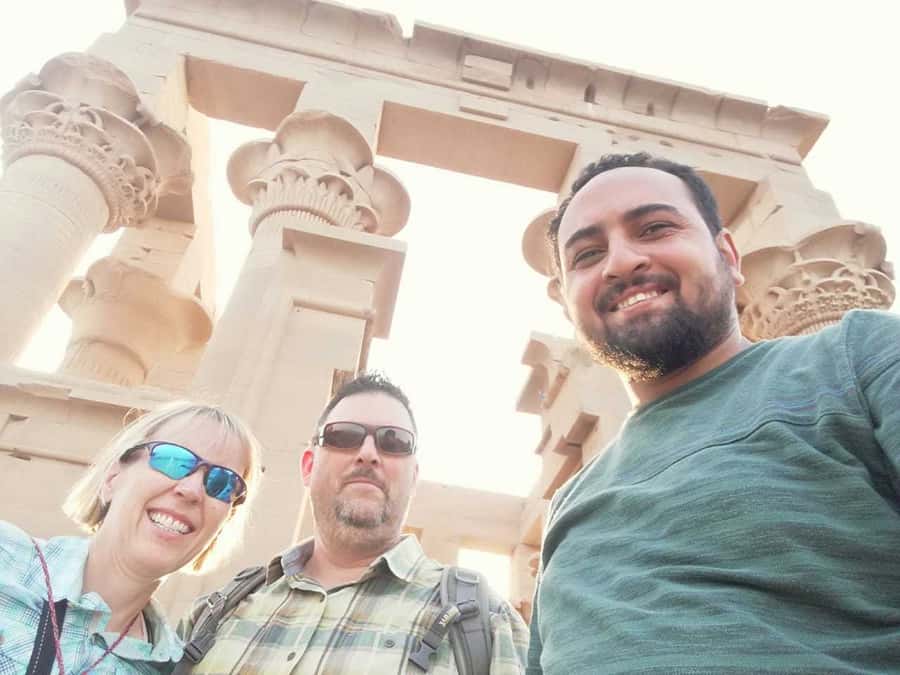
Next comes the Mortuary Temple of Hatshepsut. Built against the cliffs, the temple uses terraces and long lines to create a strong visual approach. It is a good counterpoint to the underground tombs of the Valley of the Kings.
Hatshepsut ruled as pharaoh and presented herself through the symbols traditionally linked with male kingship. Her temple helps you see how architecture and royal images were used to support political authority.
The site is more than a quick photo stop if you have time to hear the explanation. Ask your guide to point out the surviving reliefs and the parts that were damaged or altered after her reign. Guides George and Semi are associated with this program, and George has been praised for giving detailed historical explanations.
Howard Carter House and the Tutankhamun connection
The West Bank visit also includes Howard Carter House. Carter was the archaeologist who discovered the tomb of King Tutankhamun, and the house gives the famous discovery a more personal setting.
This stop changes the scale of the day. You move from royal tombs and monumental temples to the place connected with the man behind one of Egypt’s most famous archaeological finds. It helps put a human face on the work of excavation.
The information provided does not specify how long you spend inside the house, so expect it to be one part of a busy morning rather than a long standalone museum visit. The value comes from the connection to the Valley of the Kings, not from treating it as a major monument on the same scale as Karnak.
Day four: Karnak Temple and Luxor Temple
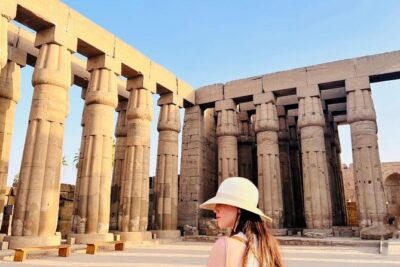
The final morning takes you to Karnak Temple, described here as the biggest temple complex in the world. The site is vast, with gateways, courts, obelisks, sanctuaries, and the famous Great Hypostyle Hall.
Karnak rewards a guide who can help you separate the different building periods and religious functions. Without context, the size can be overwhelming. With a clear explanation, you begin to see how successive rulers added to the complex over many centuries.
The Great Hypostyle Hall is the visual high point for many people. Its enormous columns make you feel very small, which is exactly the point of monumental temple design. Give yourself time to look upward, but keep an eye on the group because the Luxor schedule can be tight.
You then visit Luxor Temple, a smaller and more compact site in the modern city. Its location makes it a useful companion to Karnak. Karnak feels like a huge religious center, while Luxor Temple reads more easily as a processional and ceremonial space.
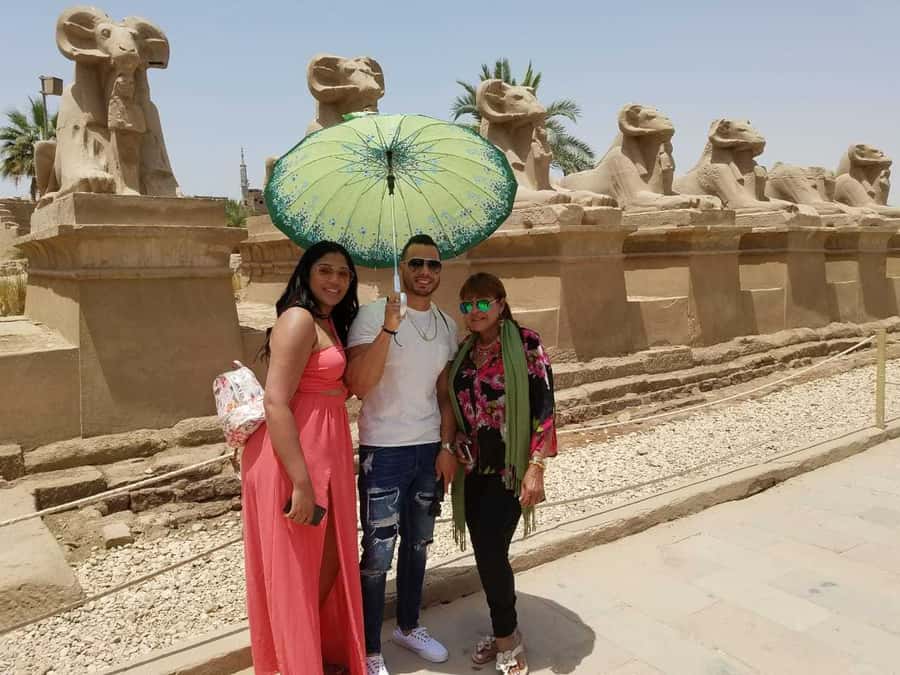
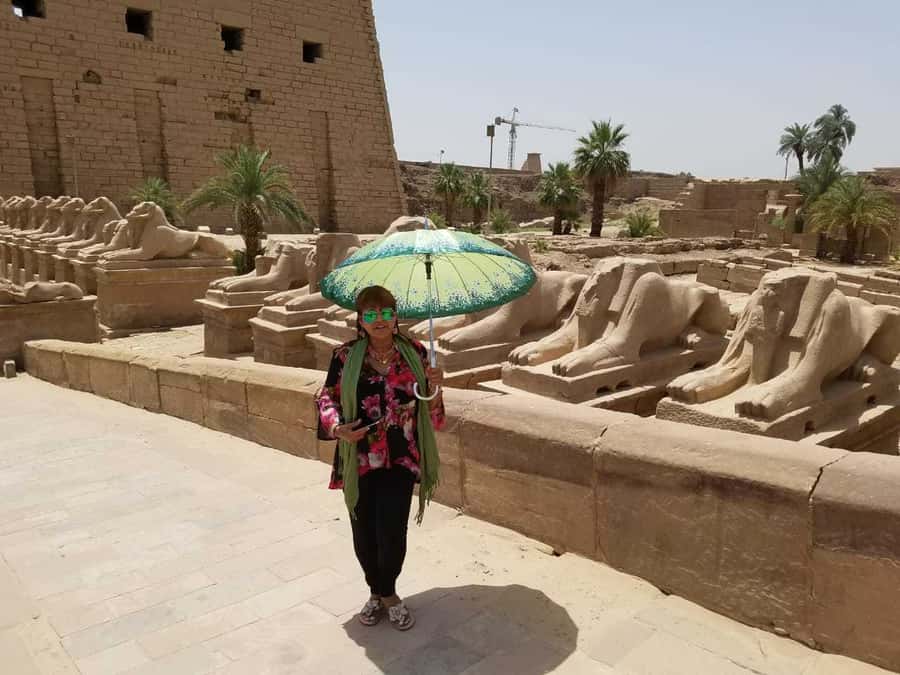
The two temples were linked in ancient times by an avenue of sphinxes. Your guide can help you understand that connection, as well as the later Roman and Christian changes visible around the complex.
The tour finishes in Luxor after the temple visits. Drop-off details are listed as included, but the supplied information specifies pickup from Aswan hotels more clearly than the exact final drop-off point. Confirm your onward transport plans before booking flights or trains.
Cabins, meals, and life aboard ship
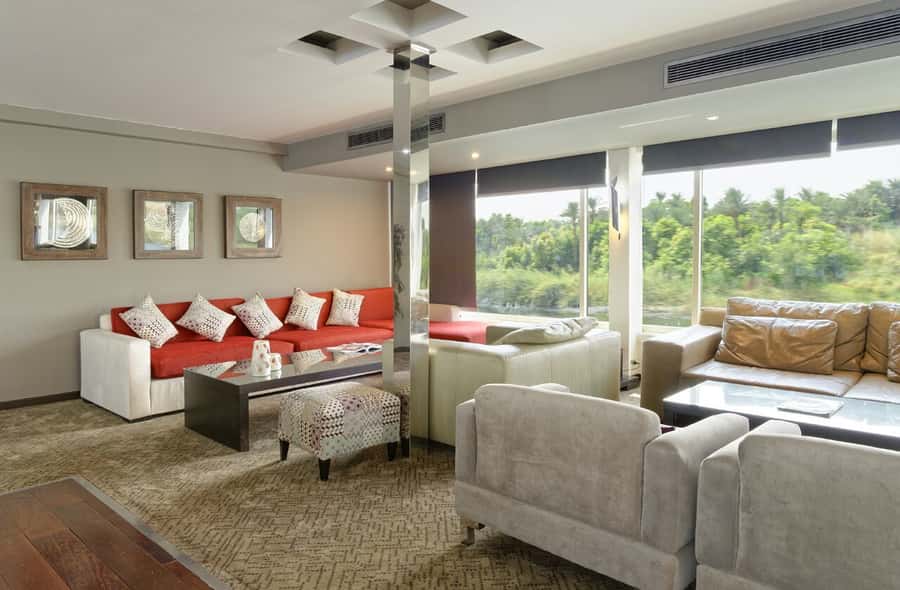
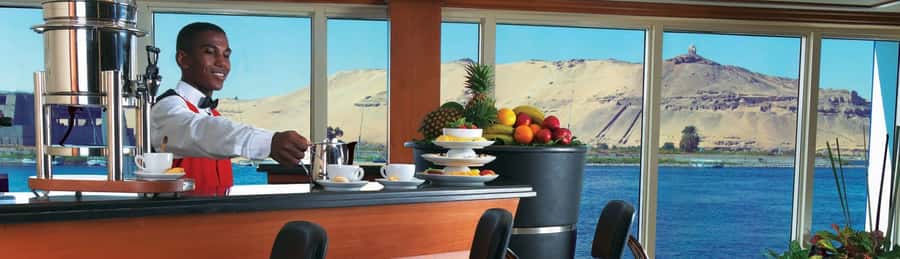
The ship is a central part of the value, not just a place to sleep. You receive a cabin with facilities and three nights on board, along with meals from the first lunch to the final breakfast.
A report about the MS Marousha describes roomy, clean cabins with windows that did not open. That is worth knowing if fresh air in the room matters to you. The same account found the vessel pleasantly sized, with room for about 120 people, and noted low occupancy at the end of April.
Food received particularly strong praise. Menus were described as varied, and another account called the food impressive. Drinks are not included, and onboard prices were compared with European levels, so keep some cash or a payment method ready if you want tea, soft drinks, or other purchases beyond the included meals.
WiFi is also extra. Do not count on it as part of the cruise package. The cruise is better suited to switching off for a while, though you should arrange any essential communication before sailing.
Crew service was praised as attentive and professional, and one arrangement handled tips for the whole crew in a sealed envelope at the end. Tipping procedures can vary by ship, so ask for the current method when you board.
One less polished detail is onboard entertainment. A report described repetitive crew music, with the same ten songs played again and again. That will not matter to everyone, but if you prefer quiet, the open deck or your cabin may be more comfortable.
Guides, transfers, and the pace of the visits
The tour includes an English-speaking live guide and air-conditioned minibus transfers to the sites. That removes much of the guesswork in a region where roads, ship docks, and temple entrances do not always line up neatly.
George is specifically praised for detailed explanations and for making sure an older passenger remained comfortable. Semi is also named as a reliable guide. The operator may change guides in Luxor, so you might not have the same person for every stop.
The main weakness is organization around timing. Some visits may feel rushed, and the order of Kom Ombo, Edfu, and sailing can be hard to understand until the day unfolds. The program is full, so it favors people who want to see major sites efficiently rather than those who want long, quiet hours at each monument.
Wheelchair access is listed, but the information does not explain the precise conditions at every temple, boat landing, carriage route, or tomb. If you use a wheelchair, ask for a site-by-site plan before booking.
Is $570 a fair price?
At $570 per person, this is not the cheapest way to travel between Aswan and Luxor, but it packages several costly parts into one booking. You receive three nights of accommodation, meals, guided sightseeing, private or group transfers in an air-conditioned vehicle, and the Edfu carriage ride.
The missing costs matter. Entrance fees are not included, and drinks and WiFi are extra. You should also ask which ship is assigned, what cabin category you will receive, which tombs are included at the Valley of the Kings, and how the final Luxor drop-off works.
I would call it good value for a first visit if you want the main monuments explained and do not want to arrange each transfer yourself. It is less appealing if you want a slow cruise with generous time at every site or if you dislike schedule changes.
Free cancellation up to 24 hours before departure and reserve-now, pay-later terms make the booking less risky. Still, flexible payment does not remove the need to confirm the sailing pattern before your trip.
Who should book this Nile cruise?
I would choose this cruise if you want a strong first look at southern Egypt, prefer guided visits, and like having your hotel move with you. It suits couples, families, and older travelers who value included transport and a guide who can keep the day organized.
It is also a good fit if Philae, Kom Ombo, Edfu, the Valley of the Kings, Hatshepsut, Karnak, and Luxor Temple are all on your list. Seeing them in one four-day run saves planning time and gives the sites a clear geographic order.
I would hesitate if you need precise timing, quiet temple visits, open cabin windows, or dependable internet. The program can change, some stops can feel hurried, and the Luxor portion may be compressed if the ship’s schedule shifts.
Should you book it?
Book this experience if you want the classic Aswan to Luxor route with solid meals, helpful guiding, and a comfortable ship at a price that covers most major travel costs. The strongest points are the temple selection, the calm river journey, the clean and spacious cabin reports, and guides such as George who bring real explanation to the monuments.
Before paying, confirm the assigned ship, entrance fees, tomb access, daily sailing order, and final drop-off in Luxor. If you accept a little schedule uncertainty, this is a practical way to see Egypt’s essential Nile sights without managing every boat, road transfer, and meal yourself.
FAQ
Where does the cruise begin?
The cruise begins in Aswan Governorate, with pickup available from hotels in Aswan. The listed pickup location is El-Shaheed Abd El-Fattah Hassanein.
Where does the cruise finish?
The tour finishes in Luxor after visits to Karnak Temple and Luxor Temple. Drop-off is included, but the exact final drop-off point should be confirmed before booking onward transport.
How long is the cruise?
The experience lasts four days and includes three nights aboard the cruise ship.
Which major sites are included?
The program includes the Aswan High Dam, Philae Island, Kom Ombo Temple, Edfu Temple, the Valley of the Kings, the Mortuary Temple of Hatshepsut, Howard Carter House, Karnak Temple, and Luxor Temple.
Are meals included?
Yes. Meals are included from the first lunch through the final breakfast.
Are entrance fees included?
No. Entrance fees are not included in the listed price.
Is WiFi included on the cruise?
No. WiFi is listed as an extra cost, as are drinks.
Is a tour guide included?
Yes. An English-speaking live tour guide is included. Guides associated with the program include George and Semi.
Can the sailing schedule change?
Yes. Local regulations may lead to changes in the sailing schedule. The stated information says these changes should not affect accommodation, tours, or check-in time.
More 4-Day Experiences in Aswan
- 4-Day 3-Night Nile Cruise from Aswan to Luxor With Balloon and Abu Simbel
★ 5.0 · 327 reviews - From Aswan:4 Days Nile Cruise Luxor Abu Simbel & Air Balloon
★ 4.4 · 310 reviews - 4-Day Nile Cruise sails Aswan to Luxor&Abu Simbel.Hot air Balloon
★ 4.5 · 247 reviews - 4-Day Nile Cruise Aswan and Luxor Hot Air Balloon with Abu Simbel
★ 5.0 · 234 reviews
Recently reviewed around Aswan
- (3-Nights Cruise From Aswan To Luxor & Balloon, Abu Simbel)★ 4.5 · 23 reviews
- Philae Temple and Aswan High-Dam Half-day tour★ 5.0 · 49 reviews
- Sailing Nile Cruise from Aswan to Luxor for 2 Nights★ 4.5 · 139 reviews
- Private Tour in Aswan : Felucca and Nubian village★ 5.0 · 29 reviews
- 4-Days Aswan sails Nile Cruise Luxor &Abu Simbel.Hot air Balloon★ 4.5 · 77 reviews
- Day Tour to Abu Simbel from Aswan by Bus★ 4.5 · 25 reviews
- Abu Simbel Private Full-Day Tour from Aswan★ 5.0 · 114 reviews
- Nubian Village by Motorboat In Aswan★ 5.0 · 97 reviews
Nile Cruises, compared.
4-Days Nile Cruise From Aswan To Luxor including Abu Simbel and Hot Air Balloon
Read our review →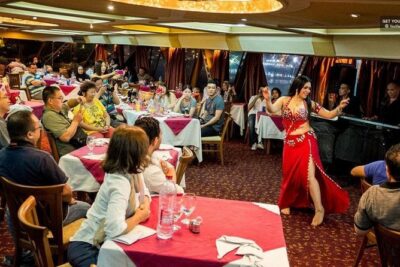
Dinner Cruise on the Nile River with Entertainment
Read our review →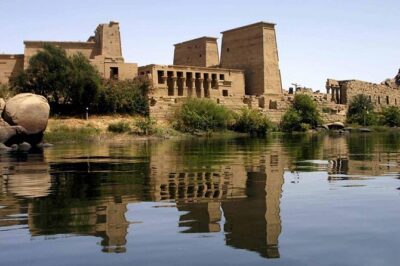
4-Day 3-Night Nile Cruise from Aswan to Luxor&Abu Simbel+Balloon
Read our review →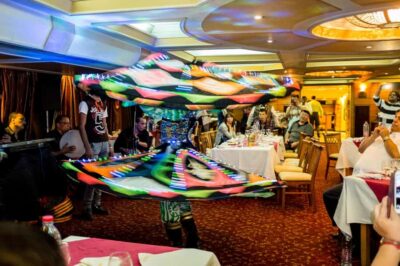
4-Day 3-Night Nile Cruise from Aswan to Luxor including Abu Simbel, Air Balloon
Read our review →
4-Day Nile Cruise from Aswan to Luxor with Guide
Read our review →
Browse the lists this tour appears in