
Reviewed · CRUISES & BOAT TOURS
From Cairo: 8-Day Tour of Cairo, Luxor and Aswan with Cruise
The biggest appeal here is simple: you see Egypt’s major sights without having to arrange each flight, transfer, meal, hotel, and temple visit yourself. The route links Cairo, Luxor, and Aswan with a 5-star Nile cruise, then adds Abu Simbel and a hot-air balloon flight over Luxor.
I like the strong mix of famous sights and slower moments. The pyramids, Karnak, and Abu Simbel deliver the grand scale, while the felucca ride and four nights on the Nile give you time to watch Egypt pass by. I also like that the tour includes private guides and private road transport for much of the trip.
The main concern is the pace. You have early starts, domestic flights, long touring days, and some arrangements that may not be confirmed until shortly before departure. Food and vehicle quality can vary, and the Abu Simbel outing is done with a group rather than entirely privately.
In This Review
- Key points to know before booking
- What $1,200 covers across eight busy days
- Arrival in Cairo and a Nile dinner on day one
- Giza, Memphis, and Saqqara on day two
- Islamic and Coptic Cairo on day three
- Flying to Luxor and meeting the Nile ship
- The hot-air balloon and Luxor’s west bank
- Edfu and Kom Ombo between shipboard meals
- Abu Simbel and Philae on day seven
- What the cruise adds to the route
- Transport, guides, and the private-tour question
- Day eight and the return to Cairo
- Who should book this Egypt tour?
- Final verdict: strong value for a first Egypt visit
- FAQ
- How long is the tour?
- Are flights included?
- How many nights are spent on the Nile cruise?
- Are meals included?
- Is the tour private?
- Is the hot-air balloon ride included?
Key points to know before booking
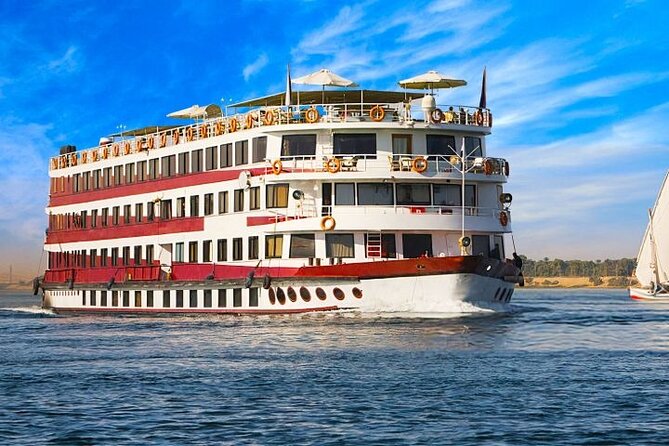
- The Nile cruise is the tour’s backbone: Four nights on a 5-star ship connect Luxor with Edfu, Kom Ombo, and Aswan.
- The hot-air balloon flight starts very early: You will need to request a breakfast box from the hotel reception the night before.
- Abu Simbel requires another early morning: Breakfast is again taken as a box, and this portion operates with a group.
- Cairo is covered in two very different ways: You see both the pharaonic monuments around Giza and the Islamic and Coptic quarters.
- The price includes nearly all major costs: Hotels, cruise, meals, flights, guides, entrance fees, and transfers are covered, but drinks and tips are extra.
- The tour is private overall, but not every segment is private: Day 7 specifically includes group transport to Abu Simbel.
What $1,200 covers across eight busy days
At $1,200 per person, this tour offers good value if you want a packed first visit to Egypt. The cost includes three nights in a 5-star Cairo hotel, four nights on a 5-star Nile cruise, the flight from Cairo to Luxor, the flight from Aswan to Cairo, daily breakfast, lunch, and dinner, entrance fees, guides, road transport, a felucca ride, and the hot-air balloon flight.
That is a lot of separate expenses rolled into one price. Egypt can be tiring to arrange independently because the sights are spread far apart and airport transfers, train or flight connections, guides, and entrance tickets all need attention. Here, a representative meets you at the airport, escorts you between major stages, and handles the practical handoffs.
The value is strongest for first-time visitors who want to cover a lot in a short period. It is less ideal if you prefer to choose your own restaurants, linger at museums, or spend several unplanned hours in each city. This is a sightseeing program, not a slow holiday.
One practical point deserves attention: the exact hotel and other arrangements may not be known until close to departure. That does not automatically mean poor quality, but you should be comfortable with some last-minute detail. A coordinator such as Marena can be useful here, especially because the tour involves flights, ship schedules, early pickups, and several different guides.
Drinks are not included, and tips are also outside the package. Spanish, German, and French-speaking guides cost extra, so the standard arrangement should be understood as English guiding unless another language is booked.
More Boat Tours in Cairo
- Cairo: Dinner Cruise on the Nile River with Entertainment
★ 4.2 · 2,190 reviews - Cairo: Nile Sunset Dinner Cruise, Show & Optional Transfer
★ 4.1 · 2,184 reviews - Cairo: Nile Dinner Cruise with Belly Dancer Show with Pickup
★ 4.4 · 835 reviews
Arrival in Cairo and a Nile dinner on day one
Your first day begins with an airport welcome. A representative waits outside the exit hall with a Nice Tours sign, then takes you to a restaurant for a traditional Egyptian lunch before bringing you to your 5-star hotel.
The evening adds a Nile cruise dinner at about 7 p.m. This is not the same as the four-night river cruise later in the trip. It is a dinner boat with food, a moving view of the river, folklore, and other traditional shows.
I like this opening because it gets you into the Egyptian setting right away. You do not spend the first night sorting out transport or finding dinner. At the same time, it is a long arrival day, especially if your flight reaches Cairo early in the morning. Keep your expectations realistic: the dinner cruise is a scheduled show meal, not a quiet, intimate sail.
Giza, Memphis, and Saqqara on day two
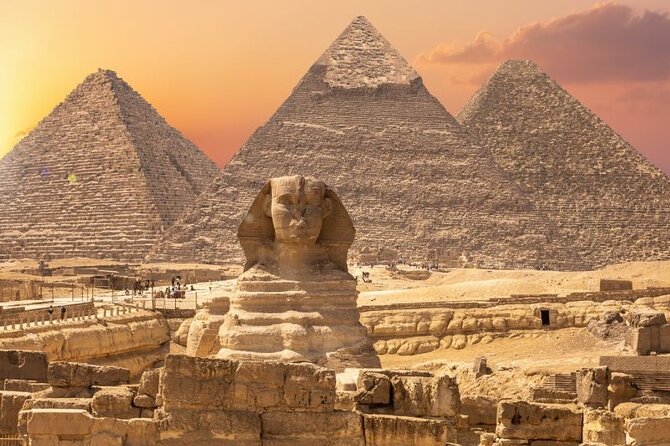
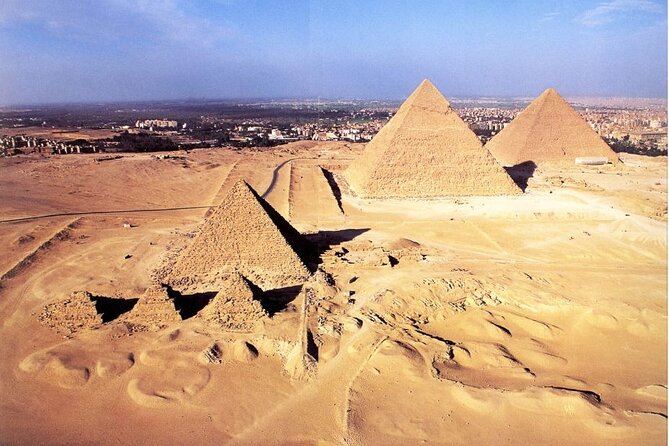
Day two gives you the classic Cairo circuit. Your private guide takes you to the Great Pyramids of Giza and the Sphinx, then onward to Memphis and Saqqara.
The Giza visit is the emotional high point for many people. The pyramids are not just large monuments in a photograph. Their scale becomes clear when you are near the stone courses and see how completely they dominate the open site. The Sphinx provides a different kind of encounter, with its human face and lion body set against the pyramid area.
Memphis adds useful context. It was an important center for more than 3,000 years and was linked to the worship of Ptah. Saqqara then shifts the focus to the Step Pyramid of Djoser, an early and important stage in pyramid building. The site works well as an open-air museum, with royal tombs and monuments spread across a broad area.
The day lasts about eight hours and includes lunch. That sounds manageable, but the heat, walking, and constant movement can wear you down. You return to the hotel for dinner and the night, so there is no planned evening exploration of Cairo.
If you want to enter a pyramid, check how entrance arrangements work before departure. The supplied program promises the Giza site and entrance fees, but it does not specifically state that an interior pyramid ticket is included.
Islamic and Coptic Cairo on day three
Day three changes the mood completely. You begin at the Cairo Citadel, built by Saladin in 1176, and continue to the Muhammad Ali Grand Mosque, often called the Alabaster Mosque.
The citadel gives you a strong introduction to Islamic Cairo and its long role as a seat of government. Inside the mosque, look for the alabaster wall panels, Arabic inscriptions, gold detail around the mihrab, and the play of light inside the prayer space. Modest clothing and respectful behavior are sensible for this visit.
The second half covers Coptic Cairo. You visit Saint George Church, also known as Mary George, which was built above an ancient Roman tower, and the Hanging Church, one of Egypt’s best-known Christian monuments. The Hanging Church contains 110 icons, many made from ebony, with some decorated with ivory. The oldest and holiest icon is said to date to the eighth century.
This split between Islamic and Coptic Cairo is one of the most worthwhile parts of the schedule. It prevents Egypt from becoming only a parade of pharaohs and tombs. The program allows about five hours for the citadel and three hours for Coptic Cairo, with lunch between visits.
The shorter blocks may feel easier than day two, though the sights are still dense with detail. Your guide makes a real difference here. Ask for time to look closely rather than rushing from one building to the next.
A different kind of day out, same part of Egypt:
- Cairo: Pyramids & Great Sphinx Private Tour with Camel Ride
★ 4.9 · 6,335 reviews - Tour to Giza Pyramids and The Egyptian Museum
★ 5.0 · 6,016 reviews - VIP All inclusive Best of the best Giza Pyramids,Sakkara,Memphis
★ 5.0 · 3,164 reviews - From Cairo: Pyramids of Giza, Sphinx, Saqqara & Memphis Tour
★ 4.7 · 3,110 reviews
Flying to Luxor and meeting the Nile ship
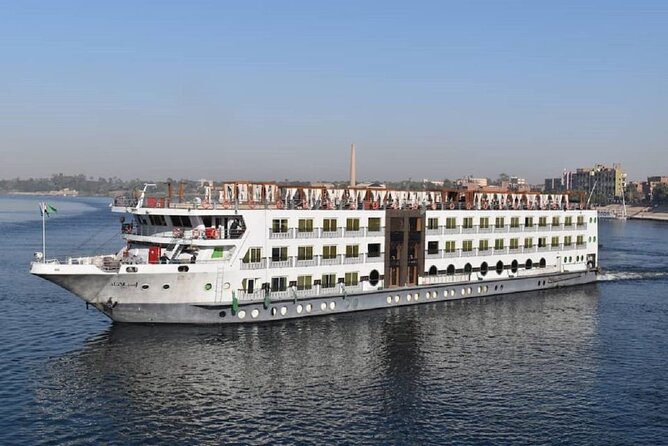
On day four, a representative takes you to the Cairo airport for your flight to Luxor. After arrival, another representative meets you outside the exit hall and brings you into the Luxor touring program.
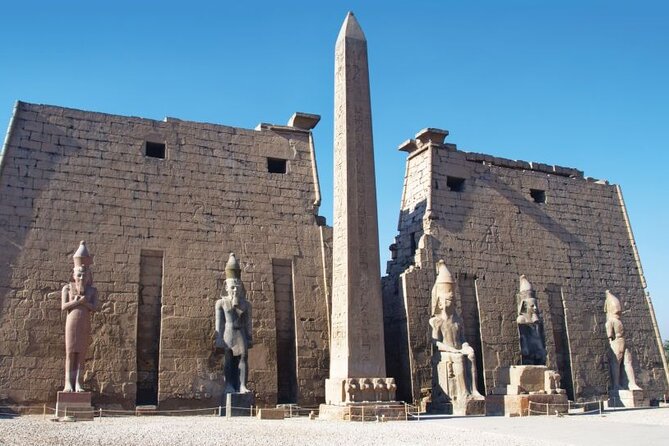
The eastern bank begins with Karnak Temple, a vast complex built and expanded by many generations over more than 1,500 years. Its scale is the point. You are not seeing one ruler’s single project, but a huge religious center shaped over time.
Luxor Temple is smaller and more compact, with well-preserved hieroglyphs and statues. It was linked to the annual Opet celebrations, an important religious festival. Seeing Karnak and Luxor Temple on the same day gives you a useful contrast: Karnak feels sprawling and layered, while Luxor Temple is easier to read as a single ceremonial space.
You board the cruise ship around lunchtime. Later, at about 4 or 5 p.m., you take a one-hour felucca ride on the Nile before returning to the ship.
The felucca is a welcome change from temple touring. It is a simple sailing boat experience, and its value lies in the slower pace and open river views. Do not expect a long sailing expedition. It lasts about an hour, but that is enough to break up a full day.
The hot-air balloon and Luxor’s west bank
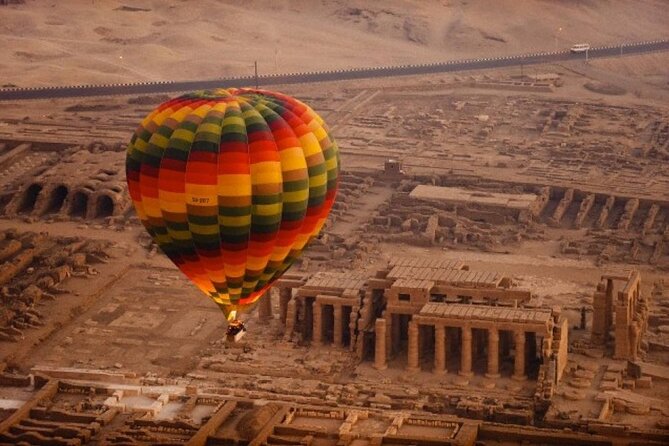
Day five begins before sunrise with a hot-air balloon flight. You should ask reception for a breakfast box the night before. This is one of the tour’s most memorable extras, but it is also one of its least restful mornings.
From the balloon, you look over Luxor as an open-air museum, with the Nile dividing the west and east banks. The view helps you understand the city’s layout in a way that ground-level visits cannot. You see the river, the two banks, and the concentration of ancient sites from above.
After landing, a guide takes you to the west bank. The Valley of the Kings looks stark from the outside, yet the tombs below the rocky surface contain painted and carved passages connected to ancient burial beliefs. The exact tombs open on the day can vary, and the program does not name specific tombs, so ask your guide which ones are available.
The Temple of Hatshepsut follows. Its inscriptions describe the queen’s birth and trading journeys to Punt, a place associated with parts of modern Somalia or the surrounding peninsula. The terraces also make the temple easy to appreciate as a piece of architecture, not just a collection of wall carvings.
You then stop at the Colossi of Memnon for photographs before returning to the ship for lunch. The ship sails toward Edfu.
This is another full day, with roughly three hours for the balloon experience and five hours for the west bank. Add the early pickup and you have a demanding schedule. If the balloon is a major reason for booking, confirm that weather-related changes are handled clearly, since the supplied details do not explain the operating rules for cancellations or rescheduling.
Edfu and Kom Ombo between shipboard meals
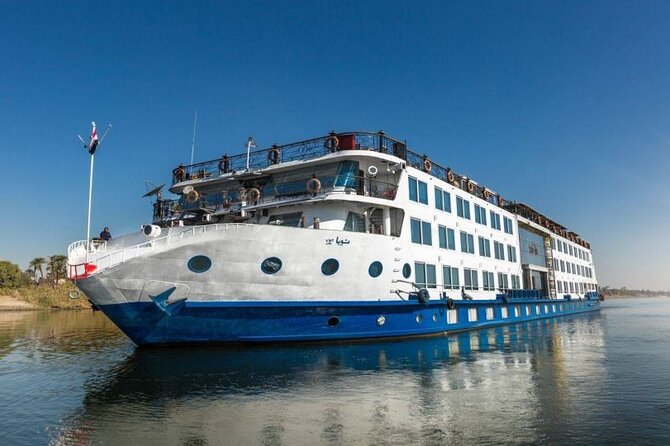
Day six is built around two temples reached while the ship continues south. In Edfu, you visit the Temple of Horus, a major Ptolemaic monument dedicated to the falcon-headed god.
Edfu is especially useful because much of the temple remains readable. Its inscriptions and reliefs offer a strong sense of later Egyptian religious art and royal presentation. Your guide can help separate the older pharaonic traditions from the Ptolemaic period represented here.
After lunch on the ship, you continue to Kom Ombo. This temple is unusual because it is dedicated to two gods, Sobek, the crocodile god, and Haroeris, a form of Horus. The divided religious purpose gives the site a different feel from Karnak, Luxor Temple, or Hatshepsut’s temple.
The schedule says about eight hours for the day, including sailing time. That rhythm is one of the best reasons to choose a cruise. You visit a site, return for a meal, watch the river, then go ashore again. Still, guide quality matters. At Kom Ombo, make sure you receive a full explanation and know where and when to meet your group before exploring.
Abu Simbel and Philae on day seven
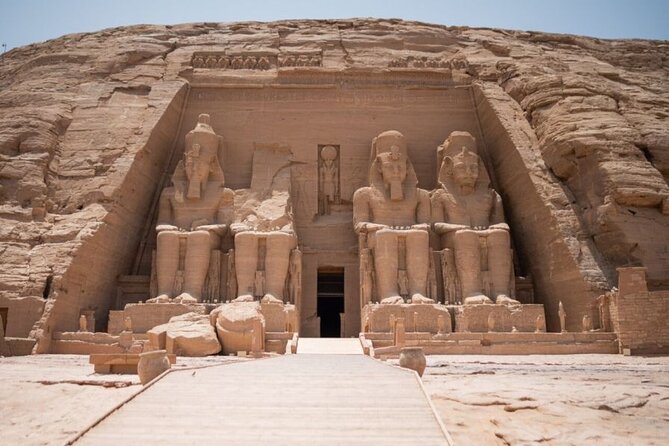
Day seven is the longest early start. You take a breakfast box and travel with a group to Abu Simbel, one of Egypt’s great monuments.
Ramesses II built the Great Temple and dedicated it to Ptah, Ra, Amun, and himself as a deified king. The story of the temple’s relocation is part of its importance. It was moved to protect it from flooding, and the site is now on the UNESCO World Heritage List.
The huge carved figures at the entrance make Abu Simbel immediately impressive, but the interior matters just as much. Your guide should explain the temple’s religious purpose, the king’s image, and the rescue project without rushing you through the rooms.
After returning to the ship for lunch, you visit Philae Temple, known as the Pearl of Egypt. Its walls carry hieroglyphics, and the site includes large sculptures of Egyptian gods. The two visits make a striking final full day: Abu Simbel shows royal power on a monumental scale, while Philae offers a more intimate temple setting.
The drawback is the amount of road time and the early departure. Abu Simbel is not a casual add-on. It is worth the effort for many first visits, but you should be ready for another long day after several days of early mornings.
What the cruise adds to the route
The four-night Nile cruise is more than a way to move between Luxor and Aswan. It gives the trip a steady center. Instead of changing hotels every night on the southern route, you return to the same cabin after visits to temples and towns.
Meals are included three times daily, though drinks are extra. Food quality can be uneven. One detailed account described the meals as average, while other comments praised the overall organization and value. I would treat the included dining as convenient rather than a major culinary feature.
The 5-star label is useful as a guide to the intended level, but hotel and ship assignments are not fully specified in advance. Ask for the ship name, cabin details, hotel names, and meal arrangements as soon as they are available.
Transport, guides, and the private-tour question
Most of the trip is presented as private, with a private guide and private car or van transport for your group. That can make Cairo and Luxor much easier, since you can ask questions and move at your own pace within the scheduled plan.
The Abu Simbel section is different. It explicitly uses group transport, so you should not assume every day has the same private format.
Transport quality may also vary. One account praised the drivers but found the interiors of the cars in poor condition. That is worth keeping in mind if comfort matters to you, particularly on long sightseeing days.
Coordinator Marena is identified as a helpful point of contact during the trip. The arrangement involves many handoffs, so having one person who responds quickly can make a real difference. At the same time, you should keep your own written schedule with flight times, pickup times, guide names, and ship details.
Day eight and the return to Cairo
After breakfast on the ship, you transfer to the Aswan airport for the flight back to Cairo. An agent meets you in Cairo and takes you to your hotel, where the tour ends.
The final day is listed at about four hours, but the airport transfer and flight make it a travel day rather than a sightseeing day. Do not plan a major Cairo visit around this final transfer unless you have extra nights.
Who should book this Egypt tour?
I would choose this tour if you want Egypt’s main ancient sites in one organized package and prefer support with transport, meals, and hotel transfers. It suits first-time visitors, couples, families, and anyone who wants a private guide in Cairo and Luxor without building the route from scratch.
It also suits you if Abu Simbel, the balloon ride, and a Nile cruise are all high priorities. Booking each piece separately could take time and may not produce a lower total cost once you add flights, entrance tickets, meals, guides, and transfers.
I would hesitate if you need a slow schedule, fixed hotel choices months ahead, or consistently high-end dining. The program is full, some details may arrive late, and the food and vehicles may be merely adequate rather than luxurious.
The cancellation policy is generous if your plans change: you can receive a full refund when cancelling at least 24 hours before the start time. Cancellations within 24 hours are not refunded, and late changes are not accepted.
Final verdict: strong value for a first Egypt visit
This is a busy but well-designed route. You get the pyramids, Cairo’s major religious quarters, Luxor’s temples and tombs, a Nile cruise, Edfu, Kom Ombo, Abu Simbel, Philae, a felucca ride, and a balloon flight in eight days.
The package earns its value through convenience and coverage. Its trade-offs are early mornings, variable vehicle and food quality, a group Abu Simbel segment, and hotel details that may not be final until shortly before departure.
With a 4.8 rating and 95 percent recommendation figure, the overall experience has a strong record. I would book it if you want a guided introduction with the major costs handled. Before paying, ask for the planned hotel and ship names, confirm the guide language, and accept that Egypt’s best sights require some stamina.
FAQ
How long is the tour?
The experience lasts approximately eight days, beginning and ending in Cairo.
Are flights included?
Yes. The package includes a flight from Cairo to Luxor and a flight from Aswan to Cairo.
How many nights are spent on the Nile cruise?
You spend four nights on a 5-star Nile cruise traveling from Luxor to Aswan.
Are meals included?
Breakfast, lunch, and dinner are included daily. Drinks are not included.
Is the tour private?
The tour includes a private guide and private car or van transportation for your group. The Abu Simbel visit on day seven is described as a group excursion.
Is the hot-air balloon ride included?
Yes. A hot-air balloon ride over Luxor is included. The pickup is early in the morning, and you should ask the hotel reception to prepare a breakfast box.
Recently reviewed around Cairo
- White Desert Overnight Camping Sharing Tour in Egypt★ 5.0 · 15 reviews
- Cairo Best 2Days tour Pyramids, Saqqara & Old Cairo★ 5.0 · 15 reviews
- Giza Pyramids with (GEM) Grand Egyptian Museum★ 5.0 · 42 reviews
- sunset at Giza pyramids by camels★ 5.0 · 31 reviews
- Tour to Giza pyramids Memphis Sakkara and Felucca on the Nile★ 5.0 · 16 reviews
- visit the pyramids of Giza + the necropolis of Saqqara + the Memphis site.★ 4.5 · 20 reviews
- Private Giza pyramid,sphinx, Mummification temple& inside pyramid★ 5.0 · 32 reviews
- Private guided shopping tour in Khan el-Khalili with Lunch★ 4.5 · 21 reviews
Cruises & Boat Tours, compared.
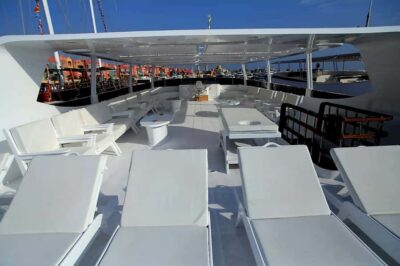

Orange Bay Island Boat Trip w/ Breakfast and Lunch
Read our review →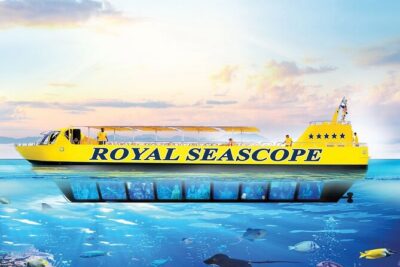
Royal Seascope Submarine Cruise with Snorkel Stop
Read our review →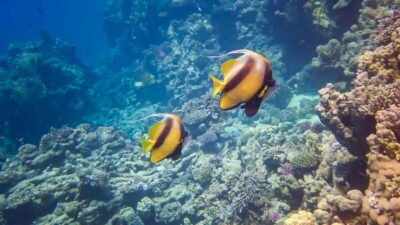
3 Islands, Dolphins & Snorkel Yacht Trip w/ Lunch
Read our review →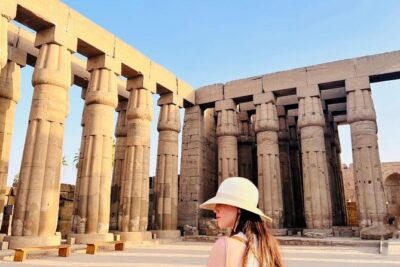
4-Days Nile Cruise From Aswan To Luxor including Abu Simbel and Hot Air Balloon
Read our review →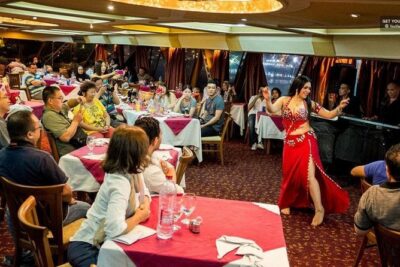
Dinner Cruise on the Nile River with Entertainment
Read our review →
Nile Sunset Dinner Cruise, Show & Optional Transfer
Read our review →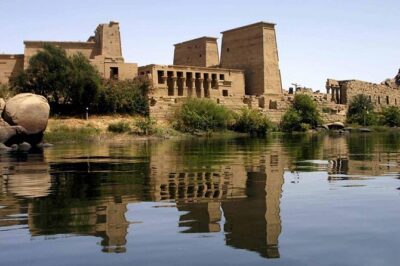
4-Day 3-Night Nile Cruise from Aswan to Luxor&Abu Simbel+Balloon
Read our review →Browse the lists this tour appears in