
Reviewed · LUXOR TOURS
From Hurghada: Luxor Private Guided Day Tour with Lunch
Luxor packs some of Egypt’s greatest ancient monuments into one long day. From Hurghada, you cross the desert to the Nile Valley, then walk among temples built by pharaohs, royal tombs cut into rock, and the huge statues of Amenhotep III. Karnak Temple and the Valley of the Kings are the big rewards.
I like the privacy of having your own vehicle and guide, since you can ask questions and adjust the pace. I also like that the price includes entry tickets, lunch, bottled water, and an Egyptologist guide, so the day is easier to manage once you leave Hurghada.
The drawback is the distance. This is a full, tiring day with roughly 240 kilometers between Hurghada and Luxor, and the heat can be fierce. You should also expect persistent sellers around some sights, especially near the stalls.
In This Review
- Key points to know before booking
- From Hurghada to the temples of Luxor
- Luxor Temple and the old southern sanctuary
- Karnak’s huge temple complex
- Lunch with Egyptian food
- The Valley of the Kings and royal tombs
- Hatshepsut’s temple beneath the cliffs
- The Colossi of Memnon
- What the private format adds
- Is $223 a fair price?
- Heat, stalls, and the less polished side of Egypt
- Who should book this Luxor day trip?
- Should you book it?
- FAQ
- Where does the tour pick me up?
- How far is Luxor from Hurghada on this tour?
- Which sites are included?
- Is lunch included?
- Are entrance tickets included?
- Is transportation private?
- Which guide languages are available?
- What should I bring?
- Can I cancel the booking?
Key points to know before booking
- A private road trip from Hurghada: You travel in an air-conditioned vehicle with pickup from your hotel or airport.
- Five major ancient sites: The route includes Luxor Temple, Karnak, the Valley of the Kings, Hatshepsut’s temple, and the Colossi of Memnon.
- Guides can be assigned in several languages: English, Spanish, German, Italian, and Arabic are listed.
- Lunch and entrance fees are covered: You do not need to arrange these basics separately.
- The guide can shape the day: Names praised for clear explanations and good care include Hani, Hosam, Mohammad Hisham, and Adel.
- A long but rewarding outing: The drive is the price of seeing Luxor without changing hotels or giving up a night on the Red Sea coast.
From Hurghada to the temples of Luxor
The day begins with pickup at your hotel or airport, followed by a drive of about 240 kilometers to Luxor. The exact road time depends on your starting point and conditions, but one account from Makadi Bay describes the trip taking about three hours after the opening of a new highway from Safaga to Luxor.
That distance matters. You are not popping over to a nearby attraction for a few hours. You are committing to a road day with a major archaeological payoff at the other end. I would choose this tour if you are staying on the Red Sea coast and want to see ancient Egypt without moving your base.
A private vehicle makes the journey more practical. You have air conditioning, bottled water, and your own guide rather than being tied to a large group. The drive also gives you a view of changing Egypt, from resort areas and open desert to towns and poorer districts around the Nile Valley. It is not polished sightseeing, but it shows more of the country than a resort shuttle does.
More Luxor trips worth a second look
- Luxor : Full Day Tour to Luxor West and East Banks & Lunch
★ 5.0 · 870 reviews - Luxor: Karnak Temple and Luxor Temple Tour with Lunch
★ 4.4 · 658 reviews - From Luxor: Guided Tour to East or West Banks with Lunch
★ 4.5 · 604 reviews
Luxor Temple and the old southern sanctuary
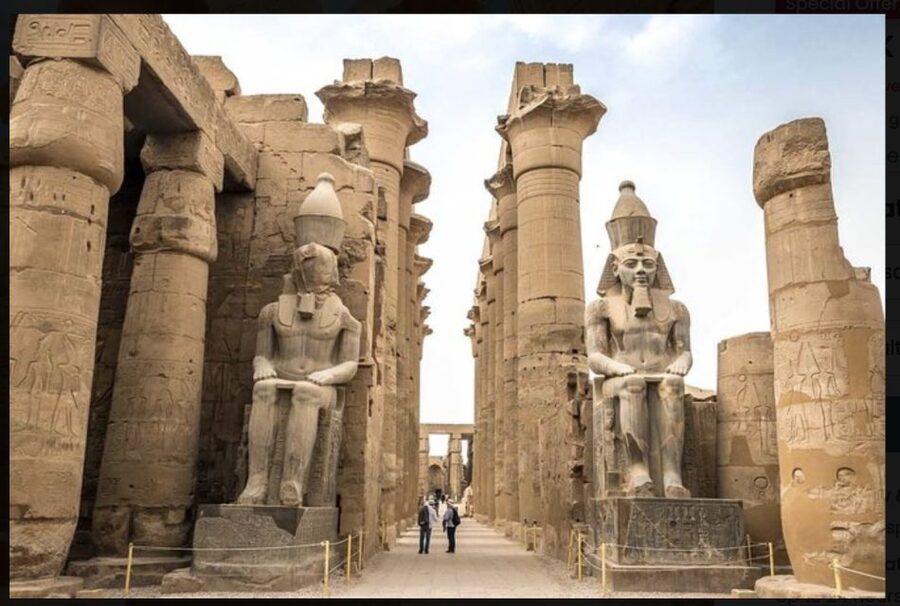
The first East Bank stop is Luxor Temple, a large temple complex in the center of modern Luxor. Ancient Egyptians called it Ipet Resyt, meaning the southern sanctuary. Construction began around 1400 BCE, and later rulers added to and changed the site.
Luxor Temple feels different from Karnak. It is more compact and closely tied to the modern city, so its columns, statues, and gateways make a strong first lesson in how ancient and modern Luxor sit side by side. Your guide can explain the rulers and religious ideas behind the buildings, which helps turn a field of stone into a readable place.
Look closely at the scale of the entrance, the carved walls, and the giant figures. The size is impressive, but the details matter just as much. Reliefs and inscriptions show how pharaohs presented themselves to the gods and to the people of Egypt.
This is a place where a private guide earns their keep. Without context, you may see columns and broken walls. With a guide, you can ask why the temple was built, how it changed over time, and how its role differed from that of Karnak.
Karnak’s huge temple complex
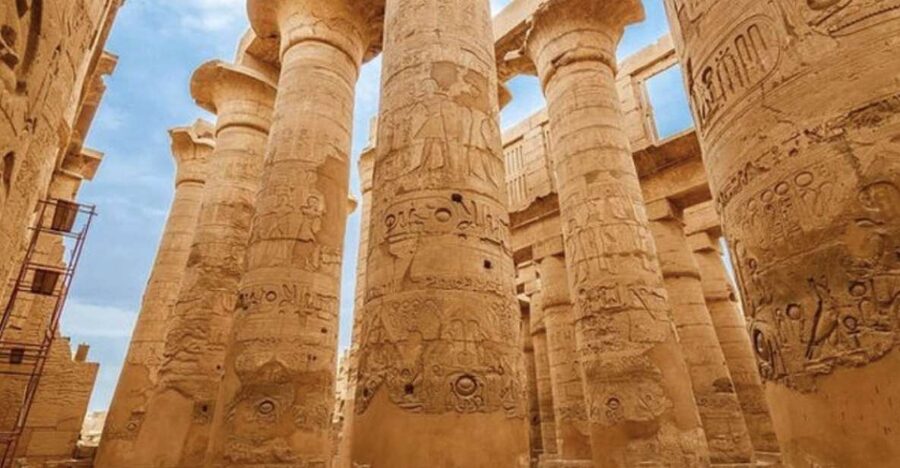
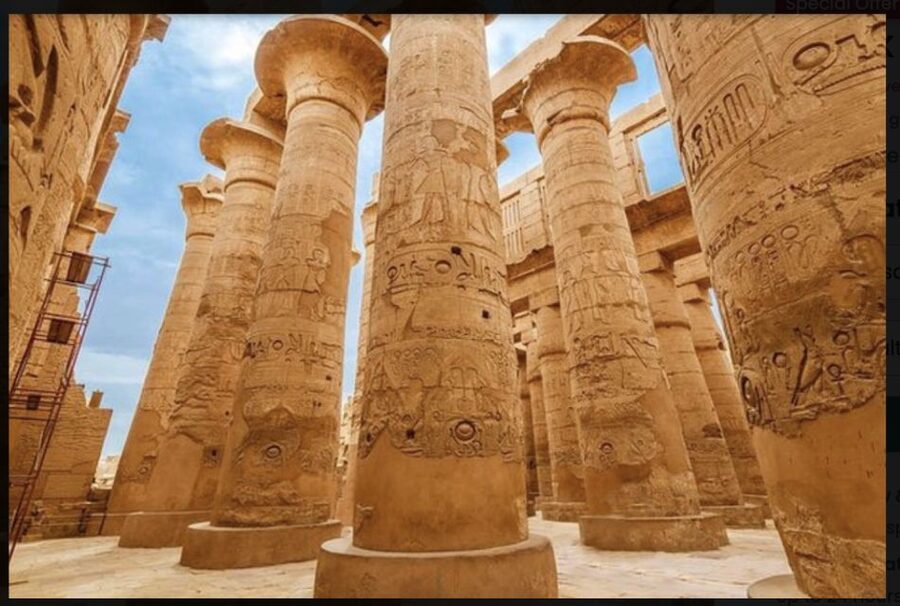
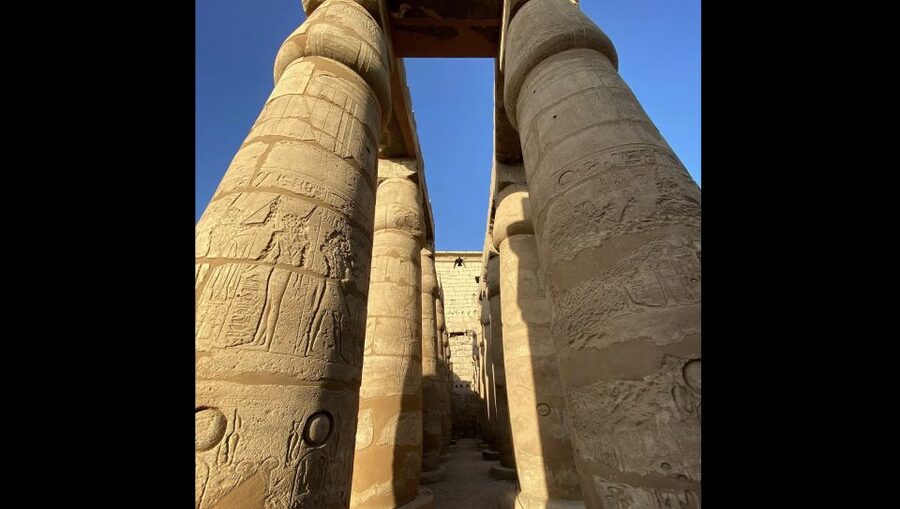
Karnak is not one single temple. It is a vast group of temples, chapels, pylons, and other buildings built and rebuilt over many centuries. Work began during the Middle Kingdom, around 2000 to 1700 BC, and continued into the Ptolemaic period, from 305 to 30 BC.
I like Karnak because it gives you a sense of ancient Egypt as a long project rather than a short chapter. Different rulers left their mark here, and the result is a sprawling complex with layers of religious and political power.
The scale can also be tiring. You walk through broad open areas, and the stone offers little relief from the sun. Comfortable shoes and light, comfortable clothing are essential. Bring water even though bottled water is included.
Pay attention to the guide’s explanation of the pylons, courtyards, columns, and chapels. The information is not just decoration. Karnak was a major religious center, and its size tells you how important the temple and its priesthood were.
Guides named Hani, Hosam, Mohammad Hisham, and Adel have been singled out for friendly company, clear information, and attention to comfort. You may not receive one of those specific guides, but the tour is designed around an Egyptologist, not just a driver. That distinction matters at a place as large as Karnak.
Lunch with Egyptian food
Lunch at an Egyptian restaurant is included after the East Bank visits. The information provided does not name the restaurant or give a fixed menu, so you should treat this as a useful midday meal rather than a specially selected culinary stop.
That is fine for this kind of day. After several hours among temples, a seated meal gives you time to rest before crossing to the West Bank. One guide team was praised for keeping food, water, and shade in mind during a very hot day, which is exactly the kind of practical care you need in Luxor.
Do not expect lunch to turn the trip into a food tour. The main value is convenience and a break from the heat. Since the meal is included, the $223 price is easier to assess as a complete day package rather than as transport alone.
A different kind of day out, same part of Egypt:
- Hurghada: Luxor Valley of the Kings & Tutankhamun Tomb Trip
★ 4.7 · 13,208 reviews - Luxor Day Trip from Hurghada Small Group & Tutankhamun Tomb
★ 4.8 · 5,366 reviews - Hot Air Balloon Ride in Luxor Egypt with Transfers Included
★ 5.0 · 4,319 reviews - Luxor: Shared Full-Day Tour to Luxor West and East Banks
★ 4.5 · 1,812 reviews
The Valley of the Kings and royal tombs
After lunch, the route continues to the West Bank and the Valley of the Kings. For nearly 500 years, from the 16th to the 11th century BC, workers cut tombs here for pharaohs and powerful nobles of the New Kingdom.
The valley is a sharp change from the open temple complexes. Instead of giant ceremonial buildings, you enter tombs cut into the rock. The setting makes sense once you understand that these were burial places designed to protect royal remains and goods, rather than temples built for public worship.
The standard entry tickets to the mentioned sites are included, but the provided information does not say how many individual tombs are covered or whether special tombs require an extra payment. Ask your guide before choosing any optional tomb. This is an important detail if you have a particular royal tomb in mind.
Inside, the painted walls and carved passages are the main reward. The space can be confined, and the heat may feel stronger underground. Move at a pace you can manage, listen to the guide’s explanation, and save some energy for Hatshepsut’s temple.
The Valley of the Kings is one of the strongest reasons to make the long trip from Hurghada. Karnak shows public religious power on a grand scale. The valley gives you a more personal look at how pharaohs prepared for death and the afterlife.
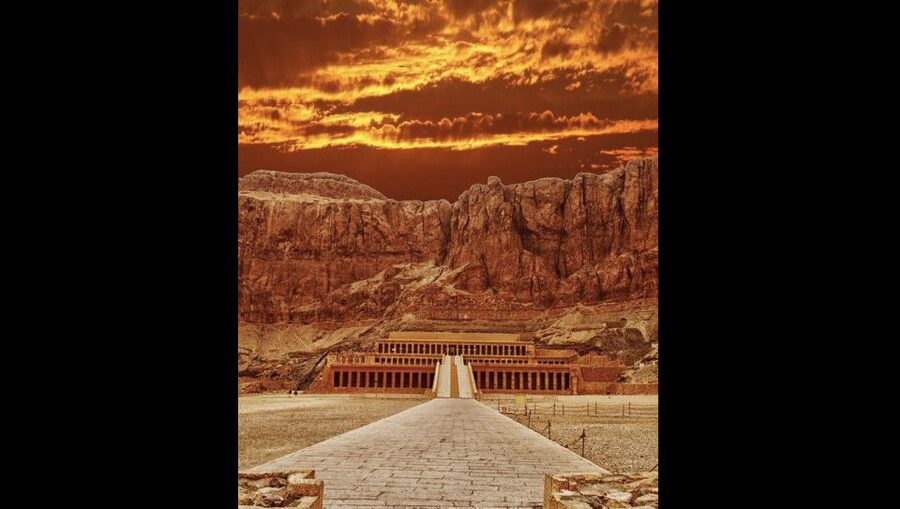
Hatshepsut’s temple beneath the cliffs
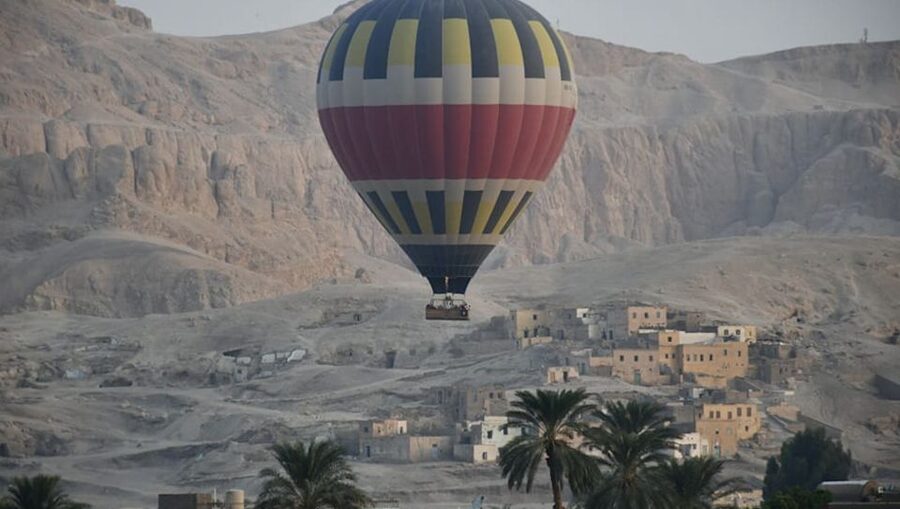
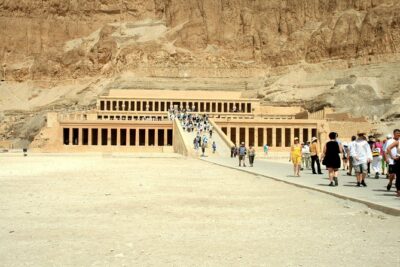
The Mortuary Temple of Hatshepsut, also called Djeser-Djeseru, sits beneath the cliffs at Deir el-Bahari. It was built for Hatshepsut, the Eighteenth Dynasty pharaoh who died in 1458 BC.
The temple’s terraces and setting make it one of the most distinctive stops on the route. The cliffs rise behind the structure, creating a dramatic frame that is very different from the flat approach to Luxor Temple or the crowded density of Karnak.
Your guide can help explain Hatshepsut’s unusual position as a female pharaoh and the purpose of a mortuary temple. The site was not simply a tomb. It was a place connected with the ruler’s cult and continued religious ceremonies after death.
Expect a hot walk with limited shade. Comfortable clothes, good walking shoes, and water are not optional extras here. The private format helps because you can pause when needed instead of trying to keep up with a large group.
The Colossi of Memnon
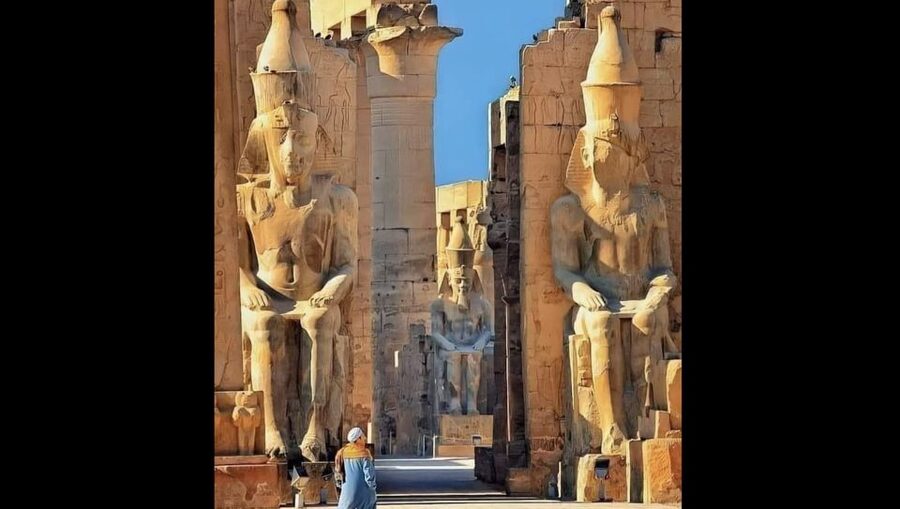
The final stop is the Colossi of Memnon, two massive stone statues of Amenhotep III. They have stood in the Theban Necropolis west of the Nile since about 1350 BCE.
This is a quick, memorable stop rather than a long temple visit. The statues are imposing because of their sheer size, and their position beside the modern road makes the contrast between ancient monuments and present-day life especially clear.
Amenhotep III ruled during Egypt’s Eighteenth Dynasty. The statues once formed part of a much larger mortuary complex, but what remains today is enough to show the ambition of the original project.
I like ending here because the stop gives you a final look at royal power before the drive back. It is also a good place for photographs, though the heat and crowds around the nearby stalls can make the visit feel less calm than the name suggests.
What the private format adds
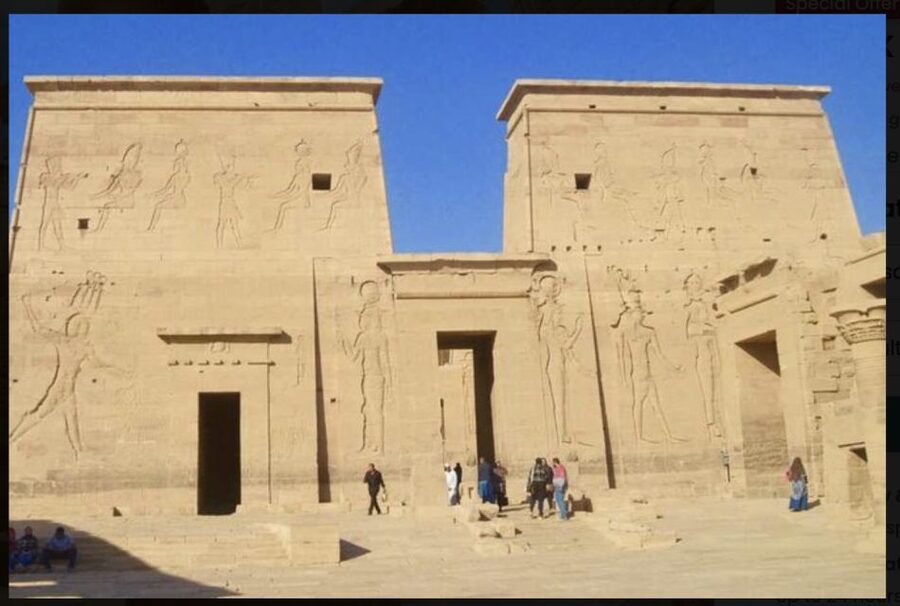
The private setup is the tour’s main practical advantage. You are collected at your hotel or airport, travel in an air-conditioned vehicle, and have a guide focused on your party rather than a large busload of people.
That makes it easier to ask direct questions. It also lets you tell the guide what interests you most, within the fixed route. Julia’s experience particularly valued the ability to personalize the tour, and that is one of the clearest reasons to choose private travel here.
The guide’s role is also important. Luxor’s monuments are vast, and names, dates, and religious terms can blur together after a few hours. A good explanation gives you a thread to follow. Hani was praised for being friendly and full of information, while Hosam and Mohammad Hisham were praised for useful explanations and for helping with water, food, and shade. Adel was credited with adding historical detail and insight.
The listed languages are English, Spanish, German, Italian, and Arabic. Confirm your preferred language when booking, since the usefulness of the tour depends heavily on clear communication.
Is $223 a fair price?
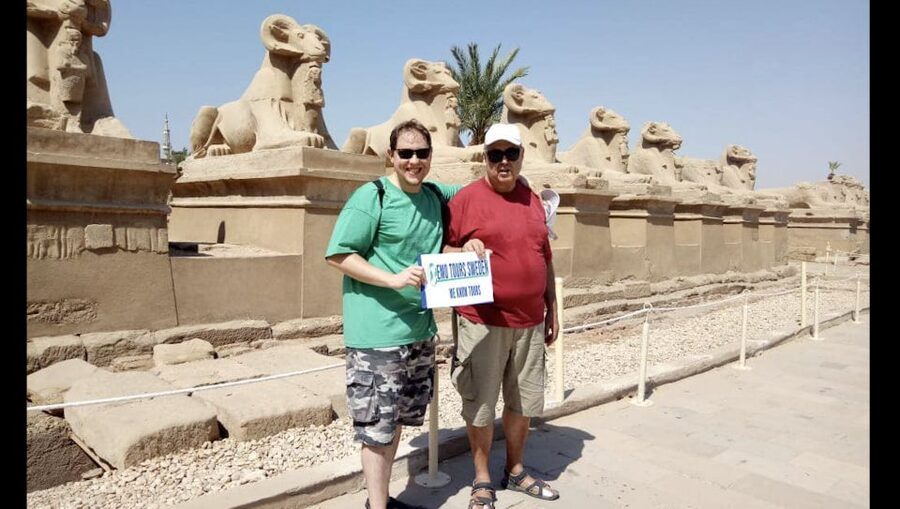
At $223 per person, this is not the cheapest way to reach Luxor. You are paying for a private vehicle, an air-conditioned ride, an Egyptologist guide, entry tickets to the listed sites, lunch, bottled water, and landing and facility fees.
The value improves if you care about convenience and interpretation. Arranging separate transport from Hurghada, finding a guide, buying tickets, and organizing lunch can become a tiring puzzle. Here, those main pieces are bundled into one day.
The price is less attractive if you dislike long road journeys or prefer to see Luxor slowly over several days. A single day cannot give you an unhurried experience of every monument. You will spend a meaningful part of the day on the road.
I would compare this tour with the cost of adding Luxor to your accommodation plans. If you are already based in Hurghada and have only one free day, $223 can be reasonable for a private, guided introduction. If you have several days available, staying in Luxor would give you more time and less rushing.
Heat, stalls, and the less polished side of Egypt
The biggest comfort issue is the heat. The route includes open temple grounds, stone walkways, and exposed areas on the West Bank. Wear comfortable shoes and clothes, use the supplied water, and take shade whenever you can.
You should also be ready for persistent sellers near the stalls. The shopping areas can feel messy and intrusive, and they may be the least enjoyable part of an otherwise impressive day. A private guide can help you move through these areas, but you should not expect every stop to feel quiet or orderly.
The road trip also passes through poorer parts of Egypt. That may be uncomfortable to see, but it is part of the country beyond the resort zone. If you want only a polished holiday bubble, this excursion may feel confronting. If you want a fuller picture of Egypt, it adds useful context.
Who should book this Luxor day trip?
I would choose this tour if you are staying in Hurghada, want to see the major Luxor sights, and value having a guide explain what you are looking at. It suits couples, families, and small private groups that want more control than a standard coach excursion offers.
It is also a good fit for first-time visitors to Egypt. The route covers the main East Bank and West Bank highlights, and the included tickets and lunch remove much of the day’s admin.
I would hesitate if you have mobility concerns, dislike long drives, or want a relaxed archaeological visit. The route is packed, the heat can be intense, and the distance from Hurghada makes the day demanding.
Reserve and pay later is available, and cancellation up to 24 hours in advance allows a full refund. Those terms give you some useful flexibility when your Red Sea plans are still changing.
Should you book it?
Book this Luxor tour if your priority is seeing the essential ancient sites in one organized day from Hurghada. The strongest features are the private transport, the Egyptologist guide, the chance to personalize the pace, and the inclusion of major costs.
Skip it if you want slow mornings, quiet ruins, or several hours at each monument. For everyone else, this is a demanding but worthwhile way to trade one Red Sea beach day for temples, royal tombs, and a direct look at Egypt’s ancient past.
FAQ
Where does the tour pick me up?
Pickup is available from your hotel or airport at the time you request.
How far is Luxor from Hurghada on this tour?
The drive is about 240 kilometers. One account from Makadi Bay described the journey taking about three hours after a new highway opened between Safaga and Luxor.
Which sites are included?
The route includes Luxor Temple, Karnak Temple, the Valley of the Kings, the Mortuary Temple of Hatshepsut, and the Colossi of Memnon.
Is lunch included?
Yes. Lunch at an Egyptian restaurant is included in the tour.
Are entrance tickets included?
Yes. Entry tickets to all the mentioned sites are included.
Is transportation private?
Yes. The tour includes private transportation in an air-conditioned vehicle.
Which guide languages are available?
The listed languages are English, Spanish, German, Italian, and Arabic.
What should I bring?
Bring comfortable shoes and comfortable clothes. Bottled water is included, but extra water may still be useful during the hot parts of the day.
Can I cancel the booking?
You can cancel up to 24 hours in advance for a full refund. Reserve and pay later is also available, so you do not need to pay anything at the time of booking.
Recently reviewed around Luxor
- Luxor: Karnak and Luxor Temples Private Half-Day Tour★ 4.7 · 27 reviews
- Private Full Day West Bank: Valley of kings Hatshepsut &More★ 4.9 · 40 reviews
- From Luxor: 3-Day Nile Cruise to Aswan with Private Guide★ 4.2 · 147 reviews
- Marsa Alam: Snorkeling with Sea Turtles Marsa Mubarak★ 4.9 · 26 reviews
- Marsa Alam : Over Day Tour to Luxor & Balloon Ride & Felucca★ 4.4 · 29 reviews
- Luxor: Valley of The Kings and Hatshepsut Temple Day Trip★ 4.3 · 55 reviews
- Luxor: Sound & Light Show at Karnak with Hotel Transfers★ 4.3 · 22 reviews
- Luxor: Habu, Deir El Medina, Shared tour, Guide, and Lunch★ 4.7 · 21 reviews
Luxor Tours, compared.
Luxor Valley of the Kings & Tutankhamun Tomb Trip
Read our review →
Luxor Day Trip from Hurghada Small Group & Tutankhamun Tomb
Read our review →
Hot Air Balloon Ride in Luxor Egypt with Transfers Included
Read our review →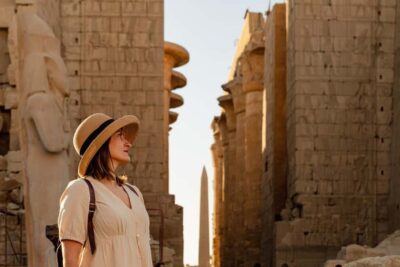
Shared Full-Day Tour to Luxor West and East Banks
Read our review →
Luxor Day Tour: Valley of Kings & Queens & Hatchepsut Temples
Read our review →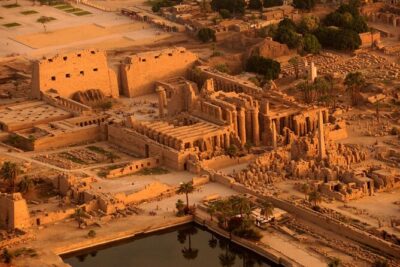
Full Day Tour to East and West Banks of Luxor
Read our review →
2-Day Luxor Tour with Hotel, Balloon, & Boat Ride
Read our review →Browse the lists this tour appears in