
Reviewed · LUXOR TOURS
Luxor: Shared Full-Day Tour to Luxor West and East Banks
Luxor packs some of Egypt’s greatest monuments into one long day. This shared tour crosses the Nile to the Valley of the Kings, then returns east for Karnak and Luxor Temple, giving you a useful first look at the ancient city without arranging transport, tickets, lunch, and guiding yourself.
I like the way the day combines the two banks, and I like that the guides usually leave time for photos after their explanations. Guides including Ahmed Bahaa, Gabriel, Alaa Hassan, and Omar have been praised for clear English, strong storytelling, and patience. The drawback is simple: the schedule is demanding, and heat, driving, and five major sites can make the day feel rushed.
In This Review
- Key points to know before booking
- Why this Luxor day works so well
- Crossing Luxor’s West Bank for the royal tombs
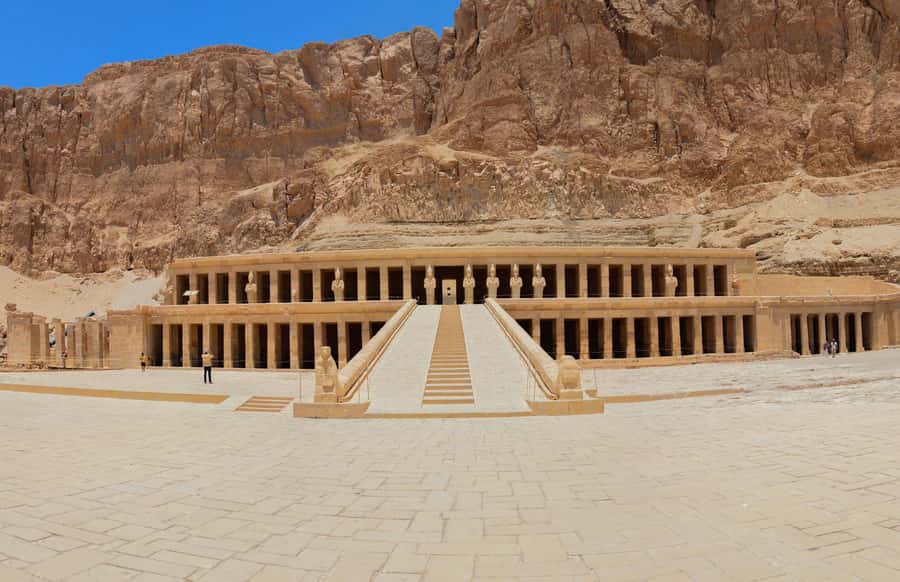
- Hatshepsut’s three terraces at Deir el-Bahari
- A brief pause at the Colossi of Memnon
- Lunch at a local restaurant
- Karnak Temple, the day’s great scale test
- Luxor Temple after the crowds thin
- How much time will you really need?
- Shared transport and group comfort
- What the $90 price includes
- Who should choose this tour?
- Final verdict: book it for coverage and context
- FAQ
- How long does the Luxor tour last?
- Which sights are included?
- Is hotel pickup included?
- Are entrance fees included?
- What language is the guide?
- Is lunch included?
Key points to know before booking
- Five major stops in one day: Visit the Valley of the Kings, Hatshepsut’s temple, the Colossi of Memnon, Karnak Temple, and Luxor Temple.
- A guide makes the difference: Egyptologists explain the symbolism, rulers, gods, tomb art, and temple plans instead of leaving you to decode huge stone walls alone.
- West Bank first, East Bank later: The order gives the day a sensible shape, moving from royal tombs and funerary monuments to temples built for worship.
- Lunch is included: You stop at a local restaurant between the West Bank and East Bank visits.
- Shared transport keeps the price reasonable: At $90 per person, the package covers guiding, lunch, hotel pickup in Luxor’s East Bank, and entrance fees when that option is selected.
- Start early if you can: The program contains a lot of walking and sightseeing, and the heat can build quickly.
Why this Luxor day works so well
Luxor is not a place where the important sights sit around one compact square. The ancient city stretches along both sides of the Nile, and the West Bank and East Bank offer very different experiences.
The West Bank is tied to death, burial, and the afterlife. Here you find the royal tombs, Hatshepsut’s mortuary temple, and the remains of Amenhotep III’s memorial complex. The East Bank was the city of temples and public worship, with Karnak and Luxor Temple forming the heart of ancient Thebes.
That contrast gives this tour real value. You are not simply ticking off monuments. You are seeing how ancient Egyptians separated the world of the living from the world of the dead, then listening to a guide connect the two.
The guide is central to the experience. A good explanation can turn painted figures and broken columns into a story about kingship, religion, burial customs, and political power. Guides named in the supplied material include Beshoy, Ramon, Muhammed, Mahmoud Hassan, Gabriel, Omar, Ahmed Bahaa, Alaa Hassan, Adam, Mena Oweda, and Abanoub.
You cannot request that a particular guide will lead your group, but the repeated praise for clear explanations, friendly service, humor, and flexibility suggests that guiding is one of the tour’s strongest features. Alaa Hassan, Ahmed Bahaa, Gabriel, Adam, and Omar are especially noted for answering questions and giving people time to take photographs.
More Luxor trips worth a second look
- Full Day Tour to East and West Banks of Luxor
★ 5.0 · 1,449 reviews - Luxor : Full Day Tour to Luxor West and East Banks & Lunch
★ 5.0 · 870 reviews - Full Day Tour of Luxor West Bank Temples and Tombs (Private)
★ 5.0 · 722 reviews
Crossing Luxor’s West Bank for the royal tombs
The first major stop is the Valley of the Kings, sometimes called the Valley of the Gates of the Kings. The setting is stark: a dry valley surrounded by rocky hills, with the Nile and modern Luxor out of sight for much of the visit.
The valley was chosen as a royal burial ground for New Kingdom pharaohs. Rather than building huge pyramids above the ground, rulers cut tombs into the rock and decorated the passages below with scenes and texts meant to guide them into the afterlife.
Your guide explains what you are seeing, including the meaning of the painted figures and the role of the tombs. This is where an Egyptologist adds the most value. Without context, one decorated chamber can look much like another. With help, you begin to notice the repeated gods, protective spells, symbolic colors, and scenes of judgment.
The standard entrance usually covers a set number of tombs, while special tombs may require an additional ticket. One visitor specifically used an extra ticket for King Tutankhamun’s tomb, so ask your guide about current options if seeing it matters to you. The additional ticket is not listed as part of the standard inclusions.
The Valley of the Kings is also one of the more physically demanding stops. You may walk in open sun, climb slopes, and enter tombs with uneven surfaces. Comfortable shoes, water, and a hat are sensible choices. Photography rules can vary by tomb and by current site policy, so follow the guide’s instructions.
This stop rewards curiosity more than speed. You will see more if you spend less time trying to visit every possible chamber and more time listening to why the tombs were built as they were.
Hatshepsut’s three terraces at Deir el-Bahari
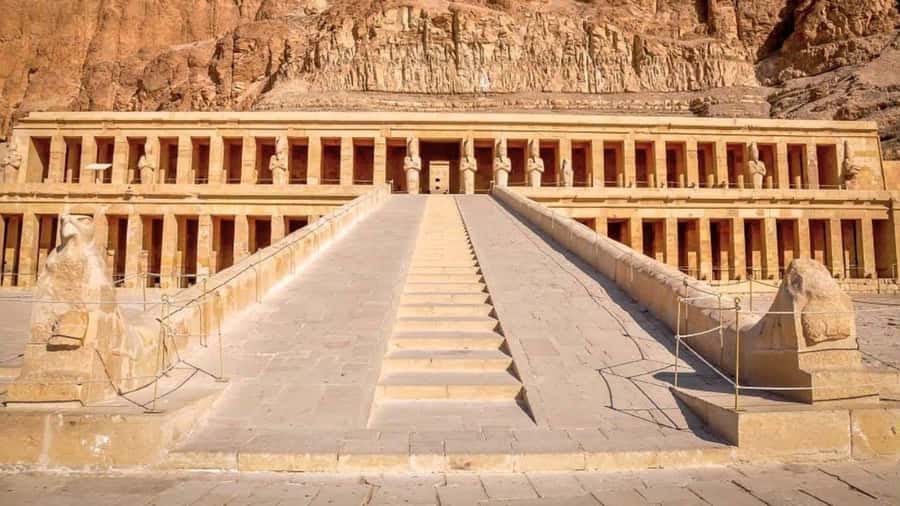
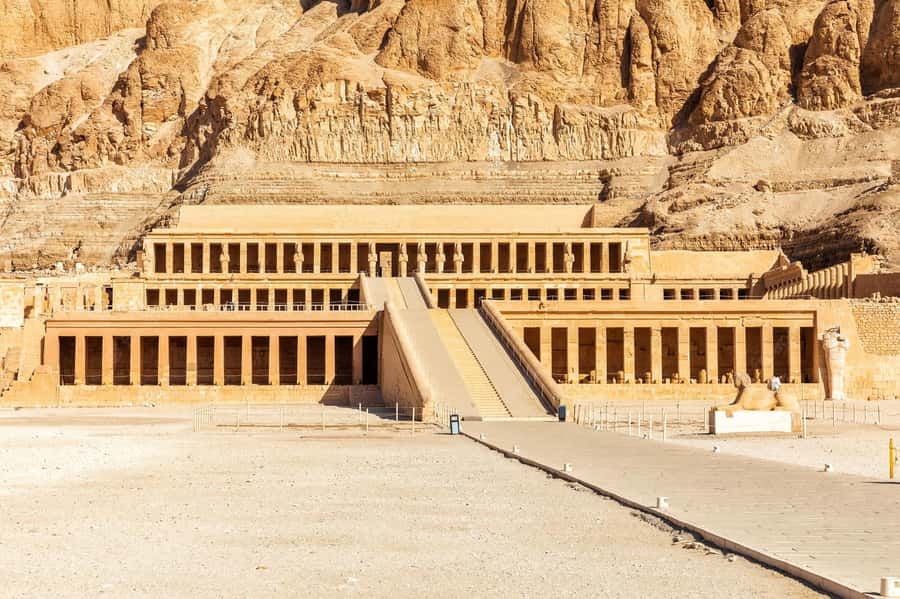
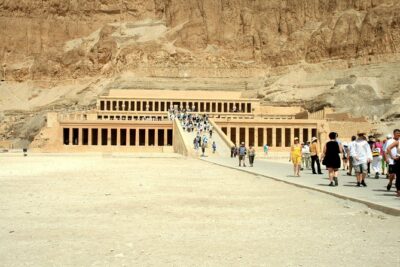
From the valley, the tour continues to the Mortuary Temple of Queen Hatshepsut at Deir el-Bahari. It is one of Luxor’s most memorable architectural settings, with broad terraces rising from the desert toward the cliffs.
Hatshepsut ruled Egypt as a female pharaoh, and her temple presents her authority through careful design and relief art. The long horizontal lines of the terraces contrast with the pale cliffs behind them. The result is less enclosed and heavy than Karnak, and more dramatic from a distance.
The three massive terraces are the visual focus, but your guide can help you understand the temple’s religious and political purpose. This was not simply a palace or a monument to a ruler. It was a place connected to the cult of the dead queen and to the gods who supported her rule.
The open setting means there is little shade. This is another reason to begin early, especially during warmer months. You will want time to take in the whole structure, not just walk up the central approach and leave.
The site also works well for photographs. Guides such as Adam and Ahmed Bahaa have been praised for helping with photos and pointing out useful angles. Still, allow a moment to put the camera away and look up at the relationship between the terraces and cliffs. That setting is the point.
A brief pause at the Colossi of Memnon
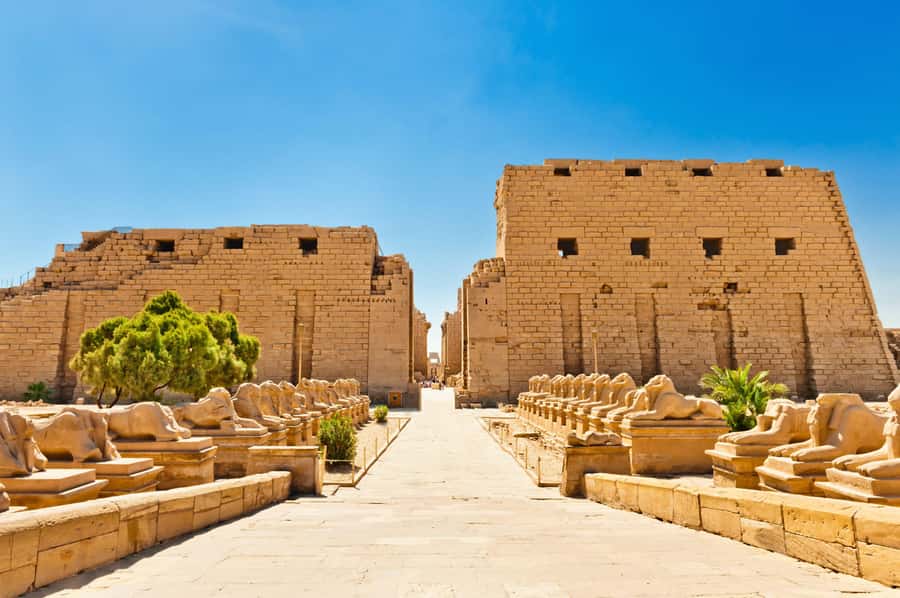
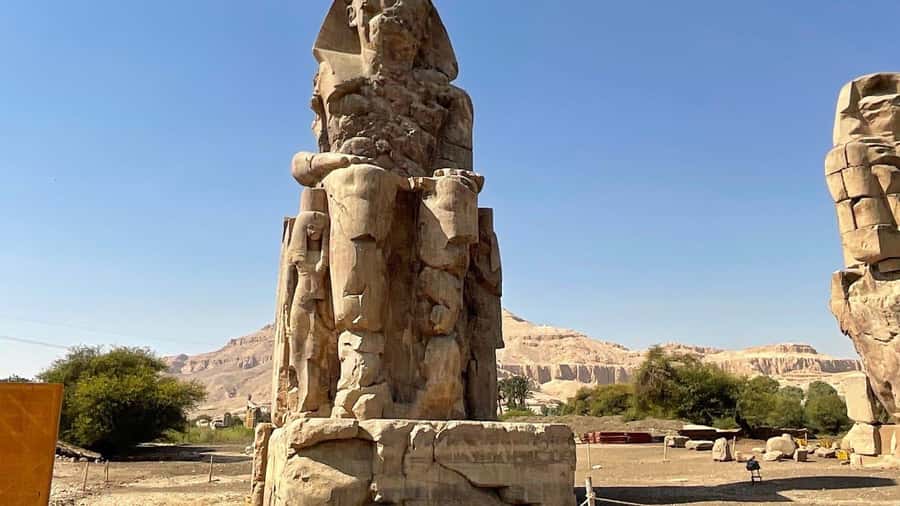
The Colossi of Memnon make a quick but worthwhile stop. These two enormous seated statues once guarded the entrance to the mortuary temple of Amenhotep III.
The temple itself has largely disappeared, which makes the statues even more striking. They remain as fragments of a much larger complex that once announced the king’s power from the West Bank.
This is not a long indoor visit. You stop, hear the story of Amenhotep III and the temple, and have a chance to photograph the statues. The stop provides a useful bridge between Hatshepsut’s surviving temple and the vanished complex of another major ruler.
Do not expect the Colossi to fill a large part of the day. Their value comes from scale and context. Once your guide explains what stood behind them, the two figures stop being isolated statues and become the surviving entrance to a lost royal monument.
A different kind of day out, same part of Egypt:
- Hurghada: Luxor Valley of the Kings & Tutankhamun Tomb Trip
★ 4.7 · 13,208 reviews - Luxor Day Trip from Hurghada Small Group & Tutankhamun Tomb
★ 4.8 · 5,366 reviews - Hot Air Balloon Ride in Luxor Egypt with Transfers Included
★ 5.0 · 4,319 reviews - Luxor: Hot Air Balloon Ride over Luxor Relics
★ 4.8 · 1,681 reviews
Lunch at a local restaurant
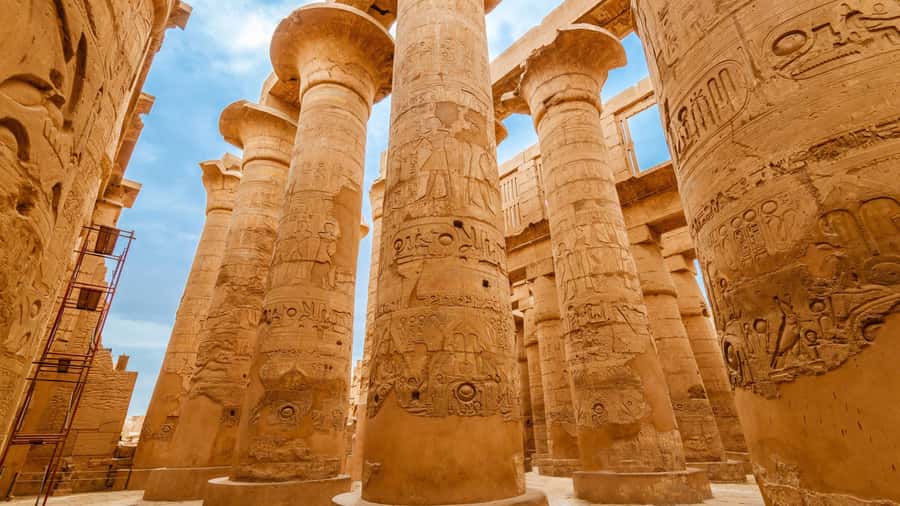
Lunch comes at a local restaurant before the East Bank temples. The meal is included, and the food has been described as tasty local fare, including buffet-style service. One dining stop was noted for a terrace overlooking a tomato farm, which gives the break a more local feel than eating beside a major monument.
Lunch is useful for more than refueling. By this point, you have already walked through the valley and across temple grounds, so a seated meal gives your feet a break before the afternoon temples.
The exact menu and setting can vary, and you should not treat lunch as a fine-dining event. Think of it as a practical local meal included in the day’s price. If you have dietary needs, raise them with the operator or guide before the meal.
Some experiences also included an alabaster factory visit. This is not listed among the main stops, so treat it as a possible extra stop rather than a guaranteed part of the program. You can politely decline purchases, and no pressure should be assumed from the information provided, but shoppers may find it useful to ask how much time the stop will take.
Karnak Temple, the day’s great scale test
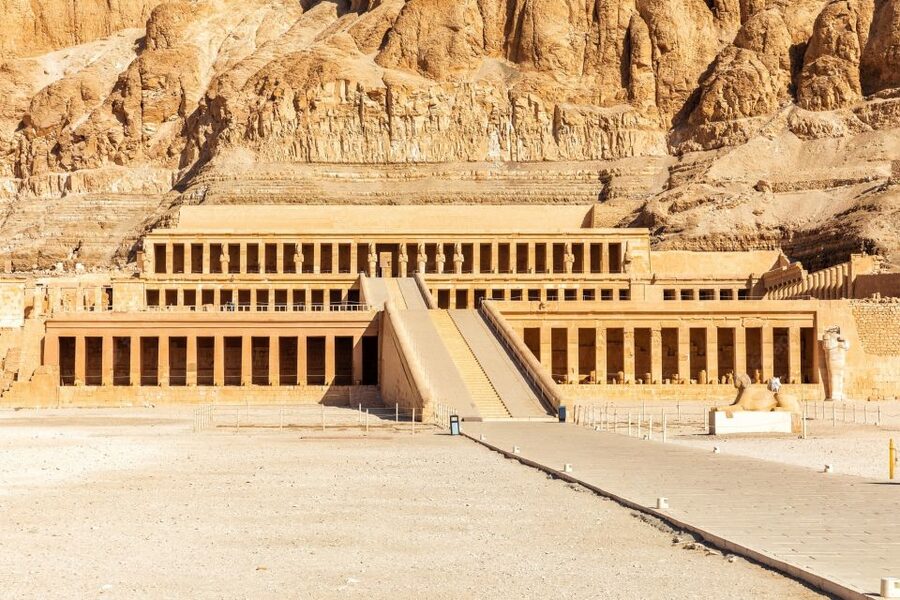
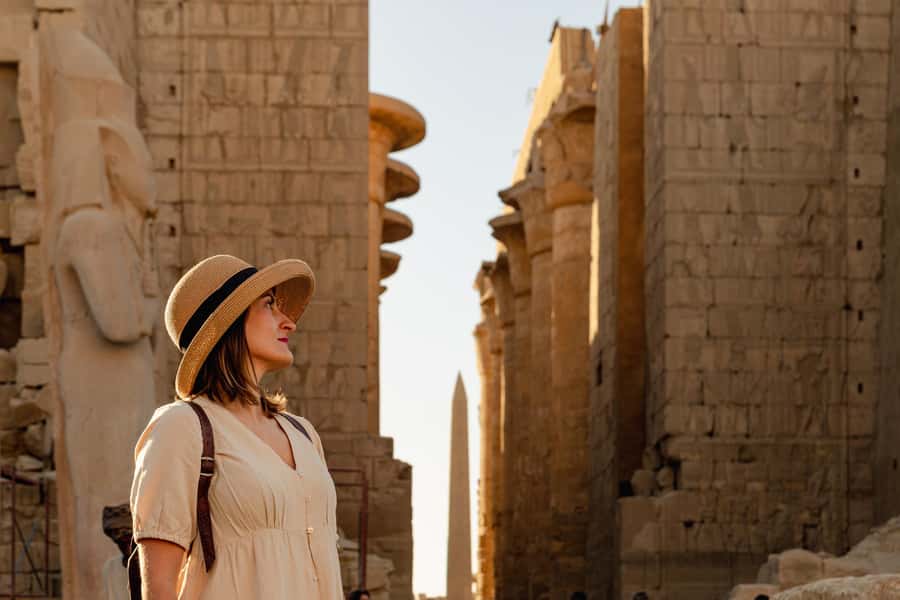
After lunch, the tour moves to Karnak Temple, the largest and most imposing temple complex on the schedule. Calling it one temple is convenient, but the site is really a huge collection of sanctuaries, pylons, courtyards, columns, and sacred spaces built and expanded by many rulers.
Karnak was dedicated mainly to Amun, along with his wife Mut and their son Khonsu. Together, these gods formed the Theban triad. Your guide explains how worship worked here and why successive pharaohs kept adding to the complex.
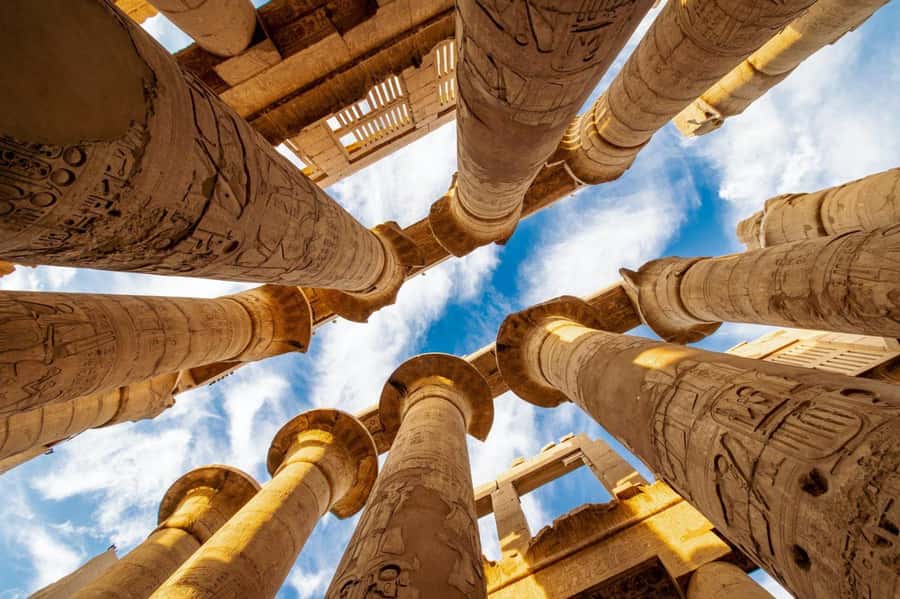
The Hypostyle Hall is the famous highlight, with vast columns packed into a forest of stone. It is easy to be impressed by the size and miss the details. Look closely at the carved figures and hieroglyphs. The guide’s explanation helps you read the scenes as statements about offerings, divine approval, military victories, and royal duty.
Karnak can feel overwhelming without a plan. The complex is large, and the heat can make a long walk seem longer. A guide who knows how to organize the visit helps you focus on the parts that matter most while still leaving time for pictures.
Several guides, including Alaa Hassan and Gabriel, have been praised for explaining imagery and symbolism in detail. That is particularly useful at Karnak, where every wall seems to contain another story. You may not absorb every dynasty and deity in one visit, but you should leave with a clear sense of how the complex grew over time.
Luxor Temple after the crowds thin
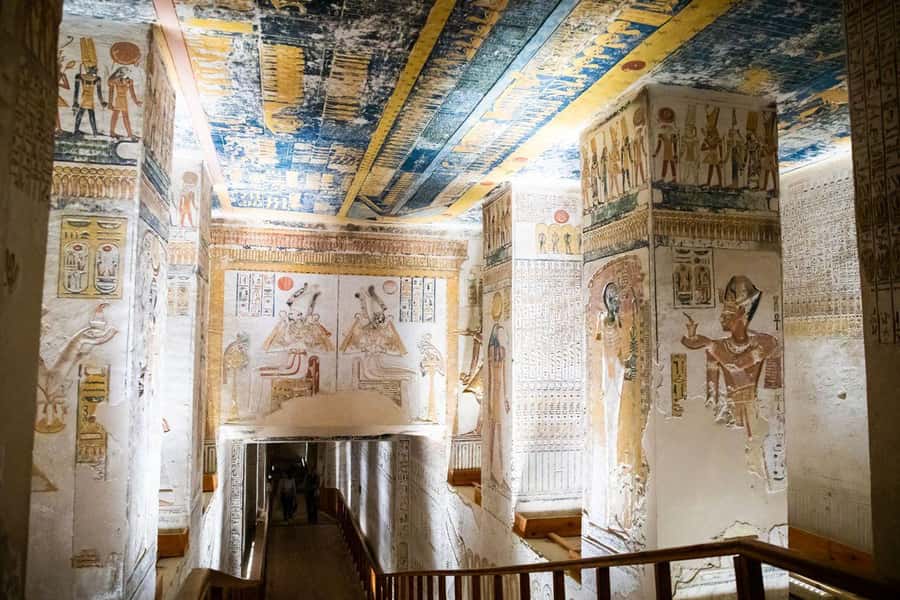
The final major stop is Luxor Temple, built by Amenhotep III during the 18th Dynasty and completed in important stages by Ramses II. Compared with Karnak, it feels more focused and easier to understand as a single ceremonial space.
The temple was linked to Karnak by an avenue of sphinxes. It was dedicated to the rejuvenation of kingship and played an important role in religious festivals connected with the Theban gods.
Ramses II’s contribution is especially visible in the entrance area, where monumental statues and the great pylon frame the approach. Amenhotep III’s work gives the temple another layer, showing how rulers across generations reshaped the same sacred site.
This is often a favorite stop for visitors because the architecture is powerful but not as sprawling as Karnak. You can take in the main axis, columns, statues, and courtyards without feeling that the site keeps unfolding forever.
Your guide’s explanation helps connect Luxor Temple to what you saw earlier at Karnak. That connection is one of the day’s best teaching moments. The two temples were not isolated monuments. They formed part of a larger religious center on the East Bank.
How much time will you really need?
The stated duration is eight hours, but this is an ambitious schedule. You have five major sightseeing stops, lunch, road time, hotel pickup and drop-off, and the movement between both sides of the river.
Some days may run closer to ten hours, especially if pickup times vary, traffic slows the group, or the guide adjusts the order of visits. One useful example from the supplied experiences involved a delayed flight, after which the guide rearranged attractions so the visitor could still see everything. That kind of flexibility matters, but you should still keep your evening free.
The best approach is to start as early as possible. Early departures help you handle the Valley of the Kings before the strongest heat and give the guide more room to manage the schedule.
You will not experience each site as a relaxed half-day visit. This is a highlights tour. It works best if your goal is to understand Luxor’s main monuments in one organized outing rather than spend an entire morning at one tomb or temple.
Shared transport and group comfort
Hotel pickup and drop-off are included for hotels on Luxor’s East Bank. If you stay elsewhere, confirm the pickup arrangement before booking, since the stated coverage is specifically for the East Bank.
The shared format keeps the price lower than a private day, but it also means you share the vehicle and guide’s attention. Groups can be small, with one group described as eight people, though the exact size is not specified.
Transport has generally been described as reliable, with cars in good condition and capable drivers. One person found the minibus a little small, so vehicle comfort may depend on the group and the day’s transport. If personal space matters greatly to you, a private tour may be worth comparing.
The shared format can still work well for solo visitors. One solo participant found the group welcoming and did not feel alone during the day. The social side is a quiet benefit, especially when you are spending many hours moving between sites.
What the $90 price includes
At $90 per person, this is a strong package if you want a single day that handles the main practical pieces. You are paying for an English-speaking guide, lunch, transport from an East Bank hotel, and entrance fees when that option is selected.
The value comes from the combination. Hiring transport separately, arranging tickets, finding a restaurant, and locating a qualified Egyptologist would take time and could cost more once everything is added together.
Check the booking option carefully because entrance fees are included only if that option is selected. Special tombs, such as King Tutankhamun’s, may also require an extra ticket.
Language support is available in English, French, German, and Spanish, but the supplied details identify the English-speaking guide as included and list other languages as an add-on. Confirm the exact language and price before booking if you do not want an English tour.
The free-cancellation window is up to 24 hours before the activity, and you can reserve now and pay later. Those terms are useful when your Luxor plans may change, but they should not replace checking the final booking conditions.
Who should choose this tour?
I would choose this tour if you have only one full day in Luxor, want the major monuments explained, and prefer not to negotiate transport between the two banks.
It suits first-time visitors, solo visitors, couples, families with older children, and anyone more interested in ancient Egyptian religion and royal history than in an unhurried photographic study of one site.
It is less suited to you if you dislike early starts, hot outdoor sites, shared vehicles, or long days with several stops. People with limited stamina should think carefully about the amount of walking and the number of stairs and slopes at some locations.
You should also avoid booking it on a day when you have a tight evening connection. The advertised eight hours is a useful guide, but the day can stretch longer.
Final verdict: book it for coverage and context
Book this Luxor tour if you want the city’s essential West Bank and East Bank sights in one day, with lunch and transport arranged. The best reason to go is the guiding. Names change from group to group, but the strongest feedback consistently centers on clear English, careful explanations, humor, photo help, and patience.
The main compromise is pace. You will see a great deal, but you will not have unlimited time at every tomb and temple. Start early, wear practical shoes, carry water, and confirm entrance options and language before paying.
For a first visit, $90 is fair value for the amount covered. It gives you the structure and background needed to make sense of Luxor, without leaving you to wander among enormous monuments wondering what happened where.
FAQ
How long does the Luxor tour last?
The stated duration is eight hours. Because the tour covers five major sites, lunch, hotel pickup and drop-off, and travel between both banks, you should allow extra time in case the day runs longer.
Which sights are included?
The tour visits the Valley of the Kings, the Mortuary Temple of Queen Hatshepsut, the Colossi of Memnon, Karnak Temple, and Luxor Temple. Lunch at a local restaurant is also included.
Is hotel pickup included?
Hotel pickup and drop-off are included for hotels on Luxor’s East Bank. Confirm the arrangement if your accommodation is outside that area.
Are entrance fees included?
All entrance fees are included if you select the option that includes them. Special tombs may require an additional ticket.
What language is the guide?
An English-speaking guide is included. French, German, and Spanish guides are available as add-ons, and the activity information also lists English, French, German, and Spanish as available tour languages.
Is lunch included?
Yes. Lunch at a local restaurant is included in the tour price. The food may be local or buffet-style, and the exact restaurant setting can vary.
Recently reviewed around Luxor
- Private Full Day West Bank: Valley of kings Hatshepsut &More★ 4.9 · 40 reviews
- Luxor: Karnak and Luxor Temples Private Half-Day Tour★ 4.7 · 27 reviews
- From Luxor: 3-Day Nile Cruise to Aswan with Private Guide★ 4.2 · 147 reviews
- From Hurghada: Luxor Private Guided Day Tour with Lunch★ 4.6 · 28 reviews
- Marsa Alam: Snorkeling with Sea Turtles Marsa Mubarak★ 4.9 · 26 reviews
- Marsa Alam : Over Day Tour to Luxor & Balloon Ride & Felucca★ 4.4 · 29 reviews
- Luxor: Valley of The Kings and Hatshepsut Temple Day Trip★ 4.3 · 55 reviews
- Luxor: Habu, Deir El Medina, Shared tour, Guide, and Lunch★ 4.7 · 21 reviews
Luxor Tours, compared.
Luxor Valley of the Kings & Tutankhamun Tomb Trip
Read our review →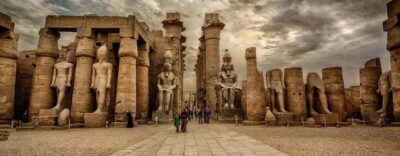
Luxor Day Trip from Hurghada Small Group & Tutankhamun Tomb
Read our review →
Hot Air Balloon Ride in Luxor Egypt with Transfers Included
Read our review →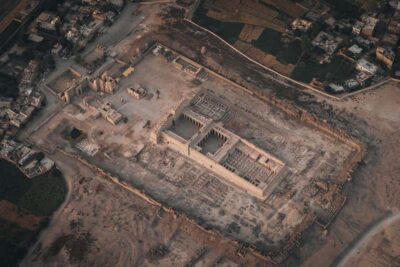
Luxor Day Tour: Valley of Kings & Queens & Hatchepsut Temples
Read our review →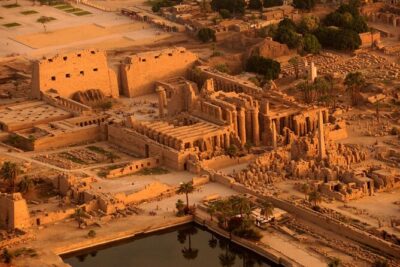
Full Day Tour to East and West Banks of Luxor
Read our review →
2-Day Luxor Tour with Hotel, Balloon, & Boat Ride
Read our review →
Luxury Sunrise Balloon Ride in Luxor with Hotel Pickup
Read our review →Browse the lists this tour appears in