Reviewed · CAIRO TOURS
Full Egypt, 8 days all inclusive
The most striking feature here is the sheer sweep of the route. In eight days, you go from the Pyramids of Giza to the temples of Luxor, sail past Esna, Edfu, and Kom Ombo, then reach Abu Simbel and Aswan before flying back to Cairo. It is Egypt in fast-forward, but with enough time at the major monuments to make the trip worthwhile.
I like two things right away: the domestic flights save you long overland transfers, and the four-night Nile cruise gives the middle of the trip a calmer rhythm. I also like that the price includes visits, tickets, meals, hotels, cruise nights, and a Spanish-speaking guide. The tradeoff is a demanding schedule, with early starts, several flights, and long sightseeing days.
In This Review
- Key points to know before booking
- What the $1,189.29 price really covers
- Cairo begins with airport help and a local dinner
- Giza, Saqqara, and the medieval lanes of Cairo
- Cairo’s Citadel, Coptic Quarter, and Egyptian Museum
- Flying to Luxor and seeing the temple by night
- Karnak and the royal tombs of the West Bank
- Edfu and Kom Ombo by river
- Abu Simbel, Philae, and a felucca on day seven
- The final flight back to Cairo
- The guide can shape the whole week
- Who will like this Egypt tour most
- Small costs and practical points to remember
- Should you book this eight-day Egypt circuit?
- FAQ
- How long is the Egypt tour?
- Where does the tour begin?
- Which cities and sites are included?
- Are domestic flights included?
- How many nights are spent on the Nile cruise?
- Are meals included?
- Is a Spanish-speaking guide provided?
- Is Tutankhamun’s tomb included?
- What is the cancellation policy?
Key points to know before booking
- The route covers Egypt’s essential sights: Cairo, Luxor, Edfu, Kom Ombo, Aswan, and Abu Simbel all fit into one trip.
- Mohamed Gaber, known as Moha, is a major part of the experience: His Spanish-language explanations, patience, and care received repeated praise.
- Four nights are spent on a Nile cruise: This links the southern temples while reducing the need to change hotels each night.
- The price includes most major trip costs: Hotels, cruise, meals, domestic flights, entrance tickets, transport, and taxes are included.
- Drinks are not included: Bring cash for beverages and expect extra charges for Tutankhamun’s tomb.
- The group is limited to 15 people: That is small enough for a more personal guide experience without making this a private tour.
What the $1,189.29 price really covers
At $1,189.29 per person, this is not simply a sightseeing package. You are paying for three hotel nights in Cairo, four nights aboard a Nile cruise, two domestic flights, full-board meals, an air-conditioned vehicle, a Spanish-speaking guide, and the scheduled entrance tickets.
That bundle gives the tour good value for anyone who wants the main Egyptian sights without arranging each piece separately. Cairo hotels, a river cruise, airport transfers, internal flights, and a guide can quickly become a complicated puzzle. Here, the operator handles the structure.
The phrase all inclusive needs a small footnote. Drinks are excluded, so the price does not cover every purchase during the week. Tutankhamun’s tomb also costs extra, at approximately 16 euros according to the tour details. The mummy hall at the Egyptian Museum is not included either.
Meals are generous on paper: seven breakfasts, seven dinners, and six lunches. Cairo includes full board for three nights, while the cruise includes full board for four nights. If you have dietary needs, the provided details do not explain how requests are handled, so ask before booking.
Other Cairo days travellers weigh against this one:
- Cairo: Pyramids & Great Sphinx Private Tour with Camel Ride
★ 4.9 · 6,335 reviews - Tour to Giza Pyramids and The Egyptian Museum
★ 5.0 · 6,016 reviews - VIP All inclusive Best of the best Giza Pyramids,Sakkara,Memphis
★ 5.0 · 3,164 reviews
Cairo begins with airport help and a local dinner
Your first day starts at Cairo airport. The local team meets you, provides the visa, helps with immigration controls, and takes you to the hotel. That assistance matters after a long flight, especially if this is your first visit to Egypt.
The evening ends with dinner at a local restaurant. It is a gentle first step into the country, though the day itself is short and mostly devoted to arrival. Your exact amount of free time depends on your flight.
Cairo is not treated as a quick stop on the way to the cruise. You get three hotel nights and two full sightseeing days, which gives the capital proper weight in the trip.
Giza, Saqqara, and the medieval lanes of Cairo
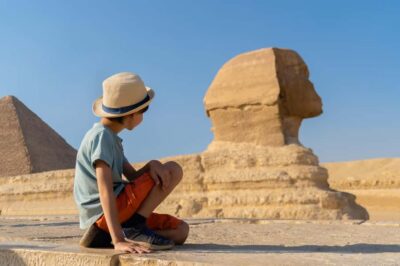
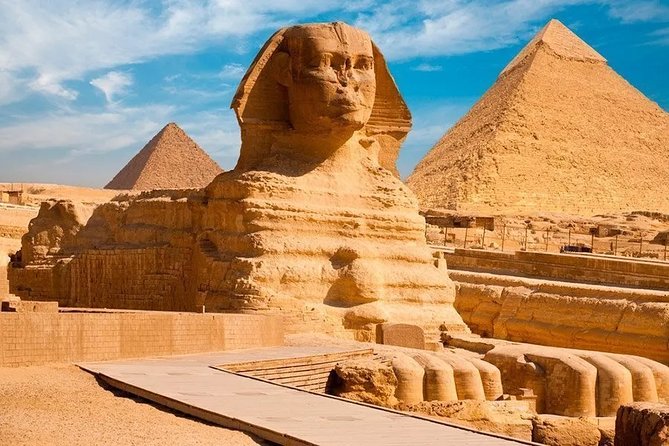
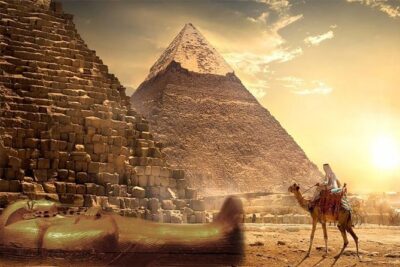
Day two opens with the Giza Plateau. You see the three famous pyramids, the Sphinx, and enter one of the pyramids. The entrance ticket is included, a useful detail because pyramid access often carries separate restrictions or charges on other tours.
Give this morning your full attention. The monuments are the headline attraction, but the guide’s explanation helps you understand how the plateau fits into ancient Egyptian society. The visit lasts about four hours, followed by a traditional meal.
The route then continues toward Memphis, described as Egypt’s first capital, and Saqqara, its necropolis. You see the famous statue of Ramses II and get a wider sense of how royal burial sites developed beyond Giza. This portion adds context that a pyramid-only visit would miss.
After time to rest at the hotel, you return to Old Cairo at night. You walk along one of the city’s oldest streets, visit Khan el-Khalili market, enter the Café de los Mirrors, and eat a typical dinner.
Khan el-Khalili is a place for atmosphere and bargaining, not a quiet museum visit. You should expect a social, commercial setting and keep your pace comfortable. The schedule gives you four hours, enough for a walk and dinner without turning the market into a rushed photo stop.
Cairo’s Citadel, Coptic Quarter, and Egyptian Museum
The third day packs the capital’s historic center into one eight-hour visit. You go to the Saladin Citadel and enter the Alabaster Mosque, then return to Khan el-Khalili for more time in the market.
The Citadel gives you a change from ancient royal monuments. The mosque adds a major Islamic-era site, while the market puts you in the middle of Cairo’s older street life. The tour then continues through the Coptic Quarter, giving you another side of the city’s religious and architectural past.
The final major stop is the Egyptian Museum. This is where a good guide can make a real difference. The collection can feel overwhelming, and Mohamed Gaber, often called Moha, is repeatedly praised for making Egyptian history clear, lively, and easy to follow in Spanish.
The hall of mummies is not included. That is an important detail for anyone building the museum visit around royal remains. You can still expect a substantial museum visit, but the excluded hall may be a disappointment if it is your top priority.
Day three ends with another dinner at a local restaurant. The schedule is full, with little open time, so wear practical shoes and save your energy.
A different kind of day out, same part of Egypt:
- From Cairo: Pyramids of Giza, Sphinx, Saqqara & Memphis Tour
★ 4.7 · 3,110 reviews - Cairo 8 Hour Private Tour of Pyramids, Egyptian Museum and Bazaar
★ 5.0 · 2,931 reviews - Cairo: Pyramids, Sakkara & Memphis Tour with Lunch
★ 4.6 · 2,493 reviews - Private ViP all-inclusive Giza Pyramids,Sphinx,Inside Pyramid
★ 5.0 · 2,448 reviews
Flying to Luxor and seeing the temple by night
After breakfast on day four, you transfer to the airport for the flight to Luxor. The flight replaces what would otherwise be a long journey by road, and it lets the tour move quickly from Cairo to ancient Thebes.
Luxor is the starting point for the cruise. You stay aboard the ship, which becomes your base for the southern part of the trip. This change of setting is one of the tour’s strengths: after two intense days in Cairo, the Nile provides a more settled pattern.
That evening, you visit Luxor Temple after dark. The illuminated columns and courtyards create a different mood from a daytime archaeological visit. You then see the city center by horse-drawn buggy before returning to the cruise.
The evening outing lasts about three hours. It is a smart use of arrival day because you see an important monument without spending another full day on the move.
Karnak and the royal tombs of the West Bank
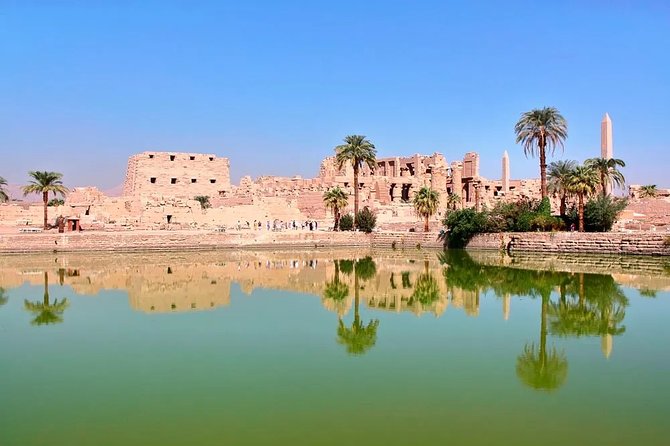
Day five begins early at Karnak. The temple complex once connected with Luxor Temple by the Avenue of the Sphinxes, and the morning visit gives you a chance to see one of Egypt’s largest religious sites before the day’s heat builds.
Karnak is not a single compact building. It is a large collection of halls, columns, sanctuaries, and monuments built over long periods. Listen closely to the guide here, because the scale can make the site hard to read without a clear explanation.
Next, you cross to the western bank of the Nile for the Valley of the Kings. The tombs belonged to some of Egypt’s best-known pharaohs, and the experience is more enclosed and intimate than Giza or Karnak.
Standard access does not include Tutankhamun’s tomb. The extra cost is approximately 16 euros. Decide before the visit if that particular tomb matters to you, since the included tombs still form the main experience.
The West Bank route also includes the Temple of Hatshepsut and the Colossi of Memnon. Hatshepsut’s temple brings architecture and royal politics into the day, while the Colossi offer a brief but memorable stop beside two immense seated figures.
After lunch, the ship sails toward Edfu. At dusk, you pass through the Esna lock. This is less about another grand monument and more about seeing how the cruise moves along the river. The day combines several major sites with an actual stretch of sailing, though the morning starts early and the sightseeing block is long.
Edfu and Kom Ombo by river
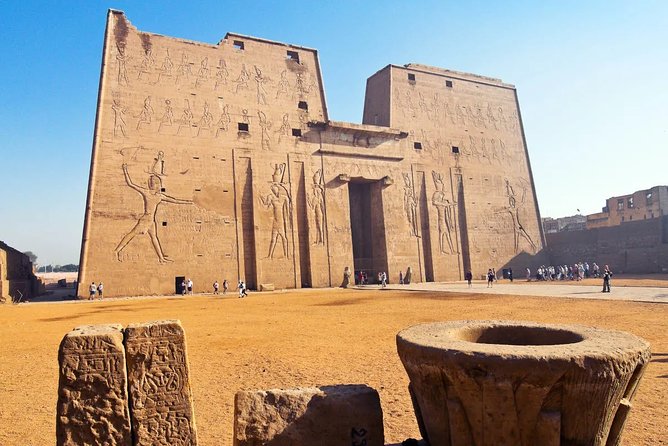
The sixth day is built around two temple visits. At Edfu, you see the Temple of Horus, described as the best-preserved temple in Egypt. Its condition helps you read the layout, carvings, and monumental gateways more easily than at sites where time and damage have erased more of the original structure.
You return to the ship and continue toward Kom Ombo. The temple there is dedicated to Sobek and Hareoris, and its riverside position gives the visit a strong visual setting.
Both stops last about three hours. That allows time for a guided visit without requiring another hotel change. The cruise does the practical work of moving you south while you eat, rest, and watch the Nile between excursions.
The downside is that port schedules can shape your day. You are following the ship’s timing rather than choosing how long to stay at each temple. For a first visit, that tradeoff is reasonable, but anyone who prefers slow archaeological study may want a longer custom trip.
Abu Simbel, Philae, and a felucca on day seven
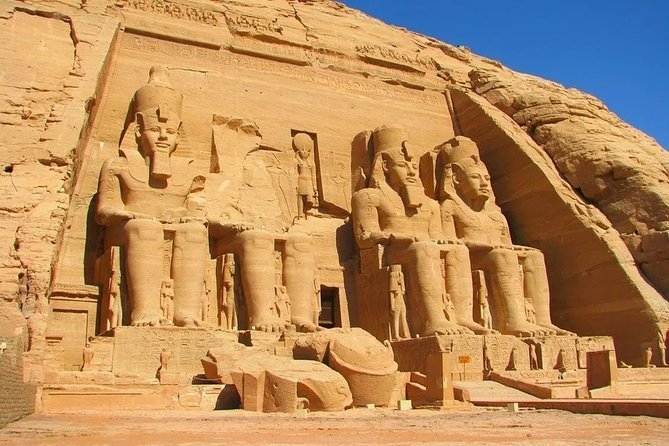
Day seven is the longest and most ambitious day. You take a bus to Abu Simbel, home to the famous temples saved from rising waters through an international preservation effort. These temples are among the most important stops in southern Egypt, and including them gives the tour extra weight.
The bus journey takes a large part of the day, even though the supplied schedule lists the full excursion at eight hours. You should be ready for a long road outing before returning to Aswan.
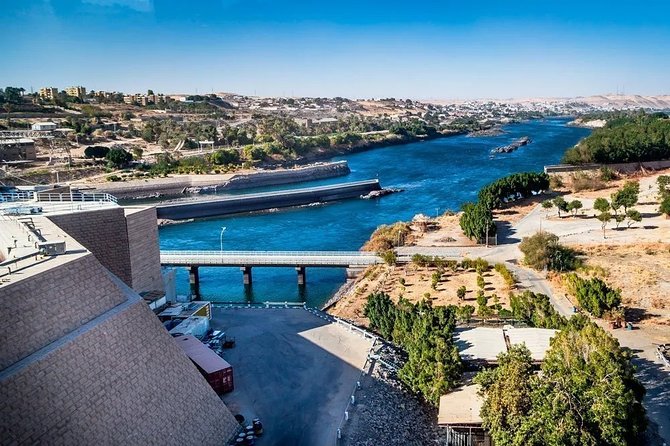
The day continues with the Aswan Dam, one of the major engineering projects of the 20th century, and the Temple of Philae. Philae sits on an island and is known as the Jewel of the Nile. This combination gives you both modern infrastructure and an ancient sanctuary in the same stretch of sightseeing.
After lunch aboard the cruise, you take a felucca ride, the traditional Egyptian sailing boat. You return to the ship around 4:00 p.m., leaving free time for the rest of the afternoon and another night aboard.
This is a packed day, but the sequence works well. Abu Simbel is the major time commitment, Philae supplies a more graceful temple visit, and the felucca provides a quieter finish. Still, you should not book this expecting a relaxed holiday. The schedule rewards stamina.
The final flight back to Cairo
On day eight, you fly from Aswan back to Cairo for your international departure. The operator adjusts the Aswan departure around your Cairo flight.
If your international flight leaves early, you receive a continental or takeaway breakfast. If you fly later in the afternoon, you can eat breakfast aboard the ship before heading to Aswan airport.
This arrangement is helpful, but you should still check the connection plan carefully before booking your international ticket. The tour includes the domestic flight to Cairo, but the day depends on the timing of your onward flight.
The guide can shape the whole week
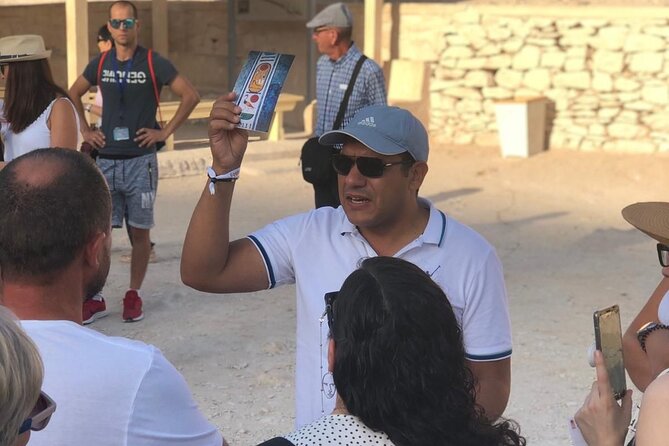
The strongest personal feature of this trip is its Spanish-speaking guiding. Mohamed Gaber, known as Moha, is praised for being punctual, attentive, professional, patient, and passionate about Egypt. Those qualities matter on a route with so many temples, dynasties, transfers, and practical decisions.
The praise also points to a particular guiding style. Moha is described as explaining complex stories simply, helping people take part in the history rather than merely reciting dates, and offering advice when problems arise. Several comments describe him as warm and careful with the group.
Abdeen is also named in connection with one highly positive account, though the supplied details do not specify his exact role on every departure. Guide assignments can vary, so treat Moha’s name as a useful possibility rather than a guarantee unless the operator confirms it.
A maximum group size of 15 helps. You are not booking a private tour, but a group this size should make questions and meeting points easier than on a large coach trip.
Who will like this Egypt tour most
I would choose this trip if you want to see the major Egyptian sights in one organized burst. It suits first-time visitors who prefer a clear plan, Spanish-language explanations, included meals, and help with airport procedures.
It is also a good fit if you value variety. In one week, you move from pyramids and Islamic Cairo to pharaonic temples, a river cruise, a felucca, and Abu Simbel.
You may want a different format if you need long periods of free time, dislike early departures, or prefer choosing your own restaurants and hotel locations. The full-board setup is convenient, but it limits spontaneous dining.
The tour also involves considerable walking and several long sightseeing days. The supplied information says most people can participate, but it does not give detailed accessibility information. Ask the operator about mobility needs before booking.
Small costs and practical points to remember
Drinks are excluded from the all-inclusive price. Set aside money for water, soft drinks, coffee, or other beverages during meals and excursions.
Tutankhamun’s tomb costs extra, at about 16 euros. The mummy hall at the Egyptian Museum is also excluded, so plan your expectations before the Cairo museum visit.
Pickup is offered, and the first meeting time is listed as 7:00 a.m. The tour confirms bookings at the time of purchase and allows free cancellation up to 24 hours before the local start time. Changes or cancellations inside that window are not accepted for a refund.
Should you book this eight-day Egypt circuit?
Book it if your goal is maximum coverage with minimum planning. The route reaches the places most people hope to see, and the price includes the expensive practical pieces: internal flights, cruise nights, meals, transport, guides, and scheduled tickets.
The best reason to choose it is the combination of a strong route and Spanish-speaking support from Moha or another assigned guide. The main warning is pace. You will see a great deal, but you will not linger everywhere.
For a first Egyptian adventure, I find the balance persuasive. You get the pyramids, the Nile, the major temples, Abu Simbel, and Cairo’s older quarters in one well-organized week. Just arrive ready for early mornings, long days, excluded drinks, and a schedule that keeps moving.
FAQ
How long is the Egypt tour?
The tour lasts approximately eight days.
Where does the tour begin?
It begins in Cairo, with pickup at Cairo airport on the first day.
Which cities and sites are included?
The route includes Cairo, Luxor, Edfu, Kom Ombo, Aswan, Abu Simbel, the Giza Pyramids, the Sphinx, Saqqara, Memphis, Khan el-Khalili, the Saladin Citadel, the Coptic Quarter, the Egyptian Museum, Karnak, the Valley of the Kings, Hatshepsut’s Temple, the Colossi of Memnon, Philae, and the Aswan Dam.
Are domestic flights included?
Yes. The package includes the flight from Cairo to Luxor and the flight from Aswan back to Cairo.
How many nights are spent on the Nile cruise?
You spend four nights on the Nile cruise.
Are meals included?
Yes. The package includes seven breakfasts, seven dinners, and six lunches. Drinks are not included.
Is a Spanish-speaking guide provided?
Yes. A Spanish-speaking guide is included for all visits. Mohamed Gaber, also known as Moha, is associated with many departures, but you should confirm the assigned guide when booking.
Is Tutankhamun’s tomb included?
No. Visiting Tutankhamun’s tomb costs extra, at approximately 16 euros.
What is the cancellation policy?
You can cancel up to 24 hours before the experience starts for a full refund. Cancellations or changes made less than 24 hours before the local start time are not accepted.
Recently reviewed around Cairo
- White Desert Overnight Camping Sharing Tour in Egypt★ 5.0 · 15 reviews
- Cairo Best 2Days tour Pyramids, Saqqara & Old Cairo★ 5.0 · 15 reviews
- Giza Pyramids with (GEM) Grand Egyptian Museum★ 5.0 · 42 reviews
- sunset at Giza pyramids by camels★ 5.0 · 31 reviews
- Tour to Giza pyramids Memphis Sakkara and Felucca on the Nile★ 5.0 · 16 reviews
- visit the pyramids of Giza + the necropolis of Saqqara + the Memphis site.★ 4.5 · 20 reviews
- Private Giza pyramid,sphinx, Mummification temple& inside pyramid★ 5.0 · 32 reviews
- Private guided shopping tour in Khan el-Khalili with Lunch★ 4.5 · 21 reviews
Cairo Tours, compared.
Pyramids & Great Sphinx Private Tour with Camel Ride
Read our review →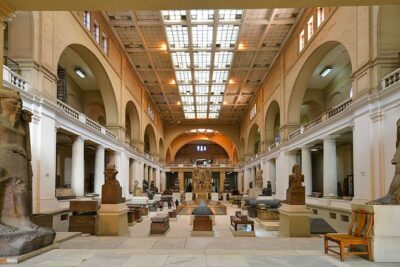
Tour to Giza Pyramids and The Egyptian Museum
Read our review →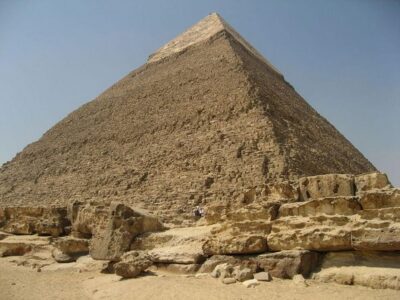
VIP All inclusive Best of the best Giza Pyramids,Sakkara,Memphis
Read our review →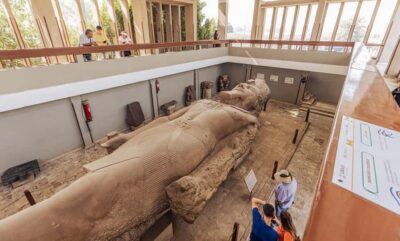
Pyramids of Giza, Sphinx, Saqqara & Memphis Tour
Read our review →
Cairo 8 Hour Private Tour of Pyramids, Egyptian Museum and Bazaar
Read our review →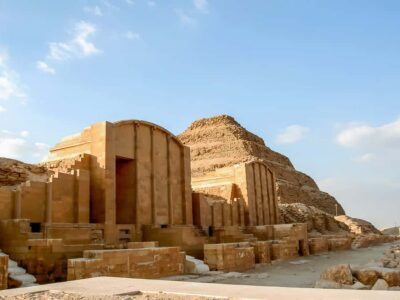
Private ViP all-inclusive Giza Pyramids,Sphinx,Inside Pyramid
Read our review →