
Reviewed · NILE CRUISES
Nile cruise between Aswan and Luxor: Sail the best temples in Egypt
The great appeal here is the changing view: one moment you are studying ancient carvings, and the next you are watching the Nile slide past from the boat. I like that the cruise links Philae, Kom Ombo, Edfu, Karnak, and Luxor Temple without making you arrange separate taxis and guides. I also like the free first day in Aswan, which gives you time to settle in or explore at your own pace.
The main guide praised throughout the supplied comments is Mohamed Gaber, also called Moha. His Spanish explanations, small theatrical presentations, humor, and care with group details appear to be a major part of the experience. The trade-off is the early start at 6:00 a.m. and a full sightseeing schedule, especially if you add Abu Simbel.
In This Review
- Key points to know before booking
- Why this Aswan to Luxor cruise works
- Day 1 in Aswan, an easy start on the river
- Day 2, Abu Simbel, Philae, and Kom Ombo
- Day 3, Edfu and Luxor’s grand temples
- Day 4, tombs and temples on Luxor’s west bank
- What the guide adds to a temple-heavy itinerary
- What the $500 price includes
- Who should book this Nile cruise
- Should you book it?
- FAQ
- Where does the cruise begin?
- Where does the cruise end?
- How long does the experience last?
- Is Abu Simbel included?
- Are temple entrance tickets included?
- Are meals included?
- What is the cancellation policy?
Key points to know before booking
- Four nights on the Nile: Your accommodation is on the cruise boat, with lunch and dinner included for all four days.
- Aswan to Luxor route: The cruise covers Egypt’s most important temple corridor, ending with a transfer in Luxor.
- Abu Simbel is optional: The two-hour temple visit is not included in the ticket price, but it is the most important extra excursion offered.
- Three tombs at the Valley of the Kings: You can choose three tombs, while special tombs may require a separate ticket if applicable.
- Pickup and drop-off are flexible: Collection is offered from an Aswan hotel, airport, or train station, with delivery to your chosen point in Luxor.
- A Spanish-speaking guide may shape the trip: Mohamed Gaber is praised for lively explanations, strong Spanish, and a personal approach to group care.
Why this Aswan to Luxor cruise works
A Nile cruise is useful because Egypt’s major ancient sites are spread along the river. Instead of checking out of one hotel, finding a driver, and haggling over each transfer, you unpack once and let the boat carry you between stops.
This four-day route is designed around the classic south-to-north direction. You begin in Aswan, where the river is broad and calm, then pass through Kom Ombo and Edfu before reaching Luxor. The final day focuses on the west bank, including the Valley of the Kings and Hatshepsut’s temple.
I would choose this trip if you want a guided introduction to ancient Egypt but still value quiet time on the water. The boat gives you breaks between temple visits. You can rest by the pool, watch the river, eat on board, and let the day’s information settle.
It is not a slow, idle cruise, though. The sights come quickly, and the 6:00 a.m. start means you need to be ready for early mornings. The schedule favors coverage and convenience over long, unplanned stays at each monument.
More Boat Tours in Aswan
- 4-Days Nile Cruise From Aswan To Luxor including Abu Simbel and Hot Air Balloon
★ 5.0 · 3,142 reviews - 4-Day 3-Night Nile Cruise from Aswan to Luxor&Abu Simbel+Balloon
★ 5.0 · 2,023 reviews - 4-Day 3-Night Nile Cruise from Aswan to Luxor including Abu Simbel, Air Balloon
★ 4.5 · 612 reviews
Day 1 in Aswan, an easy start on the river
Pickup in Aswan is arranged from the airport, train station, or a hotel. That matters because arrival logistics in Egypt can take energy, particularly if you have just stepped off a train or flight. The transfer takes you directly to the boat, where you settle into your room and begin meals according to the ship’s schedule.
The first day is free. You can use it to rest by the pool, stay aboard, or explore Aswan on your own. This is one of the better details of the program because many sightseeing tours begin at full speed. Here, you have a chance to get your bearings before the temple visits start.
Aswan itself is an appealing place to pause. The tour does not include a guided city visit on this day, so you are responsible for your own plans if you go ashore. That freedom is useful for independent visitors, but you should not expect a structured introduction to the city as part of the cruise.
The provided schedule lists 12 hours for this first stop, but that refers to the day’s available period rather than twelve hours of guided touring. Think of it as a boarding and rest day.
Day 2, Abu Simbel, Philae, and Kom Ombo
The optional Abu Simbel trip is the first major decision you need to make. The two temples were carved into rock during the reign of Ramses II and were built in honor of Ramses and his wife, Nefertari. The excursion lasts about two hours, and admission is not included.
I would strongly consider adding it if your schedule allows. Abu Simbel is not a minor extra squeezed between two nearby stops. It is one of Egypt’s great monuments, and its setting and scale make it different from the temples along the normal cruise route. Since the supplied information does not state the extra cost or exact departure arrangement, confirm both before booking.
The included visit to Philae Temple follows. Philae is dedicated to Isis and sits on an island, so you reach it by boat. That short ride is part of the charm. The temple feels separate from the mainland, and arriving over water gives the visit a natural connection to the river.
Allow about an hour at Philae. That is enough for a focused visit, though you will want to listen closely to the guide and make your photographs efficiently. The site is valuable not only for its carvings but also because the island setting helps you understand how closely Egyptian worship was tied to the Nile.
Kom Ombo has a different character. The temple was built for two gods, Sobek and Haroeris, which gives the site an unusual split religious purpose. You have about an hour here, enough to see the main remains and understand the paired dedication.
This day packs in several major ideas: royal power at Abu Simbel, the worship of Isis at Philae, and the dual-god design at Kom Ombo. The downside is pace. With an optional early outing followed by two more temples, you may feel that the schedule leaves little room for lingering.
Day 3, Edfu and Luxor’s grand temples
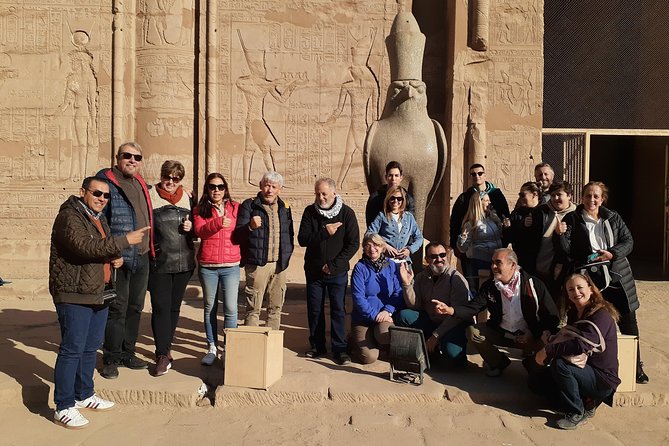
Edfu Temple is dedicated to Horus and is described as one of the best-preserved temples from ancient Egypt. You have two hours here, which is generous compared with the one-hour stop at Philae and Kom Ombo.
That extra time helps. Edfu rewards careful attention to its walls, reliefs, and religious layout. A guide can make the difference between seeing a large stone complex and understanding how its spaces related to worship and royal authority. Mohamed Gaber is repeatedly praised for explaining Egyptian religion in clear, entertaining Spanish, including the complicated relationships among the gods.
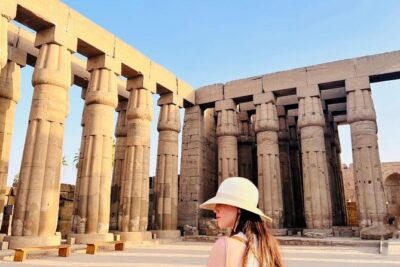
The day then moves to Karnak, the largest and most layered temple stop on the route. Different pharaohs added to it over more than 2,000 years. You will see the avenue of sphinxes, the column hall, and the avenue of rams, all of which give the site its unmistakable sense of scale.
Two hours is a useful amount of time, but Karnak can easily absorb more. Follow the guide’s route and save a little time for your own photographs. The column hall is the visual centerpiece, yet it is worth paying attention to smaller carved details too. The sheer size can make it hard to know where to look without a clear explanation.
Luxor Temple receives another two-hour visit. It was built in honor of Amun Ra, a leading god associated with kingship. Unlike Karnak, which feels like a vast religious complex, Luxor Temple is easier to take in as a single, powerful monument.
The pairing of Karnak and Luxor works well. You see two different expressions of temple building in one day, with the guide helping connect their religious and royal meanings. This is also the day when the itinerary feels most intense. Three substantial sites require walking, listening, and concentration, so comfortable shoes and water are sensible, although drinks are not included.
More Nile Cruises in Aswan
- From Aswan: 4-Day Nile Cruise from Aswan to Luxor with Guide
★ 4.1 · 593 reviews - 4-Days Nile Cruise From Aswan To Luxor including Abu Simbel and Hot Air Balloon
★ 4.5 · 509 reviews - 4-Day 3-Night Nile Cruise from Aswan to Luxor – Private Tour
★ 5.0 · 369 reviews - 4 Days Nile Cruise from Aswan to Luxor including Abu Simbel and Hot Air Balloon
★ 4.5 · 356 reviews
Day 4, tombs and temples on Luxor’s west bank
The final sightseeing day begins at the Valley of the Kings, a major burial area containing the tombs of many pharaohs of the New Kingdom. Admission includes entry to three tombs of your choice.
That choice is a real advantage. You are not locked into a single route, and you can select the three open tombs that interest you most. The information provided does not identify which tombs are available on the day, so ask your guide for advice before choosing. Tomb interiors can be more rewarding than the outside views because the painted walls show the beliefs and symbols connected with the afterlife.
The visit lasts about two hours. It can be hot and tiring, and the ground may not feel easy for everyone, so plan for a practical rather than leisurely stop. You will also want to keep your phone or camera ready for the moments when photography is permitted, since rules can vary by area and ticket.
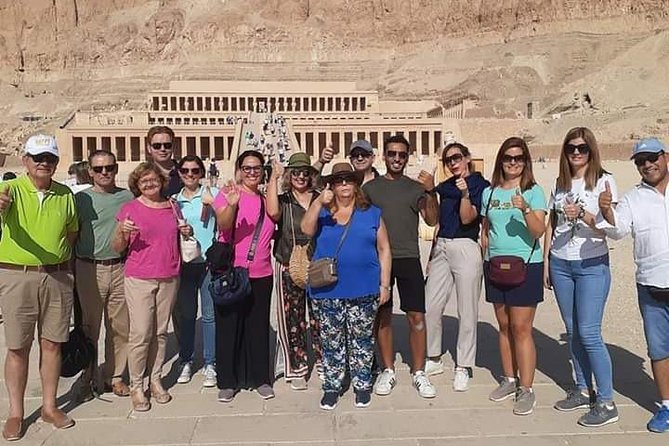
Next comes the Mortuary Temple of Hatshepsut. Hatshepsut was one of Egypt’s most important queens, and her temple has a distinctive multi-level design set against the cliffs. The visit lasts about an hour.
This is a good counterpoint to the Valley of the Kings. The valley takes you underground into royal burial places, while Hatshepsut’s temple presents royal power in a broad ceremonial setting. A strong guide adds much here because the monument’s significance is not always obvious from a quick look at its terraces.
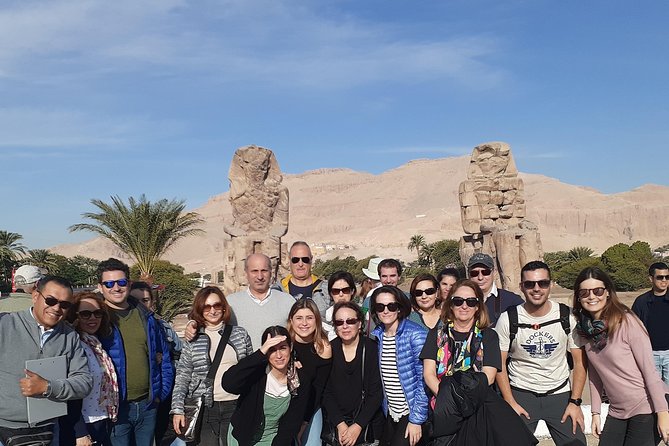
The last brief stop is the Colossi of Memnon, two huge stone statues representing Pharaoh Amenhotep III. You have about 15 minutes, so treat it as a photo and orientation stop rather than a full site visit.
After checkout, you have free time in Luxor. The tour then takes you to the hotel, airport, or train station at the time and place you specify. This final flexibility is helpful if you are continuing your trip, but make sure your onward plans allow for the morning’s sightseeing and transfer.
What the guide adds to a temple-heavy itinerary
The most consistent praise is directed at Mohamed Gaber. The comments describe a guide with strong Spanish, precise explanations, humor, and a talent for making difficult religious stories easier to follow. His use of short theatrical presentations and group participation sounds particularly useful when the subject turns to Egypt’s large and sometimes confusing group of gods.
That matters on this route. You will hear about Isis, Sobek, Horus, Haroeris, Amun Ra, Ramses II, Nefertari, Hatshepsut, and Amenhotep III in just a few days. Without context, the temples can blur together. A guide who connects each monument to its people, gods, and purpose gives the trip a clearer shape.
The personal care described in the supplied comments is another positive. Mohamed is praised for solving small problems quickly, keeping the group comfortable, and making the journey feel friendly. Those are valuable traits on a schedule with early starts and frequent transfers.
Still, a guide’s style is personal. If you prefer silent visits and complete independence, the lively explanations and group activities may feel like more structure than you want. If you want the sites explained in Spanish and enjoy learning through stories, this tour appears better suited to you.
What the $500 price includes
At $500 per person, the value depends heavily on how much you would otherwise spend arranging four nights, transport, admissions, and a guide.
The price includes:
- Pickup in Aswan from a hotel, airport, or train station
- Four nights aboard the cruise
- The listed visits and entrance tickets
- Transfer in Luxor to your chosen hotel, airport, or station
- Four lunches
- Four dinners
That is a substantial bundle. You are not paying only for a boat ride. The cost also covers the main temple admissions, the overland transfers connected with the program, and meals during the cruise.
Drinks and tips are extra. Abu Simbel admission is also not included, so budget for that optional visit separately. The information does not specify breakfast, cabin category, boat name, or onboard facilities beyond a pool mentioned in the first-day description. I would ask those questions before paying, especially if room comfort is important to you.
The group limit is 30 people. That is not a private tour, but it is more manageable than a very large coach group. The actual feel will depend on how many people book on your dates. The guide’s ability to keep explanations clear and organized will matter most at busy sites.
Who should book this Nile cruise
I would recommend this experience to first-time visitors who want the major Aswan to Luxor sights handled in one organized package. It is also a good match for families and Spanish-speaking visitors who want a guide who can explain the sites in an entertaining way.
You will get the most from it if you:
- Want four nights on the Nile rather than repeated hotel changes
- Prefer guided visits to arranging local transport yourself
- Want admission included at the main listed temples
- Enjoy history and mythology explained through stories
- Can manage early starts and several hours of sightseeing
- Want flexible pickup and drop-off in Aswan and Luxor
I would hesitate if you need a very relaxed schedule, dislike group touring, or want detailed information about the exact ship and cabin before booking. The itinerary is full, and the optional Abu Simbel outing could make the second day especially demanding.
Confirmation is provided at booking, and most people can participate. Cancellation is allowed for a full refund up to three full days before the local start time. Changes or cancellations inside that window are not accepted.
Should you book it?
Book this Nile cruise if you want the practical ease of one boat, one guide, and one connected route through Egypt’s key temples. The strongest reason to choose it is the combination of included sightseeing and Mohamed Gaber’s highly praised Spanish-led storytelling.
Before you commit, confirm the ship details, the cost and timing of Abu Simbel, what is served at breakfast, and where the boat docks. If those answers suit you, $500 is a sensible price for four nights, meals, admissions, and transfers. Add Abu Simbel if your energy and budget allow. It is the extra that could turn a very good Nile itinerary into a truly memorable one.
FAQ
Where does the cruise begin?
The cruise begins in Aswan, Egypt. Pickup is offered from an Aswan hotel, airport, or train station.
Where does the cruise end?
The cruise ends in Luxor Governorate. After checkout and free time in Luxor, you can be taken to a hotel, airport, or train station.
How long does the experience last?
The experience lasts approximately four days and includes four nights of accommodation on the cruise.
Is Abu Simbel included?
No. Abu Simbel is an optional excursion, and admission is not included in the tour price.
Are temple entrance tickets included?
Yes. Admission to the listed visits is included, except for Abu Simbel, which is optional and not included.
Are meals included?
Four lunches and four dinners are included. Drinks are not included.
What is the cancellation policy?
You can receive a full refund if you cancel at least three full days before the local start time. Cancellations or changes made less than three full days in advance are not accepted.
Recently reviewed around Aswan
- Sailing Nile Cruise from Aswan to Luxor for 2 Nights★ 4.5 · 139 reviews
- (3-Nights Cruise From Aswan To Luxor & Balloon, Abu Simbel)★ 4.5 · 23 reviews
- Philae Temple and Aswan High-Dam Half-day tour★ 5.0 · 49 reviews
- 4-Days Aswan sails Nile Cruise Luxor &Abu Simbel.Hot air Balloon★ 4.5 · 77 reviews
- Private Tour in Aswan : Felucca and Nubian village★ 5.0 · 29 reviews
- Day Tour to Abu Simbel from Aswan by Bus★ 4.5 · 25 reviews
- Abu Simbel Private Full-Day Tour from Aswan★ 5.0 · 114 reviews
- Nubian Village by Motorboat In Aswan★ 5.0 · 97 reviews
Nile Cruises, compared.
4-Days Nile Cruise From Aswan To Luxor including Abu Simbel and Hot Air Balloon
Read our review →
Dinner Cruise on the Nile River with Entertainment
Read our review →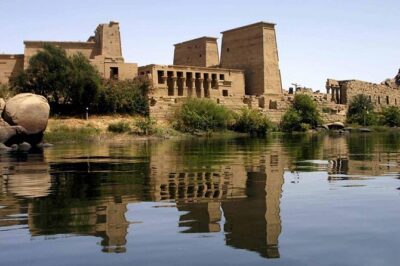
4-Day 3-Night Nile Cruise from Aswan to Luxor&Abu Simbel+Balloon
Read our review →
4-Day 3-Night Nile Cruise from Aswan to Luxor including Abu Simbel, Air Balloon
Read our review →
4-Day Nile Cruise from Aswan to Luxor with Guide
Read our review →
Browse the lists this tour appears in