
Reviewed · NILE CRUISES
Private Cairo Aswan Luxor 8 days 7 nights with Nile Cruise
The best thing about this eight-day Egypt itinerary is its shape: you begin with the Pyramids in Cairo, then follow the Nile from Aswan to Luxor by ship, before returning to Cairo for mosques, churches, and markets. It gives you the grand sweep of ancient Egypt without asking you to arrange every transfer yourself.
I like the useful mix of travel styles: three nights aboard a full-board Nile cruise give you time to watch the river pass, while private Egyptologist guides make sense of places that can otherwise feel like a wall of carved figures. I also like that airport pickup, private vehicles, entrance fees, and two overnight train rides are arranged.
The main consideration is pace. You cover a great deal in eight days, and overnight trains are practical rather than luxurious. Also check the exact price inclusions before booking, since the tour summary says two Cairo hotel nights are included while the detailed inclusions list accommodation and meals as optional.
In This Review
- Key points at a glance
- Why this Cairo, Aswan, and Luxor route works
- Cairo begins with the Pyramids of Giza
- Aswan brings Philae and the High Dam
- The cruise slows the journey between Aswan and Luxor
- Kom Ombo and Edfu show Egypt’s temple tradition
- Luxor’s west bank covers tombs, terraces, and statues
- Karnak and Luxor Temple finish the Nile section
- The return to Cairo adds a different Egypt
- What $960 per person really covers
- Who should book this Egypt tour?
- Should you book it?
- FAQ
- How long is the tour?
- Is this a private tour?
- Are airport transfers provided?
- How many nights are spent on the Nile cruise?
- Are the Cairo hotel nights included?
- Are meals included?
- Can I cancel for a full refund?
Key points at a glance
- Pyramids and the Egyptian Museum on day two: More than two hours at Giza, followed by a guided look at major museum pieces and the Tutankhamun collection.
- Three nights on the Nile: The cruise runs from Aswan to Luxor, with full board listed as included in the main tour summary.
- Two overnight train journeys: These save daytime travel hours, but you should be comfortable with train travel at night.
- Private touring: Only your group takes part, with a qualified Egyptologist guide and private, air-conditioned transport.
- Strong Cairo finish: The Citadel, Muhammad Ali Mosque, Coptic Cairo, and Khan Al-Khalili provide a useful look beyond the pharaohs.
- A price worth checking carefully: At $960 per person, the package can offer good value if the hotel, cruise, trains, transfers, and admission fees are all included as expected.
Why this Cairo, Aswan, and Luxor route works
Egypt is not a place where the famous sights sit neatly in one district. Cairo is far from Aswan, and Luxor’s temples are spread across both banks of the Nile. This tour deals with that problem by linking private transfers, overnight trains, and a cruise into one plan.
That arrangement is the real product here. You are not just buying entrance to the Pyramids. You are buying help with the awkward parts: airport arrival, luggage, train connections, cruise boarding, and getting to scattered archaeological sites.
The tour is private, so your group controls the experience more than it would on a large coach trip. The guide can answer questions, adjust the rhythm within the scheduled stops, and explain why one carved wall matters more than another. The supplied guide names include Mona in the booking process and guides such as Ash, Ashraf, Mandouah, and Ashwaf on different Egypt trips, but the guide assigned to your departure may differ.
You should still expect a busy schedule. Several days combine multiple major sites, and the two train journeys take place overnight. This is a strong first visit for someone who wants the major sights handled in one pass, but it is less suitable if you prefer slow mornings and long unscheduled afternoons.
More Boat Tours in Cairo
- Cairo: Dinner Cruise on the Nile River with Entertainment
★ 4.2 · 2,190 reviews - Cairo: Nile Sunset Dinner Cruise, Show & Optional Transfer
★ 4.1 · 2,184 reviews - Cairo: Nile Dinner Cruise with Belly Dancer Show with Pickup
★ 4.4 · 835 reviews
Cairo begins with the Pyramids of Giza
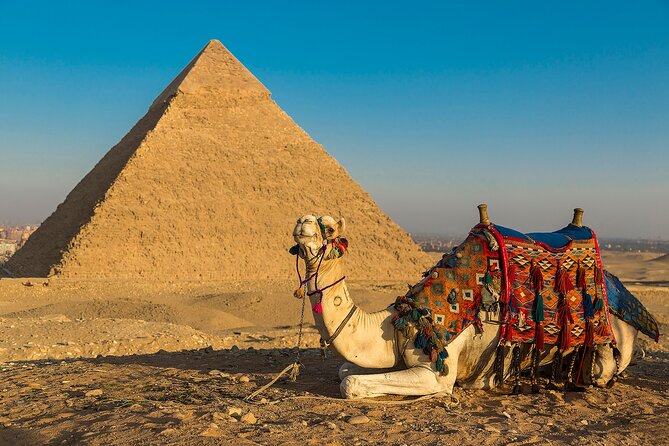
Day two goes straight to Egypt’s headline attraction. At Giza, you see the Great Pyramid of Khufu, along with the pyramids of Khafre and Menkaure, the Sphinx, and the wider pyramid area.
The stated visit lasts more than two hours, which gives you time to look beyond the standard photo stop. You can choose to enter one pyramid chamber or visit the Solar Boat Museum, and a camel ride is offered as an optional addition. Those extras may appeal to you, but they can also make a hot morning feel longer, so choose based on your interest rather than pressure.
A guide matters at Giza because the scale can distract from the details. You will hear how the pyramids were built, why the site was placed here, and how the Sphinx fits into the royal setting. Bring water, sun protection, and shoes that feel steady on uneven ground. The information provided does not specify the exact time of day, so ask when booking if avoiding the strongest heat is important to you.
After Giza, the Egyptian Museum receives about two and a half hours. The museum holds tens of thousands of objects, far too many for a single visit. A good guide helps you focus on the major pieces instead of trying to read every label.
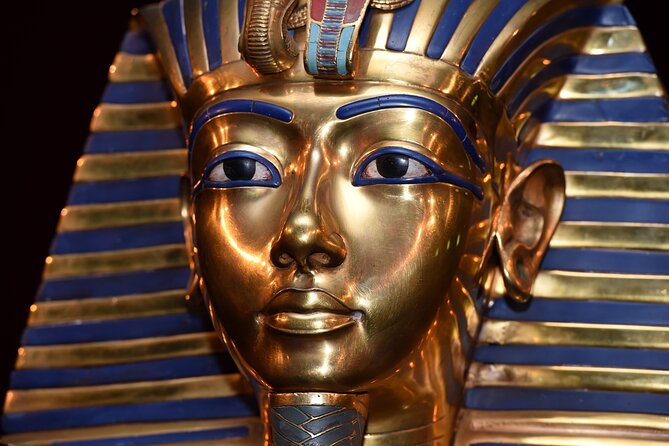
The Tutankhamun wing is a clear priority, with its gold objects and royal treasures. You will also see artifacts from different periods of ancient Egypt, though the itinerary promises a highlights tour rather than a full survey. I like this pairing of Giza and the museum: first you see the monuments in their original setting, then you meet the objects that reveal how royal life, burial, and belief worked.
Aswan brings Philae and the High Dam
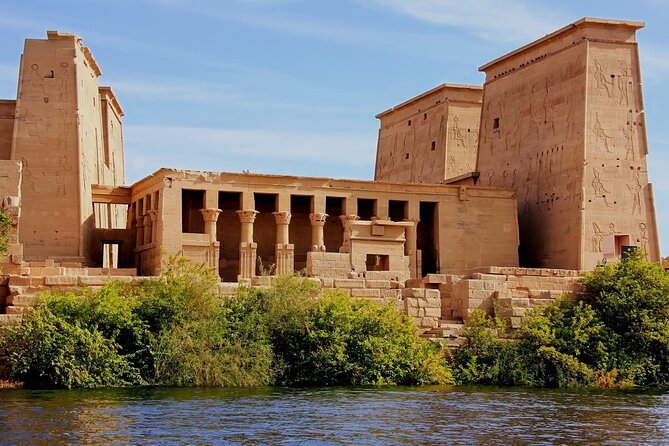
The southern section begins with Philae Temple. Dedicated to Isis, the temple has an unusual modern story as well as ancient carvings. Rising water after construction of the first Aswan Dam threatened the site, and an international rescue effort moved the temple to Agilika Island in the 1960s.
That relocation is worth understanding while you are there. The temple is not simply an ancient building preserved by luck. It is also an example of large-scale conservation, with Egyptian authorities, UNESCO, and other countries working to save it from submersion.
Your Egyptologist guide will explain the pylons, courts, reliefs, and additions made during the Greek, Roman, and Byzantine periods. Allow about two hours. The site rewards attention to the layers of construction, since different rulers kept adding to the sacred complex.
The Aswan High Dam follows for about 30 minutes. This is a very different kind of sight, but it gives useful context. The dam produced hydroelectric power and reduced the danger of Nile floods, while also changing the river and threatening ancient sites such as Philae.
I appreciate that the tour includes both the ancient temple and the modern engineering project. Egypt is not only a collection of ruins. It is also a modern country that has had to balance electricity, farming, flood control, and preservation.
The cruise slows the journey between Aswan and Luxor
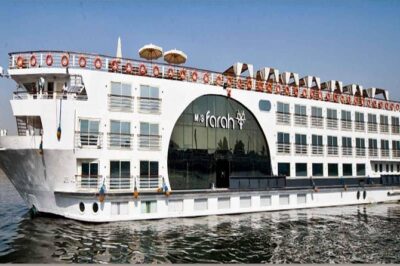
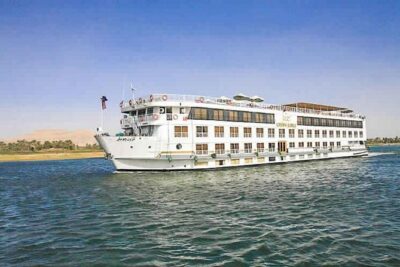
The three-night Nile cruise is the most restful part of the trip. Full board is included in the main summary, and the ship carries you north from Aswan toward Luxor while the sightseeing continues at scheduled stops.
A cruise changes the feel of the route. Instead of spending every day in a vehicle, you have time aboard ship between temples. You can use those hours to rest, eat, watch the river, and recover from the early starts that often accompany Egypt sightseeing.
The tour does not name the ship, cabin category, sailing schedule, or onboard facilities. Ask for those details before paying. The phrase five-star Cairo hotel is used for two nights, but the cruise standard is not described with the same precision. If your comfort level depends on cabin size, deck position, or dining arrangements, get those points in writing.
You should also confirm how the cruise dates line up with the train journeys. The published plan places the cruise between Aswan and Luxor, but exact boarding and disembarkation times can affect how much free time you have.
More Nile Cruises in Cairo
- Cairo: Dinner Cruise on the Nile River
★ 4.2 · 741 reviews - 2-Hour Nile River Dinner Cruise From Cairo
★ 4.5 · 672 reviews - Private Felucca Ride on the Nile River
★ 4.2 · 537 reviews - Cairo Private Felucca OnThe Nile River With Pickup and Soft Drink
★ 4.5 · 438 reviews
Kom Ombo and Edfu show Egypt’s temple tradition
While aboard the ship, you visit Kom Ombo and Edfu. Kom Ombo is distinctive because it is a double temple, linked with Sobek, the crocodile-headed god, and Horus the Elder. The visit lasts about an hour and a half, followed by lunch aboard the cruise and leisure time.
This is a good place to let your guide explain how Egyptian religion could assign different roles to different deities within one complex. The crocodile association also gives the site a memorable angle, especially if you have already seen more conventional royal temples.
Edfu receives about two hours and is dedicated to Horus, the falcon-headed god. It is described as the best-preserved ancient temple on the route, so you can get a clearer sense of the original proportions, columns, reliefs, and inscriptions.
The contrast between Kom Ombo and Edfu helps break up the temple visits. Still, you will be seeing several major religious sites in a short period. If you are fascinated by inscriptions, ask your guide to slow down for specific scenes. If your attention fades after the first few temples, use the cruise downtime to rest rather than forcing yourself to absorb every detail.
Luxor’s west bank covers tombs, terraces, and statues
Luxor’s west bank is the archaeological centerpiece of the cruise. At the Valley of the Kings, you can enter three tombs, where painted scenes and inscriptions survive inside the mountain. The pharaohs chose this barren valley to hide royal burials and their treasures, although the tombs were not all protected from ancient robbers.
The standard visit includes three tombs, with extra royal tombs such as Tutankhamun available as an option. Admission to additional tombs may involve a separate fee, so ask your guide what is covered. The itinerary specifically notes the option to visit Tutankhamun’s tomb, while some people on longer Egypt trips also singled out Nefertari’s tomb. Do not assume either special tomb is included in this eight-day price.
The tombs can be hot, narrow, and reached by walking over uneven ground. You will get more from them if you listen to the guide before entering, then take your time with the painted walls. Flash photography rules can change, so follow the instructions at the site.
Next comes the Temple of Hatshepsut at Deir el-Bahari. Hatshepsut ruled Egypt for about 20 prosperous years and was one of the country’s most important female pharaohs. Her mortuary temple differs from the Valley tombs, with broad terraces, limestone construction, and sections cut into the rock.
The temple’s reliefs tell the story of her divine birth and royal authority. It is a fine reminder that Egyptian monuments were political statements as much as religious buildings.
The Colossi of Memnon take about 30 minutes. These two seated statues depict Amenhotep III and face east toward the Nile. Their name comes from the Greek hero Memnon, not from the pharaoh shown, which gives your guide a chance to explain how later visitors renamed ancient monuments.
This stop is brief and works well as a final look at the west bank. Do not expect a long museum-style visit. The statues are best treated as a quick pause between larger sites.
Karnak and Luxor Temple finish the Nile section
Karnak needs two hours, and you should welcome the time. It is a vast temple complex dedicated mainly to Amun-Ra, with generations of rulers adding halls, columns, obelisks, statues, and reliefs.
The Great Hypostyle Hall is the visual high point. Its forest of huge columns, some decorated with papyrus and lotus forms, makes the scale of Egyptian temple building easy to grasp. Obelisks and royal statues add more layers, but the complex can feel confusing without a guide.
Your guide will help connect the spaces and explain how each pharaoh used additions to associate himself with the gods and with earlier rulers. Wear comfortable shoes and keep water close. Two hours sounds generous, but Karnak is large and the walking adds up.
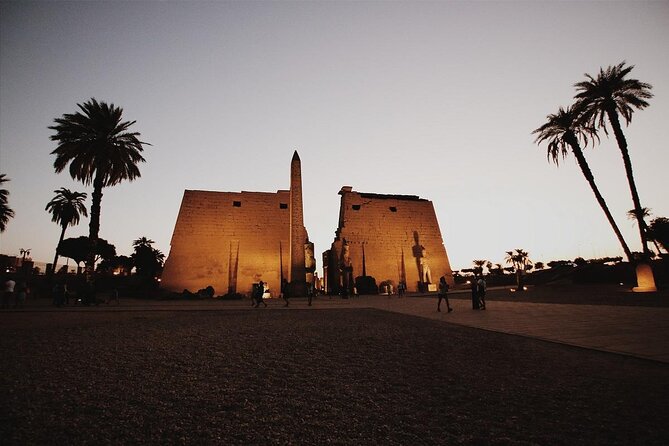
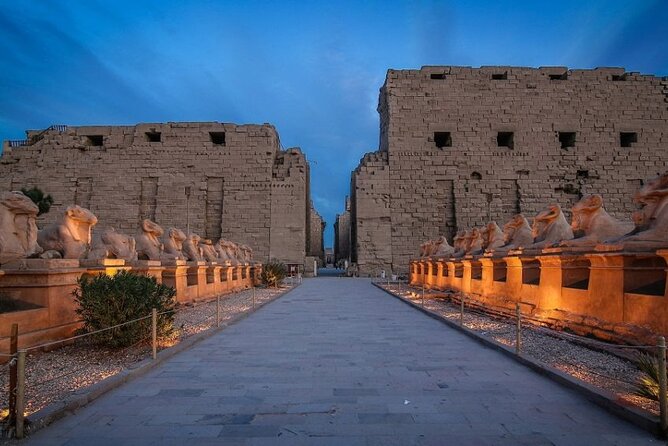
Luxor Temple takes another hour and a half. It was once connected to Karnak by an avenue of ram-headed sphinxes, used during religious celebrations. The temple also carries signs of later Greek, Roman, Islamic, and Coptic use, so it is not only an ancient Egyptian site frozen in one period.
Look for the statues and obelisks of Ramses II at the entrance. Only one of the original pair remains in Egypt, while the other was sent to Paris. This detail gives the entrance a wider story about European collecting and the movement of Egyptian antiquities.
The return to Cairo adds a different Egypt
Day seven shifts away from pharaohs. At the Citadel of Saladin, you visit the Mosque of Muhammad Ali, built in the 19th century in a style associated with Istanbul’s Blue Mosque. The alabaster surfaces and high position offer a sharp contrast to the sandstone temples of the Nile Valley.
The guide explains the main elements of the mosque and basic Islamic principles. You also get a panoramic view of Cairo from the Citadel, which helps you understand the size and density of the capital.
Coptic Cairo follows. The Hanging Church, dedicated to the Virgin Mary, was built above one of the towers of the Roman fortress of Babylon. Its interior contains 110 icons, and the church once served as the seat of the Coptic patriarch.
The nearby Church of St. Sergius and Bacchus is associated with the Holy Family’s time in Egypt. The itinerary also includes Cairo’s historic Jewish synagogue, presenting the city through three major religious traditions. This is one of the tour’s most useful contrasts: after days of ancient temples, you see how later communities shaped Cairo.
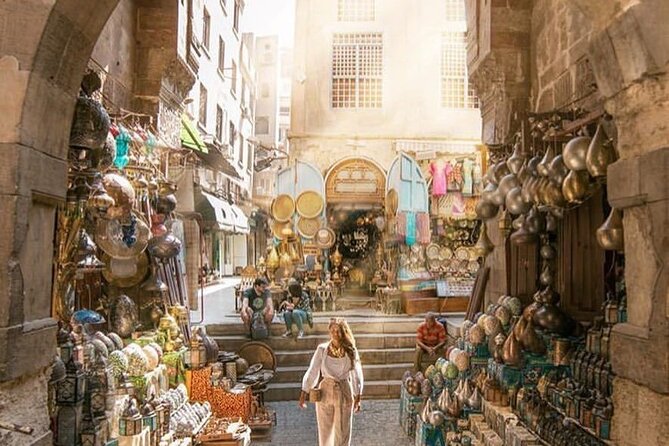
Khan Al-Khalili provides free time for browsing and bargaining. You can wander through its narrow streets, shop for souvenirs, or sit at El Fishawy coffeehouse, which dates to 1763. The scheduled time is about 90 minutes, enough for a taste but not a long shopping session.
Keep your expectations practical. Market browsing means dealing with sales pitches and bargaining. Go with a price in mind, stay polite, and do not buy an item simply because a seller says it is ancient or special.
What $960 per person really covers
At $960 per person, the value depends heavily on what is confirmed in your final package. The headline benefits are substantial: private air-conditioned transport, a qualified Egyptologist guide, entrance fees for the named sites, airport assistance and transfers, two overnight trains, three cruise nights, and two nights in a five-star Cairo hotel according to the tour summary.
That is a lot of coordination for one price. Separate bookings for Cairo, Aswan, Luxor, trains, transport, cruise accommodation, and site tickets can become complicated quickly. The private format also matters if you want your own group rather than a large shared coach.
There is a wording issue you should resolve before booking. The general summary says two Cairo hotel nights and full-board cruise accommodation are included. The detailed section says accommodation and meals are optional, and also lists international airfare, visa costs, and internal flights as excluded.
Ask for a written breakdown covering:
- Hotel names and the two included nights
- Cruise name and cabin category
- Which meals are included on land and aboard ship
- Train class and whether berths are included
- Any extra fees for Tutankhamun’s or other special tombs
- Visa costs and any optional internal flight
The tour is usually booked well ahead, with an average booking lead time of 98 days. That suggests you should not leave the planning until the last moment, especially if your dates depend on flights or a particular cruise schedule.
Who should book this Egypt tour?
I would choose this trip if you want Egypt’s major sights in one organized circuit and prefer private guiding to independent logistics. It suits couples, families, and small groups who value airport help, dedicated transport, and the ability to ask questions along the way.
It is also a good fit if you want both ancient and later Egypt. The Pyramids, museum, tombs, and temples get most of the attention, but the mosque, churches, synagogue, and market keep Cairo from becoming a single-period history lesson.
You may want a longer trip if you hope to add Abu Simbel, Saqqara, Alexandria, more time in Cairo, or extra tombs. Those additions are not part of the stated eight-day plan. The schedule is already full, so adding major detours would require a custom arrangement.
The private format does not mean every moment is private and flexible. The cruise is a ship experience, and train travel has its own fixed timetable. You should be comfortable with early sightseeing, long touring days, and changing beds during the journey.
Should you book it?
Book this tour if you want a well-connected first look at Cairo, Aswan, and Luxor, with the hard transport pieces arranged and an Egyptologist beside you at the major sites. The combination of Giza, the museum, Philae, the Nile cruise, Valley of the Kings, Karnak, and Coptic Cairo gives you a strong introduction for the money if the advertised inclusions are confirmed.
Pause before booking if you need luxury details, slow pacing, or complete clarity about meals and accommodation. At $960, the price looks attractive, but the conflicting inclusion notes make a written confirmation essential. Once those details are settled, this is a practical, ambitious route for seeing Egypt’s greatest monuments without having to solve every connection yourself.
FAQ
How long is the tour?
The tour lasts eight days and seven nights.
Is this a private tour?
Yes. Only your group participates in the private tour or activity.
Are airport transfers provided?
Yes. Arrival assistance at Cairo International Airport and transfers by private, air-conditioned vehicle are provided.
How many nights are spent on the Nile cruise?
The main tour summary includes three nights on a cruise from Aswan to Luxor, with full board listed as included.
Are the Cairo hotel nights included?
The tour summary says two nights in a five-star Cairo hotel are included. However, the detailed inclusions section lists accommodation as optional, so confirm this point before booking.
Are meals included?
Full board is listed for the three-night Nile cruise in the main summary. The detailed inclusions section says meals are optional, so confirm which land and cruise meals are covered in your package.
Can I cancel for a full refund?
Yes, if you cancel at least 24 hours before the experience start time. Cancellations made less than 24 hours before the start time are not refunded, and late changes are not accepted.
Recently reviewed around Cairo
- White Desert Overnight Camping Sharing Tour in Egypt★ 5.0 · 15 reviews
- Cairo Best 2Days tour Pyramids, Saqqara & Old Cairo★ 5.0 · 15 reviews
- Giza Pyramids with (GEM) Grand Egyptian Museum★ 5.0 · 42 reviews
- sunset at Giza pyramids by camels★ 5.0 · 31 reviews
- Tour to Giza pyramids Memphis Sakkara and Felucca on the Nile★ 5.0 · 16 reviews
- visit the pyramids of Giza + the necropolis of Saqqara + the Memphis site.★ 4.5 · 20 reviews
- Private Giza pyramid,sphinx, Mummification temple& inside pyramid★ 5.0 · 32 reviews
- Private guided shopping tour in Khan el-Khalili with Lunch★ 4.5 · 21 reviews
Nile Cruises, compared.
4-Days Nile Cruise From Aswan To Luxor including Abu Simbel and Hot Air Balloon
Read our review →
Dinner Cruise on the Nile River with Entertainment
Read our review →
4-Day 3-Night Nile Cruise from Aswan to Luxor&Abu Simbel+Balloon
Read our review →
4-Day 3-Night Nile Cruise from Aswan to Luxor including Abu Simbel, Air Balloon
Read our review →
4-Day Nile Cruise from Aswan to Luxor with Guide
Read our review →
Browse the lists this tour appears in