
Reviewed · ABU SIMBEL TOURS
Private Tour: Abu Simbel by Minibus from Aswan
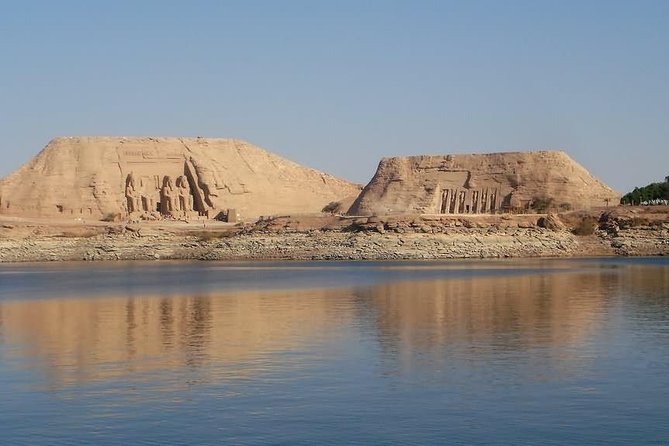
Abu Simbel is the kind of place that makes a three-hour desert drive feel worthwhile. Cut into the rock beside Lake Nasser, the temples greet you with enormous seated figures of Ramses II, and the scale is even more startling once you step inside. This private tour gives you your own minibus and Egyptologist guide, rather than folding you into a large sightseeing group.
I like the door-to-door pickup from an Aswan hotel or port, and I like having free time inside both temples after the guide’s outdoor briefing. The main catch is the journey: roughly three hours each way, with convoy rules and possible delays that can leave you only about an hour at the site.
In This Review
- Key points at a glance
- Why Abu Simbel earns the long ride
- A private ride from Aswan
- The desert road and convoy wait
- Seeing the Great Temple of Ramses II
- The smaller Temple of Hathor and Nefertari
- The engineering feat behind the temples
- How much value do you get for $231.42?
- Timing, heat, and the amount of temple time
- Guide service and what private really means
- Who should book this Abu Simbel trip?
- Should you book it?
- FAQ
- How long is the Abu Simbel tour from Aswan?
- What temples will I visit?
- Is transportation included?
- Is the tour private?
- Can I choose the departure time?
- Can the guide enter the temples with me?
- Is admission to Abu Simbel included?
- Will I visit the visitor center?
- What is the cancellation policy?
Key points at a glance
- Three hours across the desert: Abu Simbel is a long day from Aswan, but the temples are among Egypt’s essential sights.
- Two temples, not one: See Ramses II’s huge Great Temple and the smaller Temple of Hathor, dedicated to Hathor and Nefertari.
- Private attention: Only your party takes part, with hotel or port pickup and drop-off.
- Guiding stops at the entrance: Guides cannot enter the temples, so your Egyptologist explains the interiors before you explore alone.
- Timing matters: Early departures can help with heat and crowds, while later departures may suit you if you have no afternoon plans.
- A costly solo outing: At $231.42 per person, the price makes more sense for a small group sharing the private vehicle.
Why Abu Simbel earns the long ride
Abu Simbel is far south of Aswan, beyond the settled Nile Valley and beside Lake Nasser. The road crosses open desert for about three hours, so this is not a quick side trip. Still, the reward is one of ancient Egypt’s most dramatic settings and two temples that combine giant sculpture, painted chambers, royal propaganda, and a remarkable modern rescue story.
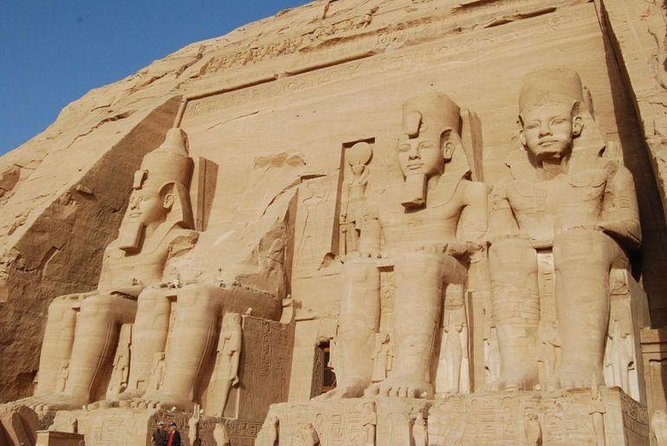
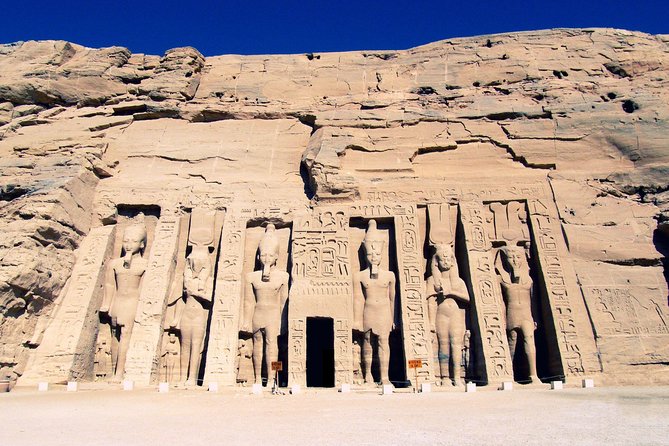
The Great Temple was built for Ramses II in the 13th century BC. Four colossal seated statues of the king dominate the facade, each meant to project power to anyone approaching from the south. Nearby, the smaller Temple of Hathor honors the goddess Hathor and Queen Nefertari, Ramses II’s favored wife. Its facade uses six large standing figures, with Ramses and Nefertari shown at similar height, an unusual and meaningful choice in royal art.
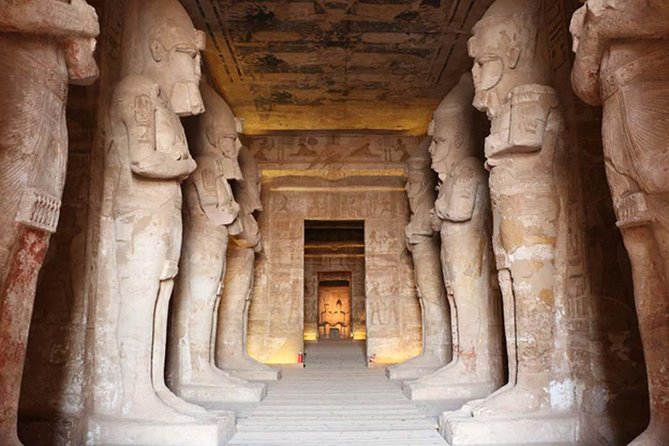
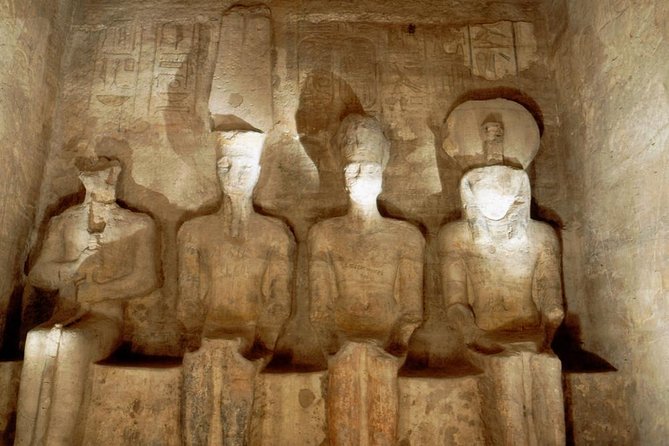
I especially like that the experience gives you time to look beyond the famous facade. Inside the Great Temple, you can see towering statues, painted battle scenes, pillars, and wall decoration. The Temple of Hathor has its own mood, with murals and pillars showing Hathor and Nefertari.
More Aswan trips worth a second look
- Private Day Tour to Abu Simbel Temples from Aswan
★ 4.5 · 507 reviews - Aswan: High Dam, Unfinished Obelisk, & Philae Private Tour
★ 4.5 · 375 reviews - 4-Day 3-Night Nile Cruise from Aswan to Luxor – Private Tour
★ 5.0 · 369 reviews
A private ride from Aswan
The tour begins with pickup at your Aswan hotel or port. The vehicle is an air-conditioned private minibus, and only your group participates. That matters on a road day this long. You can settle into your own seats, ask questions as you go, and avoid spending the day waiting for a large group to assemble at several hotels.
The private format also helps if your schedule is tight. You choose a departure time when booking, and the operator can arrange pickup around a stay in Aswan or an arrival at the port. One useful detail is that local staff may meet you ahead of time to confirm the plan, particularly if you are arriving by boat.
Do not confuse private transport with a short or relaxed outing. The round trip can take six hours, and the road is commonly handled in a convoy under tourist police instructions. Departure times have included about 3:45 or 4 a.m., 8:45 a.m., and even late-night starts around 11:30 p.m. The exact arrangement can depend on road-safety rules and convoy organization.
An early start has clear benefits. You may reach Abu Simbel before the worst heat and avoid some of the day’s crowds. A later start lets you sleep longer and may work better if you have no afternoon plans in Aswan. The tradeoff is simple: late departures can mean hotter conditions, more people, or less time at the temples if the convoy runs slowly.
The desert road and convoy wait
The drive is mostly about getting from Aswan to the temples, not sightseeing along the way. You may see camels from the road, but the main feature is the wide, stark desert around the route. Bring water, and ask your hotel whether it can provide breakfast for an early departure. Some boat operators provide a box breakfast with coffee or tea.
The convoy system deserves a realistic warning. It is used for security and road control, but it can also create delays. There have been departures where vehicles turned around or waited while the convoy reorganized. That matters because every lost minute comes out of your time at Abu Simbel.
If the trip is scheduled for eight hours, think of that as an approximate total, not a promise that you will spend two full hours inside the temples. Some outings allow around two hours at the complex, while others have been compressed to roughly one hour because of convoy delays. Ask at pickup what time the return convoy is expected to leave and how much time you will have on site.
Comfort varies by vehicle and driver. The minibus is air-conditioned, and an onboard ice box has been appreciated on hot days. Yet some departures have used a small van rather than a spacious coach. If you are tall, traveling with several people, or prone to motion discomfort, ask what vehicle is planned. A small pillow from your hotel can make the long ride easier.
Seeing the Great Temple of Ramses II
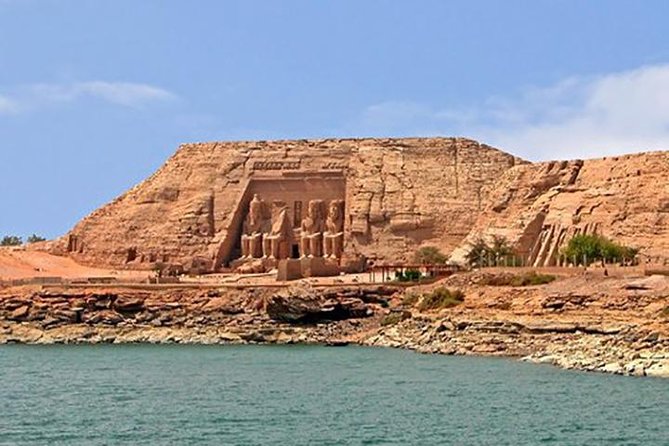
The short walk from the vehicle brings you to the unforgettable facade. Four seated figures of Ramses II are carved into the cliff, with smaller figures of family members around them. One statue is damaged, which only adds to the sense of age and scale. Stand back before heading inside, because the facade is difficult to take in from close range.
Your guide explains the history outside the entrance. Since guides are not permitted inside the temples due to the high number of people at the site, this briefing is important. A good guide uses photographs and illustrations to show you the layout, point out the major scenes, and explain what to look for before you enter.
Inside, the Great Temple unfolds through halls lined with colossal royal statues and pillars. Painted battle scenes celebrate Ramses II’s military victories, including the famous imagery connected with the Battle of Kadesh. You do not need to race through it. Take time to look at the scale of the statues, then move closer to the walls to see the painted details.
The guiding arrangement is both useful and imperfect. You get privacy while exploring, but you cannot ask your guide questions beside the actual reliefs. The quality of the outdoor explanation matters a great deal. Some guides on past departures, including guides named Mark and Michael, have been praised for clear English and strong Egyptology. Other departures have suffered from short briefings and vague answers, so a private booking is not a guarantee of expert interpretation.
A different kind of day out, same part of Egypt:
- 4-Days Nile Cruise From Aswan To Luxor including Abu Simbel and Hot Air Balloon
★ 5.0 · 3,142 reviews - From Aswan: Abu Simbel Temple Day Trip with Hotel Pickup
★ 4.4 · 2,807 reviews - 4-Day 3-Night Nile Cruise from Aswan to Luxor&Abu Simbel+Balloon
★ 5.0 · 2,023 reviews - 4-Day 3-Night Nile Cruise from Aswan to Luxor including Abu Simbel, Air Balloon
★ 4.5 · 612 reviews
The smaller Temple of Hathor and Nefertari
The Temple of Hathor is physically smaller, but do not treat it as an afterthought. Its six facade figures show Ramses II and Nefertari, and the temple gives you a more personal look at royal imagery. Nefertari appears with Hathor, linking the queen to the goddess and giving the building a different focus from the military and royal message of the Great Temple.
Inside, look for the murals and pillars engraved with Hathor and Nefertari. The decoration is more intimate than the huge first temple, and the details reward a slower pace. Your guide will explain the main features before you go in, then you explore on your own.
Time is the pressure point here. If the convoy has delayed your arrival, you may have to choose between a careful look and a broad visit to both temples. I would see both interiors even if that means fewer photographs outside. The Great Temple gets the fame, but the smaller temple completes the story.
The engineering feat behind the temples
The modern history of Abu Simbel is nearly as striking as its ancient art. When the Aswan High Dam was built, rising water from Lake Nasser threatened to flood the temples. A UNESCO-led international project moved them in 1968 to higher ground, piece by piece.
The temples were dismantled and reassembled above the future waterline. The work preserved the cliff-cut monuments while keeping their relationship to the lake and their original orientation as closely as possible. Look for the joins in the reconstructed rock as you walk around the facade. They are remarkably hard to spot.
If time permits, your guide may take you to the small visitor center after the temples. It documents the relocation project and helps explain how such enormous structures could be cut apart and put back together. This stop is worthwhile, but it is not guaranteed. When the convoy schedule is tight, the visitor center is likely to be sacrificed so you can return safely to Aswan.
The relocation also gives Abu Simbel an important modern lesson. You are not only looking at ancient monuments. You are looking at buildings saved by international cooperation and major engineering work, a reminder that archaeological sites can be vulnerable even after surviving for thousands of years.
How much value do you get for $231.42?
At $231.42 per person, this is not a budget excursion. The price includes private air-conditioned transportation, a qualified Egyptologist guide, pickup and drop-off, and admission to the temple complex. For one person, or a couple paying separately, the cost can feel high for a day with six hours on the road.
The value improves when several people share the private vehicle. Group discounts are offered, and a private tour can be convenient if you need pickup at a cruise boat or want a departure that fits a narrow Aswan schedule. You are paying for coordination, private transport, and a guide, not simply for a ride to the entrance.
Compare the price against what your hotel or boat can arrange. A less expensive private car may be available locally, and some people have found similar transport and guiding through their accommodation. The advantage here is having the arrangements made in advance and a contact who can coordinate pickup and drop-off.
I would pay the premium if your time in Aswan is limited, you are uneasy about arranging the desert journey yourself, or you want a private vehicle for your family or small group. I would hesitate if you are traveling alone, watching your budget, or mainly want transportation rather than guiding.
Timing, heat, and the amount of temple time
The best departure time depends on what matters most to you. A 4 a.m. start can reduce the heat and may get you ahead of some crowds, but it means losing sleep and spending much of the day on the road. A departure around 8:45 a.m. can be more humane if you have no later plans, though the site may be busier and hotter.
Late-night departures have also been used. Leaving around 11:30 p.m. can put you at the temples at an unusual hour and may produce quieter conditions. The return drive can then offer changing desert light or sunset views, but you need to be comfortable with a very long, tiring day.
Ask three questions before settling on a time:
- How long will I have inside each temple?
- What time is the return convoy expected to leave?
- If the convoy is delayed, will the visitor center be skipped?
These questions are more useful than simply asking what time the tour departs. The difference between one hour and two hours at Abu Simbel is substantial.
Guide service and what private really means
A private guide should make the site easier to understand, especially when you cannot follow the guide inside. The strongest guides on this experience have been described as fluent in English, friendly, and able to explain the temples’ background during the walk from the minibus.
But service can vary. Some guides have offered only a brief explanation, spent too much time on a phone, or struggled with basic questions. Others have stayed engaged, helped with photographs, and made the long outing feel personal. I would confirm the guide’s language and Egyptology qualifications when booking, and I would bring a few questions of your own about the relocation, temple alignment, Ramses II, and Nefertari.
The guide may also suggest a papyrus shop or another commercial stop. This is not described as a required part of the itinerary, but it has happened on some outings. If you would rather spend your limited time at Abu Simbel, say so clearly. The private format should make it easier to keep the focus on the temples.
Who should book this Abu Simbel trip?
This tour suits you if Abu Simbel is high on your Egypt wish list and you are staying in Aswan. It is particularly practical for cruise passengers, families, and small groups that want hotel or port pickup without arranging a vehicle on their own.
It also works for people who value a private schedule. You can ask questions in the minibus, adjust your pace within the site, and avoid a large group’s fixed commentary. The free time inside both temples is a real benefit.
I would think twice if you dislike long road journeys, have only a little tolerance for heat, or expect several hours of leisurely exploration. The temples are the star, but the transport can be tiring, and convoy delays may shorten the visit. A small vehicle, an early start, or a return journey in darkness may not suit everyone.
The experience has an overall rating of 4 out of 5 from 42 ratings, which fits the pattern: Abu Simbel itself earns the strongest praise, while transport timing, guide quality, and convoy control produce the mixed reactions. That is a fair way to judge the tour. You are buying access to an extraordinary site, but the day depends on road rules and the people assigned to your vehicle.
Should you book it?
I would book this private Abu Simbel trip if you have one day in Aswan, want the temples arranged in advance, and can accept a six-hour round trip for roughly one to two hours at the site. The monuments are too important to skip simply because the drive is long.
Book with a small group if possible, ask about the departure and return convoy, and confirm that the guide will give a full explanation before you enter. Bring water, sun protection, a hotel breakfast, and a small pillow for the minibus.
If price matters more than privacy, compare a local hotel or boat option first. If convenience, advance coordination, and a private guide matter more, the $231.42 price can be reasonable, especially when shared among several people.
FAQ
How long is the Abu Simbel tour from Aswan?
The experience lasts about eight hours, with approximately three hours of driving each way. The time at the temples can vary if the convoy is delayed.
What temples will I visit?
You will visit the Great Temple of Ramses II and the smaller Temple of Hathor, dedicated to Hathor and associated with Queen Nefertari.
Is transportation included?
Yes. The tour includes private transportation by air-conditioned minibus, with pickup and drop-off at an Aswan hotel or port.
Is the tour private?
Yes. Only your group participates in the activity.
Can I choose the departure time?
You can choose a preferred departure time when booking. Actual timing may be affected by tourist police instructions and convoy arrangements.
Can the guide enter the temples with me?
No. Guides are not permitted inside either temple because of the high number of visitors. The guide explains the interiors before you enter, and you then explore independently.
Is admission to Abu Simbel included?
Yes. Admission to the Abu Simbel Temple Complex is included.
Will I visit the visitor center?
You may visit the small visitor center if time permits. It explains how the temples were moved in 1968 to protect them from flooding caused by the Aswan High Dam.
What is the cancellation policy?
You can cancel at least 24 hours before the experience start time for a full refund. Cancellations or changes made less than 24 hours before the start time are not accepted for a refund.
Recently reviewed around Aswan
- (3-Nights Cruise From Aswan To Luxor & Balloon, Abu Simbel)★ 4.5 · 23 reviews
- Philae Temple and Aswan High-Dam Half-day tour★ 5.0 · 49 reviews
- Sailing Nile Cruise from Aswan to Luxor for 2 Nights★ 4.5 · 139 reviews
- Private Tour in Aswan : Felucca and Nubian village★ 5.0 · 29 reviews
- 4-Days Aswan sails Nile Cruise Luxor &Abu Simbel.Hot air Balloon★ 4.5 · 77 reviews
- Day Tour to Abu Simbel from Aswan by Bus★ 4.5 · 25 reviews
- Abu Simbel Private Full-Day Tour from Aswan★ 5.0 · 114 reviews
- Nubian Village by Motorboat In Aswan★ 5.0 · 97 reviews
Abu Simbel Tours, compared.
4-Days Nile Cruise From Aswan To Luxor including Abu Simbel and Hot Air Balloon
Read our review →
4-Day 3-Night Nile Cruise from Aswan to Luxor&Abu Simbel+Balloon
Read our review →
4-Day 3-Night Nile Cruise from Aswan to Luxor including Abu Simbel, Air Balloon
Read our review →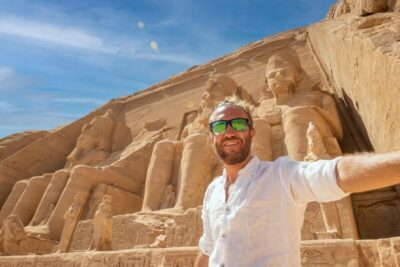
Abu Simbel Temple Private Guided Day Trip with Lunch
Read our review →4-Days Nile Cruise From Aswan To Luxor including Abu Simbel and Hot Air Balloon
Read our review →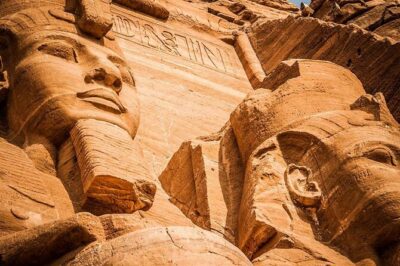
Private Day Tour to Abu Simbel Temples from Aswan
Read our review →4 Days Nile Cruise from Aswan to Luxor including Abu Simbel and Hot Air Balloon
Read our review →Browse the lists this tour appears in