
Reviewed · MEMPHIS & SAQQARA TOURS
Private Tour: Memphis and Sakkara
The Step Pyramid at Saqqara is the star of this private Cairo outing. Built for Pharaoh Djoser and designed by Imhotep, it marks an early leap from flat-roofed tombs to the pyramid form that later reached its grandest scale at Giza. I like having an Egyptologist beside me here, and I like that a private vehicle and private schedule let you stop for photos, questions, or a slower look at the tomb art. The main caution is Memphis: its Ramses II statue is superb, but the rest of the site can feel thin beside Saqqara.
I also like the tour’s compact shape. In roughly three to four hours, you see two major archaeological areas without committing a whole day, and hotel pickup from Cairo or Giza keeps the morning simple. Ask for a patient, engaging guide if possible. Mohammed, Mahmoud, Tito, Fouad Salah, Chaly, and Osama are among the guides who have received especially warm praise, though a particular guide cannot be guaranteed.
In This Review
- Key points to know before booking
- Why Saqqara deserves your morning
- The Step Pyramid and Imhotep’s great idea
- Memphis, Ramses II, and a more modest stop
- A private guide changes the pace
- The optional Papyrus Institute visit
- Transport, timing, and what the three hours really means
- Price and value at $100.92 per person
- Families, photographers, and history fans
- Practical advice for a smoother visit
- Should you book Memphis and Saqqara?
- FAQ
- How long does the Memphis and Saqqara tour last?
- What time does the tour start?
- Is hotel pickup included?
- Is the tour private?
- Is an Egyptologist guide included?
- Is lunch included?
- Can I skip the Papyrus Institute?
- What is the cancellation policy?
Key points to know before booking
- The Step Pyramid is the main event: Saqqara offers Egypt’s oldest pyramid and access to early royal tombs.
- Memphis is brief but worthwhile for Ramses II: The open-air museum lets you walk around a huge fallen statue.
- You control the pace: This is a private tour, so you can spend more time at tombs and less time at weaker parts of the visit.
- Transport is handled for you: Hotel pickup, drop-off, and an air-conditioned private minivan are included.
- The Papyrus Institute is optional: You can watch scroll making and shop for genuine papyrus items, or tell your guide to skip it.
- The tour suits families and history fans: Guides have handled young children and even allowed breaks for a family with a two-month-old baby.
Why Saqqara deserves your morning
Cairo’s pyramids are not all about Giza. Saqqara shows you an earlier, more experimental chapter in Egyptian building, when royal tombs were changing shape and scale. The Step Pyramid’s stacked design looks different from the smooth-sided pyramids you may already know, and that difference is exactly what makes the site useful.
Your guide can explain how Saqqara formed part of the vast necropolis serving Memphis, the ancient capital of Lower Egypt. The area contains royal monuments, private tombs, chapels, and decorated chambers. You are not simply looking at one pyramid in an empty field. You are walking through a large burial zone tied to the growth of Egypt’s early state.
I would give Saqqara the longer share of your time. The supplied schedule allows about an hour at Memphis and an hour at Saqqara, but the private format means you can ask to linger at the Step Pyramid or spend more time inside a tomb if access is included that day. Exact access can depend on the operating arrangements and what your guide includes, so confirm your preferred tombs at the start.
The site can also be physically demanding in small ways. You may walk over uneven ground, pause in exposed areas, and move between monuments by vehicle. Wear practical shoes, bring water, and keep your hat or sun protection handy. The tour is described as suitable for most people, but a private group gives you the best chance to adjust the pace if someone needs a break.
More Cairo trips worth a second look
- Cairo: Pyramids & Great Sphinx Private Tour with Camel Ride
★ 4.9 · 6,335 reviews - Cairo 8 Hour Private Tour of Pyramids, Egyptian Museum and Bazaar
★ 5.0 · 2,931 reviews - Private ViP all-inclusive Giza Pyramids,Sphinx,Inside Pyramid
★ 5.0 · 2,448 reviews
The Step Pyramid and Imhotep’s great idea
The Step Pyramid is the clearest reason to book this excursion. It was built nearly 5,000 years ago for Djoser, and its form reflects a major change in royal architecture. Instead of a single low mastaba, the monument rises in a series of stepped layers.
A good guide turns those stones into a story. Imhotep, the architect linked with the project, was not only an official in the modern sense. He became one of ancient Egypt’s most respected figures, later remembered as a wise man and healer. Ask your guide to explain what is known and what remains uncertain. That distinction matters at a site where later legends can easily blur into confirmed history.
Saqqara also offers a chance to see painted scenes and carved details in royal tombs. The art can be more intimate than the giant monuments at Giza. You might find scenes of food, farming, offerings, and daily work, all made to support the deceased in the next life.
One particularly useful feature of a private guide is the ability to ask why a certain image matters. Several highly rated guides, including Mahmoud and Tito, were praised for pointing out favorite frescoes and explaining details that are easy to miss. That is the difference between walking past a wall and understanding what you are seeing.
Some visits have included entry into the pyramid of Teti, giving visitors a chance to see an interior space as well as the main Step Pyramid. Since the exact sites included can vary, ask your guide what is open and what admission covers on your day.
Memphis, Ramses II, and a more modest stop
Memphis was founded around 3,100 BC and is associated with Menes, the king credited with uniting Upper and Lower Egypt. Its location helped control movement between the Nile Valley and Delta, making it an important political center in the first years of a united Egyptian kingdom.
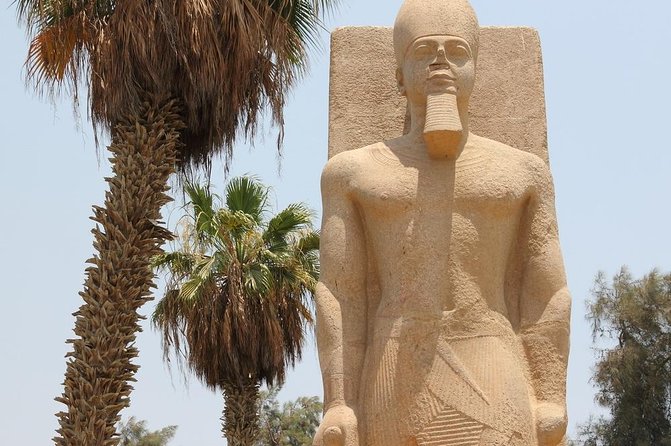
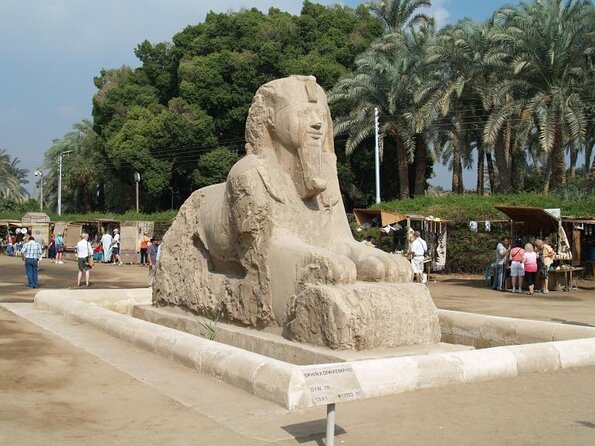
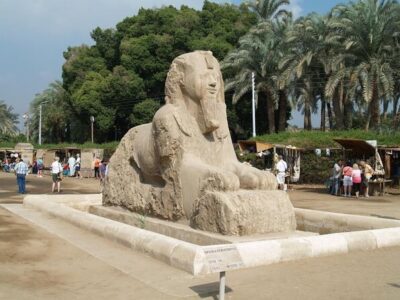
The modern visit is much smaller in feel than the ancient city once was. You will not find a complete urban center waiting to be explored. Instead, you see an open-air museum and scattered remains, including a large alabaster sphinx and major statues of Ramses II.
The fallen limestone statue of Ramses II is the highlight. You can walk around it and inspect the carved body from different angles. That close view is more satisfying than simply seeing a giant figure from behind a barrier. Your guide may also explain why archaeologists think other statues could remain in the area behind the museum.
I would be honest about Memphis when planning your expectations. If your main goal is a long, dense archaeological visit, Saqqara will likely feel more rewarding. Memphis works best as a short historical stop that adds context and gives you a close look at Ramses II. Some people consider the stop skippable, particularly if they are short on time. Others feel the statue alone makes the visit worthwhile.
Because the tour is private, you can make that judgment during the morning. If Memphis takes less time than expected, ask to put those minutes into Saqqara rather than spending extra time around souvenir stands.
A private guide changes the pace
The tour’s biggest practical advantage is not simply that it is private. It is that you can shape the visit around your group. You are not tied to a large party’s slowest photo stop or fastest walker, and you can ask for more explanation when a subject catches your interest.
This flexibility matters at Saqqara. A history enthusiast may want more time with tomb reliefs and pyramid design. A family may need shorter explanations, snack breaks, and a slower walk. One family with children aged seven, five, and three praised a guide for keeping the youngsters involved, while another family with a two-month-old used the private van for feeding breaks.
The guide quality will shape the experience. Strong guides have been described as clear English speakers, good storytellers, and active companions who stayed with the group rather than leaving everyone to wander alone. Mohammed was especially praised for bringing stories about Alexander the Great, Mark Antony and Cleopatra, and Ramses into the larger story of royal power. Osama received credit for humor during the drive as well as useful explanations at the sites.
Other names worth requesting, if the operator allows it, include Mahmoud, Tito, Fouad Salah, Chaly, and Ahmad. This is not a guarantee, but it is sensible to ask for a guide with the style you want. If you prefer detailed history, say so. If you need a slower walking pace or are traveling with children, mention that before pickup.
There is a warning here too. One unhappy experience involved a guide who walked too fast and left little time for photography. Use the private format to speak up early. Tell the guide you want regular photo pauses and a pace that keeps everyone together.
A different kind of day out, same part of Egypt:
- Tour to Giza Pyramids and The Egyptian Museum
★ 5.0 · 6,016 reviews - VIP All inclusive Best of the best Giza Pyramids,Sakkara,Memphis
★ 5.0 · 3,164 reviews - From Cairo: Pyramids of Giza, Sphinx, Saqqara & Memphis Tour
★ 4.7 · 3,110 reviews - Cairo: Pyramids, Sakkara & Memphis Tour with Lunch
★ 4.6 · 2,493 reviews
The optional Papyrus Institute visit
After the archaeological sites, you may be offered a visit to a Papyrus Institute. Here you can see how papyrus scrolls are made and browse finished pieces. The visit is optional, so you can decline it if you would rather use the time for Saqqara or return to your hotel.
I would treat this as a shopping and demonstration stop, not as a core archaeological attraction. It may be interesting if you want to understand how the plant is processed into sheets and how traditional artwork is produced. It can also give you a chance to buy a souvenir that feels connected to Egyptian craft.
If you are not interested in shopping, tell your guide at the beginning. The tour description specifically allows you to leave out the institute, and a private tour makes that request easier than it would be with a fixed group.
Transport, timing, and what the three hours really means
Pickup begins at about 9:00 am, with hotel pickup and drop-off from Cairo and Giza included. You ride in a private, air-conditioned minivan, a useful feature in Egypt’s heat and city traffic.
The stated duration is about three hours, while the description also presents the outing as a three to four-hour experience. That difference is worth noting. Memphis and Saqqara each receive about an hour in the basic schedule, but driving time, pickup routes, photo stops, and the optional Papyrus Institute can affect the total.
This is best viewed as a focused morning, not a full archaeological day. It gives you the two sites without the fatigue of adding several more monuments. If you want to include Dahshur, ask in advance. One private group added it and found the pyramids and lighter crowds worthwhile, but Dahshur is not part of the standard tour details given here, so do not assume it is included or free.
The private van is also helpful for families and mixed-ability groups. You can return to the vehicle between sites, and you do not have to keep pace with strangers. Most people can participate, but the ground around ancient monuments is not presented as fully level or effortless.
Price and value at $100.92 per person
At $100.92 per person, this tour costs more than joining a basic group transfer, but the comparison is not quite fair. The price includes a private Egyptologist guide, private air-conditioned transportation, hotel pickup and drop-off, and the ability to control how long you spend at each site.
For two people, the total can feel substantial. For a family or small group, the private arrangement may make better financial sense because the price is set per person but the experience avoids the delays and compromises of a large coach. Group discounts are also offered, though the exact savings are not specified.
Admission tickets are listed as included for the Memphis and Saqqara stops. Lunch is included only if you choose the option that includes lunch. English-language guiding is included, while a 1,000 Egyptian pound supplement applies to other guide languages.
Extra transfer charges of 1,000 Egyptian pounds per car, round trip, apply for pickup from 6th of October, the New Administrative Capital, or New Cairo settlement areas. Check your hotel location before paying so the final price does not surprise you.
The value is strongest when you care about explanation and control. If you only want a driver to take you to the monuments, this may be more than you need. If you want the ancient stories explained on site and prefer to set the pace, the price is easier to justify.
Families, photographers, and history fans
I would recommend this tour most strongly to three kinds of visitors. First are people with limited time in Cairo who want a concentrated look at early pyramid building. Second are families who need a flexible vehicle and a guide able to keep young children engaged. Third are history fans who want the connections between Memphis, Saqqara, early kings, Ramses II, and later Egyptian power explained in one morning.
Photographers should also benefit from the private format, provided they set expectations. Ask for time to walk around the Ramses statue, frame the Step Pyramid, and pause at tomb art. Some guides, including Mahmoud, have been praised for taking photographs, but that is not a promised feature.
This may be less suitable if you want a slow, exhaustive archaeological day. The schedule is short, and Memphis has limited remains on display compared with Saqqara. It may also disappoint shoppers who expect the Papyrus Institute to be a major cultural stop, since that portion is optional and focused on demonstration and purchases.
Practical advice for a smoother visit
Book with the morning start in mind and make sure your hotel is within the standard pickup area. If you stay in one of the regions with a transfer supplement, confirm the added cost before departure.
At pickup, tell your guide three things: how much history you want, how often you want photo pauses, and whether you want the Papyrus Institute. This simple conversation can prevent the most common complaints, especially moving too quickly or spending time shopping when you would rather see monuments.
Ask what tombs are open and what is included in your admission. Conditions can change, and the tour description does not promise every tomb or every interior space. If entering a pyramid matters to you, raise the question before leaving Cairo.
Bring water and wear shoes suited to uneven archaeological ground. Keep some flexibility in your schedule because the advertised duration is approximate. Free cancellation is available up to 24 hours before the start time for a full refund, but changes or cancellations inside that window are not accepted.
Should you book Memphis and Saqqara?
Book it if the Step Pyramid is high on your Cairo list, you want an Egyptologist rather than a simple transfer, and you value a private pace. Saqqara is the clear strength, with early pyramid design, tomb art, and the possibility of seeing interiors such as Teti’s pyramid when available.
Book with measured expectations about Memphis. The Ramses II statue and open-air museum are worthwhile, but the ancient city is not presented as a fully preserved capital. If you have only one short morning, ask to keep Memphis efficient and give Saqqara the extra time.
I would also contact the operator about guide preferences. Ask for an English-speaking guide known for clear storytelling, such as Mahmoud, Tito, Mohammed, Osama, Ahmad, Fouad Salah, or Chaly, while understanding that assignments are not guaranteed. For families, photographers, and travelers who want real explanations at the monuments, this private outing offers good value and a practical way to see two important sites without filling an entire day.
FAQ
How long does the Memphis and Saqqara tour last?
The experience lasts approximately three to four hours. The listed visits allow about one hour at Memphis and one hour at Saqqara, with the remaining time used for transportation and any optional stop.
What time does the tour start?
Pickup begins at approximately 9:00 am.
Is hotel pickup included?
Yes. Hotel pickup and drop-off are included for hotels in Cairo and Giza. Extra round-trip vehicle charges apply for pickup from 6th of October, the New Administrative Capital, or New Cairo settlement areas.
Is the tour private?
Yes. Only your group participates, and transportation is provided in a private air-conditioned minivan.
Is an Egyptologist guide included?
Yes. An expert, qualified Egyptologist guide is included. English guiding is included in the listed price. Other languages require a 1,000 Egyptian pound supplement.
Is lunch included?
Lunch is included only when you select the option that includes lunch.
Can I skip the Papyrus Institute?
Yes. The Papyrus Institute visit is optional. Tell your guide that you do not want to include it.
What is the cancellation policy?
You can cancel at least 24 hours before the local start time for a full refund. Cancellations or changes made less than 24 hours before the experience are not accepted and are not refunded.
Recently reviewed around Cairo
- White Desert Overnight Camping Sharing Tour in Egypt★ 5.0 · 15 reviews
- Cairo Best 2Days tour Pyramids, Saqqara & Old Cairo★ 5.0 · 15 reviews
- Giza Pyramids with (GEM) Grand Egyptian Museum★ 5.0 · 42 reviews
- sunset at Giza pyramids by camels★ 5.0 · 31 reviews
- Tour to Giza pyramids Memphis Sakkara and Felucca on the Nile★ 5.0 · 16 reviews
- visit the pyramids of Giza + the necropolis of Saqqara + the Memphis site.★ 4.5 · 20 reviews
- Private Giza pyramid,sphinx, Mummification temple& inside pyramid★ 5.0 · 32 reviews
- Private guided shopping tour in Khan el-Khalili with Lunch★ 4.5 · 21 reviews
Memphis & Saqqara Tours, compared.
VIP All inclusive Best of the best Giza Pyramids,Sakkara,Memphis
Read our review →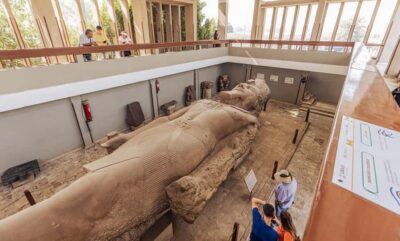
Pyramids of Giza, Sphinx, Saqqara & Memphis Tour
Read our review →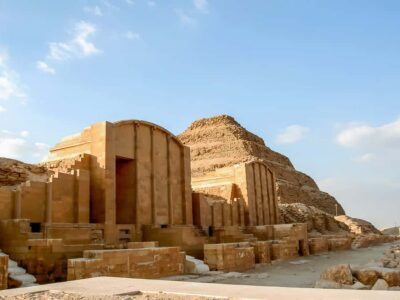
Private Day Tour Giza Pyramids, Sphinx, Memphis, and Saqqara
Read our review →
Private tour: GIza Pyramids, Memphis City & Sakkara Pyramid
Read our review →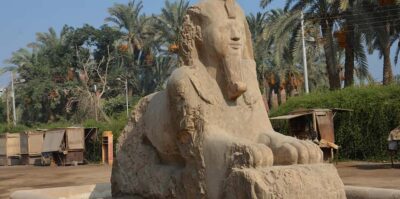
Sakkara, Memphis & Dahshur (Pyramid & Felucca Options)
Read our review →
Private Full-Day Tour to Giza Pyramids,Sphinx,Memphis, and Saqqara
Read our review →
All-inclusive Private Trip Giza Pyramids Sphinx Saqqara, Dahshur
Read our review →Browse the lists this tour appears in