
Reviewed · GIZA PYRAMIDS & SPHINX TOURS
Private Tour To Giza Pyramids ,Memphis,Saqqara & Dahshur Pyramids
The best thing about this tour is its sweep. In one long day, you move from the famous Giza Plateau to the quieter royal burial grounds at Saqqara and Dahshur, with ancient Memphis in between. I like the private car and hotel pickup, which save you from sorting out Cairo’s traffic, and I like the chance to see pyramid design evolve from the Step Pyramid to the Bent and Red Pyramids. The drawback is that nine hours packed with monuments, driving, shopping stops, and optional add-ons can feel tiring.
The $16 starting price looks excellent, but read the fine print. It is the transport-only rate, while a guide, entrance tickets, pyramid interiors, and lunch cost extra depending on the package you choose. The quality of the day also depends heavily on your assigned guide: names praised in the feedback include Merna, Kareem, Aya, Ahmed, and Mohammed, while a few visitors found their guides quiet, inaccurate, or too focused on finishing early.
In This Review
- Key points at a glance
- Why this route is worth your day
- Starting at Giza: the essential first stop
- Khufu, Khafre, and Menkaure
- The Sphinx and the best photo pauses
- Memphis and the giant statue of Ramesses II
- Saqqara and the Step Pyramid of Djoser
- Dahshur’s Bent Pyramid
- The Red Pyramid and the end of the route
- Guides, drivers, and the human factor
- Shopping stops and lunch choices
- Is the $16 price good value?
- Who should book this tour?
- FAQ
- What is included in the $16 tour price?
- Where does pickup take place?
- How long does the tour last?
- Does the tour include entry inside the pyramids?
- Is lunch included?
- Is this a group tour?
- Can I cancel for a full refund?
Key points at a glance
- Four major ancient sites in one day: Giza, Memphis, Saqqara, and Dahshur give you a broad view of Old Kingdom Egypt.
- Private transportation from Cairo or Giza: Your group gets a private air-conditioned vehicle and return transfer from your address.
- The $16 fare is the basic option: Guide services, entry tickets, lunch, and access inside the pyramids may require an upgrade.
- Saqqara adds more than another pyramid: You can see the Step Pyramid, the Pyramid of Unas, the Pyramid of Teti, and the Mastaba of Ti.
- Dahshur offers two important early pyramids: The Bent Pyramid shows a construction problem, while the Red Pyramid marks a successful smooth-sided design.
- Shopping stops are part of the day: Perfume, cotton, papyrus, and carpet visits may be useful, but they can reduce time at the monuments.
Why this route is worth your day
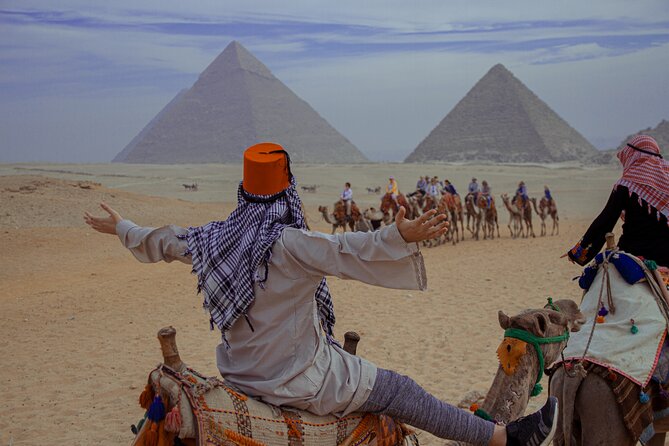
Giza is the obvious headline, but the real value here is comparison. The Great Pyramid of Khufu, the Pyramid of Khafre, and the Pyramid of Menkaure are not simply three giant stone shapes. Together with Saqqara and Dahshur, they show how Egyptian builders experimented with form, engineering, and royal burial over several generations.
You also get a useful contrast in atmosphere. Giza is Cairo’s essential ancient sight, and it can feel busy and highly organized around photo viewpoints, ticket areas, and vendors. Saqqara and Dahshur generally give you a broader sense of the desert burial grounds, with more space between monuments and a stronger feeling of archaeological discovery.
I especially like that the route includes places many short Cairo excursions skip. Memphis gives you a look at Egypt’s first capital, while Saqqara supplies the earliest major pyramid form. Dahshur then lets you see the stages that led to the familiar straight-sided pyramid.
This is not a slow, scholarly archaeological visit. It is a full day with several stops, and the schedule can become brisk. If you want long interior visits, detailed museum time, or quiet time at every monument, you may need a more focused tour.
More Cairo trips worth a second look
- Cairo: Pyramids & Great Sphinx Private Tour with Camel Ride
★ 4.9 · 6,335 reviews - Cairo 8 Hour Private Tour of Pyramids, Egyptian Museum and Bazaar
★ 5.0 · 2,931 reviews - Private ViP all-inclusive Giza Pyramids,Sphinx,Inside Pyramid
★ 5.0 · 2,448 reviews
Starting at Giza: the essential first stop
Pickup is scheduled for 8:00 a.m. from an address in Cairo or Giza. Your group travels in a private, air-conditioned vehicle, and bottled water is included. That matters in Cairo, where traffic can make a simple cross-town journey unpredictable and where having a driver waiting is far easier than arranging separate taxis between sites.
The Giza Plateau includes the Great Pyramid of Khufu, the Pyramid of Khafre, the Pyramid of Menkaure, the Great Sphinx, related temples, cemeteries, and remains of a workers’ village. The plateau sits west of the Nile, around 9 kilometers from the river and roughly 13 kilometers southwest of central Cairo.
The stated visit to the main plateau lasts about an hour, followed by separate time at the three pyramids and the Sphinx. The schedule lists about one hour for Khufu, 30 minutes for Menkaure, 30 minutes for Khafre, and 30 minutes for the Sphinx. Treat these times as a guide rather than a promise. Traffic, ticket lines, photo stops, and your chosen options can change the pace.
Khufu, Khafre, and Menkaure
The Great Pyramid of Khufu is the largest and most famous of the three. Its original complex included a valley temple, a causeway, a mortuary temple, and the pyramid itself. The valley temple is now buried beneath the village of Nazlet el-Samman, but traces of its paving and walls have been found.
The basic tour does not include entry inside the pyramids. If you want to enter Khufu or another pyramid, select the appropriate ticket option and confirm exactly what it covers before paying. Interior access can be physically demanding, and it is best treated as an optional extra rather than an automatic part of the day.
Menkaure is smaller than the other two Giza pyramids, but its complex remains important. It included a valley temple, causeway, mortuary temple, and pyramid. The valley temple once held several statues of the king, and a smaller ante-temple was added during the Fifth Dynasty.
Khafre’s pyramid often looks taller than Khufu’s because it sits on higher ground. It is also the pyramid associated with the Sphinx complex. Its original layout included a valley temple, the Sphinx temple, causeway, mortuary temple, and pyramid. If your guide is strong, this is a good place to ask how the temples and causeways connected the pyramid to the Nile.
The Sphinx and the best photo pauses
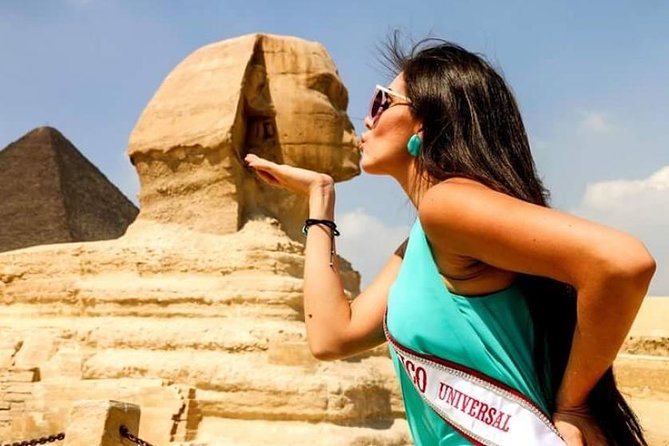
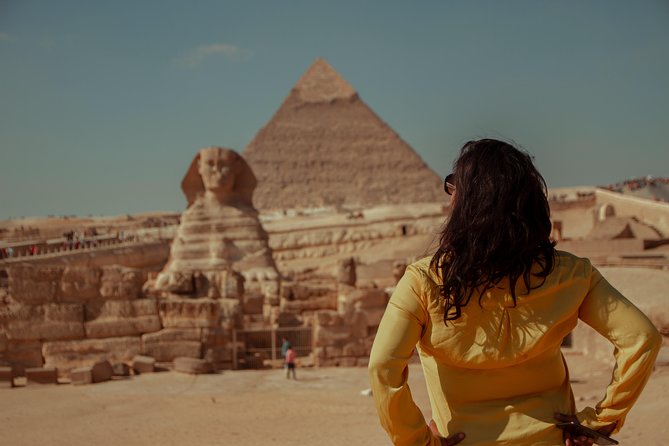
The Great Sphinx is a short but important stop. Its lion body and royal head were carved as part of the funeral complex associated with Khafre. You get a close view rather than merely seeing it from a distant plateau viewpoint.
The itinerary also includes a panoramic pyramid view for about 30 minutes. This is where the scale of Giza works best in photographs. Your guide or driver may help with picture angles, and several highly praised guides, including Ahmed and Kareem, were specifically appreciated for taking photos and finding good positions.
That personal help can be valuable, especially if you are traveling alone or with a small group. Still, keep control of your own time. A photo stop is useful, but it should not replace the actual monument visits.
A different kind of day out, same part of Egypt:
- Tour to Giza Pyramids and The Egyptian Museum
★ 5.0 · 6,016 reviews - VIP All inclusive Best of the best Giza Pyramids,Sakkara,Memphis
★ 5.0 · 3,164 reviews - From Cairo: Pyramids of Giza, Sphinx, Saqqara & Memphis Tour
★ 4.7 · 3,110 reviews - Cairo: Pyramids, Sakkara & Memphis Tour with Lunch
★ 4.6 · 2,493 reviews
Memphis and the giant statue of Ramesses II
After Giza, the route heads to Memphis, traditionally founded around 3100 BC and regarded as Egypt’s first capital. The site is less visually overwhelming than Giza, but its importance is substantial. This was a center of royal power during the Old Kingdom, and it helps explain why the pyramid fields developed nearby.
A highlight is the colossal statue of Ramesses II, displayed at the open-air museum. One visitor singled out the statue as the best part of the Memphis visit. That makes sense: the enormous reclining figure gives you a direct impression of royal scale and craftsmanship without the vast crowds associated with Giza.
The Memphis stop is scheduled for about an hour when combined with Saqqara. That means you should not expect every corner of the site to receive equal attention. A private tour gives you some flexibility, but tell your guide early if Memphis matters more to you than shopping or a long lunch.
Saqqara and the Step Pyramid of Djoser
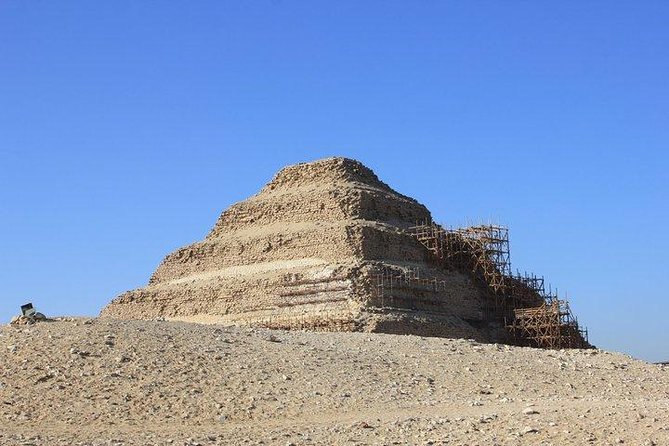
Saqqara is where the pyramid story changes. The Step Pyramid, also called the Djoser or Zoser Pyramid, is widely recognized as the world’s oldest major stone building structure. Its stacked design looks very different from the smooth-sided pyramids at Giza, and that difference is precisely why the stop matters.
The surrounding necropolis contains more than one royal monument. The route can include the Pyramid of Unas, the Pyramid of Teti, and the Mastaba of Ti. These visits add texture to the day because you are not only looking at giant royal tombs. You can also see decorated tomb spaces and scenes of everyday life.
The Pyramid of Unas is particularly notable for its funerary texts inside. The Pyramid of Teti is another Old Kingdom royal burial monument, with chambers and corridors that help you picture how the pyramid functioned as a tomb complex. Entry arrangements depend on the ticket package, so confirm whether the specific interior sites you want are covered.
The Mastaba of Ti is a different experience. This important Saqqara tomb was discovered by Auguste Mariette and contains two serdabs. Its wall scenes show ordinary activities and work, offering glimpses of ancient Egyptian daily life rather than only royal ceremony.
Saqqara is one of the strongest reasons to choose this route over a simple Giza outing. You see architectural change, private tomb decoration, and royal burial grounds in one stop. The tradeoff is that the site is spread out, so vehicle transfers and a firm schedule are necessary.
Dahshur’s Bent Pyramid
Dahshur brings you to an earlier stage in pyramid construction. The Bent Pyramid was built for Pharaoh Sneferu around 2600 BC and is one of Egypt’s most distinctive monuments.
Its lower section rises at an angle of about 54 degrees. Above roughly 47 meters, the builders changed to a gentler angle of about 43 degrees, creating the unmistakable bend. The change was not simply decorative. It reflects the practical problems Egyptian builders faced while trying to create a tall, stable smooth-sided pyramid.
The Bent Pyramid is scheduled for about an hour. That gives you time to appreciate its shape and desert setting, though it may feel brief if you want to explore every accessible area. The stop is valuable because it makes the construction process visible. At Giza, you see the finished idea. At Dahshur, you see the experiment.
The Red Pyramid and the end of the route
The Red Pyramid is also linked to Sneferu and is the largest of the three major pyramids at Dahshur. It is often described as Egypt’s first successful true smooth-sided pyramid, making it a key step between the Bent Pyramid and later forms at Giza.
Its reddish limestone gives it its modern name. The pyramid was originally covered with white Tura limestone, but much of that casing was removed for construction in Cairo. A few casing stones remain near the base, allowing you to see the contrast between the original outer finish and the exposed red stone.
The Red Pyramid stop lasts about an hour, and the tour then returns you to your Cairo or Giza hotel. The itinerary also lists Dahshur admission as free while other entries may be ticketed. Since the package descriptions distinguish basic-area access from optional entrance fees, check the final price and inclusions carefully.
Guides, drivers, and the human factor
The best feedback centers on the people. Guides named Merna, Kareem, Aya, Mohammed, and Ahmed were praised for clear explanations, friendly help, good timing, and photography. One solo visitor particularly valued Mohamed Hemeda’s patience and the way he helped with pictures throughout the day. Kareem was praised for making the history easy to follow, while driver Adel was appreciated for smooth transfers and keeping drop-off points close to the monuments.
Drivers matter just as much. Cairo and Giza traffic can be chaotic, so a courteous driver who arrives on time and collects you at the right place changes the whole mood of the day. Yahyaa was praised for respecting preferences, and Abdul was described as a strong partner to guide Ahmed.
The experience is not uniform. Some guides have been criticized for speaking too softly, giving incorrect information, using their phone, or pressuring the group to move on. One group finished an hour early after feeling pushed through the sites. If you care about explanations, ask for a private guide rather than booking transport only, and state clearly which monuments deserve the most time.
Shopping stops and lunch choices
The day may include roughly 20-minute stops at a perfume shop, a soft Egyptian cotton store, a papyrus gallery, and a handmade carpet school. These visits can show local crafts and provide a chance to buy souvenirs, but they are not ancient monuments.
You can politely say that you prefer more time at Memphis, Saqqara, or Dahshur. One person using the driver-only option successfully asked to skip the shops. That is a useful tip: decide before departure if shopping interests you, and communicate it at the start.
Lunch at a local restaurant, often featuring koshari, is optional. Koshari is a filling Egyptian mix of rice, pasta, lentils, chickpeas, tomato sauce, and fried onions. Some visitors enjoyed the buffet-style meal and service, while the basic price does not include lunch.
Is the $16 price good value?
At $16 per person, the entry price is unusually low for a private nine-hour vehicle service from Cairo or Giza. It can be excellent value if you mainly want transport and already know how you want to organize tickets and sightseeing.
It is not the complete cost of the classic guided experience. Add-ons may include a private guide, entry fees, pyramid interiors, and lunch. Ask what basic area access means, which tickets are included, and whether the Sphinx, Saqqara interiors, or specific pyramid entrances require separate payment.
The private format is most useful for two or more people sharing the ride. Solo visitors still gain convenience, but the per-person cost rises once you add a guide and tickets. Group discounts may improve the value for larger private parties.
Who should book this tour?
Book it if you want to cover the main pyramid areas in one day, prefer a private car, and like having the flexibility to choose transport only or add services. It suits first-time visitors with limited time in Cairo, families who want door-to-door transfers, and anyone eager to compare Giza, Saqqara, Memphis, and Dahshur.
It is less suitable if you dislike long days, shopping stops, or changing vehicles between scattered archaeological sites. It also may not satisfy you if you want a slow, academic tour with long explanations at every monument.
My advice is simple: choose the guide option if ancient Egyptian history is central to your trip, ask to skip shopping if it is not, and identify your top three monuments before leaving. With the right guide and a clear plan, this is a strong value-packed introduction to the pyramid fields. Without those choices, the day can become a rushed checklist.
FAQ
What is included in the $16 tour price?
The tour includes bottled water, private transfers in a modern air-conditioned vehicle, and a private tour arrangement. Guide services, entrance fees, lunch, and entry inside the pyramids are listed as optional.
Where does pickup take place?
Pickup is offered from addresses in Cairo or Giza. The scheduled start time is 8:00 a.m., and the tour ends with drop-off at your Cairo or Giza hotel.
How long does the tour last?
The experience lasts approximately nine hours. The exact timing can vary depending on traffic, selected options, shopping stops, and the amount of time you spend at each monument.
Does the tour include entry inside the pyramids?
No. Entry inside any of the pyramids is not included in the basic arrangement. You need to select and pay for the relevant entrance option if you want to go inside.
Is lunch included?
Lunch is optional and is described as a local restaurant meal featuring koshari. It is not part of the basic price.
Is this a group tour?
No. This is a private activity, so only your own group participates. Group discounts may be available for larger parties.
Can I cancel for a full refund?
Yes, if you cancel at least 24 hours before the experience start time. Cancellations or changes made less than 24 hours in advance are not accepted for a refund.
Recently reviewed around Cairo
- White Desert Overnight Camping Sharing Tour in Egypt★ 5.0 · 15 reviews
- Cairo Best 2Days tour Pyramids, Saqqara & Old Cairo★ 5.0 · 15 reviews
- Giza Pyramids with (GEM) Grand Egyptian Museum★ 5.0 · 42 reviews
- sunset at Giza pyramids by camels★ 5.0 · 31 reviews
- Tour to Giza pyramids Memphis Sakkara and Felucca on the Nile★ 5.0 · 16 reviews
- visit the pyramids of Giza + the necropolis of Saqqara + the Memphis site.★ 4.5 · 20 reviews
- Private Giza pyramid,sphinx, Mummification temple& inside pyramid★ 5.0 · 32 reviews
- Private guided shopping tour in Khan el-Khalili with Lunch★ 4.5 · 21 reviews
Giza Pyramids & Sphinx Tours, compared.
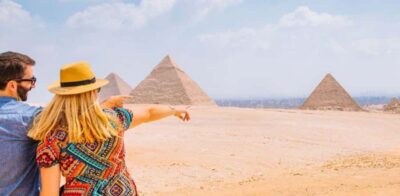
Pyramids & Great Sphinx Private Tour with Camel Ride
Read our review →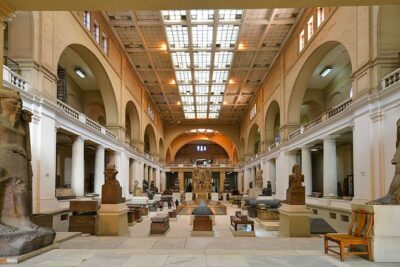
Tour to Giza Pyramids and The Egyptian Museum
Read our review →
VIP All inclusive Best of the best Giza Pyramids,Sakkara,Memphis
Read our review →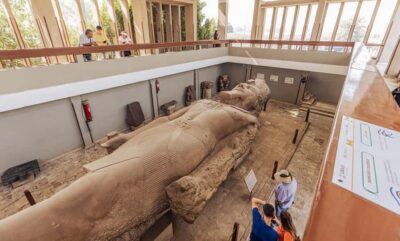
Pyramids of Giza, Sphinx, Saqqara & Memphis Tour
Read our review →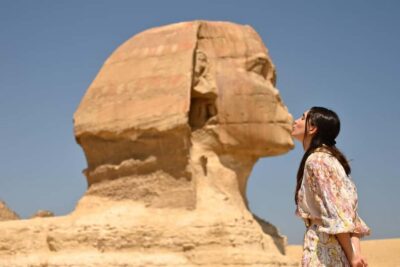
Half-Day Tour to Pyramids of Giza and the Sphinx
Read our review →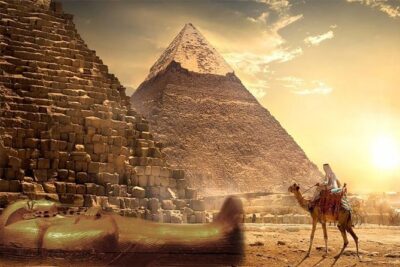
Private ViP all-inclusive Giza Pyramids,Sphinx,Inside Pyramid
Read our review →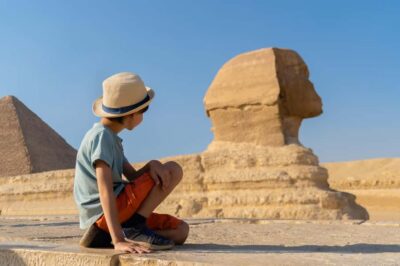
Grand Egyptian Museum, Pyramids, Sphinx Tour & Lunch
Read our review →
Cairo Pyramids, Sphinx & Egyptian Museum Day Trip
Read our review →Browse the lists this tour appears in