
Reviewed · GIZA PYRAMIDS & SPHINX TOURS
Top 6 Days Around Cairo,Giza Pyramids,Luxor , Aswan & Abu Simbel
The boldest part of this Egyptian sampler is its reach: in six days, you go from the Giza Pyramids to Luxor’s royal tombs, Aswan’s island temples, and Abu Simbel. The classic sleeper train replaces domestic flights, while a private guide and arranged transfers take much of the strain out of a fast-moving trip.
I like two things here. First, the route is well chosen: it hits the sights most first-time visitors want without forcing you to arrange trains, drivers, hotels, and entrance tickets separately. Second, the personal guides make a difference in a country where ancient names, temple layouts, and local transport can feel confusing. The main drawback is the pace. Six days is enough for highlights, not leisurely exploration, and the early Abu Simbel departure plus overnight trains will test your sleep.
In This Review
- Key points to know before booking
- What $1,295 buys you in six days
- Day 1: A soft landing in Cairo
- Day 2: Pyramids, museum treasures, and Cairo’s old bazaar
- The sleeper train: efficient, atmospheric, and not luxurious
- Day 3: Luxor’s west bank and the power of Karnak
- Day 4: Aswan High Dam and Philae Temple
- Day 5: Abu Simbel before breakfast, then the train north
- Day 6: Return to Cairo and the practical finish
- Guides, private touring, and what makes the trip easier
- Who should book this fast Egypt route?
- Should you book it?
- FAQ
- How long is the tour?
- Is this a private tour?
- Are airport transfers included?
- Does the tour include domestic flights?
- Is the entrance fee to the Giza Pyramids included?
- Are hotels included?
- Are meals included?
- What time does the Abu Simbel trip begin?
Key points to know before booking
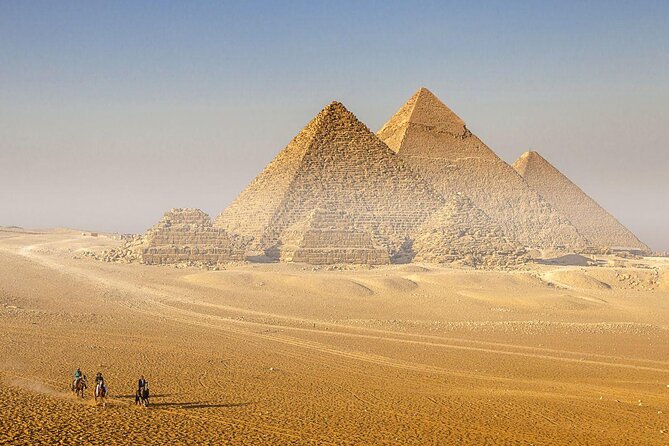
- Cairo begins with the essentials: Giza, the Sphinx, the Egyptian Museum, and Khan Al-Khalili fill one long sightseeing day.
- The sleeper train saves a flight: You travel between Cairo, Luxor, and Aswan by rail, though overnight train comfort can vary.
- Luxor gets a strong full day: Hatshepsut’s temple, the Valley of the Kings, Colossi of Memnon, and Karnak are all included.
- Abu Simbel requires a 5:00 am start: A breakfast box is provided before the drive from Aswan.
- Most major arrangements are covered: Four-star hotels, guides, transfers, entry fees, and most meals are included.
- Check the pyramid fee carefully: Entrance to the Giza Pyramids is specifically excluded, so budget for that separately.
What $1,295 buys you in six days
At $1,295 per person, this is not a shoestring Egypt trip, but it can be good value for someone who wants the country’s main ancient sites handled in one package. You are paying for four-star accommodation, a qualified Egyptologist, airport and hotel transfers, private touring, sleeper train tickets, admissions to most listed sights, five breakfasts, two lunches, and two dinners.
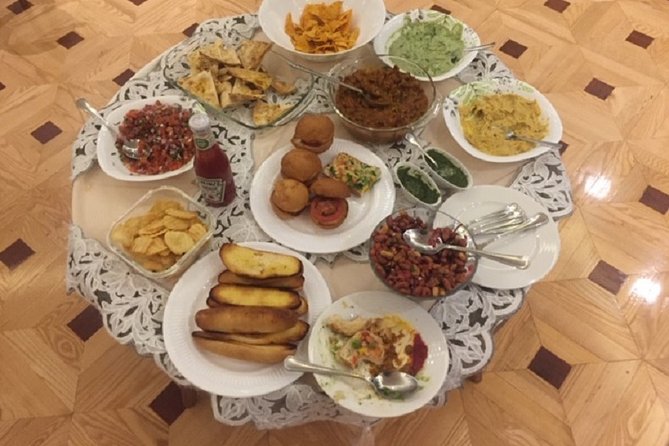
The value is strongest if you are short on time or uneasy about arranging Egypt on your own. Cairo, Luxor, Aswan, and Abu Simbel are spread across a large stretch of the country. Coordinating rail tickets, local drivers, hotel check-ins, boat transfers, and site opening times can eat up your holiday. Here, a tour manager meets you at Cairo International Airport, takes you to the hotel, helps with check-in, and reviews the schedule.
Still, read the inclusions with care. The Giza Pyramid entrance fee is not included. The package includes most meals, but not every meal, so you should expect some food costs of your own. The supplied information also refers to sleeper train travel, while some past trip descriptions refer to flights, so confirm your exact transport plan before paying.
This is a private tour, meaning only your own group participates. That is useful for families and friends who want to move at their own speed, though the listed price is per person and group discounts are offered. The guide names associated with the operation include Nevin in Cairo, Abd El Hamid and Walid in Luxor, Ahmed in Aswan, and Victor on trips covering Luxor and Aswan. Your actual guide may differ.
More Cairo trips worth a second look
- 6 Days Hypnotic Cairo & Nile Cruise Tour Package
★ 5.0 · 248 reviews - Cairo: 6-Day Egypt Tour with Flights and Nile Cruise
★ 3.8 · 177 reviews - Cairo: All-Inclusive 6-Day Egypt Highlights & Nile Cruise
★ 4.7 · 27 reviews
Day 1: A soft landing in Cairo
Arrival day is deliberately simple. A tour manager meets you at Cairo International Airport and escorts you to your hotel in an air-conditioned vehicle. The manager helps with check-in and goes over the pickup times for the days ahead.
That small orientation matters in Cairo. You do not want to land after a long flight and immediately negotiate a taxi, find the hotel, and work out the next morning’s departure. This first evening is for settling in and sleeping.
The hotel category is four-star, but no specific property is named. I would ask for the hotel name before departure if room location, neighborhood, or facilities matter to you. You spend one night in Cairo before the sightseeing begins.
Day 2: Pyramids, museum treasures, and Cairo’s old bazaar
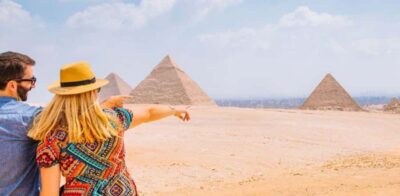
The Cairo day packs four major stops into one route. You begin at the Giza Plateau with a private guide and visit the pyramids of Cheops, Chefren, and Mykerinus. The tour allows about two hours here, enough to view the monuments and hear the basic story of their construction and purpose.
The Great Pyramid of Cheops is the headline, but do not rush past the other two. Their scale and setting help explain how the Giza complex worked as a royal burial area rather than a single isolated monument. You may also have time to take in the plateau views, though the exact amount of free time depends on traffic and the group’s pace.
The pyramid entrance fee is not included. That is the most important extra cost to note for this day. Ask your guide which interior access options are available and what they cost before deciding. Going inside a pyramid is a separate choice, not something you should assume is covered.
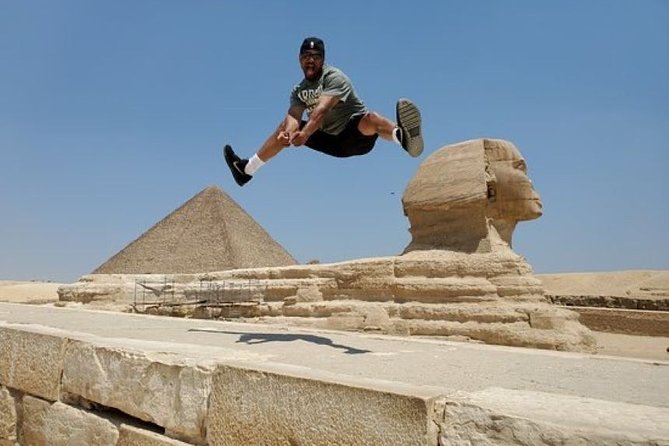
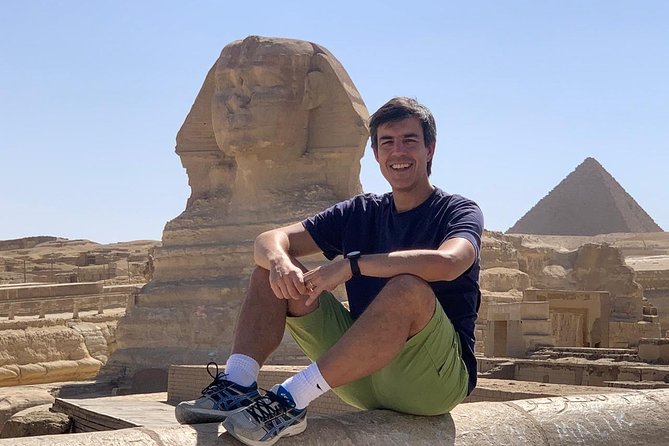
The nearby Great Sphinx gets about 30 minutes. Cut directly from the bedrock, this lion-bodied, human-headed statue is traditionally linked with Pharaoh Khafre. Its famous face is only part of the story. Look at the scale of the paws, the repairs made with stone blocks, and the way the statue faces east across the plateau.
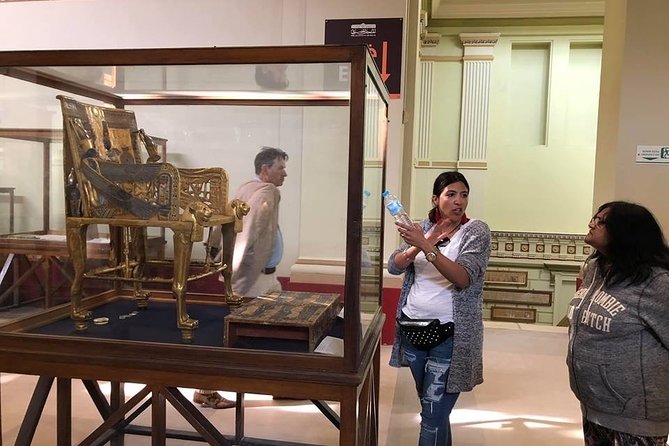
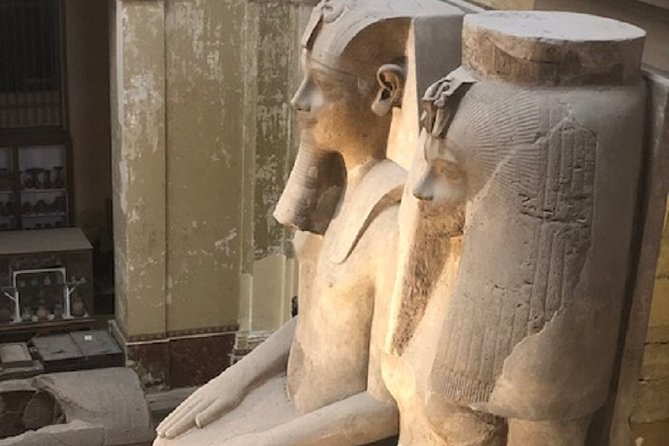
Two hours at the Egyptian Museum follow. The museum’s collection includes about 120,000 ancient Egyptian objects, with only a portion on display. That means you cannot see everything in one visit, and a guide is especially useful for choosing a manageable set of objects rather than wandering through room after room without context.
The older Cairo museum is part of the experience. Its building dates to 1901 and has the feel of a traditional institution, with objects arranged across broad galleries. The displays can be dense, so stay close to your guide if you want a clear thread through the collection.
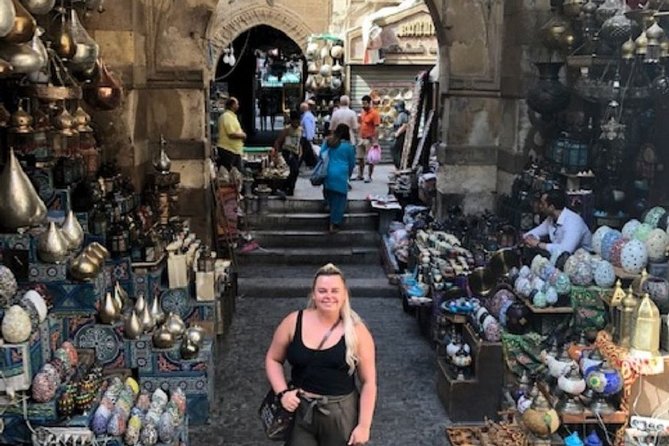
The final stop is Khan Al-Khalili, Cairo’s large bazaar. One hour gives you a taste rather than a full shopping expedition. You can browse metalwork, souvenirs, spices, and other goods, but keep your expectations practical. This is a commercial market, not a quiet heritage site, and bargaining is part of the rhythm.
This is also the day most likely to feel crowded and tiring. Giza, the museum, and the bazaar each demand a different kind of attention. Wear shoes suited to uneven ground, carry water, and do not count on a long midday break.
The sleeper train: efficient, atmospheric, and not luxurious
The train is one of the tour’s more distinctive choices. It avoids domestic flights and lets you cover long distances while you sleep. You get a view of the Nile corridor and a more local form of transport than an airport hop.
The trade-off is comfort. A sleeper train is not the same as a hotel room. Noise, movement, and an unfamiliar bed can make the night less restful, especially before a busy day in Luxor. Pack earplugs, a light layer, toiletries, and only the overnight items you need. Keeping a small bag separate from your main luggage will make boarding and arrival easier.
The schedule described for the trip uses the train from Cairo to Luxor and from Aswan back to Cairo. Because the day-by-day details do not spell out every boarding time, ask the operator for the precise rail schedule and cabin arrangement. That information will help you judge how much real sleep you are likely to get.
A different kind of day out, same part of Egypt:
- Cairo: Pyramids & Great Sphinx Private Tour with Camel Ride
★ 4.9 · 6,335 reviews - Tour to Giza Pyramids and The Egyptian Museum
★ 5.0 · 6,016 reviews - VIP All inclusive Best of the best Giza Pyramids,Sakkara,Memphis
★ 5.0 · 3,164 reviews - From Cairo: Pyramids of Giza, Sphinx, Saqqara & Memphis Tour
★ 4.7 · 3,110 reviews
Day 3: Luxor’s west bank and the power of Karnak
After arriving in Luxor, you meet a local representative and begin on the west bank. The first stop is the Mortuary Temple of Hatshepsut at Deir el-Bahari, set beneath tall cliffs. Its broad terraces, colonnades, courts, and sanctuary give it a very different feel from the compact tombs nearby.
Hatshepsut ruled as pharaoh and promoted her divine birth to support her claim to power. Reliefs also show expeditions to Punt, a trading region whose exact location remains debated. Your guide can make these carved scenes easier to read, since the temple’s open terraces can otherwise seem like a series of grand stone platforms.
The Valley of the Kings follows, with about two hours. The valley held 63 known tombs of important rulers and served as a royal burial ground for roughly five centuries. The setting is stark: red rock, dry heat, and narrow entrances leading into decorated underground rooms.
Your ticket covers entry to the valley, but the standard ticket does not necessarily mean every tomb is open or included. Tutankhamun’s tomb has a separate history and may require a separate fee. Ask your guide what is open that day and which additional tickets are available.
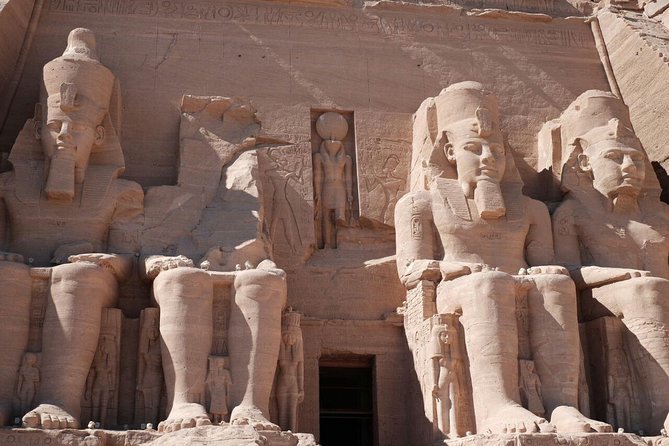
The Colossi of Memnon gets about 30 minutes. These twin statues of Amenhotep III once guarded the entrance to his mortuary temple. They are quick to see, but their size is impressive, especially when you remember that the original complex behind them was far larger than what remains.
Karnak is the final major stop, with about two hours. This vast temple complex grew over many centuries and became the religious center of Thebes during the New Kingdom. Its columns, courts, pylons, and sacred spaces show how political power and worship were linked in ancient Egypt.
Karnak rewards a guide who can explain the sequence of spaces. Without that help, the columns may blur together. With it, you begin to see how the complex expanded, where ceremonies moved, and why its scale mattered.
You then check into your Luxor hotel. This is a full day in the sun, so a hat, water, and modest clothing are sensible. The west bank and Karnak are not difficult because of walking alone, but the heat and the number of stops add up.
Day 4: Aswan High Dam and Philae Temple
After breakfast, you check out and drive to Aswan with a private guide and driver. The trip takes about four hours. That transfer is a practical part of the route, not wasted time, but it does mean you should expect a morning on the road before sightseeing begins.
The Aswan High Dam is a short stop of about 30 minutes. Completed after construction began in 1960, the dam measures more than 360 feet high and about 12,500 feet across. It changed Egypt’s control of the Nile, supported development, and created Lake Nasser, but it also forced the relocation of important ancient monuments.
Philae Temple shows what that rescue work involved. The complex was moved from its original island when the High Dam threatened to submerge it. Today it sits on Aglika Island, reached by water taxi, with the temple layout and surrounding planting arranged to resemble its former home.
The boat ride is part of the appeal. Philae feels separate from the city, and its island setting gives the columns and courtyards room to breathe. Allow about 90 minutes for the temple visit. You will want your guide to explain the reliefs and the temple’s links to Isis, since the carved figures are easy to overlook in the bright sun.
With only an afternoon in Aswan, this is a concise introduction rather than a full city visit. You do not get much unscheduled time in the supplied plan, so tell the tour manager early if there is something specific you hope to see.
Day 5: Abu Simbel before breakfast, then the train north
The Abu Simbel day begins at 5:00 am with a breakfast box. That early start is not a minor detail. You need to be comfortable leaving before sunrise, and you should treat the previous evening as an early night if possible.
Abu Simbel is one of Egypt’s most dramatic sites. Ramesses II cut the temples into the rock beside Lake Nasser to mark Egypt’s southern frontier and project royal power toward Nubia. The great seated figures at the entrance are designed to impress before you even enter.
Inside, the halls and reliefs continue the message of authority. The temples are also a modern preservation story, since the complex was moved to higher ground before the creation of Lake Nasser. Your private guide can connect the ancient purpose with the modern rescue effort, which makes the visit more than a quick photo stop.
The listed visit lasts about 90 minutes. That gives you time to see the principal spaces, but not unlimited freedom to linger. From Aswan, you then transfer to the sleeper train for the overnight return to Cairo.
This is the trip’s most demanding day. You get up very early, ride to Abu Simbel, return to Aswan, and board an overnight train. The payoff is one of Egypt’s greatest monuments, but I would not choose this schedule if you need a slow, restful holiday.
Day 6: Return to Cairo and the practical finish
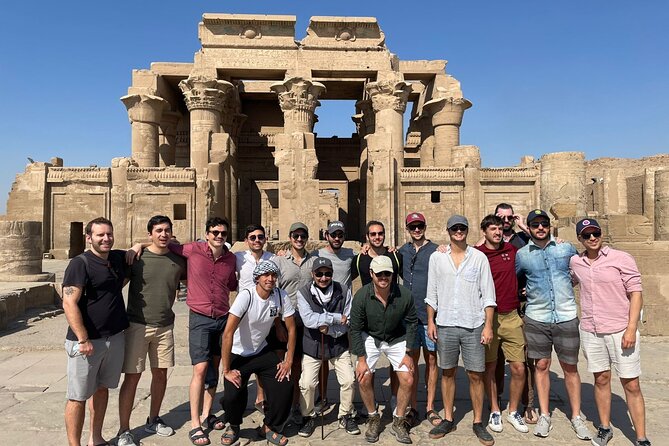
The final service is a transfer from Cairo’s railway station to your Cairo hotel, taking about 25 minutes. The supplied plan lists accommodation on this day, so confirm whether the room is part of your booking and whether you are extending the stay after the tour.
That final transfer is useful after a night train. You do not have to negotiate a station taxi while tired and carrying luggage. It also gives you a fixed endpoint if you have a later flight or another Cairo stay arranged.
Guides, private touring, and what makes the trip easier
The tour uses a private guide rather than placing you in a large coach group. That gives your party more room to ask questions and adjust the pace within the fixed schedule. It also means you can tell the guide when you need shade, water, or a short pause.
Names connected with the guiding team include Nevin in Cairo, Ahmed in Aswan, Walid and Abd El Hamid in Luxor, and Victor on routes covering Luxor and Aswan. Do not assume a particular person is guaranteed, but these names give you a useful sense of the operation’s local coverage.
The strongest practical feature is coordination. Airport pickup, hotel drop-offs, rail transfers, local drivers, and admission arrangements are handled for you. Past trip details also describe drivers as punctual and helpful, which matters when a late pickup can ruin a tightly timed ancient-site day.
Food is partly covered, with five breakfasts, two lunches, and two dinners listed. Vegetarian meals are available if requested when booking. Because not every meal is included, ask which days have lunch or dinner supplied, especially during the Abu Simbel and train segments.
Who should book this fast Egypt route?
I would recommend it to a first-time Egypt visitor with limited holiday time, especially someone who wants Cairo and the Upper Nile in one organized trip. It suits families, couples, and private groups that value direct support more than free-form exploration.
It also works for people who prefer rail travel to domestic flights and want a guide to explain what they are seeing. The private format is a plus if your group has older relatives or children, though children must be accompanied by an adult.
I would hesitate if you want long museum visits, relaxed meals, independent wandering, or several nights in each place. Cairo alone can fill several days, and Luxor deserves more time than this plan allows. The schedule is best viewed as a highlights route, not a complete study of Egypt.
The cancellation terms are fairly practical: cancel at least 24 hours before the start time for a full refund. Changes made inside that window are not accepted, and poor weather may lead to a new date or full refund.
Should you book it?
Book this tour if your priority is seeing the big four regions in six days with the difficult parts arranged for you. The route is ambitious but logical, and the private Egyptologist gives the monuments a clearer meaning than a quick self-guided visit would.
Do not book it expecting a restful pace or polished luxury. The overnight trains, four-hour transfer to Aswan, dawn departure for Abu Simbel, and extra pyramid fee all deserve honest consideration. For a short first visit, though, $1,295 can be a fair price for the amount of ground covered, especially if you value reliable transfers and personal guides over spare time.
FAQ
How long is the tour?
The tour lasts approximately six days and includes five nights.
Is this a private tour?
Yes. Only your group participates in the activity.
Are airport transfers included?
Yes. Pickup from Cairo International Airport and hotel drop-off services are included, along with other listed hotel and station transfers.
Does the tour include domestic flights?
The planned transport uses sleeper trains between Cairo, Luxor, and Aswan rather than domestic flights. Confirm the exact rail arrangements before booking.
Is the entrance fee to the Giza Pyramids included?
No. The Giza Pyramids entrance fee is specifically excluded.
Are hotels included?
Yes. Accommodation in four-star hotels is included. The specific hotel names are not provided.
Are meals included?
The package includes five breakfasts, two lunches, and two dinners. Most meals are covered, but not every meal.
What time does the Abu Simbel trip begin?
You meet your guide at 5:00 am in the Aswan hotel lobby and receive a breakfast box before departing.
Recently reviewed around Cairo
- White Desert Overnight Camping Sharing Tour in Egypt★ 5.0 · 15 reviews
- Cairo Best 2Days tour Pyramids, Saqqara & Old Cairo★ 5.0 · 15 reviews
- Giza Pyramids with (GEM) Grand Egyptian Museum★ 5.0 · 42 reviews
- sunset at Giza pyramids by camels★ 5.0 · 31 reviews
- Tour to Giza pyramids Memphis Sakkara and Felucca on the Nile★ 5.0 · 16 reviews
- visit the pyramids of Giza + the necropolis of Saqqara + the Memphis site.★ 4.5 · 20 reviews
- Private Giza pyramid,sphinx, Mummification temple& inside pyramid★ 5.0 · 32 reviews
- Private guided shopping tour in Khan el-Khalili with Lunch★ 4.5 · 21 reviews
Giza Pyramids & Sphinx Tours, compared.
Pyramids & Great Sphinx Private Tour with Camel Ride
Read our review →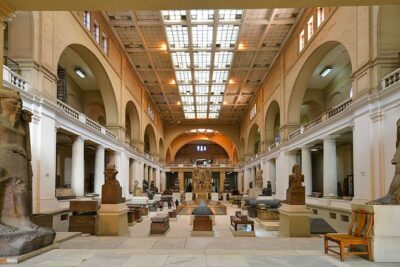
Tour to Giza Pyramids and The Egyptian Museum
Read our review →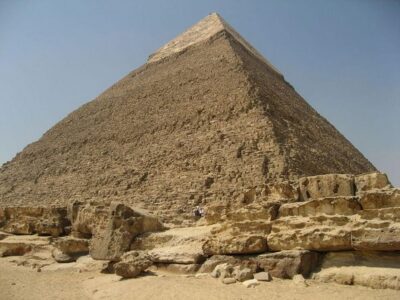
VIP All inclusive Best of the best Giza Pyramids,Sakkara,Memphis
Read our review →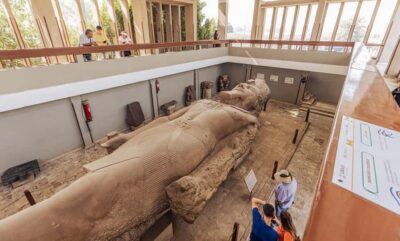
Pyramids of Giza, Sphinx, Saqqara & Memphis Tour
Read our review →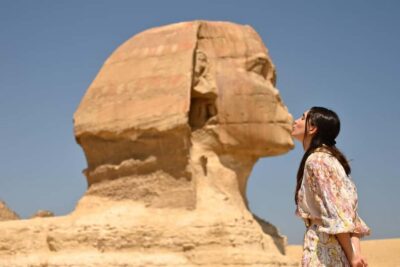
Half-Day Tour to Pyramids of Giza and the Sphinx
Read our review →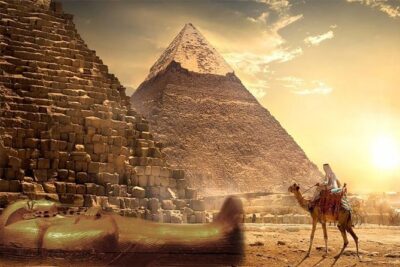
Private ViP all-inclusive Giza Pyramids,Sphinx,Inside Pyramid
Read our review →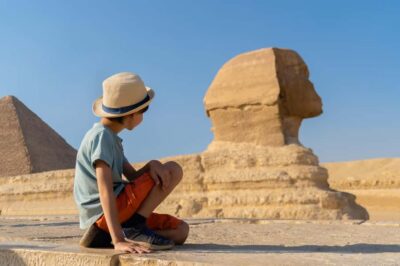
Grand Egyptian Museum, Pyramids, Sphinx Tour & Lunch
Read our review →
Cairo Pyramids, Sphinx & Egyptian Museum Day Trip
Read our review →Browse the lists this tour appears in