
Reviewed · ASWAN TOURS
Top Day Tour To Luxor From Aswan
Luxor packs an astonishing amount of ancient Egypt into one long day. From Aswan, you’ll cross the Nile Valley to the old capital of Thebes, then visit painted royal tombs, a cliff-cut temple, giant statues, and two of Egypt’s greatest temple complexes. I especially like the private format and the chance to shape your questions around the sites, rather than follow a large group.
I also like that the tour covers both banks of the Nile, with a guide such as Mohamed Hashimi, Ayman, Ashraf, Ahmed, or Ghada Khalaf praised for clear explanations, good humor, and help with family photos. The drawback is the sheer length: the listed schedule involves a very early or late pickup and many hours on the road, so this is a demanding day rather than a relaxed outing.
In This Review
- Key points to know before booking
- Why this Aswan to Luxor day trip is worth considering
- The long road from Aswan through the Nile Valley
- Valley of the Kings: painted tombs beneath the hills
- Hatshepsut’s temple and the story of a woman pharaoh
- The Colossi of Memnon in a quick 30-minute stop
- Karnak Temple: scale on a city-sized level
- Luxor Temple and the idea of kingship
- Guides can make or break this day
- Lunch, timing, and the small details that matter
- Who should book this Luxor tour?
- Should you book it?
- FAQ
- How long is the Aswan to Luxor tour?
- How far is Luxor from Aswan on this tour?
- Is hotel pickup included?
- Is the tour private?
- Which Luxor sites are visited?
- Is an Egyptologist guide included?
- Are entrance fees included?
- Is lunch included?
- Is bottled water provided?
- Can I cancel for a full refund?
Key points to know before booking
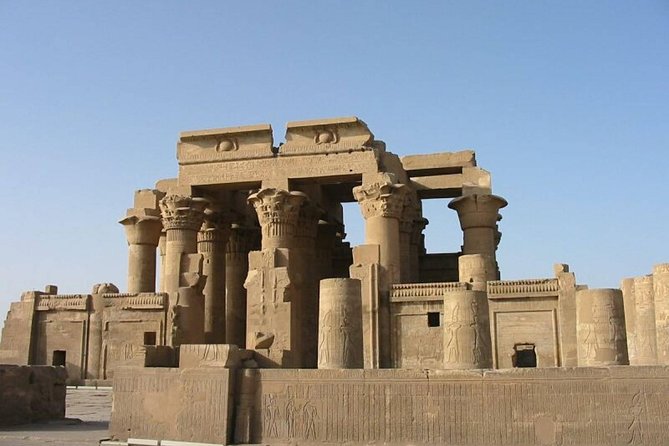
- A full West Bank and East Bank plan: You see the Valley of the Kings, Hatshepsut, the Colossi of Memnon, Karnak, and Luxor Temple in one day.
- Private transport from Aswan: Pickup and return are provided in a private air-conditioned vehicle.
- Egyptologist-led sightseeing: Your guide explains the rulers, gods, tomb paintings, and political stories behind each place.
- Entrance fees are included: The listed admission covers the basic entry areas at the named sites.
- Lunch needs checking: Lunch is described as optional and not included in the listed inclusions, despite the general tour description referring to an included lunch.
- A strong guide element: Specific guides praised for their care and communication include Mohamed Hashimi, Ayman, Ashraf, Ahmed, and Ghada Khalaf.
Why this Aswan to Luxor day trip is worth considering
The main appeal is efficiency. Aswan and Luxor are about 280 kilometers apart, yet this trip lets you see Luxor’s major sights without changing hotels or arranging separate rides. If your Egypt itinerary gives you only one day for Luxor, the route covers the essential sites in a sensible order.
You begin on the West Bank, where the focus is on death, burial, and the afterlife. After lunch or a planned meal stop, you cross to the East Bank for the great state temples of Karnak and Luxor. That contrast helps the day make sense. You are not simply ticking off ruins. You are moving from royal tombs and mortuary temples to places built for public worship and kingship.
The price is $140 per person. For a private tour, that can be fair value because the cost includes hotel or Nile cruise pickup, a private vehicle, an Egyptologist guide, bottled water, entrance fees to the listed places, and the return transfer. You are paying for a long-distance road day as well as the sightseeing.
The value depends on your group size and expectations. A solo visitor may find the price less attractive than a shared excursion, while a couple or family can spread the cost across the group and gain the comfort of private transport. Group discounts are offered, so it is worth checking the final price before booking.
Other Aswan days travellers weigh against this one:
- 4-Days Nile Cruise From Aswan To Luxor including Abu Simbel and Hot Air Balloon
★ 5.0 · 3,142 reviews - From Aswan: Abu Simbel Temple Day Trip with Hotel Pickup
★ 4.4 · 2,807 reviews - 4-Day 3-Night Nile Cruise from Aswan to Luxor&Abu Simbel+Balloon
★ 5.0 · 2,023 reviews
The long road from Aswan through the Nile Valley
The drive is part of the experience, not just a gap between attractions. You pass through the Nile Valley, with views of traditional villages and cultivated land along the river. That gives you a look at the settled strip of Egypt beyond the monuments.
The road time also shapes the day. The supplied schedule says pickup is at 7:00 pm from your hotel or Nile cruise in Aswan, followed by arrival in Luxor at about 10:00 am. It also describes the experience as approximately 13 hours, so the timing deserves careful confirmation before you pay. Ask the operator to state the exact pickup hour, arrival hour, and expected return time in writing.
A private air-conditioned vehicle matters here. The distance is too great for a casual transfer, and the heat around Luxor can be intense. Bottled water is included, but you should still plan for a long day outdoors and wear practical shoes, light clothing, and sun protection.
The drive can be tiring, especially for children or anyone who has just arrived in Egypt. Still, the private setup gives you more control than a large coach. You can ask questions, keep your group together, and avoid waiting for many unrelated passengers at every stop.
Valley of the Kings: painted tombs beneath the hills
Your first major stop is the Valley of the Kings on Luxor’s West Bank. This dry valley served as a burial ground for pharaohs, including Thutmose I, Thutmose III, Tutankhamun, Ramesses VI, Merenptah, and Amenhotep II.
The setting is stark and powerful. Instead of grand pyramids, the royal tombs are cut into the rock. Their plain outer entrances conceal corridors and chambers covered with images, symbols, and texts linked to the pharaoh’s journey after death.
Admission includes the basic area, but the wording is important. Special tombs, including famous royal tombs, may require extra tickets or separate payment. Tutankhamun’s tomb is the obvious example to ask about, since basic admission does not necessarily cover every tomb. Confirm what is included before entering.
You are given about two hours here. That is enough time to see the main section at a purposeful pace, but not enough to examine every chamber slowly. Your Egyptologist guide can help you decide which open tombs deserve your attention and explain what you are seeing inside.
Photography rules can vary by tomb and ticket type. Follow the instructions given at the site, and ask your guide before taking pictures. The painted walls are the reason to come, but the tombs can feel close and crowded inside, so this may not be the easiest stop for anyone who dislikes confined spaces.
Hatshepsut’s temple and the story of a woman pharaoh
The Temple of Hatshepsut at Deir el Bahari is one of Luxor’s most memorable buildings. Its terraces rise against the cliffs, creating a strong visual link between the temple and the rock face behind it.
Hatshepsut ruled Egypt for roughly two decades during the 18th Dynasty. She was the daughter of Thutmose I and one of the few women to take the full role of pharaoh. Her temple reflects that political message. It was built to present her authority, honor the gods, and connect her reign to the royal line.
I find this stop especially valuable with an Egyptologist guide because the architecture alone does not tell the whole story. The carved scenes and statues relate to royal power, divine approval, and Hatshepsut’s place in a male-dominated succession system. Your guide can also explain what happened to her memory after her death and why some images were later damaged.
The tour allows about two hours for Hatshepsut’s temple together with the Colossi of Memnon. That is a reasonable block of time, though the site is broad and exposed. The walk from the entrance area toward the terraces can feel hot, so keep water close and pace yourself.
A different kind of day out, same part of Egypt:
- 4-Day 3-Night Nile Cruise from Aswan to Luxor including Abu Simbel, Air Balloon
★ 4.5 · 612 reviews - From Aswan: 3-Day Cruise to Luxor with Hot Air Balloon
★ 4.3 · 598 reviews - From Aswan: 4-Day Nile Cruise from Aswan to Luxor with Guide
★ 4.1 · 593 reviews - 4-Days Nile Cruise From Aswan To Luxor including Abu Simbel and Hot Air Balloon
★ 4.5 · 509 reviews
The Colossi of Memnon in a quick 30-minute stop
The Colossi of Memnon are two huge seated statues of Amenhotep III. They have faced the Theban plain since about 1350 BC and once guarded the entrance to a vast mortuary temple.
Only the statues remain in this stop, but their scale gives you a clear sense of what the lost temple must have been like. Each figure is carved from stone and shows the pharaoh seated in a formal pose. The surrounding area also has a fascinating later story.
Greek and Roman visitors believed the northern statue represented Memnon, a figure from Greek mythology. Ancient visitors recorded sounds from the statue, and more than 100 Greek and Latin inscriptions refer to the site. The identification was mistaken, but it helped give the statues their famous name.
You have about 30 minutes here. That is enough for a close look, photographs, and a short explanation. Do not expect a long exploration. This is a brief but worthwhile stop between Hatshepsut and the East Bank.
Karnak Temple: scale on a city-sized level
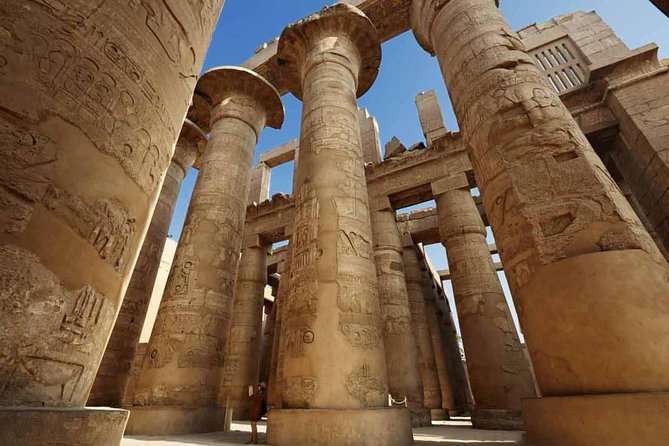
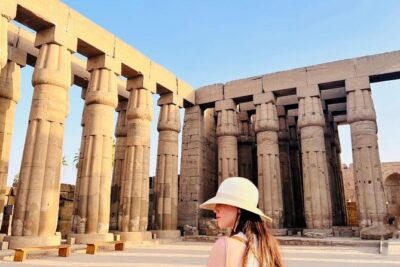
Karnak is the day’s largest site and usually the place where the scale of ancient Thebes becomes clearest. The complex includes temples, pylons, chapels, columns, and other structures built over many centuries.
Construction began during the Middle Kingdom under Senusret I and continued into the Ptolemaic period. Most of what you see today dates from the New Kingdom, when Thebes was a major center of royal and religious power.
The complex was known in ancient Egyptian as Ipet-isut, often translated as The Most Selected of Places. It was the main worship center for the Theban Triad, with Amun at its head. That religious role explains the grand avenues, monumental gateways, sacred spaces, and repeated royal inscriptions.
Your allotted visit is about one hour. That is enough to see the major areas with a guide, but Karnak can easily fill much longer. Focus on the elements your guide points out, especially the huge columns, towering pylons, and carved reliefs. Without context, the site can become a blur of stone. With a good explanation, you begin to see how the complex grew over time.
Karnak is part of the monumental city of Thebes, which UNESCO added to its World Heritage List in 1979. That status does not make the visit valuable by itself, but it confirms the site’s importance within the wider collection of temples and tombs around Luxor.
Luxor Temple and the idea of kingship
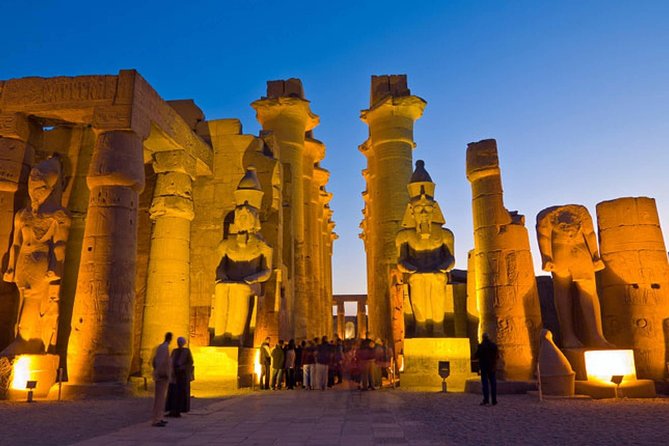
Luxor Temple gives the day a different ending. Located on the East Bank in modern Luxor, it was built around 1400 BCE and was known in ancient Egyptian as Ipet resyt, the Southern Sanctuary.
Unlike many Egyptian temples, Luxor Temple was not focused on one cult god or on a dead pharaoh. Its purpose was tied to the renewal of kingship. That makes it a useful final stop because your guide can connect the architecture to royal ceremonies and the idea of legitimate rule.
The temple’s location in the modern city also creates a different mood from the Valley of the Kings. Here, ancient stone sits close to present-day life. You can see the remains of a monument that once formed part of the religious center of Thebes, while the city of Luxor continues around it.
The visit lasts about one hour. Look closely at the carved reliefs and the arrangement of the entrance and courts. Ask your guide about Alexander the Great’s claim to have been crowned here. The tradition is linked to Luxor Temple, although it is uncertain that Alexander ever traveled this far south from the Memphis area.
Guides can make or break this day
The guide is central to the experience. You are visiting five major sites in a compressed schedule, and a clear explanation helps you understand what deserves attention at each one.
Several guides connected with this experience are specifically praised for their care and communication. Mohamed Hashimi is noted for handling practical details and taking family photographs. Ayman is described as giving detailed explanations at the temples. Ashraf received particularly strong praise for the Valley of the Kings and Karnak, while Ahmed was appreciated for taking good pictures. Ghada Khalaf is noted for combining strong site knowledge with humor, even during a hot day in Ramadan.
Those names do not guarantee who will lead your particular departure, so ask when booking if a specific guide matters to you. Language flexibility also appears to be possible. One guide adapted by changing language during the tour, which may help mixed-language families or groups.
Because the experience is private, you can ask more questions than you usually can on a large group outing. That is especially useful at Hatshepsut and Karnak, where a few simple explanations about rulers, gods, and building phases can transform the visit.
Lunch, timing, and the small details that matter
There is an important inconsistency about food. The general description refers to lunch, but the inclusion details say lunch at a local restaurant is optional and not included. Treat lunch as an extra cost unless the operator confirms otherwise.
The tour includes bottled water, but not tipping. Tipping is customary for good service in Egypt, so carry suitable cash if you want to thank your driver or guide. Optional tours are also excluded.
Pickup is offered from your hotel or Nile cruise in Aswan, and the activity ends back at the starting point. The stated meeting point is on Sharq El Bandar Street in Aswan, but hotel pickup is part of the service, so confirm the exact pickup arrangement for your accommodation.
Confirmation is provided at booking. Free cancellation is available if you cancel at least 24 hours before the start time. Changes or cancellations inside that window are not accepted for a refund.
Who should book this Luxor tour?
I would choose this trip if you are based in Aswan and have no practical way to spend a night in Luxor. It is also a good fit for families and small private groups that want a guide, a dedicated vehicle, and a broad introduction to the main sites.
You should be comfortable with a long road journey and a tightly packed sightseeing plan. This is not the right choice if you want slow photography, extended time inside the tombs, or a leisurely lunch. A separate Luxor stay would give you more breathing room.
Solo visitors should compare the $140 rate with shared options, especially if no group discount applies. Couples and families may find the private arrangement more worthwhile, since the vehicle, guide, and schedule are reserved for your party.
Should you book it?
Book this tour if your priority is seeing Luxor’s essential monuments in one organized day from Aswan. The route is strong, the private vehicle adds comfort, and the Egyptologist guide can turn a fast visit into a meaningful one. The clearest strengths are the full West Bank and East Bank coverage, attentive guides, and included entrance fees.
Before booking, confirm the exact pickup time, the expected return time, which tombs are covered by basic admission, and whether lunch is included or optional. If you accept the long hours and plan your expectations around a highlight tour rather than a slow archaeological study, this is a practical and worthwhile way to connect Aswan with ancient Thebes.
FAQ
How long is the Aswan to Luxor tour?
The experience is listed as approximately 13 hours. The supplied schedule says pickup is at 7:00 pm and arrival in Luxor at about 10:00 am, so confirm the exact timing with the operator before booking.
How far is Luxor from Aswan on this tour?
The route is described as about 280 kilometers north of Aswan.
Is hotel pickup included?
Yes. Pickup and drop-off are offered from your hotel or Nile cruise in Aswan.
Is the tour private?
Yes. Only your group participates in the private tour or activity.
Which Luxor sites are visited?
The tour visits the Valley of the Kings, the Temple of Hatshepsut, the Colossi of Memnon, Karnak Temple, and Luxor Temple.
Is an Egyptologist guide included?
Yes. A professional Egyptologist guide is included.
Are entrance fees included?
Entrance fees to the named historical sites are included. The admission covers the basic area only, so ask about any extra fees for special tombs or optional areas.
Is lunch included?
The information describes lunch at a local restaurant as optional and not included. Confirm the meal arrangements before departure.
Is bottled water provided?
Yes. Bottled water is included.
Can I cancel for a full refund?
Yes, if you cancel at least 24 hours before the experience start time. Cancellations or changes made less than 24 hours before the start time are not accepted for a refund.
Recently reviewed around Aswan
- (3-Nights Cruise From Aswan To Luxor & Balloon, Abu Simbel)★ 4.5 · 23 reviews
- Philae Temple and Aswan High-Dam Half-day tour★ 5.0 · 49 reviews
- Sailing Nile Cruise from Aswan to Luxor for 2 Nights★ 4.5 · 139 reviews
- 4-Days Aswan sails Nile Cruise Luxor &Abu Simbel.Hot air Balloon★ 4.5 · 77 reviews
- Private Tour in Aswan : Felucca and Nubian village★ 5.0 · 29 reviews
- Day Tour to Abu Simbel from Aswan by Bus★ 4.5 · 25 reviews
- Abu Simbel Private Full-Day Tour from Aswan★ 5.0 · 114 reviews
- Nubian Village by Motorboat In Aswan★ 5.0 · 97 reviews
Aswan Tours, compared.
4-Days Nile Cruise From Aswan To Luxor including Abu Simbel and Hot Air Balloon
Read our review →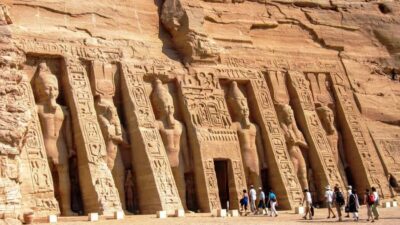
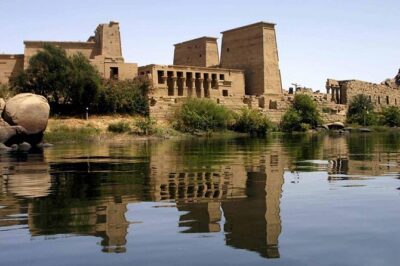
4-Day 3-Night Nile Cruise from Aswan to Luxor&Abu Simbel+Balloon
Read our review →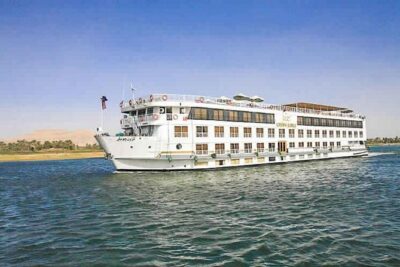
4-Day 3-Night Nile Cruise from Aswan to Luxor including Abu Simbel, Air Balloon
Read our review →

4-Day Nile Cruise from Aswan to Luxor with Guide
Read our review →4-Days Nile Cruise From Aswan To Luxor including Abu Simbel and Hot Air Balloon
Read our review →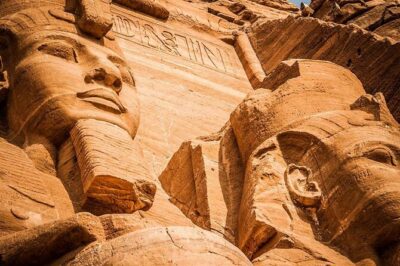
Private Day Tour to Abu Simbel Temples from Aswan
Read our review →Browse the lists this tour appears in