
Reviewed · HOT AIR BALLOON RIDES
3 Day Nile Cruise from Aswan and Luxor Hot Air Balloon
The best part of this three-day trip is the way it links Egypt’s great sights by river. You see Philae by motorboat, watch the Nile from a cruise deck, ride by horse-drawn carriage to Edfu, then finish among the tombs and temples of Luxor. I like the private-cabin setup and the Egyptologist-led visits, which save you from piecing together transport and site tickets on your own.
I also like the mix of grand monuments and slower stretches aboard ship. Full-board meals, included transfers, and a folkloric show make the trip easy to manage. The main caution is that the hot-air balloon ride is named in the experience but not given a clear place in the day-by-day schedule, so confirm the flight time and exactly what is included before paying.
In This Review
- Key points to know before booking
- Why this Aswan to Luxor cruise works well
- Day one: the High Dam, Philae, and Kom Ombo
- Day two: Edfu’s huge Temple of Horus
- Day two in Luxor: Karnak and the evening temple
- Day three: tombs and temples on Luxor’s west bank
- The hot-air balloon question
- Cabins, meals, and life aboard ship
- Guide support and transport
- Who should book this cruise?
- Should you book it?
- FAQ
- Where does the Nile cruise begin and end?
- How long is the experience?
- What time does the experience start?
- Is hotel or cruise accommodation included?
- Are meals included?
- Is an Egyptologist included?
- Are site admissions included?
- What happens if the hot-air balloon is cancelled because of bad weather?
Key points to know before booking
- Philae begins the journey: Reach the island temple by small motorboat, with admission included.
- Edfu comes with a horse-drawn carriage: Allow about three hours for the Temple of Horus visit and the ride.
- Luxor brings the biggest concentration of sites: Karnak, Luxor Temple, the Valley of the Kings, Hatshepsut’s temple, and the Colossi of Memnon all appear across the final two days.
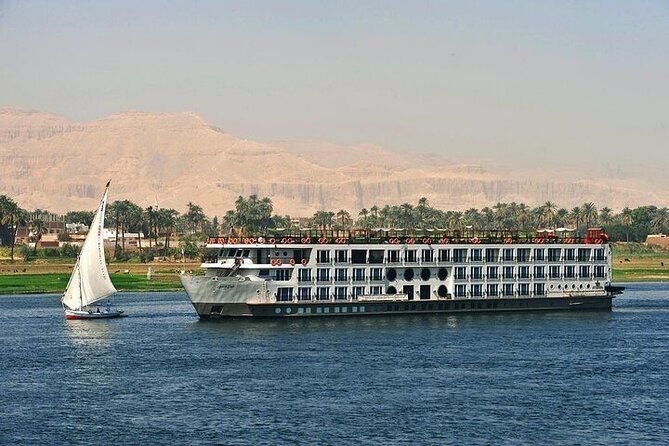
- Your base is a 5-star Nile cruise: A private cabin, full board, transfers, and an Egyptologist are included.
- The balloon ride needs clarification: Bad weather brings a stated refund of $25 per person, but the schedule does not specify when the flight takes place.
- This is arranged for your own party: The activity is described as private, with group discounts and room arrangements for single, double, or triple occupancy.
Why this Aswan to Luxor cruise works well
A Nile cruise is one of the most practical ways to see Upper Egypt. The river connects the main ancient sites, and you avoid changing hotels every night or arranging separate cars for each temple. After a hot, dusty morning, you return to a cabin, a meal, and a moving view instead of another long road transfer.
This trip costs $655.05 per person. That is not a budget sightseeing package, but the price covers a great deal: two nights aboard a 5-star cruise, full-board dining, transfers in an air-conditioned deluxe vehicle, site admissions for the listed visits, meet-and-assist service, and an Egyptologist during excursions. The value is strongest if you want one organized package rather than managing a boat, guide, drivers, and tickets separately.
I would still ask for the ship name, cabin category, sailing dates, and balloon details before booking. A 5-star label can mean different things on the Nile, and the information supplied does not identify the boat or describe the cabin beyond private accommodation. You should also confirm how the private activity works on the water, since the excursions are private for your group but the cruise itself may operate on a larger vessel.
The listed start time is 12:00 p.m. Pickup is offered, and the tour has meet-and-assist service on arrival and departure. Confirmation is provided at booking, and the experience is near public transportation, though most of your sightseeing transport is already arranged.
More Boat Tours in Aswan
- 4-Days Nile Cruise From Aswan To Luxor including Abu Simbel and Hot Air Balloon
★ 5.0 · 3,142 reviews - 4-Day 3-Night Nile Cruise from Aswan to Luxor&Abu Simbel+Balloon
★ 5.0 · 2,023 reviews - 4-Day 3-Night Nile Cruise from Aswan to Luxor including Abu Simbel, Air Balloon
★ 4.5 · 612 reviews
Day one: the High Dam, Philae, and Kom Ombo
The first stop is the Aswan High Dam, built between 1960 and 1970. It was created to control flooding and produce electricity, and it remains one of the world’s largest embankment dams. This is less visually delicate than the temples, but it gives you useful context for modern Egypt and the way the Nile was brought under tighter control.
Allow about two hours, with admission included. The stop is a good opening because it places ancient Egypt beside a major modern engineering project. You can look across the dam and think about the changes it caused along the river, including the need to move some ancient monuments.
From there, you head to Philae by small motorboat. The temple complex is dedicated to Isis and contains Graeco-Roman work, giving it a different feel from the older pharaonic sites. The boat ride is not just a transfer. It is part of the visit, offering a brief view of Aswan’s river setting before you reach the island.
Philae deserves the full two hours allowed here. Look closely at the carved figures, columns, and temple spaces rather than rushing from one photo stop to the next. Your guide should help explain Isis and the later periods of construction, but you will get more from the visit if you ask about the temple’s mixed Egyptian, Greek, and Roman character.
After returning to the cruise, dinner and a folkloric show are scheduled. The show gives the evening a clear finish, although it also means your first day is not a quiet, open-ended afternoon. If you prefer slow travel, use any spare time on deck and treat the Nile views as part of the program.
The cruise then reaches Kom Ombo, where the temple is dedicated to both Sobek, the crocodile god, and Horus, the falcon-headed god. Its twin layout is the big feature: two entrances, two sets of halls, and two sanctuaries reflect the paired religious purpose.
Kom Ombo is planned as another two-hour visit, with admission included. Its symmetrical design is easy to understand even if you are new to Egyptian temples. The site is also a reminder that Egyptian religious places were still being built and altered during the Ptolemaic and Roman periods, long after the age of the earliest pyramids.
The timing can feel full on day one. You visit a major dam, take a boat to an island temple, eat dinner, attend a show, and see Kom Ombo. Comfortable shoes, water, and a small day bag will help. Keep your camera ready for the river, but listen for the guide’s explanations too. The paired gods at Kom Ombo are much easier to remember when you understand how the building is organized.
Day two: Edfu’s huge Temple of Horus
The Temple of Horus at Edfu is one of Egypt’s best-preserved ancient monuments. Built between 237 and 57 BCE during the Ptolemaic period, it has imposing pylons, a broad courtyard, a hypostyle hall, carved reliefs, and an inner sanctuary.
The visit is planned for three hours, making it the longest single temple stop in the schedule. That matters. Edfu is not a quick look at a facade. You have time to study the reliefs, walk through the columns, and let the scale of the complex sink in.
The horse-drawn carriage ride to the temple is a distinctive part of this stop. It adds local transport to the day rather than sending you straight from the ship in a standard vehicle. The information does not specify the carriage duration, condition, or whether the ride is shared, so ask your operator if that matters to you.
I find Edfu especially useful after Philae and Kom Ombo because it makes comparison easy. Philae has its island setting and Graeco-Roman mix. Kom Ombo has the unusual double dedication. Edfu gives you a more complete sense of how a major temple was laid out, from pylon to sanctuary.
You will likely spend much of the day moving through stone courtyards and halls. A hat, sun protection, and water are sensible, and good footwear is more useful than dress shoes. The tour is described as suitable for most people, but the schedule includes walking, boarding transport, and time outside in the sun.
Day two in Luxor: Karnak and the evening temple
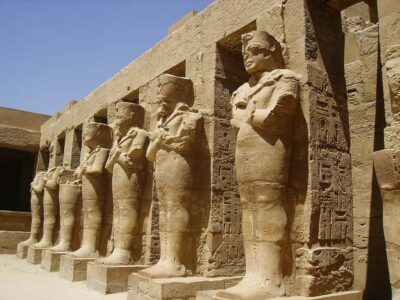
Karnak follows on day two, with about two hours at the complex. Dedicated mainly to Amun-Ra, Karnak covers a huge area and includes temples, chapels, a sacred lake, and the famous Hypostyle Hall with 134 columns.
Two hours is enough for a strong introduction, but it is not enough to explore every corner. Stay close to the guide through the main route, then use any free minutes for the details that catch your eye. The columns and reliefs are the obvious highlights, yet the scale of the complex is just as important. Karnak feels more like a religious district than a single building.
The Avenue of Sphinxes leads toward the main entrance, adding a strong sense of arrival. Your Egyptologist can help separate the work of different rulers and explain why the complex grew over many generations. Without that context, the number of courtyards and pylons can blur together.
Luxor Temple is also scheduled for two hours. It was mainly built under Amenhotep III and later expanded by Ramses II, and it is dedicated to the Theban group of Amun, Mut, and Khonsu. The entrance area features colossal statues and obelisks, followed by halls and carved walls that show royal and religious scenes.
Karnak and Luxor Temple work well together, but seeing both on the same day can be tiring. You get the broad religious center at Karnak, then a more compact temple experience at Luxor. I would pay attention to how the guide connects the two sites instead of treating them as separate photo stops.
The schedule places three substantial temple visits on day two, after the morning at Edfu. That is excellent for anyone focused on ancient architecture, but less ideal if you need long breaks. The cruise provides a place to rest between outings, and the deck can be the best spot to recover while watching the river pass.
More Hot Air Balloon Rides in Aswan
- From Aswan: 3-Day Cruise to Luxor with Hot Air Balloon
★ 4.3 · 598 reviews - 4-Days Nile Cruise From Aswan To Luxor including Abu Simbel and Hot Air Balloon
★ 4.5 · 509 reviews - 4 Days Nile Cruise from Aswan to Luxor including Abu Simbel and Hot Air Balloon
★ 4.5 · 356 reviews - 4-Days Nile Cruise Aswan&Luxor,Hot Air Balloon&Abu Simbel.Hot deal
★ 5.0 · 322 reviews
Day three: tombs and temples on Luxor’s west bank
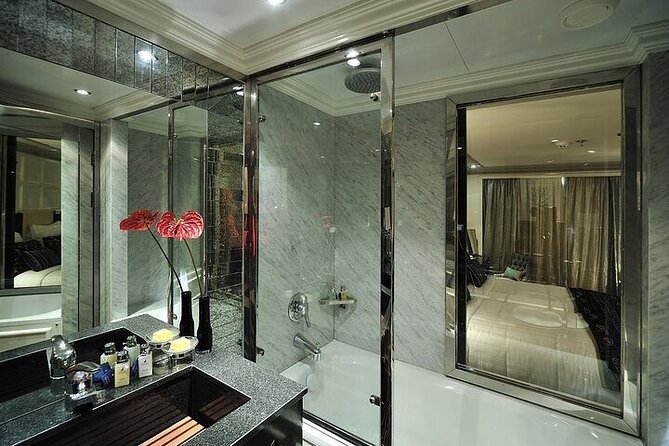
The Valley of the Kings is the main event on day three. This burial area contains rock-cut tombs made for pharaohs of the New Kingdom, dating from the 16th to 11th century BCE. The walls carry painted scenes and hieroglyphic texts linked to the afterlife.
The visit lasts about two hours, with admission included. That gives you enough time for a meaningful introduction, but the exact tombs available to enter can vary. Tutankhamun’s tomb is famous, yet its entrance arrangements and any extra cost are not specified here, so ask your guide what the standard admission covers.
The Valley is not mainly about grand exterior buildings. You walk into the hills and down into chambers where color and writing survive in enclosed spaces. The experience is more intimate than Karnak, but it can also be physically demanding because of heat, slopes, and uneven walking surfaces. Take water and listen carefully to the guide, since the small details inside the tombs are easy to miss.
Next comes the Temple of Hatshepsut at Deir el-Bahari, scheduled for one hour. Built in the 15th century BCE for Hatshepsut, one of Egypt’s few female rulers, the temple is arranged in broad terraces against the cliffs.
The setting is the key. The building does not compete with the cliffs behind it. Its layered design draws your eye upward and helps explain why Hatshepsut chose this location for her mortuary temple. One hour is brief, so focus on the terraces, surviving reliefs, and the relationship between architecture and rock.
The final stop is the Colossi of Memnon, two seated quartzite statues of Amenhotep III. Each figure rises about 18 meters, or 59 feet, and the stop lasts 30 minutes. Admission is free.
Half an hour is plenty for these statues. This is a short roadside-style pause rather than a full archaeological visit, so use it for photos and a quick look at the surviving figures and their throne symbols. After the enclosed tombs and broad temple terraces, the colossal statues provide a simple, memorable finish.
The hot-air balloon question
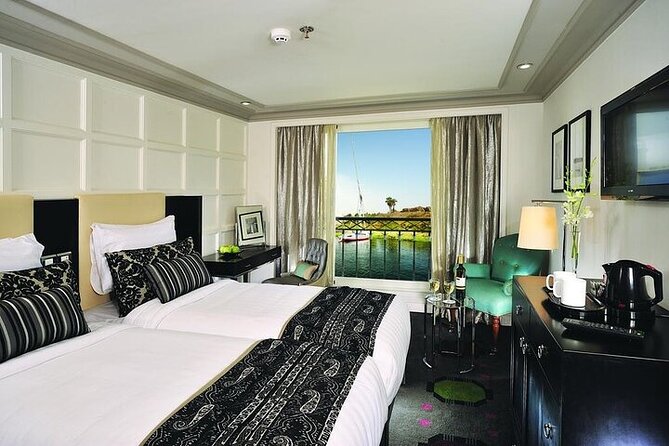
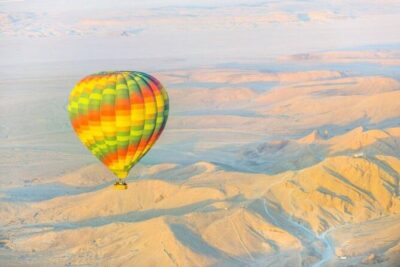
A sunrise hot-air balloon ride over Luxor is one of the most appealing parts of the experience, but the supplied day-by-day plan does not say when it happens. It also does not state the flight duration, launch point, transfer arrangements, or whether the balloon flight is shared with other passengers.
That does not mean you should dismiss it. It means you should get the details in writing. Ask if the flight takes place before the west-bank visits on day three, how you return to the boat or vehicle, and what happens if the schedule changes.
The stated bad-weather policy is clear: if the balloon is cancelled because of weather, you receive $25 per person back. That refund is useful to know, but it is far below the total tour price, so do not assume the balloon represents a large portion of the package cost.
The balloon can also make day three an early start before the Valley of the Kings, Hatshepsut, and the Colossi. For many people, the view will be worth the lost sleep. If you prefer a slower morning, ask how much time you will have between the flight and the west-bank tour.
Cabins, meals, and life aboard ship
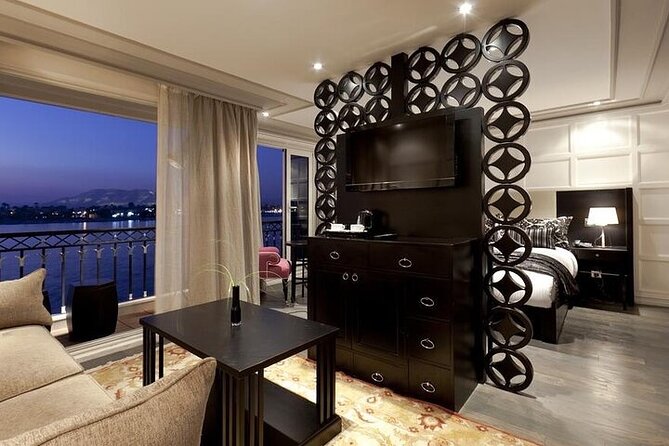
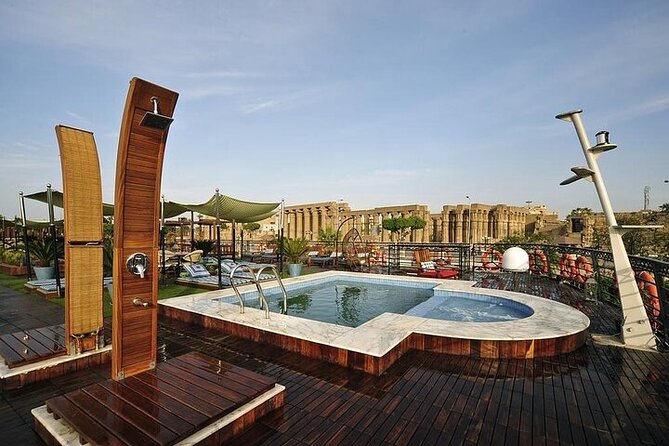
The cruise includes accommodation in a 5-star boat on a full-board basis. Breakfast, lunch, and dinner are included for two of each meal during the three-day experience. The available information does not give a sample menu, dining times, cabin size, deck facilities, or drinks policy, so avoid assuming that every beverage or onboard service is covered.
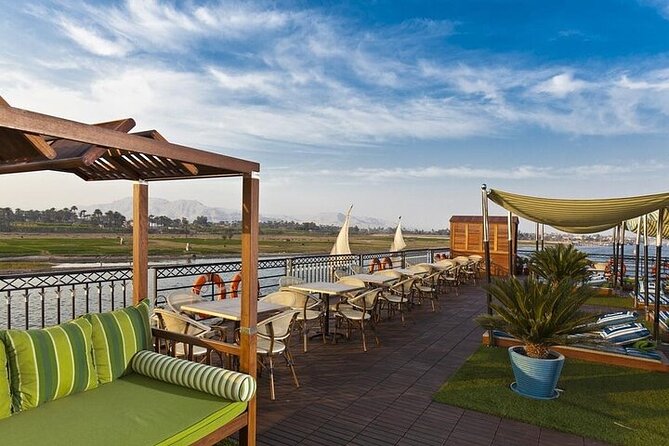
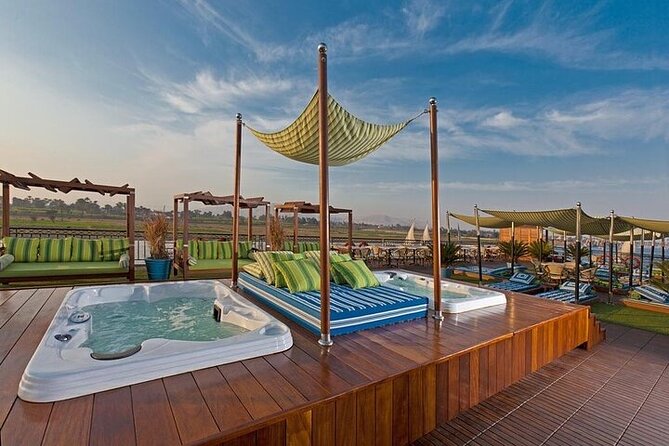
The cruise is meant to provide comfort between temple visits. Several details point to that purpose: private cabins, full-board meals, and a deck where you can rest between excursions. The practical advantage is clear. You do not have to hunt for a restaurant after a long morning or repack your suitcase each night.
Room arrangements need attention at booking. If you want your own room, you must book as a single person. A group of three uses one triple room, while a group that wants separate rooms must make a separate single-person booking.
This matters for couples, friends, and families. A triple room may be a sensible way to lower the cost, but it does not give three people the same space as two rooms. Ask how the room configuration works before you rely on the group discount.
Guide support and transport
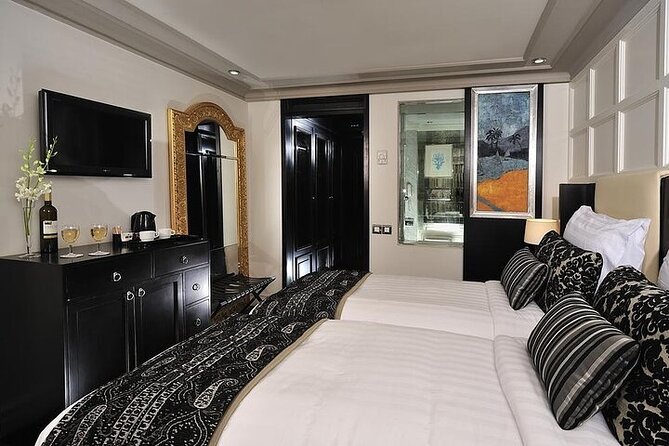
An Egyptologist accompanies the excursions, and transfers use a modern, air-conditioned deluxe vehicle. That combination is valuable in Upper Egypt, where sites are spread out and the midday heat can be tough.
A guide does more than identify a pharaoh. At Edfu, the guide can show you how the temple’s rooms fit together. At Kom Ombo, the twin plan makes sense once you understand the two gods. At the Valley of the Kings, the guide can help you read the painted scenes as part of a burial program rather than random decoration.
The activity is private, meaning only your group participates in the tour portion. You should still clarify whether the guide stays with your group for every listed stop and how cruise dining and onboard areas are organized.
Tipping is not included. Bring enough cash for tips, since the package does not state recommended amounts or accepted payment methods. Peak periods from December 20 through January 7 carry an additional fee, with Christmas, New Year, and Easter also identified as busy periods.
Who should book this cruise?
I would choose this trip if you want the major Aswan to Luxor sights handled in one package, prefer a private cabin to basic hotel rooms, and like having an Egyptologist explain what you are seeing. It suits first-time visitors who want a clear route, included transfers, and little daily planning.
It is also a good match for people who enjoy temple architecture. Philae, Kom Ombo, Edfu, Karnak, Luxor Temple, Hatshepsut, and the Valley of the Kings give you a strong range of styles and periods in only three days.
I would hesitate if you need a relaxed schedule with long unscheduled breaks. Day two is especially packed, and day three may begin early if the balloon flight takes place before the west-bank visits. I would also compare prices if you do not care about the hot-air balloon or prefer to arrange your own cruise.
The package has a high stated rating of 5 out of 5 from 15 ratings, with 100 percent recommending it. The strongest praise centers on clean, comfortable cabins, good meals, friendly guide service, and the sense of returning to a pleasant boat after demanding sightseeing. Those are exactly the areas that matter on a short Nile cruise, but I would still confirm the ship and balloon details before booking.
Should you book it?
Book this experience if you want history, river travel, and convenience in one short trip. The included sites and full-board cruise make the $655.05 price reasonable for a well-organized first visit, especially when private transport and an Egyptologist are important to you.
Before you commit, confirm the balloon schedule, cabin type, single supplement, drinks policy, and peak-season fee. If those details suit your plans, this is a strong way to connect Aswan and Luxor without spending your holiday arranging every transfer yourself.
FAQ
Where does the Nile cruise begin and end?
The cruise begins in Aswan and travels to Luxor.
How long is the experience?
The tour lasts approximately three days.
What time does the experience start?
The listed start time is 12:00 p.m.
Is hotel or cruise accommodation included?
Yes. Accommodation aboard a 5-star cruise is included on a full-board basis.
Are meals included?
Yes. The package includes two breakfasts, two lunches, and two dinners.
Is an Egyptologist included?
Yes. An Egyptologist accompanies you during the excursions.
Are site admissions included?
Admission is included for the Aswan High Dam, Temple of Philae, Temple of Kom Ombo, Temple of Horus at Edfu, Karnak, Luxor Temple, Valley of the Kings, and Temple of Hatshepsut. Admission to the Colossi of Memnon is free.
What happens if the hot-air balloon is cancelled because of bad weather?
You receive a refund of $25 per person if the balloon is cancelled because of bad weather.
More 3-Day Experiences in Aswan
- 3 Days and 2 Nights Nile Cruise from Aswan to Luxor
★ 4.5 · 42 reviews - 3-Day 2-Night Tour to Aswan, Abusimbel & Luxor
★ 5.0 · 24 reviews - 3 Day Nile Cruise from Aswan to Luxor and Hot Air Balloon
★ 5.0 · 20 reviews - From Aswan: 2 Night-3 Day Nile Cruise & Hot Air Balloon Ride
★ 5.0 · 19 reviews
More Nile Cruises in Aswan
- From Aswan: 4-Day Nile Cruise from Aswan to Luxor with Guide
★ 4.1 · 593 reviews - 4-Day 3-Night Nile Cruise from Aswan to Luxor – Private Tour
★ 5.0 · 369 reviews - 4-Day 3-Night Nile Cruise from Aswan to Luxor With Balloon and Abu Simbel
★ 5.0 · 327 reviews - 2 Night Nile Cruise from Aswan to Luxor
★ 5.0 · 311 reviews
Recently reviewed around Aswan
- (3-Nights Cruise From Aswan To Luxor & Balloon, Abu Simbel)★ 4.5 · 23 reviews
- Philae Temple and Aswan High-Dam Half-day tour★ 5.0 · 49 reviews
- Sailing Nile Cruise from Aswan to Luxor for 2 Nights★ 4.5 · 139 reviews
- Private Tour in Aswan : Felucca and Nubian village★ 5.0 · 29 reviews
- 4-Days Aswan sails Nile Cruise Luxor &Abu Simbel.Hot air Balloon★ 4.5 · 77 reviews
- Day Tour to Abu Simbel from Aswan by Bus★ 4.5 · 25 reviews
- Abu Simbel Private Full-Day Tour from Aswan★ 5.0 · 114 reviews
- Nubian Village by Motorboat In Aswan★ 5.0 · 97 reviews
Hot Air Balloon Rides, compared.
Hot Air Balloon Ride in Luxor Egypt with Transfers Included
Read our review →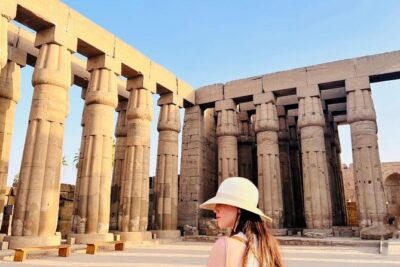
4-Days Nile Cruise From Aswan To Luxor including Abu Simbel and Hot Air Balloon
Read our review →

Luxury Sunrise Balloon Ride in Luxor with Hotel Pickup
Read our review →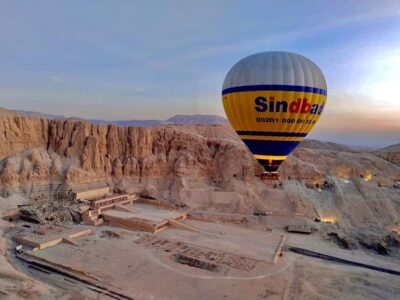
Sunrise Hot Air Balloon Over the Historical sites in Luxor
Read our review →
Hot Air Balloon Ride with Full-Day Sights Tour
Read our review →Browse the lists this tour appears in