
Reviewed · LUXOR WEST BANK TOURS
Luxor Day Tour: Explore Valley of Kings, Queens, Hatshepsut& More
Luxor’s West Bank is best understood as a working map of ancient Thebes, not a single monument. This tour takes you from royal burial chambers in the Valley of the Kings to the homes of the craftsmen who decorated them, with Hatshepsut, Medinet Habu and the Valley of the Queens in between.
I like two things here. First, a private vehicle and guide let you adjust the pace, which matters on a hot day. Second, the route covers both famous monuments and quieter sites such as Deir el-Medina. The main drawback is the packed schedule: seven stops can feel brisk, and entrance fees are not included in the basic option.
In This Review
- Key points to know before booking
- Why this West Bank route works
- Valley of the Kings: two hours among royal tombs
- Hatshepsut’s temple and the story of a female pharaoh
- Colossi of Memnon: a short stop with a big visual payoff
- Valley of the Queens and the Tombs of the Nobles
- Medinet Habu and the power of Ramses III
- Deir el-Medina: the people behind the royal tombs
- What the private vehicle changes
- The $10 price and what you really receive
- Guides, pacing and the human side of the day
- Food, weather and what to carry
- Who should book this Luxor day tour?
- Should you book it?
- FAQ
- How long does the Luxor day tour last?
- What sites are included?
- Is hotel pickup available?
- Is this a private tour?
- Are entrance tickets included?
- Is lunch included?
- Is a guide included?
- Is transportation air-conditioned?
- Can I cancel for a full refund?
Key points to know before booking
- Royal tombs and worker housing in one day: See the pharaohs’ burial place, then visit the village where the tomb builders lived.
- Private touring: Only your group takes part, with hotel pickup, return transport and a private Egyptologist guide.
- Practical tomb advice: Guides such as Mohammed Adly and Hassan Moghrapy are praised for helping people choose which tombs deserve extra entry fees.
- A full West Bank route: The day includes the Valley of the Kings, Hatshepsut, Colossi of Memnon, Valley of the Queens, Medinet Habu and Deir el-Medina.
- Flexible package choices: The $10 starting price is attractive, but check the exact option because entry fees and lunch vary.
- Plan for heat and walking: Good shoes, cold drinks and snacks will make the long day much easier.
Why this West Bank route works
Many Luxor day trips stop at the Valley of the Kings and Hatshepsut’s temple, then call it a day. This one keeps going. You also visit the Valley of the Queens, the Tombs of the Nobles, Medinet Habu and Deir el-Medina.
That wider route gives you a better picture of how ancient Thebes functioned. The Valley of the Kings shows the burial world of pharaohs. Deir el-Medina shows the ordinary houses and tombs of the skilled people who made that royal world possible.
The tour is private, so you are not tied to a large bus group. Your guide can spend more time on questions, suggest tombs based on your interests and allow a little breathing room at the larger sites. That flexibility is especially useful if you are traveling with a young child or simply do not want to race from one ruin to the next.
The schedule lists about seven and a half hours of sightseeing, though the full experience can run from seven to ten hours depending on pickup, pace and stops. That is a serious day in the Egyptian sun. You will see a lot, but you should not expect a slow, museum-like visit at every location.
Other Luxor days travellers weigh against this one:
- Hurghada: Luxor Valley of the Kings & Tutankhamun Tomb Trip
★ 4.7 · 13,208 reviews - Luxor Day Trip from Hurghada Small Group & Tutankhamun Tomb
★ 4.8 · 5,366 reviews - Hot Air Balloon Ride in Luxor Egypt with Transfers Included
★ 5.0 · 4,319 reviews
Valley of the Kings: two hours among royal tombs
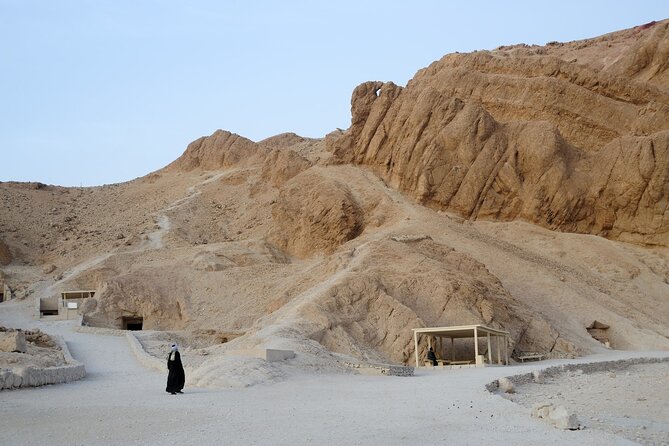
The day begins on the West Bank at the Valley of the Kings, the tour’s main attraction. The valley contains 63 known tombs, cut into the dry hills for rulers and important people during Egypt’s New Kingdom period.
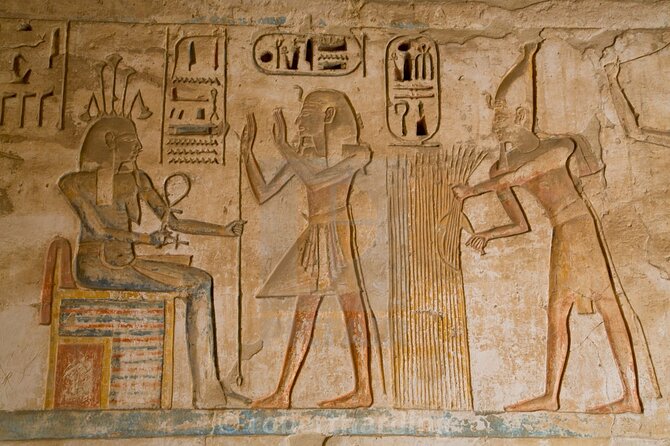
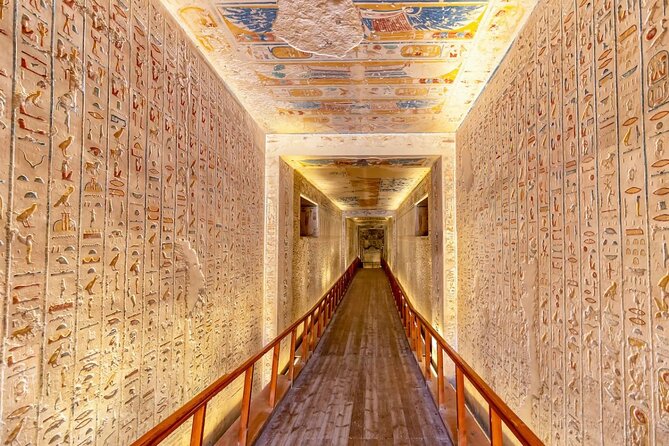
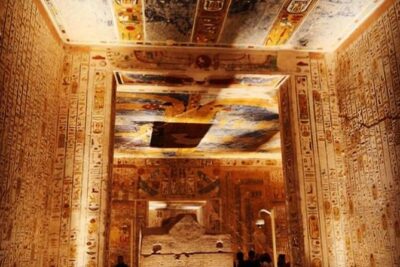
Inside, the decoration is the real prize. Painted figures, hieroglyphs and scenes linked to the afterlife cover many of the chambers. The colors can be surprisingly strong, and the narrow passages make the royal burial plan feel more immediate than a museum display ever could.
The basic admission ticket does not cover every tomb. This is where a good guide can save you both money and time. Mohammed Adly, Mustafa, Ahmed and other guides connected with the service have been praised for advising which tombs are worth an additional ticket.
Tutankhamun’s tomb is the famous name, but fame does not automatically make it the best choice for every visitor. The chamber is important because of the boy king’s discovery and burial, yet other tombs may offer more extensive decoration. Ask your guide to help you compare the options before paying for extras.
Allow two hours here, but understand that the valley involves walking and some steps. The heat can be punishing, especially when moving between the ticket area, the shuttle or access points, and the tomb entrances. Wear shoes with good grip and bring water. The tour includes a bottle of water, but an extra cold drink and a snack are sensible.
Hatshepsut’s temple and the story of a female pharaoh
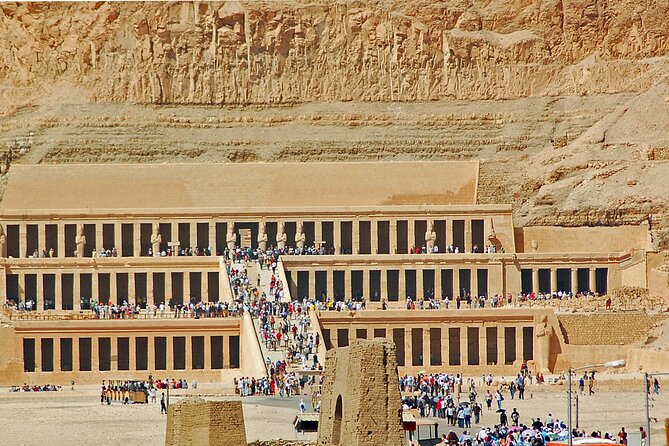
Next comes the Memorial Temple of Hatshepsut at Deir el-Bahari. Its broad terraces rise against a huge limestone cliff, creating one of Luxor’s most memorable settings.
Hatshepsut ruled as pharaoh during the 18th Dynasty. The temple presents her authority through formal images, processions and scenes of royal power. Your guide can help you read those carvings as political statements, not just decoration.
The story becomes more complicated after Hatshepsut’s death. Some images and names were damaged or removed under Thutmose III, who had succeeded her. The destruction was not complete, so you can still trace parts of her story through the surviving scenes.
You are scheduled to spend about two hours here. That is enough time to walk through the terraces and examine the major walls, though the scale of the place can make the visit feel longer in the midday heat.
I like this stop because it adds a human and political story to the tombs. The Valley of the Kings is about death and the afterlife. Hatshepsut’s temple is about how a ruler wanted to be seen, remembered and accepted.
Colossi of Memnon: a short stop with a big visual payoff
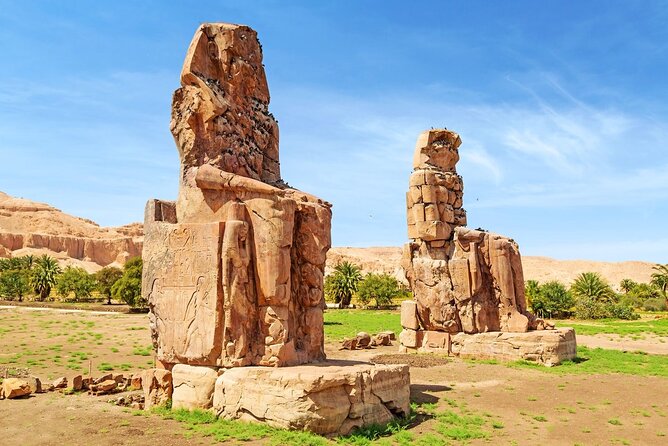
The Colossi of Memnon take only about 30 minutes, but they are an easy highlight. These two huge stone figures portray Amenhotep III and once formed part of a much larger temple complex.
The statues are free to visit, so this stop adds no entrance cost. You can stand close to the massive figures, study the weathered stone and take photographs with the scale of the statues clear in the frame.
Do not expect a long guided visit here. The value is visual and historical rather than architectural. It is a useful pause between the larger temple and tomb visits, and it gives you a chance to take photographs without spending another hour inside a monument.
A different kind of day out, same part of Egypt:
- Luxor: Shared Full-Day Tour to Luxor West and East Banks
★ 4.5 · 1,812 reviews - Luxor: Hot Air Balloon Ride over Luxor Relics
★ 4.8 · 1,681 reviews - Luxor Day Tour: Valley of Kings & Queens & Hatchepsut Temples
★ 5.0 · 1,496 reviews - Full Day Tour to East and West Banks of Luxor
★ 5.0 · 1,449 reviews
Valley of the Queens and the Tombs of the Nobles
The route then turns to the Valley of the Queens, where royal women and other high-ranking figures were buried. The tour specifically includes the area connected with Queen Nefertari, one of Egypt’s most celebrated queens.
Entry arrangements and ticket choices matter here. The basic tour price does not include admission, and special tombs may require an extra ticket. Confirm with your guide which chambers are open and what the added cost will be before you commit.
The Valley of the Queens is followed by the Tombs of the Nobles. This pairing helps broaden the day beyond pharaohs. The nobles’ tombs contain scenes of daily work, farming, food preparation and social life, along with passages linked to the journey after death.
The schedule allows about an hour for this part of the day. That is enough for a focused visit, but not for every tomb in the area. More than 400 tombs are associated with the Tombs of the Nobles, so the guide’s selection matters.
I would ask for a tomb with well-preserved decoration and clear scenes of daily life. These images can be more personal than the formal royal scenes. You may see a glimpse of how food, labor and family life were represented for the afterlife.
Medinet Habu and the power of Ramses III
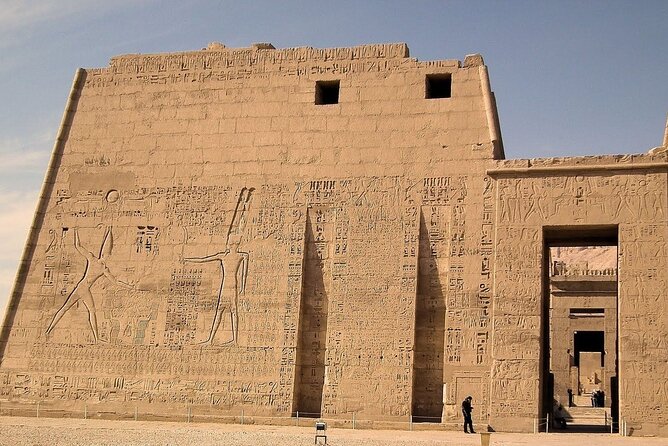
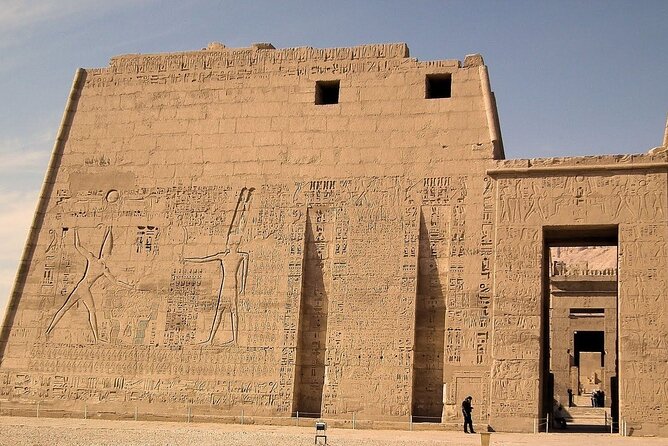
Medinet Habu is the memorial temple of Ramses III, and it deserves more attention than it often gets. Its walls carry large reliefs tied to the king’s victories, religious duties and public role.
The temple was connected with Amun, the major local god of Thebes, and it also played a part in the economic life of the city. In ancient Egypt, a temple was not only a place for ritual. It could hold land, staff, supplies and administrative power.
You have about an hour here, with time for your guide to explain the main features before you explore on your own. That balance is useful. A guide can point out the military scenes and religious images, then you can slow down for photographs or examine details at your own pace.
Medinet Habu is also a good place to notice the difference between a temple’s surviving reliefs and the open spaces around them. Some walls still show impressive carved scenes, while other areas reveal the damage and loss that affected ancient sites over time.
Deir el-Medina: the people behind the royal tombs
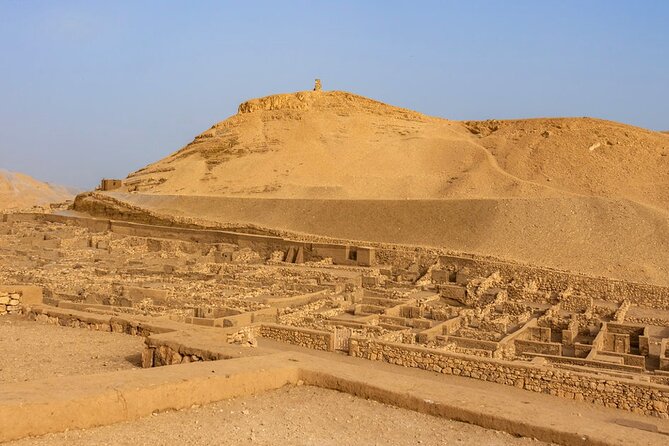
Deir el-Medina may be the most revealing stop of the day. This ancient village was home to the artisans and craftsmen who built and decorated the royal tombs.
The preserved houses and worker tombs offer a rare look at community life. Instead of focusing only on kings and queens, you see where the specialists lived, worked and were buried.
The tour allows about an hour here. That is enough time to understand the layout and see why the site matters, especially if your guide explains how it connects to the royal necropolis nearby.
For me, this is the stop that gives the day its balance. The grand tombs of the kings can make ancient Egypt seem like a story written only by rulers. Deir el-Medina brings the workers into view. Their skill made the painted burial chambers possible, and their own tombs preserve a more grounded side of Egyptian society.
The site does not have the same instant recognition as Tutankhamun’s tomb or Hatshepsut’s temple. Give it your attention anyway. If you want more than a checklist of famous monuments, this is one of the most worthwhile parts of the route.
What the private vehicle changes
Hotel pickup and return are included, along with transfers in a modern air-conditioned vehicle. That matters on the West Bank, where the sites are spread out and the heat can drain your energy quickly.
A clean, air-conditioned car is a real advantage over arranging several local taxis during the day. The driver waits while you visit the sites, and past guide-driver teams have been praised for punctual pickups, careful driving and clear communication.
The private format also means the day can adapt to your group. You may spend longer at the Valley of the Kings and less time at the Colossi of Memnon, or ask for more explanation at Deir el-Medina. The exact flexibility depends on your guide and the time available, but a private tour gives you a better chance than a shared bus trip.
There is also a practical safety benefit. Guides including Hassan Moghrapy have been praised for keeping an eye on unwanted approaches and helping visitors handle ticket questions. That does not remove the need for normal awareness, but support on the ground is useful.
The $10 price and what you really receive
A starting price of $10 per person looks remarkably low for a private full-day tour. It can be excellent value, but only if you read the package details carefully.
The base information says entrance tickets are not included at the listed stops. There is also an option described as Car plus Guide plus Entry plus Lunch. That means the final price depends on the package you select, your group size and which tickets you need.
Included services are hotel pickup and return in Luxor, air-conditioned transfers, taxes and service charges, a private Egyptologist guide and a bottle of water. Lunch is included only when you choose the package that specifically includes it.
This structure can work well if you want control over your spending. You might prefer to pay only for the tombs and sites that matter most to you. On the other hand, a low headline price can be misleading if you assume every admission fee and lunch is covered.
Before booking, confirm three things:
- Which entrance tickets are included in your selected option
- Whether lunch is part of your package
- The total price for your group, including any special tomb tickets
Tipping is optional. The tour also offers group discounts, so the value may improve if you are traveling with family or friends.
Guides, pacing and the human side of the day
The guide is central to this experience. Stones and painted walls can impress you on their own, but a skilled Egyptologist explains what you are seeing and helps you choose where to spend your limited time.
Guide names associated with highly rated departures include Mohammed Adly, Abdul, Hassan Moghrapy, Youssef Hussain, Ahmet, Abdo, Khaled, Sayed and Aza. Their praised qualities include clear explanations, patience, good humor, local knowledge, photo help and the ability to adjust the pace.
You should still state your preferences at the beginning. Tell the guide if you care most about tomb decoration, royal politics, photography, temple architecture or daily life. Also say if you are traveling with children or need short breaks.
The nine-hour experience can be a good fit for families because transport is private and the guide can adjust the day. But the sites themselves remain hot, exposed and physically demanding. A four-year-old may manage it with breaks, though that depends on the child and the family.
The tour is described as suitable for most people and available as a private activity for your group alone. It is near public transportation, though pickup is offered from your Luxor hotel, making local transit less important for this day.
Food, weather and what to carry
Lunch is available with the correct package, and one guide has been praised for choosing a spot with a view. Since the exact restaurant is not specified, treat lunch as a convenient part of the package rather than the main reason to book.
Bring a cold drink, snacks and comfortable shoes. Those simple preparations came up for good reason. The route includes several open archaeological areas, long walks and repeated movement in and out of tombs and temples.
Luxor’s weather can shape the whole day. The experience requires good weather, and a cancellation caused by poor weather brings the choice of another date or a full refund. You can cancel for a full refund up to 24 hours before the start time, but changes or cancellations inside that window are not refunded.
Who should book this Luxor day tour?
I would choose this tour if you want to cover the West Bank efficiently without joining a large group. It suits first-time Luxor visitors who want the major sights, but it also works for repeat visitors who want less obvious places such as Deir el-Medina.
It is especially useful for you if:
- You want a private car and guide rather than a shared bus
- You need hotel pickup and return
- You want help choosing extra tomb tickets
- You prefer a full day with many sites
- You are interested in both royal monuments and ordinary workers’ lives
- You want the option of adding entrance fees and lunch to the package
I would hesitate if you prefer a slow visit with plenty of time at each monument. Six major areas in one day is ambitious. You will see more, but you may need another day if you want detailed photography or long, unhurried stops.
Should you book it?
Book this tour if your priority is broad West Bank coverage with private transport. The combination of the Valley of the Kings, Hatshepsut, Medinet Habu and Deir el-Medina gives you both the famous sights and a better sense of how ancient Thebes worked.
The strongest value comes from the guide’s practical role. Ask about tomb choices, ticket costs and timing before the day begins. If you confirm what your selected package includes, the $10 starting price can be a very good deal, especially for a group.
Skip it if you want a short, relaxed outing or if you dislike extra ticket decisions. For everyone else, this is a sensible way to see Luxor’s West Bank in one demanding but rewarding day.
FAQ
How long does the Luxor day tour last?
The tour lasts approximately seven to ten hours. The planned sightseeing time adds up to about seven and a half hours, not including all pickup and transfer details.
What sites are included?
The route includes the Valley of the Kings, Temple of Hatshepsut at Deir el-Bahari, Colossi of Memnon, Valley of the Queens, Tombs of the Nobles, Medinet Habu and Deir el-Medina.
Is hotel pickup available?
Yes. Pickup from your hotel in Luxor and return transport are included.
Is this a private tour?
Yes. Only your group participates in the activity.
Are entrance tickets included?
Entrance tickets are not included at the listed stops in the basic arrangement. An option is available that includes the car, guide, entry and lunch, so check your selected package before booking.
Is lunch included?
Lunch is included when you choose the option described as Car plus Guide plus Entry plus Lunch. It is not included in every package.
Is a guide included?
Yes. The tour includes a private Egyptologist guide.
Is transportation air-conditioned?
Yes. Transfers are provided in a modern air-conditioned vehicle.
Can I cancel for a full refund?
You can cancel up to 24 hours before the experience start time for a full refund. Cancellations or changes made less than 24 hours before the start time are not accepted or refunded.
Recently reviewed around Luxor
- Private Full Day West Bank: Valley of kings Hatshepsut &More★ 4.9 · 40 reviews
- Luxor: Karnak and Luxor Temples Private Half-Day Tour★ 4.7 · 27 reviews
- From Luxor: 3-Day Nile Cruise to Aswan with Private Guide★ 4.2 · 147 reviews
- From Hurghada: Luxor Private Guided Day Tour with Lunch★ 4.6 · 28 reviews
- Marsa Alam: Snorkeling with Sea Turtles Marsa Mubarak★ 4.9 · 26 reviews
- Marsa Alam : Over Day Tour to Luxor & Balloon Ride & Felucca★ 4.4 · 29 reviews
- Luxor: Valley of The Kings and Hatshepsut Temple Day Trip★ 4.3 · 55 reviews
- Luxor: Habu, Deir El Medina, Shared tour, Guide, and Lunch★ 4.7 · 21 reviews
Luxor West Bank Tours, compared.
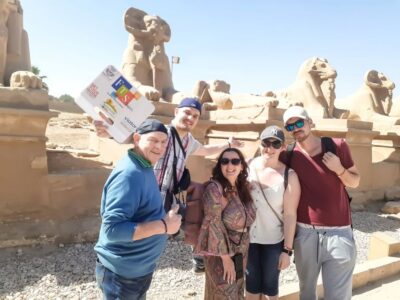
Luxor Valley of the Kings & Tutankhamun Tomb Trip
Read our review →
Luxor Tour with Valley of Kings, Karnak & Tut Tomb
Read our review →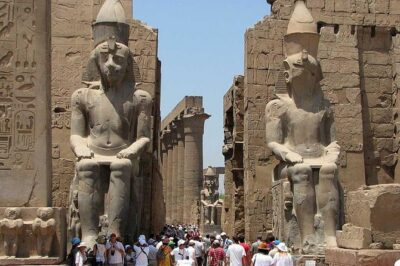
Valley of Kings, Hatchepsut Temple ,Karnak & Luxor-DayTour
Read our review →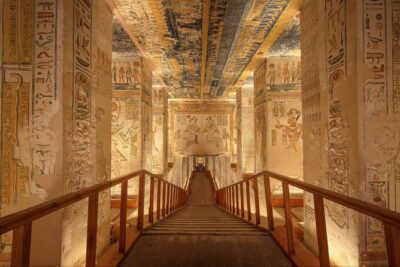
Full Day Tour of Luxor West Bank Temples and Tombs (Private)
Read our review →
Small Group Excursion to Luxor Valley of the Kings from Hurghada
Read our review →
Valley of Kings Hatshepsut & Karnak Luxor Day Trip
Read our review →
Valley of the Kings and Queens Guided Tour with Lunch
Read our review →Browse the lists this tour appears in