
Reviewed · LUXOR TOURS
Luxor Day Tour visit East and West Nile Banks
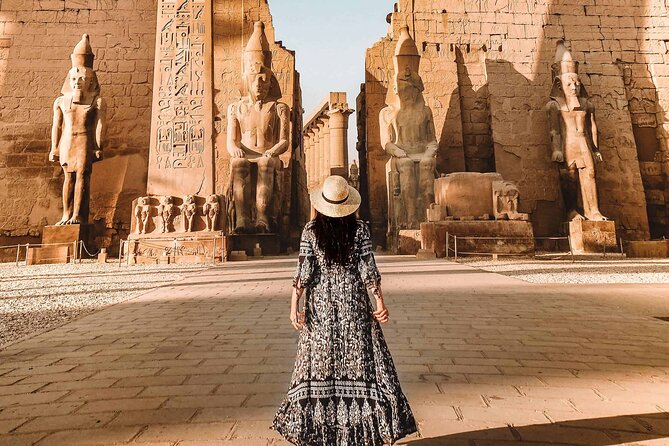
Luxor packs some of Egypt’s greatest monuments into one compact stretch of the Nile. This private day tour gives you a practical way to see both banks, from royal tombs in the Valley of the Kings to the huge columns of Karnak and the elegant avenue-facing Temple of Luxor. The main appeal is coverage: you can see the essential sights in one day without sorting out several separate rides.
I like the private vehicle and flexible pace, especially for first-time visitors. Past guides such as Ahmed, Shereen, Nourhan, and Mustafa Awad have been praised for clear explanations, patience, and adjusting the day to suit the group. I also like that hotel pickup, bottled water, and air-conditioned transfers are included.
The main drawback is the confusing cost information. The headline price is only $15 per person, but lunch, entry fees, and sometimes the guide are shown as optional in the booking details. Confirm exactly what your chosen option covers before paying, particularly if you expect all site tickets to be included.
In This Review
- Key points to know before booking
- Why this one-day Luxor plan works
- The Valley of the Kings: tombs, heat, and extra choices
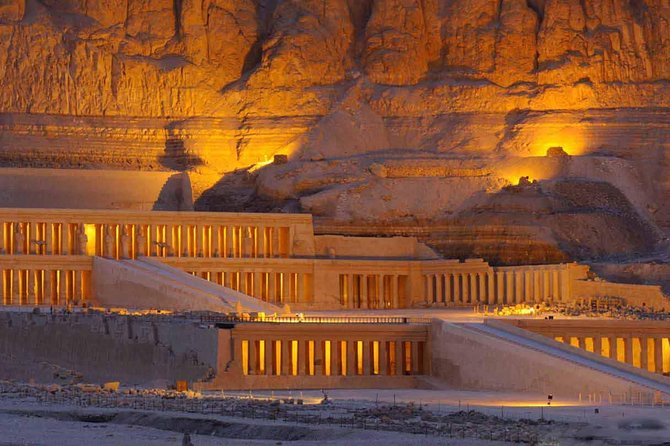
- Hatshepsut Temple and the story of a rare female ruler
- Colossi of Memnon: a brief West Bank stop
- Lunch: useful pause, unclear package detail
- Karnak Temple: allow time for the huge scale
- Luxor Temple: an atmospheric final stop
- Guides, drivers, and the private format
- Price, tickets, and the real value
- Who should book this Luxor day tour?
- Practical advice for making the day better
- Should you book it?
- FAQ
- How long does the Luxor day tour last?
- What sites are visited?
- Is hotel pickup and drop-off included?
- Is the tour private?
- Are lunch and entrance fees included?
- Can I cancel for a full refund?
Key points to know before booking
- Six major sights in one day: Visit the Valley of the Kings, Hatshepsut Temple, Colossi of Memnon, Karnak Temple, and Luxor Temple, with both Nile banks covered.
- Private touring: Only your group participates, and transfers use a private air-conditioned vehicle.
- Guide quality can shape the day: Names praised in past experiences include Ahmed, Shereen, Nourhan, Hamada, Amir, and Mustafa Awad, though a specific guide is not guaranteed.
- The $15 price needs checking: Lunch, drinks, entrance fees, and guide services are not consistently described in the package details.
- Start early: Pickup is listed for 7:00 a.m., giving you cooler hours at the outdoor monuments.
- Free cancellation: Cancel at least 24 hours before the local start time for a full refund.
Why this one-day Luxor plan works
Luxor is split by the Nile into two very different sightseeing zones. The East Bank is the city side, home to Karnak and Luxor Temple. The West Bank is quieter and more open, with the Valley of the Kings, Hatshepsut Temple, and the Colossi of Memnon.
Seeing both sides in a single day is tiring, but it is efficient. You avoid arranging separate taxis, negotiating several fares, or trying to coordinate a boat crossing and site visits on your own. The private format also matters. You can ask for more time at a tomb, shorten a stop, or skip shopping stops if they are not useful to you.
The advertised length is about eight hours, though the actual day can vary. One past booking ran closer to six hours after shopping stops were skipped. That is not necessarily a problem. The key sites can fit into a shorter visit if you move at a brisk pace, but you should not expect a slow, museum-like study of every monument.
The pickup time is listed as 7:00 a.m. The guide waits with a sign bearing your name, and the activity ends back at the meeting point. Hotel pickup and drop-off are included, although the supplied meeting-point information also gives a location in Luxor, so confirm the exact pickup arrangement when you book.
Other Luxor days travellers weigh against this one:
- Hurghada: Luxor Valley of the Kings & Tutankhamun Tomb Trip
★ 4.7 · 13,208 reviews - Luxor Day Trip from Hurghada Small Group & Tutankhamun Tomb
★ 4.8 · 5,366 reviews - Hot Air Balloon Ride in Luxor Egypt with Transfers Included
★ 5.0 · 4,319 reviews
The Valley of the Kings: tombs, heat, and extra choices
The West Bank begins with the Valley of the Kings, the burial ground for many New Kingdom rulers. Instead of pyramids, the pharaohs placed their tombs inside the limestone hills, hiding their burial chambers and painted walls from view.
You have about two hours here. That is enough to see the main valley and enter the tombs covered by your ticket, but the number of tombs open can change. The tour information names royal tombs associated with Thutmose I, Thutmose III, Tutankhamun, Ramses VI, Merenptah, and Amenhotep II, with availability depending on the day and the option you choose.
Do not assume every famous tomb is included. Basic entry often covers a limited number of tombs, while special tombs can require an added fee. The details specifically warn that entry fees depend on the tour option and that basic-area access may be included instead of every available tomb.
The valley is exposed and hot. One past booking praised the driver and assistance but noted that the heat made the visits difficult. Wear a hat, carry water, and use the included bottle as a supplement rather than your only drink. The vehicle’s air conditioning gives you a welcome break between sites.
One important detail: the Valley of the Kings has a no-tour-guide policy inside the tombs, according to the supplied tour information. Your guide can explain the site and help you understand what you are seeing, but you may not receive a full commentary inside every burial chamber. This makes the guide’s briefing before entry especially useful.
The tombs are the reason to come here, not the broad scenery. Painted figures, hieroglyphs, and narrow corridors reveal how much effort went into preparing a royal afterlife. If you care more about tomb decoration than quantity, ask your guide which open tombs deserve your time.
Hatshepsut Temple and the story of a rare female ruler
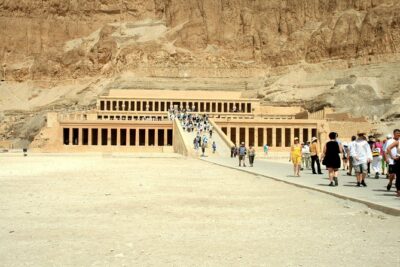
Next comes the Temple of Hatshepsut, usually allowed about two hours in this schedule. The monument rises in terraces against the cliffs, giving it a strong sense of order and scale even before you focus on the inscriptions.
Hatshepsut ruled Egypt for roughly two decades during the 18th Dynasty. She was the daughter of Thutmose I and the only woman identified in the tour description as having ruled ancient Egypt as a pharaoh. Her position was unusual, and the temple’s reliefs and statues help explain how she presented royal power.
Two hours is generous compared with the short photo stops common on packed sightseeing days. Use that time to look beyond the central approach. Your guide can point out the reliefs, the terraces, and the symbols used to show Hatshepsut as a legitimate ruler.
The site has little shade. It also involves walking across open ground, so the early start helps. Still, the sun can be fierce even in the morning. Comfortable shoes, light clothing, water, and sun protection are practical necessities rather than optional extras.
Colossi of Memnon: a brief West Bank stop
The Colossi of Memnon is a much shorter stop. These two enormous seated statues are the surviving remains of the mortuary temple of Amenhotep III. The schedule gives this visit about one hour, although the wording describes passing by the statues before continuing toward the East Bank.
Treat this as a pause for photographs and a quick explanation, not a full site visit. The statues are impressive because of their size and age, but much of the original temple is gone. This stop also breaks up the longer drive between the West and East Banks.
The distinction matters when you plan your expectations. The Valley of the Kings and Hatshepsut Temple deserve your main attention on the West Bank. The Colossi are a useful historical marker and a convenient stop, but they are not likely to occupy the full hour unless your guide adds more nearby sightseeing.
A different kind of day out, same part of Egypt:
- Luxor: Shared Full-Day Tour to Luxor West and East Banks
★ 4.5 · 1,812 reviews - Luxor: Hot Air Balloon Ride over Luxor Relics
★ 4.8 · 1,681 reviews - Luxor Day Tour: Valley of Kings & Queens & Hatchepsut Temples
★ 5.0 · 1,496 reviews - Full Day Tour to East and West Banks of Luxor
★ 5.0 · 1,449 reviews
Lunch: useful pause, unclear package detail
After the West Bank, you continue to the East Bank for lunch at a local restaurant. The tour description presents lunch as part of the day, but the included and excluded sections say lunch is optional and drinks are not included. This is the clearest point to settle before booking.
Ask two direct questions: Is lunch included in the exact option I am selecting, and where will the meal take place? The supplied experiences include meals at local restaurants and, in one case, a meal near the Nile. But no fixed restaurant or menu is specified, so you should not book this expecting a particular dish or riverside setting.
Lunch is more than a meal in an eight-hour sightseeing day. It gives you time to cool down, use a restroom, and reset before Karnak. If lunch is not included, carry Egyptian pounds for food and drinks. Small cash is also useful for minor payments and tips.
One disappointing experience involved difficulty getting help finding a restaurant. That suggests a simple precaution: confirm the lunch plan with the operator in advance instead of assuming the driver will arrange everything automatically. If you have dietary needs, state them before departure.
Karnak Temple: allow time for the huge scale
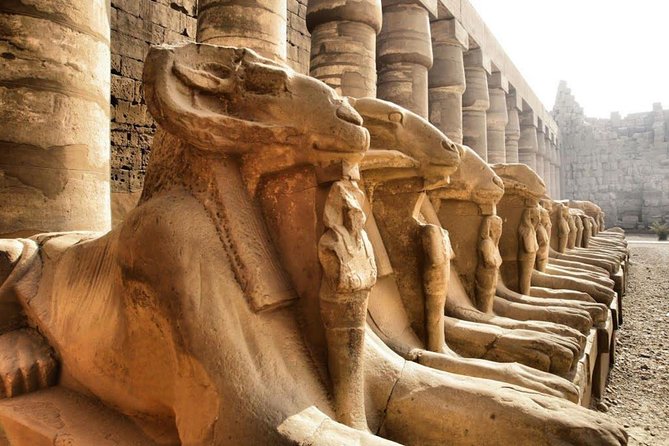
Karnak is the biggest monument on the East Bank and one of the places where a guide makes a real difference. The complex was dedicated to Amun, his wife Mut, and their son Khonsu. It grew over centuries, so you are not looking at one ruler’s single project but a vast religious center shaped by successive pharaohs.
The scheduled visit lasts about two hours. That is enough to appreciate the main spaces without turning the entire day into a march through stone. The columns, courts, gateways, and carved surfaces can blur together if you rush. A good guide helps you focus on what each section was for and how the complex developed.
Several past experiences singled out guides for explaining the temples in clear English and for answering questions. One guide, described as an Egyptology graduate from Cairo, used the monuments to explain broader Egyptian beliefs and royal power. Another guide, Ahmed, was praised for bringing energy and modern cultural context to the visit. These details matter because Karnak can feel overwhelming without a story to hold it together.
At the same time, guide quality may vary. One booking described the vehicle as the main service and found the explanations weaker than expected. Since the guide is listed as optional in part of the package information, check if a licensed or Egyptology-trained guide is included in your chosen rate.
Karnak is also another outdoor site with limited relief from the sun. The early start helps, but you will still spend much of the visit on exposed stone. Use your vehicle transfers wisely: keep the air conditioning break between each major stop instead of lingering in the heat.
Luxor Temple: an atmospheric final stop
The day finishes at Luxor Temple, built by Amenhotep III in the 18th Dynasty and completed by Ramses II in the 19th Dynasty. It is smaller and more focused than Karnak, which makes it a good final monument after a long day.
Look for the layered story in the architecture. Amenhotep III began the temple, while Ramses II completed major work later. The result reflects different reigns and changing ways of presenting kingship. Your guide can help connect the names and dates, which otherwise become difficult to keep straight after several sites.
The scheduled visit lasts about an hour. That is enough for the main court, columns, statues, and monumental entrance, though a longer visit would allow more time for details. The temple’s position in modern Luxor gives it a different feel from the West Bank tombs. You are seeing an active city around an ancient religious center, rather than a monument isolated in the desert.
Ending here also makes sense emotionally. After the hidden tombs and cliffside temple, Luxor Temple brings you back to the river city and closes the day with a more compact monument. The vehicle then returns you to the meeting point.
Guides, drivers, and the private format
The strongest part of this experience is often the human service. Drivers named Ali, Ismail, Ahmed, Amir, Hamada, and Abd El Rabo were praised for being reliable, flexible, helpful, and familiar with Luxor. Several guides, including Shereen, Nourhan, Nermeen Nabil, Hameess, and Mustafa Awad, were praised for patient explanations and strong command of the subject.
Do not treat those names as a promise that one of them will lead your tour. They show the range of staff used by the operator, not a guaranteed assignment. If a particular guide is important to you, request that person at booking and ask for confirmation.
The private setup is useful for couples, families, and small groups with different interests. You can ask to spend more time at tombs, shorten a stop, or avoid shops. One past booking specifically found the day more relaxed after skipping shopping stops.
The vehicle is described as a newer private air-conditioned model. A clean, comfortable van matters in Luxor because the day involves repeated transitions between open-air monuments. Bottled water is included, but drinks at lunch are not.
Price, tickets, and the real value
At $15 per person, the headline rate looks exceptionally low for private transportation across both banks. It can be good value if you are booking a basic transport package and understand the extra costs. It becomes less attractive if you expect the price to cover a full guide, lunch, and every entry ticket.
The package details conflict in several places. The overview says lunch is included, while the included and excluded sections call lunch optional. Some sections say admission tickets are included, but the additional information says entrance fees depend on the selected option and may cover only the basic area. One booking paid extra for site tickets and felt the description had not made that clear.
Before you commit, confirm these points in writing:
- Are Valley of the Kings tickets included?
- How many tombs can you enter?
- Are the Hatshepsut, Karnak, and Luxor Temple tickets included?
- Is the guide included, or is this mainly a private vehicle service?
- Is lunch included in this specific booking option?
- Are drinks extra?
Also budget for tipping. Tips are excluded, and several experiences describe especially helpful drivers and guides. Carry small Egyptian currency if possible. One guide even helped with a small restroom payment when a visitor lacked change, but you should not rely on staff to cover minor costs.
Who should book this Luxor day tour?
I would consider this a good fit for a first visit, especially if you have only one full day in Luxor. You get the major East and West Bank sights, private transfers, a flexible schedule, and a guide who can turn a sequence of ruins into a connected story.
It also suits solo visitors. A reliable pickup and private vehicle remove much of the uncertainty of arranging transport alone. Couples and small groups can benefit from the ability to set their own pace.
You may prefer another arrangement if you want a slow archaeological visit, guaranteed access to special tombs, or a clearly all-inclusive price. The schedule is full, the heat can be hard, and the ticket wording needs careful checking. Independent visitors who already know Luxor may find the transport useful but may not need a guided package.
The experience has a 4.8 rating from 264 ratings, with 95 percent recommending it. Those numbers suggest a strong overall service, but the one-star experience and the three-star complaints point to the exact risks: unclear inclusions, lunch coordination, and uneven guide commentary.
Practical advice for making the day better
Start with breakfast. The pickup is early, and one guide helped a group find a local breakfast when they had left without eating. Still, it is better to arrange your own food before departure or confirm that the guide can make a stop.
Ask to skip shopping stops if you want more time at the monuments. The day can last closer to six hours when those stops are removed, but you will spend less time on activities unrelated to the main sights.
Take the heat seriously. The West Bank sites offer broad open areas and little shade. Light clothing, a hat, water, and sturdy shoes will help more than stylish luggage or heavy layers.
Use the guide strategically. Ask for a short explanation before entering each site, then ask which two or three details deserve your attention. At Karnak especially, a focused route is better than trying to understand every column and inscription.
Check the exact booking option before paying. The low price is attractive, but the value depends on what is added for tickets, lunch, and guiding. Free cancellation is available if you cancel at least 24 hours before the local start time. Poor weather may lead to a different date or a full refund.
Should you book it?
Book this tour if you want an efficient, private introduction to Luxor and you are prepared to confirm the extra costs. Its best features are the broad coverage, hotel transfers, air-conditioned vehicle, and the chance of having a flexible guide such as Ahmed, Shereen, Nourhan, or Mustafa Awad.
I would not book it blindly at the $15 headline price. First verify the ticket package, lunch, drinks, and guide arrangements. If those details are clear and the total remains reasonable, this is a sensible way to see Luxor’s essential monuments in one demanding but rewarding day.
FAQ
How long does the Luxor day tour last?
The advertised duration is approximately eight hours. The actual length can vary, and one past booking lasted about six hours after shopping stops were skipped.
What sites are visited?
The tour visits the Valley of the Kings, Temple of Queen Hatshepsut, Colossi of Memnon, Karnak Temple, and Luxor Temple. It covers both the East and West Banks of the Nile.
Is hotel pickup and drop-off included?
Yes. Hotel pickup and drop-off are listed as included, with a stated start time of 7:00 a.m. The activity ends back at the meeting point.
Is the tour private?
Yes. Only your group participates in the private tour or activity, and transfers use a private air-conditioned vehicle.
Are lunch and entrance fees included?
The information is inconsistent. Some sections describe lunch and admission as included, while other sections state that lunch, guide services, and entry fees may be optional or depend on the selected tour option. Confirm the exact inclusions before booking.
Can I cancel for a full refund?
Yes, if you cancel at least 24 hours before the experience start time. Cancellations or changes made less than 24 hours before the start are not refunded, and poor weather may result in a different date or full refund.
Recently reviewed around Luxor
- Private Full Day West Bank: Valley of kings Hatshepsut &More★ 4.9 · 40 reviews
- Luxor: Karnak and Luxor Temples Private Half-Day Tour★ 4.7 · 27 reviews
- From Hurghada: Luxor Private Guided Day Tour with Lunch★ 4.6 · 28 reviews
- From Luxor: 3-Day Nile Cruise to Aswan with Private Guide★ 4.2 · 147 reviews
- Marsa Alam: Snorkeling with Sea Turtles Marsa Mubarak★ 4.9 · 26 reviews
- Marsa Alam : Over Day Tour to Luxor & Balloon Ride & Felucca★ 4.4 · 29 reviews
- Luxor: Valley of The Kings and Hatshepsut Temple Day Trip★ 4.3 · 55 reviews
- Luxor: Sound & Light Show at Karnak with Hotel Transfers★ 4.3 · 22 reviews
Luxor Tours, compared.
Luxor Valley of the Kings & Tutankhamun Tomb Trip
Read our review →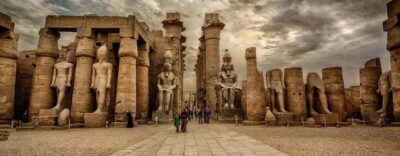
Luxor Day Trip from Hurghada Small Group & Tutankhamun Tomb
Read our review →
Hot Air Balloon Ride in Luxor Egypt with Transfers Included
Read our review →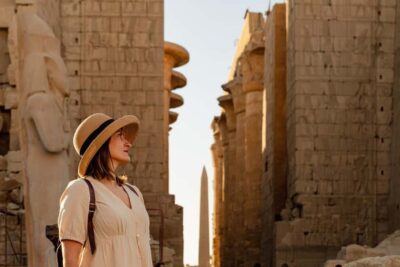
Shared Full-Day Tour to Luxor West and East Banks
Read our review →
Luxor Day Tour: Valley of Kings & Queens & Hatchepsut Temples
Read our review →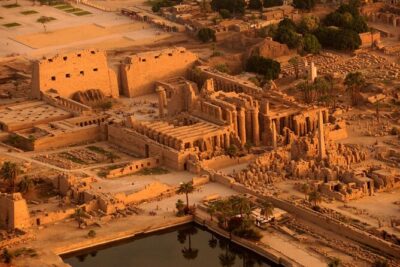
Full Day Tour to East and West Banks of Luxor
Read our review →
2-Day Luxor Tour with Hotel, Balloon, & Boat Ride
Read our review →Browse the lists this tour appears in