
Reviewed · LUXOR TOURS
Luxor Private Full-Day Tour: Discover the East and West Banks of the Nile
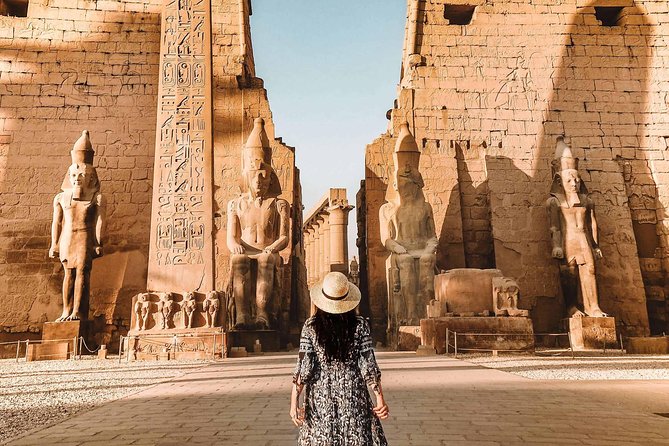
Luxor’s great advantage is that its ancient sights are split between two very different halves of the Nile. This private day brings them together, taking you from royal tombs and Hatshepsut’s terraces on the West Bank to Karnak and Luxor Temple on the East Bank, with an Egyptologist guide beside you.
I like the private vehicle and door-to-door pickup, since you avoid arranging separate taxis between widely spaced monuments. I also like that lunch, water, transport, and the listed entry fees are built into the $90 price. The main caution is the pace: five major stops in about eight hours can feel full, especially if you want a slow look at every carving.
In This Review
- Key points at a glance
- Why this Luxor route works so well
- Valley of the Kings: two hours among royal tombs
- Hatshepsut’s Temple at Deir el Bahari
- The Colossi of Memnon in a quick 20 minutes
- Lunch before Karnak Temple
- Karnak Temple: two hours for Egypt’s great religious center
- Luxor Temple after the main crowds of history
- What the private format adds at $90
- Guide quality can shape the whole day
- Who should book this Luxor day tour
- Should you book it?
- FAQ
- How long does the Luxor private tour last?
- Which attractions are included?
- Is pickup and return transportation included?
- Is the tour private?
- Is lunch included?
- Are entrance fees included?
- Who leads the tour?
- Can I cancel for a full refund?
Key points at a glance
- Five major monuments in one day: The route covers the Valley of the Kings, Hatshepsut’s Temple, the Colossi of Memnon, Karnak, and Luxor Temple.
- Private touring: Only your group participates, so you can focus your questions on the parts of ancient Egypt that interest you most.
- Pickup from several starting points: Collection is available from a Luxor hotel, Nile cruise, or Luxor International Airport, with return transport included.
- Useful all-in pricing: Lunch, listed admission fees, a private air-conditioned vehicle, water, taxes, and service charges are included.
- Guide quality matters here: Alladin is praised for explaining the relationship between royal burial grounds on the West Bank and city life on the East Bank. Ahmed is described as passionate and funny.
- Flexible cancellation: You can receive a full refund if you cancel at least 24 hours before the start time.
Why this Luxor route works so well
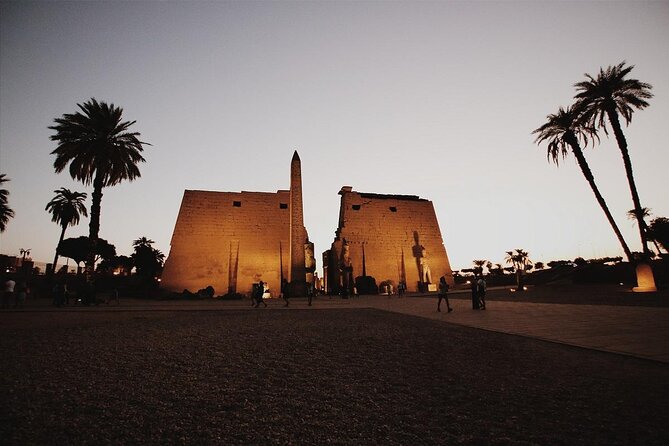
A first day in Luxor can be awkward to plan. The Valley of the Kings is on the West Bank, while Karnak and Luxor Temple are on the East Bank. Add Hatshepsut’s Temple and the Colossi of Memnon, and you have a long list of sights spread across a broad area.
This tour solves that problem with a private, air-conditioned vehicle and a guide who handles the movement between sites. You do not need to negotiate separate rides, watch the clock for a driver, or work out which entrance ticket belongs to which monument. For many visitors, that practical help is worth as much as the commentary.
The route also gives you a useful way to understand Luxor. The West Bank is presented as the area of royal tombs and mortuary monuments. The East Bank shows the temples tied to worship and public religious life. Alladin was especially praised for explaining this contrast, which helps turn a series of impressive ruins into a connected story.
The tour lasts about eight hours. That is enough time to see the essential monuments, but it is not a leisurely archaeological study. If you stop for every inscription or want extensive time inside several tombs, you may find the schedule tight. If your goal is to get a strong first look at Luxor in one day, the plan is sensible.
More Luxor trips worth a second look
- Luxor: Shared Full-Day Tour to Luxor West and East Banks
★ 4.5 · 1,812 reviews - Full Day Tour to East and West Banks of Luxor
★ 5.0 · 1,449 reviews - Luxor : Full Day Tour to Luxor West and East Banks & Lunch
★ 5.0 · 870 reviews
Valley of the Kings: two hours among royal tombs
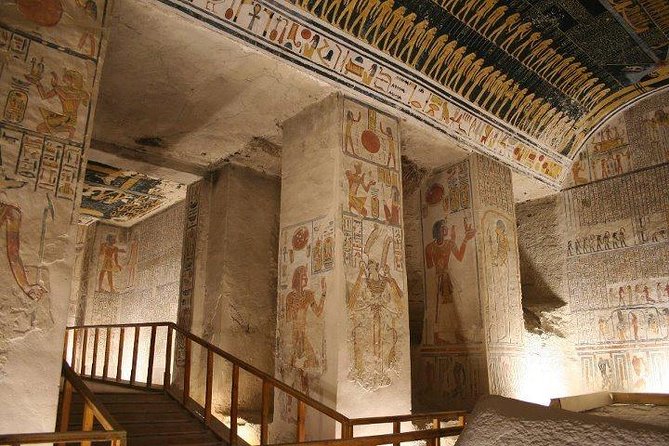
The day begins on the West Bank at the Valley of the Kings. This is the visit that many people most anticipate, and the two-hour allocation gives you the best chance to see the site without rushing through it.
The valley served as a burial area for Egyptian kings. The tombs named for this route include those of Thutmose I, Thutmose III, Tutankhamun, Ramesses VI, Merenptah, and Amenhotep II. Each tomb has its own layout and decoration, and the guide can place the rulers in the wider story of Egypt’s dynasties.
Your admission to the Valley of the Kings is included. That matters because a private tour can otherwise appear cheaper at first glance, only to add entrance charges at each stop. Here, the listed admission fees are part of the stated price, so you have a clearer idea of the day’s cost before setting out.
The biggest practical issue is that the Valley of the Kings is not one single tomb. You may need to decide how to use your time among the available burial sites. The basic admission covers the site, while some especially famous tombs can have separate ticket arrangements in Egypt. The tour information specifically includes admission to the Valley of the Kings, but it does not promise entry to every individually restricted tomb.
Tutankhamun’s tomb is famous because of the discovery of his burial treasure, while Ramesses VI is known for its decorated interior. Your guide can help you decide which tombs deserve priority within the time available. I would ask early in the visit which tombs are open and which ones best match your interests.
The valley is also the place where good footwear and water matter most. A bottle of water is included, and the vehicle provides shelter between stops, but you should still expect some walking. Two hours sounds generous until you account for moving between tomb entrances, listening to explanations, and taking a moment to look carefully at the painted walls.
Hatshepsut’s Temple at Deir el Bahari
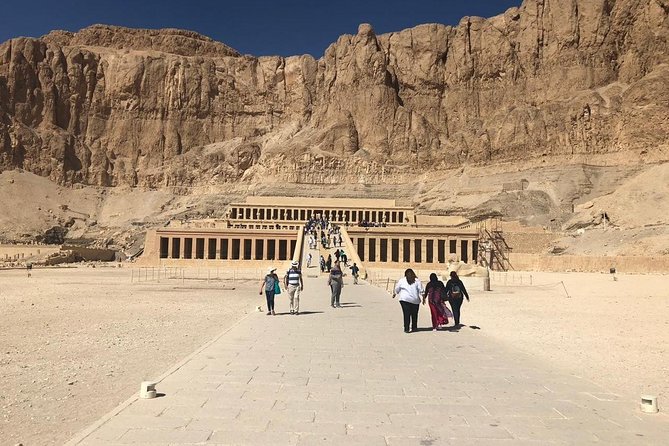
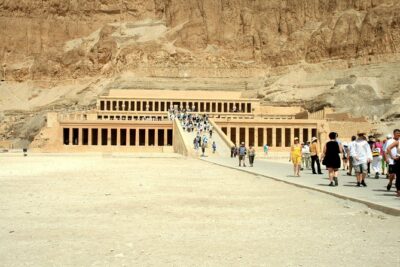
From the valley, the tour continues to the Temple of Hatshepsut at Deir el Bahari. One hour is assigned here, enough for the main terraces, photographs, and a clear explanation of the queen’s unusual place in Egyptian history.
Hatshepsut was the daughter of Thutmose I and ruled Egypt for about 20 years during the 18th Dynasty, dated in the supplied information to 1490 to 1469 B.C. She is presented as the only woman to reign as pharaoh in ancient Egypt. The temple gives your guide a natural setting to explain her authority, her building program, and the way royal power was shown through architecture.
The temple’s design differs sharply from the rock-cut tombs at the valley. Its broad terraces and strong horizontal lines are made to be seen from a distance, while the Valley of the Kings asks you to move inward through narrow passages. That change gives the day some welcome variety.
I would use this stop to listen rather than rush straight to photographs. The architecture makes more sense once you understand who commissioned it and why a female ruler needed such a powerful public image. Your guide can also help you distinguish the main surviving sections from later damage and alteration, though the exact depth of the explanation will depend on the guide assigned to your group.
One hour is a reasonable compromise. You can see the principal features, but the stop is not designed for a slow architectural inspection. If Hatshepsut is your main interest, tell the guide at the start so the visit can reflect that.
The Colossi of Memnon in a quick 20 minutes
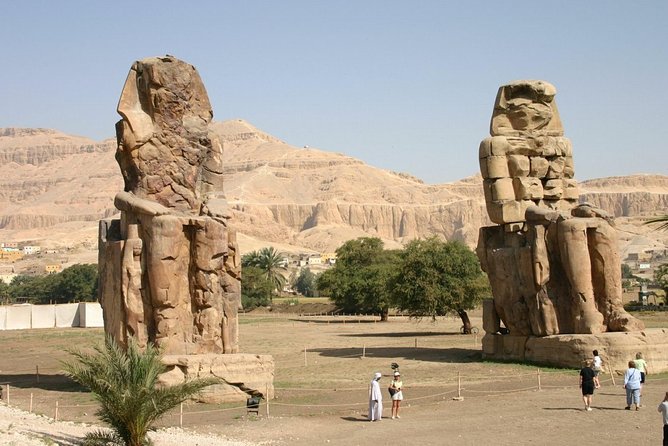
The Colossi of Memnon is the shortest stop, with about 20 minutes for photographs. These huge seated statues provide a quick visual break between the West Bank’s larger monuments.
The stop is simple by design. You will have time to see the statues and take pictures, but not to treat the site as a long museum visit. That is probably the right use of the schedule. After two hours in the Valley of the Kings and an hour at Hatshepsut’s Temple, a brief outdoor stop keeps the day moving toward the East Bank.
Because the visit is short, listen for the historical setting rather than expecting a long exploration. The statues are part of the grand royal building tradition that defines Luxor’s West Bank, and they help reinforce the scale of ancient Egyptian construction.
This is also a useful moment to reset before lunch and the East Bank temples. I would keep your camera ready and avoid lingering too long if you want to protect time at Karnak.
A different kind of day out, same part of Egypt:
- Hurghada: Luxor Valley of the Kings & Tutankhamun Tomb Trip
★ 4.7 · 13,208 reviews - Luxor Day Trip from Hurghada Small Group & Tutankhamun Tomb
★ 4.8 · 5,366 reviews - Hot Air Balloon Ride in Luxor Egypt with Transfers Included
★ 5.0 · 4,319 reviews - Luxor: Hot Air Balloon Ride over Luxor Relics
★ 4.8 · 1,681 reviews
Lunch before Karnak Temple
After crossing to the East Bank, you stop for lunch at a local restaurant. Lunch is included, along with a bottle of water during the trip. The meal is a practical benefit rather than an optional extra, since buying food independently in the middle of a packed sightseeing day can cost both time and money.
The exact restaurant and menu are not specified, so you should not book this expecting a particular dish or dining style. Think of it as a scheduled meal that keeps the tour moving. If you have dietary needs, it is sensible to raise them when booking or before the tour begins, since no special menu details are provided.
The timing makes sense. Karnak and Luxor Temple require attention, and stopping for lunch before Karnak gives you a chance to sit down before the longest East Bank visit. The meal also breaks up what would otherwise be a continuous run of monuments.
Karnak Temple: two hours for Egypt’s great religious center
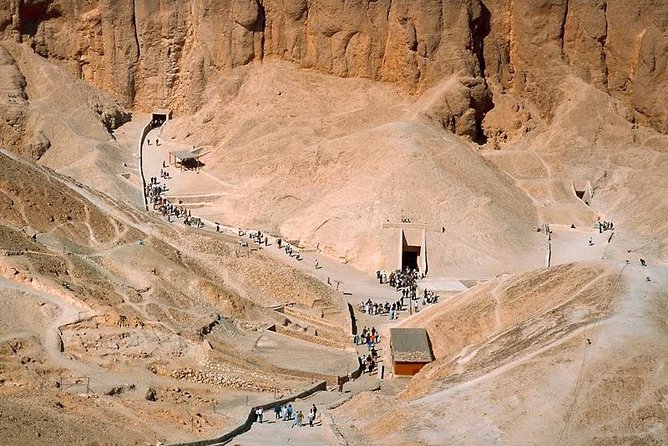
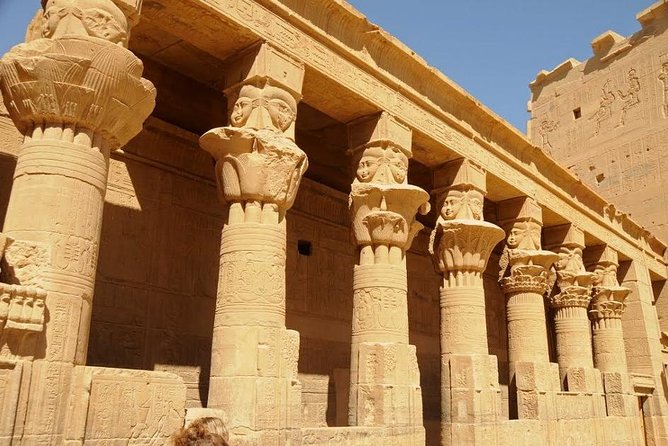
Karnak receives about two hours, matching the Valley of the Kings as the longest stop. That is appropriate. This is not a single compact temple but a major complex associated with Amun, his wife Mut, and their son Khonsu.
The tour describes Karnak as one of the greatest examples of worship in ancient history. Your guide’s job is especially important here because the scale can make it difficult to know where to look. Columns, courts, gateways, and carved surfaces compete for your attention. Without context, you may remember only size. With a clear explanation, you can better understand how the complex functioned as a religious center.
I like having a licensed Egyptologist here rather than visiting on your own. You can ask why a particular section was built, how the different deities fit together, and how later pharaohs added to the site. The guide can also keep the visit focused, which is helpful when two hours begin to feel short.
Karnak is likely to be one of the day’s most visually powerful stops, but it can also be tiring. You should expect a lot of walking across a large temple area, and the schedule does not leave room to examine every carved wall. Use the first part of the visit to follow the explanation, then take photographs once you understand the main features.
The private format helps here. If one part of the complex catches your attention, you can ask a follow-up question instead of waiting for a large group to regroup. The tour is still time-bound, but the conversation can be more personal than on a standard coach excursion.
Luxor Temple after the main crowds of history
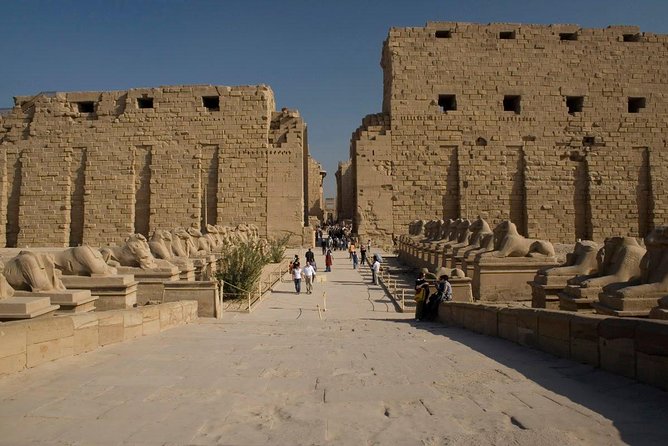
The final monument is Luxor Temple, with about one hour set aside before the return to your hotel or airport. The temple was begun by Amenhotep III in the 18th Dynasty during the New Kingdom and completed by Ramesses II in the 19th Dynasty.
That building history gives the temple a useful connection to the day’s wider story. At the Valley of the Kings, you see royal burial places. At Karnak, you see a major religious complex. Luxor Temple adds another expression of royal power and worship on the East Bank.
One hour is enough for a guided overview of the main structures and for photographs. It is also a sensible final stop because the temple is more compact than Karnak. After a long day, you can take in the remaining monumental architecture without facing another sprawling site.
The guide’s explanations are valuable here because different rulers contributed to the temple over time. Amenhotep III and Ramesses II are not simply names on a sign. Their work helps show how Egyptian monuments could be expanded and reshaped by later kings.
Once you finish, private transport returns you to your Luxor hotel or Luxor International Airport. That airport option is useful if you are using the tour as a final sightseeing day before departure, although you should make sure your flight timing leaves a safe margin after an eight-hour activity.
What the private format adds at $90
At $90 per person, the price is easiest to judge by adding up what you would otherwise arrange separately. You receive round-trip pickup, all transfers in a private air-conditioned vehicle, a fully licensed Egyptologist guide, lunch, water, the listed entrance fees, taxes, and service charges.
That is a strong bundle for a full day. You are not paying only for a guide and a list of monuments. You are also paying for the transport between both banks, the convenience of having one person manage the route, and the ability to keep the activity limited to your own group.
The value becomes even better for a group that can use the stated group discounts, though the exact discount is not provided. Ask for the current rate before booking rather than assuming a particular saving.
The price does not include tips or other options. Plan for tipping separately if you feel the guide and driver provided good service. Since the tour has a private vehicle and private guide, that extra cost may form part of your real budget.
A private tour is not automatically the best value for everyone. If you prefer a large group and a lower basic rate, another format might suit you better. Here, the main benefit is control and convenience, not simply admission to the monuments.
Guide quality can shape the whole day
The strongest praise connected with this experience centers on the guides. Alladin is described as an excellent historian who explains why royal cemeteries developed on the West Bank while civilization and city life grew on the East Bank. That is exactly the kind of framework that makes Luxor easier to understand.
Ahmed is described as passionate and funny, a combination that can make a long day feel lighter. Humor matters when you are moving through five major sites, but it should support the history rather than replace it. The tour includes a qualified, fully licensed Egyptologist, although the specific guide is not guaranteed for every booking.
I would use the private setting to make your interests clear. If you care most about royal succession, temple architecture, tomb decoration, or Hatshepsut’s rule, say so early. A guide who knows what you want can spend more time on those subjects instead of giving every stop the same treatment.
The guide also helps with decisions on the ground, such as how to use your time in the Valley of the Kings or how long to spend at Karnak. That kind of judgment is hard to price, especially on a first visit.
Who should book this Luxor day tour
I think this tour fits you best if you have one full day in Luxor and want to cover the essential ancient sites without arranging transport yourself. It is particularly useful if you are staying at a hotel, arriving from a Nile cruise, or need pickup and return to Luxor International Airport.
It also suits couples, families, and small groups who prefer a private conversation over a fixed large-group script. Most people can participate, and service animals are allowed according to the tour information.
You may want a different plan if your priority is slow photography, extended archaeological study, or a highly customized list of lesser-known sites. The route is built around Luxor’s major sights, and its schedule is full. You get breadth and a clear structure, not unlimited time at each monument.
The cancellation terms are straightforward: cancel at least 24 hours before the local start time for a full refund. Changes or cancellations inside that 24-hour window are not accepted for a refund.
Should you book it?
Book this tour if you want a well-organized first look at Luxor, prefer private transport, and value having lunch and listed admissions included in one price. The combination of the Valley of the Kings, Hatshepsut’s Temple, Karnak, and Luxor Temple gives you a solid picture of both sides of the Nile in one day.
I would book it with realistic expectations. The eight-hour schedule is busy, the Colossi of Memnon is only a short photo stop, and the larger sites cannot be explored in every detail. But for $90 per person, the private guide, air-conditioned vehicle, meal, water, and included entry fees make this a practical choice for seeing Luxor’s essential monuments efficiently.
FAQ
How long does the Luxor private tour last?
The tour lasts approximately eight hours.
Which attractions are included?
The route includes the Valley of the Kings, Temple of Hatshepsut at Deir el Bahari, Colossi of Memnon, Karnak Temple, and Luxor Temple.
Is pickup and return transportation included?
Yes. Pickup and return are included from a Luxor hotel, Nile cruise, or Luxor International Airport.
Is the tour private?
Yes. Only your group participates in this private activity.
Is lunch included?
Yes. Lunch at a local restaurant is included in the tour price.
Are entrance fees included?
Yes. Admission to the Valley of the Kings, Hatshepsut’s Temple, Karnak Temple, Luxor Temple, and the Colossi of Memnon is included.
Who leads the tour?
A qualified and fully licensed Egyptologist guide leads the tour. Guides named in the available information include Alladin and Ahmed, but a specific guide is not guaranteed.
Can I cancel for a full refund?
Yes. You can cancel at least 24 hours before the experience start time for a full refund. Cancellations or changes made less than 24 hours before the start time are not refunded or accepted.
Recently reviewed around Luxor
- Private Full Day West Bank: Valley of kings Hatshepsut &More★ 4.9 · 40 reviews
- Luxor: Karnak and Luxor Temples Private Half-Day Tour★ 4.7 · 27 reviews
- From Luxor: 3-Day Nile Cruise to Aswan with Private Guide★ 4.2 · 147 reviews
- From Hurghada: Luxor Private Guided Day Tour with Lunch★ 4.6 · 28 reviews
- Marsa Alam: Snorkeling with Sea Turtles Marsa Mubarak★ 4.9 · 26 reviews
- Marsa Alam : Over Day Tour to Luxor & Balloon Ride & Felucca★ 4.4 · 29 reviews
- Luxor: Valley of The Kings and Hatshepsut Temple Day Trip★ 4.3 · 55 reviews
- Luxor: Sound & Light Show at Karnak with Hotel Transfers★ 4.3 · 22 reviews
Luxor Tours, compared.
Luxor Valley of the Kings & Tutankhamun Tomb Trip
Read our review →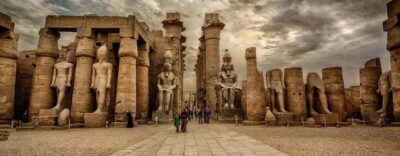
Luxor Day Trip from Hurghada Small Group & Tutankhamun Tomb
Read our review →
Hot Air Balloon Ride in Luxor Egypt with Transfers Included
Read our review →
Shared Full-Day Tour to Luxor West and East Banks
Read our review →
Luxor Day Tour: Valley of Kings & Queens & Hatchepsut Temples
Read our review →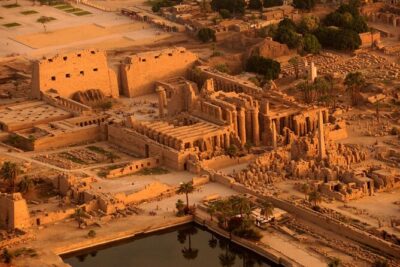
Full Day Tour to East and West Banks of Luxor
Read our review →
2-Day Luxor Tour with Hotel, Balloon, & Boat Ride
Read our review →Browse the lists this tour appears in