
Reviewed · LUXOR TOURS
Private Full-Day Luxor Highlights East and West Banks
Luxor’s greatest strength is that its ancient sights are split between two very different worlds. The West Bank is a land of tombs and funerary temples, while the East Bank is home to grand temples built for worship and ceremony. This private full-day tour puts both sides together in one long, carefully packed day.
I like two things right away: you have a private guide, so you can ask questions and slow down when a wall painting catches your eye, and lunch plus hotel pickup are included. Guides named Ameen, Hassan, Khalid, Ragab, Hamdee, Abdul, and Mahamoud have been praised for clear explanations, patience, and good handling of the day.
The trade-off is the schedule. Eight hours is enough for the major sights, but not enough for leisurely visits to every tomb and temple listed. Entrance tickets are not included, and a stone-carving shop may be included in the day, so set your expectations and budget before you leave.
In This Review
- Key points to know before booking
- Why this private Luxor day works so well
- The Valley of the Kings: start with the tombs
- Tutankhamun’s tomb and the small-scale royal story
- Hatshepsut’s temple at Deir el Bahari
- Colossi of Memnon: a quick photo stop
- Lunch and the rhythm of a private day
- Karnak Temple: the day’s grandest stop
- Luxor Temple and the Avenue of Sphinxes
- Extra West Bank sites and a crowded schedule
- What the $65 price really covers
- Transport, pace, and comfort
- The guides make the biggest difference
- Who should book this tour?
- Should you book the Luxor East and West Bank tour?
- FAQ
- What time does the tour start?
- How long does the Luxor tour last?
- Is hotel pickup included?
- Is this a private tour?
- Is lunch included?
- Are entrance fees included?
- Can I visit Tutankhamun’s tomb?
- Is a guide included?
- Can I cancel for a refund?
Key points to know before booking
- Four major royal tombs are included at the Valley of the Kings, with an optional paid visit to Tutankhamun’s tomb.
- The West Bank comes first, including Hatshepsut’s temple and the Colossi of Memnon.
- Karnak gets the longest temple visit, with time for the Hypostyle Hall, obelisks, sacred lake, and Temple of Amun.
- Lunch is included, and some itineraries use a local restaurant on the West Bank.
- This is a private outing, so only your group participates and the pace can be adjusted.
- The $65 price does not include entrance fees or gratuities, which can change the final cost.
Why this private Luxor day works so well
This is a good choice if Luxor is one stop on a larger Egypt trip and you want to see the essential monuments without arranging separate taxis, guides, and tickets. The driver collects you from your Luxor hotel at about 8:00 am, and you travel in an air-conditioned vehicle with your own guide.
The private format matters here. Luxor’s monuments are not simple places where you can read one sign and move on. A guide can explain why one tomb has an unusual ceiling, how a temple changed over many reigns, or why a statue has a different name from the person who commissioned it.
The best guides also know when to stop talking. Hassan, Ragab, Khalid, Ameen, Hamdee, Abdul, Mahamoud, and other members of the team are praised for combining strong Egyptology with free time for photographs and independent looking. That balance is important. You want the meaning of a scene explained, but you also want a quiet minute beneath the columns.
The day is described as about eight hours, although the sightseeing schedule itself is also described as roughly seven hours. The listed stops add up to a very full program, and actual timing can depend on traffic, ticket lines, walking speed, and how much time you spend inside the tombs.
More Luxor trips worth a second look
- Luxor: Shared Full-Day Tour to Luxor West and East Banks
★ 4.5 · 1,812 reviews - Full Day Tour to East and West Banks of Luxor
★ 5.0 · 1,449 reviews - Luxor : Full Day Tour to Luxor West and East Banks & Lunch
★ 5.0 · 870 reviews
The Valley of the Kings: start with the tombs
The day begins on Luxor’s West Bank at the Valley of the Kings. This dry valley served as a burial place for powerful New Kingdom rulers, and its tombs were cut into the rock rather than built as huge pyramids.
Your visit includes four royal tombs. The specific program highlights Ramesses IV, Ramesses III, Merneptah, and another royal tomb, with the itinerary also listing Ramesses VI and Ramesses IX among possible sites. Since tomb access can change, ask your guide which four are open and included on the day.
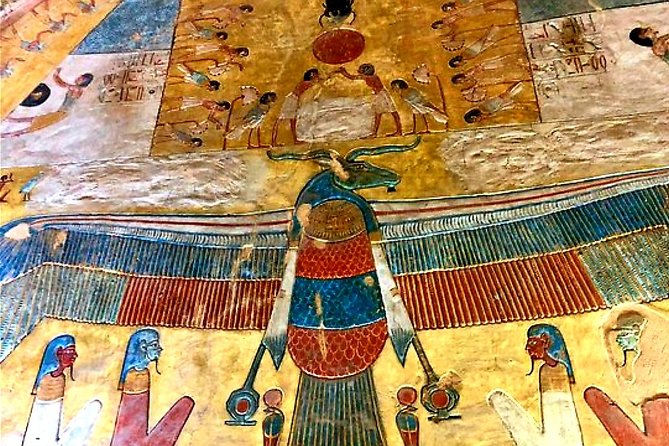
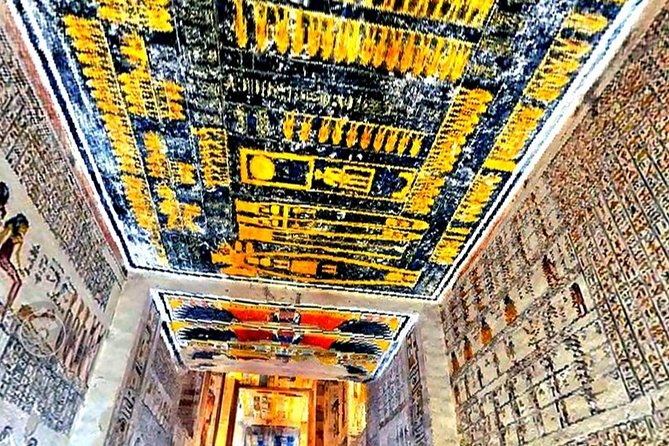
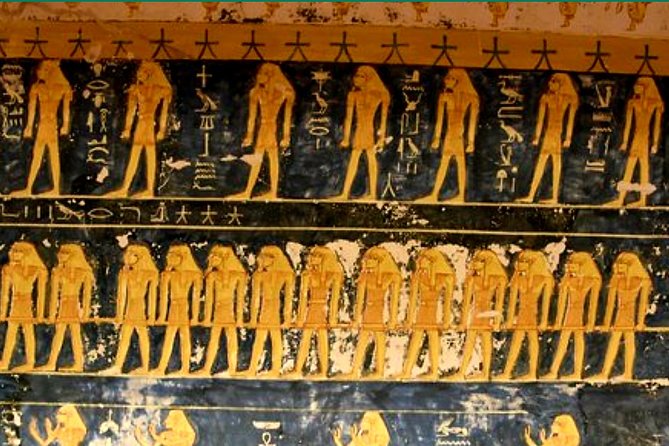
Inside, the reward is not furniture or treasure. It is the painted decoration on the walls and ceilings. These scenes were meant to guide the dead king through the next world, and they include gods, ritual texts, stars, boats, and symbolic journeys through night.
Ramesses IV’s tomb is especially notable for its blue and white decoration. The ceiling image of the sky goddess Nut shows the sun swallowed at night and born again in the morning, a compact picture of the Egyptian idea of renewal.
Ramesses III’s tomb has a long, decorated corridor. Its unusual side chambers show details such as foreign tribute, boats, weapons, pottery, and musicians. These small scenes offer a glimpse beyond formal royal religion, though you will need to pay attention to notice them during a short visit.
Merneptah’s tomb differs in shape from some earlier examples. Its corridors and chambers are unusually tall, while the number of side rooms is more limited. Merneptah was the son of Ramesses II, so this stop also helps connect several generations of New Kingdom rulers.
Plan on about an hour for the Valley of the Kings, with around 15 to 25 minutes at individual tombs. That is enough to see several interiors, but not enough to linger over every painted figure. Wear shoes suited to uneven ground, and carry water. The valley is exposed, and the walk from the vehicle to the tomb entrances can feel hot.
Tutankhamun’s tomb and the small-scale royal story
Tutankhamun’s tomb is an optional extra, with an entrance fee of 300 Egyptian pounds listed in the tour details. It is much smaller than the tombs of some major pharaohs, but its importance is enormous because the young king’s burial was found with much of its contents intact.
The tomb contains Tutankhamun’s royal mummy, which gives this visit a more direct and personal feel than the grander painted chambers nearby. You are looking at the burial place of a ruler who became king at about age 10 and died at about 19.
I would treat this as a personal choice rather than an automatic must. If you are fascinated by Tutankhamun, the extra ticket is likely worth considering. If your main interest is wall decoration and large chambers, the standard Valley of the Kings visits may give you more visual impact.
Hatshepsut’s temple at Deir el Bahari
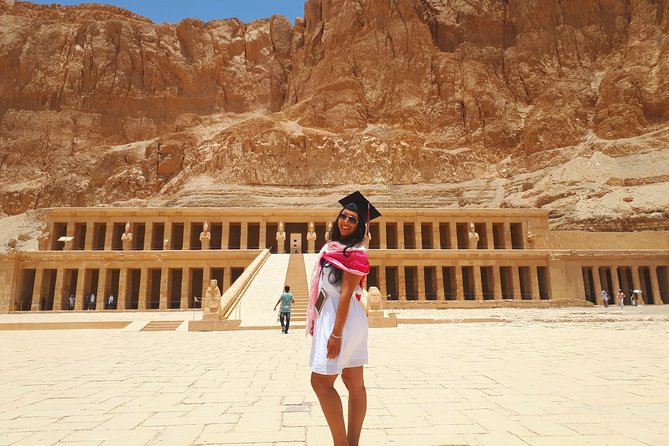
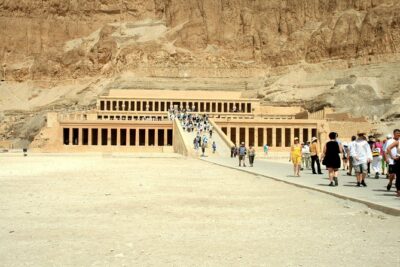
From the royal tombs, the vehicle takes you to the Temple of Hatshepsut at Deir el Bahari. The temple rises in broad terraces against the cliffs, giving it a very different character from the underground tombs.
Hatshepsut ruled as pharaoh, a rare achievement for a woman in ancient Egypt. She was also an ancestor of Tutankhamun, linking this temple to the royal story you have just encountered in the valley.
The guide can help you understand the temple’s political message. Hatshepsut presented herself as a legitimate ruler and used architecture, reliefs, and religious imagery to support that claim. The clean horizontal lines and open terraces make this one of the easier West Bank monuments to grasp visually.
The planned visit is about an hour. Give yourself time to look back toward the cliffs and across the terraces, not just at the carved walls. The setting is part of the experience.
A different kind of day out, same part of Egypt:
- Hurghada: Luxor Valley of the Kings & Tutankhamun Tomb Trip
★ 4.7 · 13,208 reviews - Luxor Day Trip from Hurghada Small Group & Tutankhamun Tomb
★ 4.8 · 5,366 reviews - Hot Air Balloon Ride in Luxor Egypt with Transfers Included
★ 5.0 · 4,319 reviews - Luxor: Hot Air Balloon Ride over Luxor Relics
★ 4.8 · 1,681 reviews
Colossi of Memnon: a quick photo stop
The two Colossi of Memnon are the shortest major stop, usually about 10 minutes. These huge seated figures date from the reign of Amenhotep III and once guarded the entrance to his mortuary temple.
There is no entrance fee listed for this stop. It is mainly a chance to see the scale of royal sculpture and take photographs. Do not expect a long guided visit here. The value is in understanding that these statues are survivors from a much larger complex that no longer remains in its original form.
Lunch and the rhythm of a private day
Lunch is included, but the exact menu and restaurant are not specified. Some guides use a local restaurant on the West Bank, and one guide was praised for choosing a place that offered a more everyday view of Luxor.
That local setting can be one of the day’s pleasant moments. After several formal monuments, a simple meal gives you a break and a chance to ask your guide about modern Luxor as well as ancient Egypt.
Expect lunch to be practical rather than luxurious. One assessment found it too basic, so I would not book this tour for a special culinary experience. The point is convenience: you do not need to search for a restaurant while trying to keep a tight sightseeing schedule.
A boat ride across the Nile was included unexpectedly for one group, but it is not clearly listed as part of the standard inclusions. Treat that as a possible variation, not a guaranteed feature.
Karnak Temple: the day’s grandest stop
Karnak is the major East Bank highlight, and the program allows about two hours here. That longer visit is welcome because the complex is too large to understand in a quick walk.
Karnak grew over many reigns rather than being built all at once. The result is a vast religious center dedicated mainly to Amun, with later rulers adding pylons, halls, obelisks, chapels, and other monuments.
The Hypostyle Hall is the visual centerpiece. Its 134 columns create a forest of stone, with the tallest columns rising above the others in the central aisle. Look up as well as forward. The upper parts once carried roof slabs, and the height of the central columns helped shape a ceremonial route through the hall.
The complex also includes obelisks linked with Hatshepsut and Thutmose I, the Temple of Amun, a sacred lake, lotus and papyrus designs, and the large granite scarab associated with Amenhotep III. Your guide can sort out the names and periods, which is useful because Karnak can otherwise feel like a collection of disconnected stones.
The itinerary separates several parts of Karnak into individual stops, including the Temple of Ramesses III, the Temple of Amun, and the obelisks. In practice, these are within the larger complex, so do not assume you are visiting entirely separate locations.
Karnak is also where a private guide earns the fee. Without context, the scale can be impressive but confusing. With a clear explanation, you begin to see the complex as a religious center shaped by generations of rulers.
Luxor Temple and the Avenue of Sphinxes
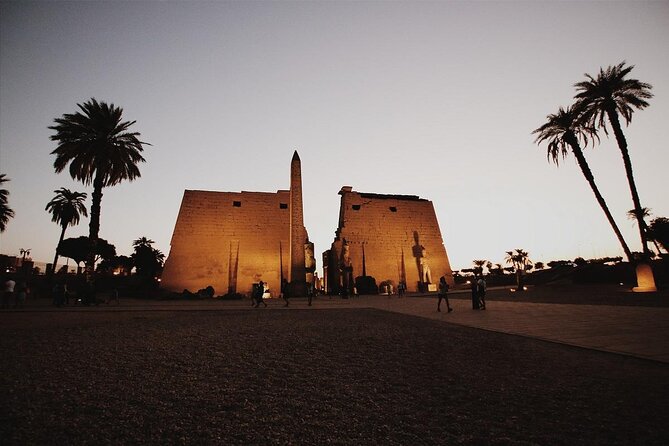
After Karnak, the tour continues to Luxor Temple. This temple is dedicated to the Theban Triad of Amun-Ra, Mut, and Khonsu, and it has a more compact, urban feel than Karnak.
The granite statues of Ramesses II are among the main sights. The temple also shows how different rulers added to an older sacred site, creating a layered monument rather than a single building from one moment.
The visit lasts about an hour. That gives you enough time to hear the main explanation, see the statues and entrance area, and take photographs without turning the stop into a rushed walk-through.
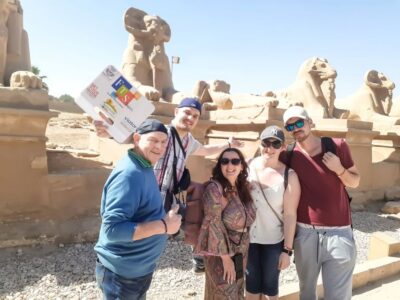
The Avenue of Sphinxes once connected Luxor Temple and Karnak. Only part of the long avenue is visible today, but the surviving section helps you picture the ceremonial route between the two temple complexes.
The obelisk of Thutmose I and Hatshepsut’s obelisk are also listed among the stops. These are brief visits, usually about five minutes, and some are free according to the tour details. Your guide can point out which monuments are inside the paid temple areas and which can be seen without a separate ticket.
Extra West Bank sites and a crowded schedule
The itinerary also names the Tombs of the Nobles, Al Asasif, Carter House, the Temple of Merneptah, the Temple of Ramesses II, the Mortuary Temple of Seti I, and additional royal tombs such as Ramesses VI and Ramesses IX.
This is useful as a sense of the tour’s scope, but do not assume every one of these places receives a full visit. The main schedule already includes the Valley of the Kings, Hatshepsut, Colossi of Memnon, Karnak, and Luxor Temple. Those core stops alone fill the day.
If you have a special interest in Howard Carter, Seti I, or the Tombs of the Nobles, ask your guide early in the morning if one can replace another stop. A private tour gives you more room to discuss priorities, but it cannot make an eight-hour day unlimited.
There may also be a stop at a stone shop. One person found this uncomfortable and felt pressured to buy expensive figures, while another guide’s only criticism of the day was the stone shop. You can politely say you do not wish to shop, ask whether the stop is optional, and keep purchases separate from the sightseeing budget.
What the $65 price really covers
At $65 per person, the tour offers strong value if you want a guide, private transport, hotel transfers, and lunch in one package. Organizing the same day independently would mean finding transport between the East and West Banks, arranging a guide, choosing a restaurant, and managing several ticket purchases.
The headline price is not the final cost. All entrance fees are extra, including the standard tickets for the major temples and tombs. Tutankhamun’s tomb is an additional optional ticket listed at 300 Egyptian pounds. Gratuities are also not included and are recommended.
Ask for a clear estimate of entrance fees before the day begins. Ticket prices and access can change, and a private guide can help you buy the correct tickets without wasting time at the counters.
The tour does not include the optional hot-air-balloon experience. That can be arranged before the main tour according to the supplied details, but it is a separate activity and cost.
Transport, pace, and comfort
Pickup and drop-off are offered at Luxor hotels. The vehicle is described as air-conditioned, though one person complained about the vehicle temperature and another said the road could be bumpy. The operator explained that fresh air had been requested in that case, so comfort may depend on your preference and the vehicle assigned.
The private vehicle is useful because the West Bank and East Bank are separated by the Nile, and you will make several short rides between sites. It also gives you a place to rest during the hottest part of the day.
Tell the guide if you need a slower pace. Some people praised guides for giving explanations first and then allowing time to explore alone. That is exactly the arrangement I would want at a site like Karnak, where constant commentary can become tiring.
Most people can participate, according to the tour information. Still, the tombs and temple grounds involve walking, steps, uneven surfaces, and heat. If you have mobility concerns, ask the operator what can be adjusted before booking.
The guides make the biggest difference
The strongest part of this experience is the guide. A good Egyptologist turns names and dates into a story you can follow from one monument to the next.
Ameen and Hassan are praised for clear explanations and an easy manner. Khalid is described as exceptionally strong on ancient Egyptian subjects, while Ragab is praised for detailed history, good English, and a relaxed pace. Hamdee is noted for sensing when people need less information or more time.
Abdul is also described as friendly with children and able to explain restoration work from direct experience. Mahamoud is praised for being respectful and for making the history easy to follow. These details matter because a full day beside ancient monuments can become exhausting if the guide talks at you nonstop.
You are not guaranteed a particular guide unless the operator confirms one in writing. The useful question to ask is not only who is available, but also whether the guide will provide both historical explanation and free time at each site.
Who should book this tour?
I would choose this tour if you have one full day in Luxor and want the major sights handled efficiently. It suits first-time visitors, families, and anyone who prefers a private car over negotiating transport between scattered monuments.
It is also a good fit if you want to ask questions. The private format is far more flexible than a large group, and the guide can adapt explanations to children, adults, or people with a strong interest in archaeology.
I would hesitate if you want long, quiet visits at every tomb, or if you dislike shopping stops and do not want to manage extra ticket costs. In that case, a shorter private itinerary focused on fewer sites may be better.
Should you book the Luxor East and West Bank tour?
Book it if your priority is coverage, guidance, and simple transport. For $65 per person, the combination of a private Egyptologist, hotel transfers, lunch, and a full day of major monuments is appealing, as long as you add entrance tickets and gratuities to your budget.
Before confirming, ask which four Valley of the Kings tombs will be open, whether Tutankhamun’s tomb is worth adding for your interests, and whether any shopping stop is planned. If the answers suit you, this is a practical way to see Luxor’s essential ancient sites without spending your day arranging the pieces yourself.
Free cancellation is available up to 24 hours before the start time. Cancellations or changes made less than 24 hours in advance are not refunded or accepted.
FAQ
What time does the tour start?
The stated start time is 8:00 am.
How long does the Luxor tour last?
The experience lasts approximately eight hours. The sightseeing portion is also described as about seven hours.
Is hotel pickup included?
Yes. Pickup and drop-off are offered at Luxor hotels.
Is this a private tour?
Yes. Only your group participates in the activity.
Is lunch included?
Yes. Lunch is included in the tour.
Are entrance fees included?
No. All entrance fees are paid separately.
Can I visit Tutankhamun’s tomb?
Yes, but it is optional and requires a separate entrance fee. The listed price is 300 Egyptian pounds.
Is a guide included?
Yes. A qualified Egyptologist guide is included, along with transport in an air-conditioned vehicle.
Can I cancel for a refund?
Yes, if you cancel at least 24 hours before the experience starts. Cancellations made less than 24 hours in advance are not refunded.
Recently reviewed around Luxor
- Private Full Day West Bank: Valley of kings Hatshepsut &More★ 4.9 · 40 reviews
- Luxor: Karnak and Luxor Temples Private Half-Day Tour★ 4.7 · 27 reviews
- From Luxor: 3-Day Nile Cruise to Aswan with Private Guide★ 4.2 · 147 reviews
- From Hurghada: Luxor Private Guided Day Tour with Lunch★ 4.6 · 28 reviews
- Marsa Alam: Snorkeling with Sea Turtles Marsa Mubarak★ 4.9 · 26 reviews
- Marsa Alam : Over Day Tour to Luxor & Balloon Ride & Felucca★ 4.4 · 29 reviews
- Luxor: Valley of The Kings and Hatshepsut Temple Day Trip★ 4.3 · 55 reviews
- Luxor: Sound & Light Show at Karnak with Hotel Transfers★ 4.3 · 22 reviews
Luxor Tours, compared.
Luxor Valley of the Kings & Tutankhamun Tomb Trip
Read our review →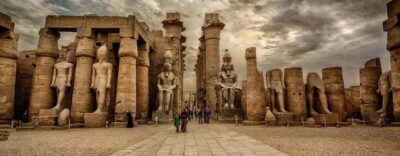
Luxor Day Trip from Hurghada Small Group & Tutankhamun Tomb
Read our review →
Hot Air Balloon Ride in Luxor Egypt with Transfers Included
Read our review →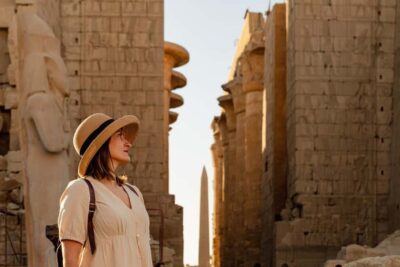
Shared Full-Day Tour to Luxor West and East Banks
Read our review →
Luxor Day Tour: Valley of Kings & Queens & Hatchepsut Temples
Read our review →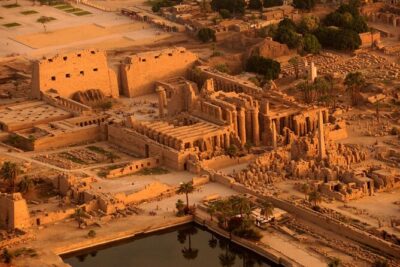
Full Day Tour to East and West Banks of Luxor
Read our review →
2-Day Luxor Tour with Hotel, Balloon, & Boat Ride
Read our review →Browse the lists this tour appears in